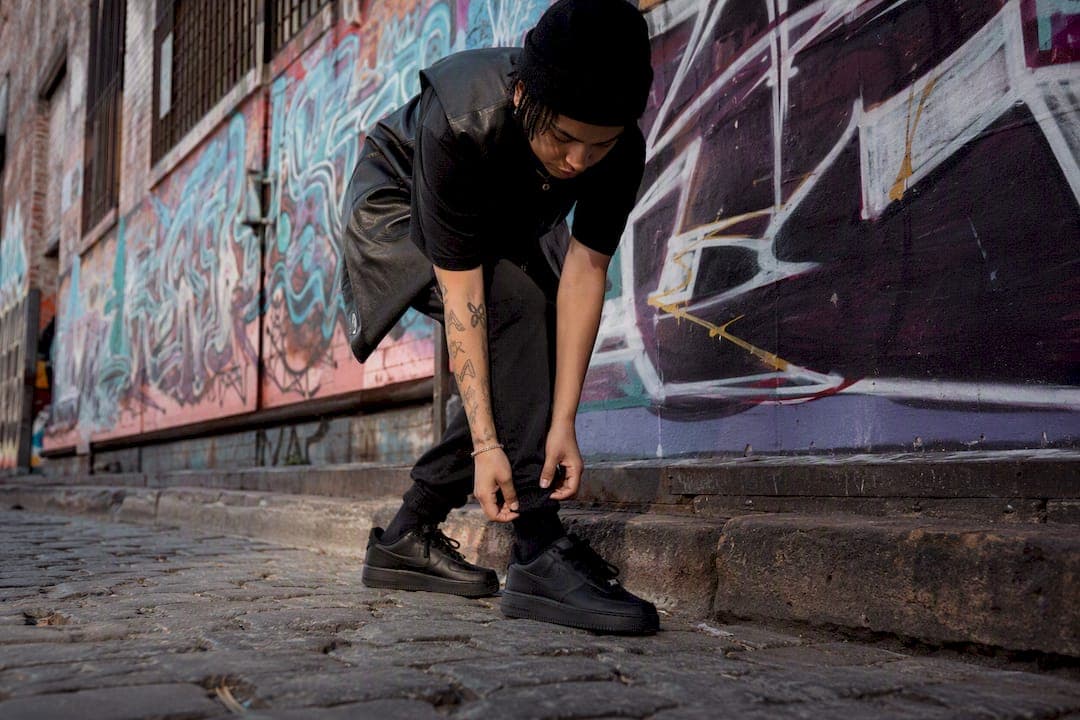
All-black streetwear works when you build outfits from clear formulas and mix textures, not when you throw on matching sweats and call it a fit. GfaceGear built its whole aesthetic on this idea, and Victor, who covers streetwear styling for us, breaks it down into rules anyone can copy. Success comes down to two things: texture contrast and silhouette control. Here are five formulas to start with.
- Casual daily: a heavyweight hoodie, black denim, and chunky black sneakers. The hoodie's fleece against denim's twill already gives you two textures before you even try.
- Elevated casual: oversized tee, leather jacket, slim black trousers, Chelsea boots. Leather's sheen breaks up matte cotton instantly.
- Night out: fitted turtleneck, tailored blazer, straight-leg trousers, polished boots. Structure does the heavy lifting here.
- Layered cold-weather: thermal base, hoodie, puffer or coach jacket, joggers, boots. Three layers, three weights, zero flatness.
- Summer streetwear: lightweight tee, cotton shorts or wide-leg linen pants, low-top sneakers. Weight drops, but the texture rule still applies.
Key Takeaways
All-black streetwear succeeds when texture contrast, tonal variation, and fit balance replace matching, single-surface outfits.
| Point | Details |
|---|---|
| Use the three-surface rule | Combine at least three textures, like fleece, denim, and leather, in every outfit. |
| Balance oversized and fitted | Pair an oversized top with a fitted bottom, or vice versa, to keep your silhouette readable. |
| Map shoes to formality | Choose chunky sneakers for streetwear, Chelsea boots for elevated looks, and combat boots for layered fits. |
| Limit graphics and metal | Keep one graphic piece and one metal accessory per outfit to avoid visual clutter. |
| Shop texture-built pieces | GfaceGear's hoodies, lion sneakers, and hats are designed for monochrome streetwear formulas, not adapted from colored lines. |
Table of Contents
- All Black Streetwear Outfits: Six Builds to Steal
- Why Flat Black Happens and How Texture Fixes It
- Shoes and Accessories That Finish the Look
- Escaping the All-Black Trap: The 3-3-3 Rule
- Why Trust This Advice: Victor and GfaceGear's Streetwear Expertise
- Streetwear Brands That Own Black and Where to Shop Them
- Using Statement Pieces to Elevate an All-Black Fit
- Getting Fit Right: Oversized vs Fitted in Streetwear
- Why the "Rules" Around All-Black Are Half-Right
- Shop the Formulas: GfaceGear's All-Black Lineup
- Sources
- FAQ
All Black Streetwear Outfits: Six Builds to Steal
Every one of these builds breaks down into five parts: top, outer layer, bottom, shoes, and one accessory. Swap pieces freely, but keep the texture logic intact.
1. Hoodie and jogger stack
- Top: heavyweight hoodie with substantial fleece fabric
- Bottom: tapered joggers
- Shoes: chunky black sneakers
- Accessory: a chain or dog tag for a metal moment
- Tip: size the hoodie one notch up, keep the joggers tapered so the silhouette doesn't drown you.
2. Oversized tee and selvage denim
- Top: oversized graphic tee (this is your one graphic piece)
- Bottom: raw or selvage black denim, straight cut
- Shoes: black low-tops
- Accessory: a leather belt with a visible buckle
- Tip: the denim's stiffness against a soft cotton tee gives you contrast without adding a single extra layer.
3. Leather jacket and slim trousers
- Top: fitted crewneck or mock neck
- Outer: leather jacket
- Bottom: slim tailored trousers
- Shoes: Chelsea boots
- Accessory: a slim watch, GfaceGear included
- Tip: leather is your loudest texture, so keep everything underneath quiet and fitted.
4. Blazer and wide-leg pants
-
Top: fine-knit sweater
-
Outer: structured blazer
-
Bottom: wide-leg trousers
-
Shoes: Chelsea boots or clean low-tops
-
Accessory: a Greek Key medallion piece for a hint of gold against the black
-
Tip: this build proves all-black doesn't mean casual only. Vogue notes that tonal variation and mixed textures like wool and leather keep monochrome looks from feeling flat.
5. Puffer layered look
- Top: thermal long sleeve
- Mid: hoodie
- Outer: puffer or coach jacket
- Bottom: cargo pants or joggers
- Shoes: combat boots
- Accessory: a beanie
- Tip: three layers of differing weight (thermal, fleece, nylon) create depth automatically. Check our best puffer jackets for streetwear guide before you buy.
6. Summer lightweight look
- Top: lightweight cotton tee (180 to 220 GSM)
- Bottom: linen-blend shorts or wide-leg pants
- Shoes: canvas low-tops
- Accessory: a canvas or nylon crossbody
- Tip: drop the weight, keep the texture mix. Our summer streetwear outfits guide has more warm-weather swaps.
Gender-neutral versions work across every build above. Long tshirt dresses styled with combat boots and a leather jacket follow the exact same texture math as the oversized tee build. For a deeper walk through outfit assembly, see our men's streetwear outfits guide.
Why Flat Black Happens and How Texture Fixes It
Flat black happens when every piece has the same finish, the same weight, and the same shade. Fix it with the three-surface rule: aim for at least three distinct textures in one outfit, like fleece, denim, and leather. Fashion editors consistently point to mixing fabric textures and weights as the difference between an outfit that reads as styled and one that reads as loungewear.
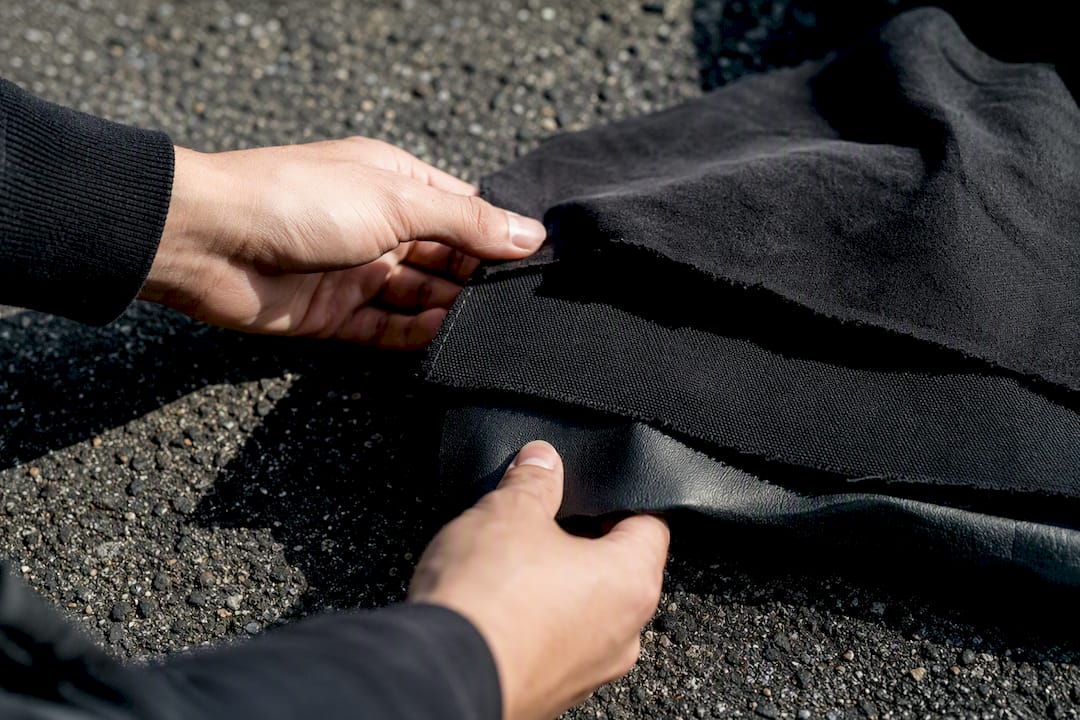
Tone matters just as much as texture. True black, charcoal, and near-black all behave differently under light, and layering slightly different dark shades keeps an outfit from looking like one flat block.
Weight is the part people skip. A 220 GSM tee drapes soft and thin. A 550 GSM hoodie holds structure and shadow. Fourteen-ounce denim stands stiff against both. Stack these three weights and you get depth without touching color.
- Check your closet: lay three black pieces side by side under a window.
- If they all look identical in sheen and weight, one of them needs to go.
Pro Tip: Test pieces under natural daylight, not your closet bulb, and move around in them. Sheen and drift only show up in motion.
Shoes and Accessories That Finish the Look
Footwear sets the formality ceiling for the whole outfit. Menswear guides map shoe choice directly to formality: black low-top sneakers for minimal daytime looks, chunky black sneakers for street-first fits, combat boots for layered cold-weather builds, and Chelsea boots when you're dressing the outfit up.
Accessories follow a simple rule set:
- One metal moment: a chain, medallion, or watch, never all three.
- One strap or belt: visible hardware adds a texture break without extra bulk.
- One graphic piece max: keep printed items to a single spot in the outfit.
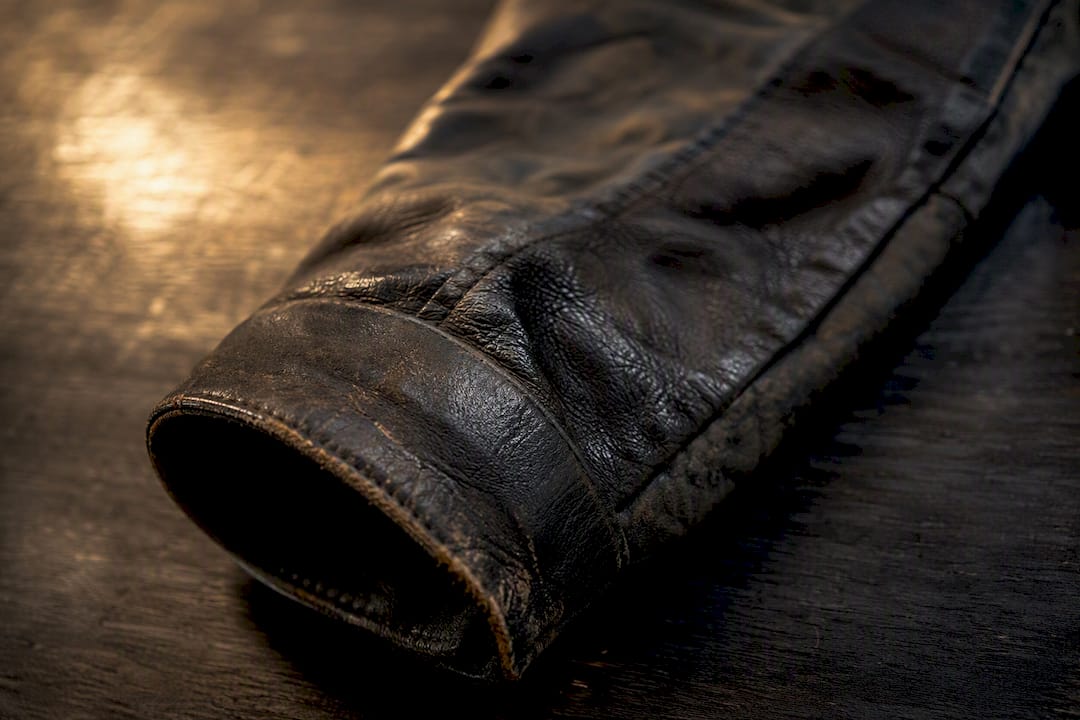
Care matters more in all-black than any other palette because lint, fading, and scuffs show instantly. Lint roll fleece and knit pieces before you leave, condition leather every few weeks, and rotate sneakers so the sole foam doesn't yellow.
Pro Tip: A cracked or dusty leather jacket kills an otherwise perfect outfit faster than a bad shoe choice.
Escaping the All-Black Trap: The 3-3-3 Rule
The all-black trap is what happens when every piece matches in finish and weight, the classic matching-fleece-set problem. Three fixes rescue it fast:
- Swap one piece for a different texture (denim instead of a second fleece item).
- Change proportions (pair an oversized top with a slim bottom, or vice versa).
- Add one focal point (boots, a belt, or a metal accessory).
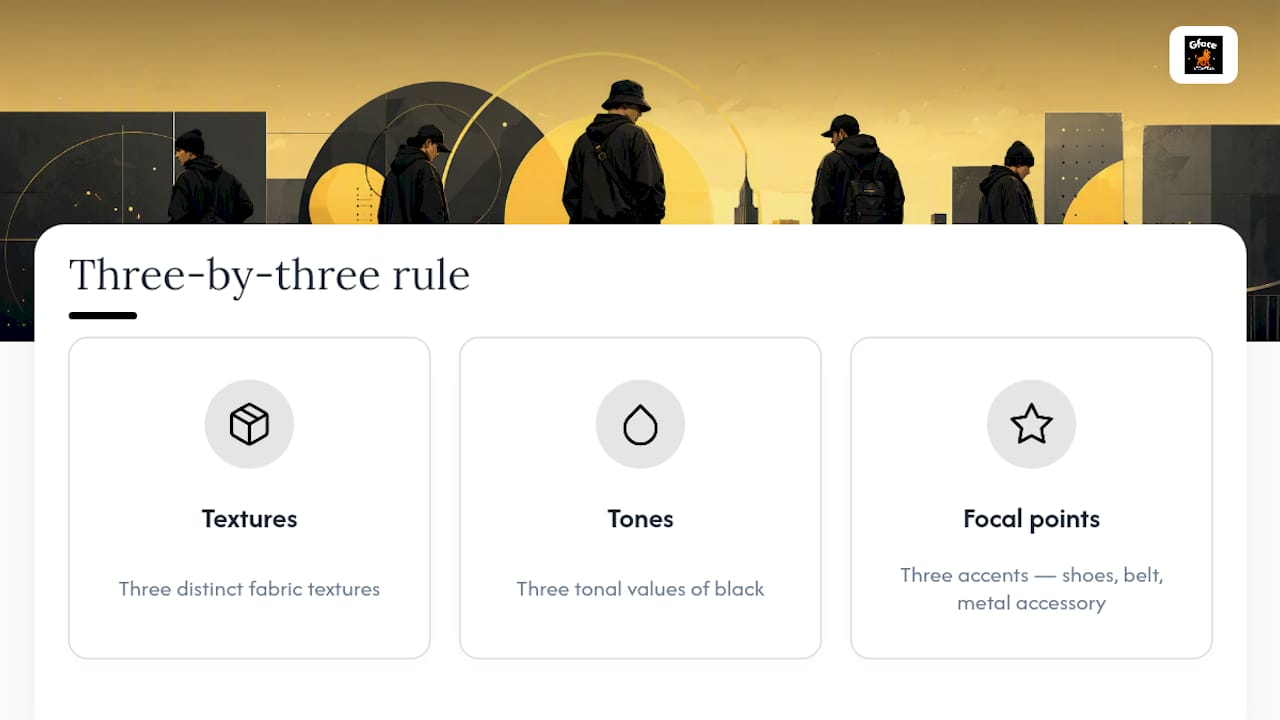
Run the 3-3-3 rule as a gut check: three textures, three tonal values, three focal points. Counting surfaces this way, fleece, denim, leather, reliably creates depth in an outfit.
Red flags: matching fleece sets (swap the bottom for denim), and too many logos (drop to one graphic piece, worn as the outer layer).
Why Trust This Advice: Victor and GfaceGear's Streetwear Expertise
Victor covers streetwear styling for GfaceGear, writing our guides on men's streetwear outfits and streetwear jackets. GfaceGear's own catalog was built around these formulas:
- Heavyweight hoodies for the layered and casual builds
- Hats for the accessory rule's focal point
- Lion sneakers for the chunky-sneaker slot in nearly every build
- Limited drops, including the Boriqua collection, for statement pieces
Browse the GfaceGear lookbook to match pieces directly to the formulas above.
Streetwear Brands That Own Black and Where to Shop Them
Black apparel is the backbone of streetwear, and a handful of brands built entire identities around it. Heavyweight fleece specialists dominate the hoodie and jogger space, leather-focused labels anchor the elevated casual builds, and denim houses supply the raw and selvage black jeans that hold up against fleece and leather alike. Sneaker brands round things out with all-black colorways built specifically to anchor monochrome fits.
GfaceGear fits into this landscape as a Brooklyn-born option built specifically around the all-black streetwear formula, not adapted from a lighter color palette. The lion sneaker line was designed to slot into the chunky-sneaker role across casual and layered builds, while the hoodie and hat lines cover the fleece and accessory slots most formulas call for.
Where you shop matters as much as what you buy. Print-on-demand and limited-drop models, like GfaceGear runs, mean pieces don't sit on a shelf getting picked over. A drop happens, it sells through, and the next one replaces it. That scarcity works in your favor if you're trying to avoid the matching-fleece-set problem: everyone else isn't wearing the same hoodie you are.
Stick to one or two go-to sources for your black basics (hoodies, tees, denim) so fit and weight stay consistent, then treat outer layers and shoes as the place to introduce new brands and textures.
Using Statement Pieces to Elevate an All-Black Fit
A statement piece works because it breaks the rhythm the rest of the outfit sets up. If everything else is quiet fleece and denim, one bold layer, a graphic outer piece, a limited-edition jacket, a medallion necklace, becomes the outfit's focal point almost automatically.
Limited-edition drops do this better than permanent-collection pieces because scarcity reads as intention. When GfaceGear runs a limited drop like the Boriqua collection, wearing that piece signals you moved fast and knew where to look, not that you grabbed whatever was on the rack. That's a different kind of confidence than a plain black tee delivers, and it's worth building an entire outfit around.
The placement rule stays the same as the one-graphic guidance: your statement piece should be the outer or most visible layer, not buried under a jacket. A bold graphic tee under a plain hoodie wastes the statement. The same graphic tee worn alone, or under an open jacket, does its job.
Limit yourself to one statement piece per outfit. Two loud items compete instead of complementing, and you're back in the flat-black trap, just with more competing focal points. Pair the statement piece with the quietest possible textures elsewhere: a plain black tee, straight denim, low-key sneakers. Let the one piece work.
Getting Fit Right: Oversized vs Fitted in Streetwear
Streetwear's whole visual language runs on contrast between oversized and fitted, and all-black outfits depend on that contrast even more than colorful ones. Fit and form carry more weight in monochrome dressing because there's no color blocking to define where one piece ends and the next begins. Silhouette becomes the entire story.
The rule that works across nearly every build above: if your top is oversized, your bottom should be fitted or tapered, and vice versa. An oversized hoodie over slim joggers reads as intentional streetwear. An oversized hoodie over oversized joggers reads as pajamas, which is the single fastest way to fall into the all-black trap.
Layering adds a second fit variable. A fitted base layer under an oversized outer piece (think a slim thermal under a boxy puffer) keeps the silhouette readable even with three layers on. Two oversized layers stacked together erase your shape entirely and flatten the whole look, textures or not.
Tailored pieces, blazers, slim trousers, structured jackets, function as your fitted anchor when you want to dress a look up. Streetwear staples, hoodies, joggers, cargo pants, function as your oversized anchor when you want to dress it down. Most strong all-black outfits pick one anchor from each category and build around that single contrast point rather than trying to balance three or four competing proportions at once.
Why the "Rules" Around All-Black Are Half-Right
Most style advice treats all-black as a shortcut, throw on a black hoodie and black joggers and you're done. That's exactly backward. Black removes the excuse of color coordination, which means fit, texture, and finish carry the entire outfit on their own. Skip that work and you get pajamas, not streetwear.
The overrated piece of conventional wisdom is "keep it simple." Simple is how you end up in a matching fleece set. What actually works is deliberate contrast: one oversized piece against one fitted piece, one matte surface against one with sheen, one loud graphic against three quiet layers. That's not complicated, it's specific.
If you take one thing from this, prioritize your shoes and outer layer first. Everything under a jacket or hoodie is secondary to what a stranger sees in the first two seconds, and that's almost always your silhouette from the shoulders down and your footwear. Get those two right, and the rest of the formula falls into place.
Shop the Formulas: GfaceGear's All-Black Lineup
Every formula above works better when the pieces are actually built for this palette, not a black colorway tacked onto a lighter design. GfaceGear designs its hoodies, tees, hats, and lion sneakers specifically for texture-first, monochrome streetwear, so the fleece weight, denim cut, and sneaker sole all pull their weight the way this guide describes.
If you're rebuilding your rotation around these formulas, start with the pieces that show up in the most builds: a heavyweight hoodie, a pair of lion sneakers, and one hat for the accessory slot. Limited drops, like the Boriqua collection, cover the statement-piece formula without you having to hunt across five different brands to find one black jacket that actually fits right. Browse the GfaceGear lookbook to match pieces to the builds above and grab your next drop before it sells through.
Sources
- GQ — How to style an all-black outfit (2025)
- Vogue — All black outfits (2022)
- PAGE Magazine — All black streetwear done right
FAQ
What Is the 3-3-3 Rule for Clothes?
In all-black streetwear styling, the 3-3-3 rule means aiming for three distinct textures, three tonal values of black, and three focal points, like shoes, a belt, and a metal accessory, in one outfit.
What's Trending in Streetwear Right Now?
Layered monochrome looks, heavyweight fleece, and limited-edition drops are driving current streetwear trends, with texture mixing replacing flat, single-fabric all-black fits. Check our streetwear trends guide for a fuller breakdown.
What Is an All-Black Outfit Called?
There's no single official name, but stylists commonly call it "monochrome dressing," "all-black everything," or, within streetwear circles, "blacked-out" fits.
Is It Classy to Wear All Black?
Yes. All-black reads as classy when the fit is intentional and textures vary, since GQ notes black is treated as an authoritative, easy-to-coordinate palette precisely because it puts silhouette and finish front and center.
Can I Wear All Black in Summer?
Yes, with lighter fabric weights. Swap heavyweight fleece and denim for lightweight cotton tees and linen-blend shorts or pants to keep the outfit breathable while keeping the texture mix intact.