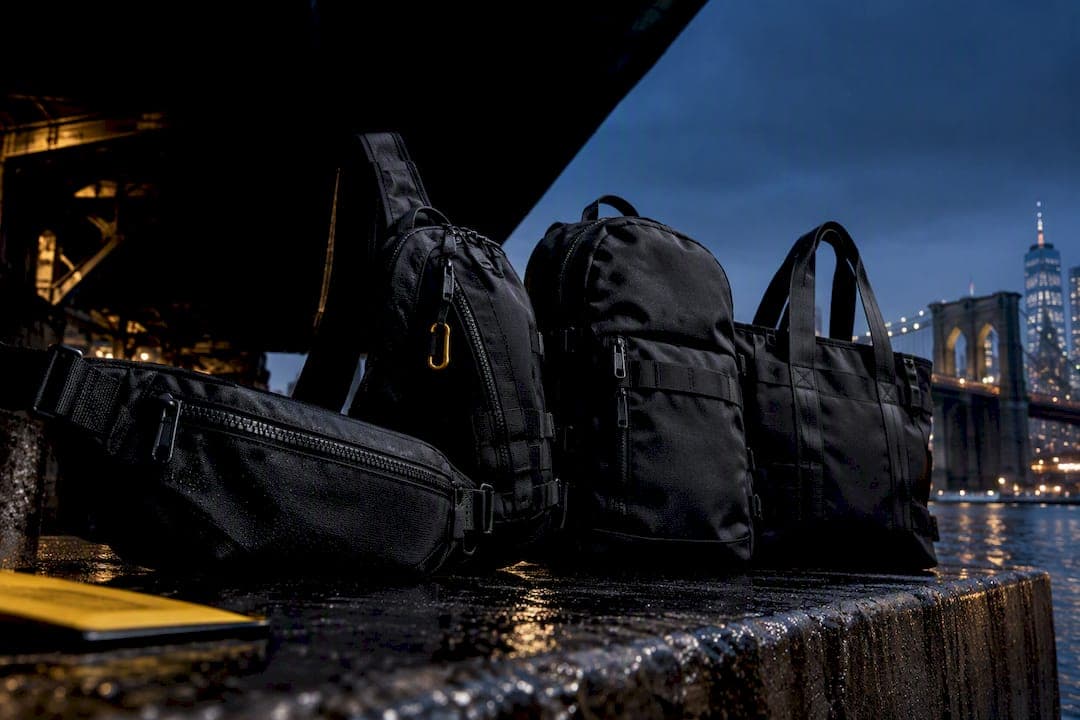
For most streetwear looks, choose a waist bag or low-profile sling for hands-free city days, a tech-ready daypack for the commute, and a bold shoulder bag or tote for nights out. Pick by silhouette, denier rating, and hardware quality, not the logo. A featured bag lineup covers those same style lanes with build specs that hold up to daily wear.
TL;DR:
- Durability and hardware quality are more important than logo size or brand when selecting streetwear bags, with YKK zippers and reinforced straps indicating better longevity.
- Choosing the right silhouette depends on daily needs: waist bags and slings suit hands-free commutes, while tech daypacks are best for carrying laptops and clothes.
- Look for high denier ratings (1000D or ballistic nylon) and abrasion-resistant fabrics like CORDURA® to ensure bags withstand daily wear and outdoor conditions.
- Budget bags ($20-$50) are suitable for short-term use, but mid-range ($50-$120) offers better hardware and materials for long-term wear, with premium options focusing on reinforcement and warranties.
- Scarcity-driven hype pieces often do not outperform functional, well-constructed bags in everyday durability and usefulness, making purpose and hardware the key buying considerations.
Table of Contents
- What Are the Best Streetwear Bags Right Now?
- How Do You Choose the Right Streetwear Bag?
- Which Bag Silhouette Fits Your Streetwear Look?
- What Materials and Hardware Actually Matter?
- How Do You Style Streetwear Bags With Your Outfit?
- How Do You Care for Streetwear Bags?
- Victor's Picks From GfaceGear's Bag Lineup
- Why Author Expertise and Brand Provenance Matter Here
- Which Brands Define Streetwear Bag Culture Right Now?
- What Features Make a Streetwear Bag More Functional?
- Silhouette Beats Hype: Victor's Take
- Shop Streetwear Bags Built for Daily Wear
- Sources
- FAQ
What Are the Best Streetwear Bags Right Now?
The best streetwear bags in 2026 split into four working silhouettes, and each one earns its spot for a different reason. Waist bags and slings dominate for hands-free city movement. Tech daypacks handle the laptop-and-gym-shoes rotation. Shoulder bags and totes carry the statement-piece energy for nights when the bag is part of the outfit, not just a container for your phone.
Analysts tracking 2026 streetwear bag trends point to classic, functional silhouettes adapted for city life, most of them built from durable CORDURA® nylon rather than flashy fashion fabrics. That is the real shift. The bags winning attention this year are not the loudest ones. They are the ones that survive a full week of subway commutes, gym stops, and late nights without falling apart at the zipper.
Here is the shortlist, organized by what each pick is actually for:
- Waist/belt bag, best for commute and errands. Holds a phone, wallet, keys, and a slim charger. Sits in the budget-to-mid price range and works as a daily driver you barely think about.
- Sling/crossbody, best for minimal everyday carry. Fits a phone, cardholder, and small sunglasses case, sometimes a compact camera. Mid-range pricing gets you real hardware here; budget versions often cut corners on the strap clip.
- Tech daypack, best for commuting and travel. Built to carry a 13-inch laptop, charger, water bottle, and a change of clothes. Mid to premium pricing tracks directly with padded compartments and stronger zipper pulls.
- Shoulder bag or tote, best for a night out or a statement fit. Carries a phone, cash, a small makeup or grooming kit, and not much else by design. Price ranges widely since the bag is doing visual work as much as functional work.
One bag category leans into this same logic. Rather than chasing a single hero product, the lineup covers crossbody, daypack, and tote shapes so you can match the bag to the day instead of forcing one bag to do every job. If you already know your silhouette, that is the fastest way to shop the current bag drops without second-guessing.
One thing worth flagging before you buy anything: streetwear bags split hard into two categories, hype pieces built for resale and functional gear built for daily use. Buyers chasing scarcity often pay a real premium for rarity rather than fabric innovation, and that is a fine trade if collecting is the goal. It is a bad trade if you just need a bag that survives your commute.
How Do You Choose the Right Streetwear Bag?
Most people buy a bag by staring at it. Give it three minutes instead, and you will walk away with something that actually earns its shelf space.
1. Judge capacity by liters and by what you actually carry, not by looking at it on a mannequin. A waist bag in the 1 to 3 liter range fits a phone, cash, and keys. A daypack needs 15 to 20 liters minimum if a laptop, charger, and a water bottle are all going in. Measure your own gear once, add 20 percent for breathing room, and shop against that number instead of guessing.
2. Match carry style to your actual day, not your Pinterest board. Waist bags and slings win when you need both hands free, walking, biking, riding transit. Backpacks win once you are carrying more than three items or anything fragile. Shoulder bags and totes are the right call when the outfit calls for a visual anchor and you are not sprinting for a train.
3. Run the hardware checklist before you touch the fabric. Look for a visible YKK stamp on the zipper pull, since that single detail predicts how the bag ages more reliably than the price tag does. Check that the strap attaches through a stitched loop or a metal D-ring, not a glued tab. Press on the seams at the corners, the point where bags fail first, and look for double or triple stitching.
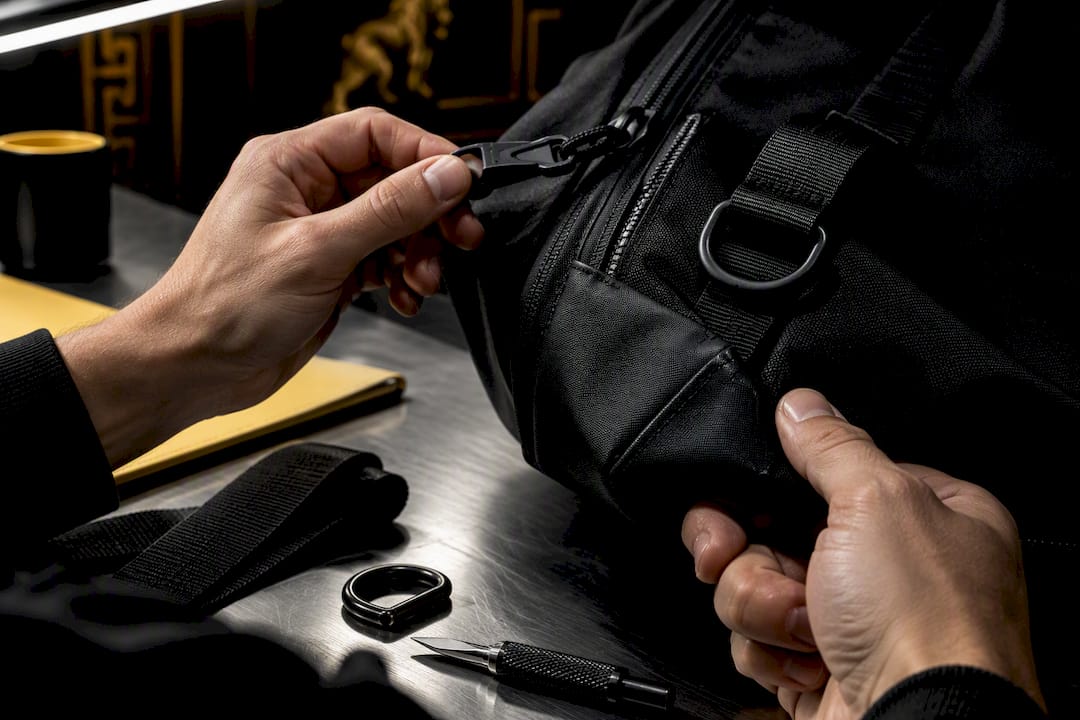
4. Check the material against its actual job. Denier ratings measure thread thickness, and higher numbers generally mean tougher fabric. A 500D panel is fine for a lightweight sling. A daypack that is getting thrown around a gym locker room wants 1000D or ballistic nylon. CORDURA® shows up constantly in urban-use bags because it resists abrasion without adding much weight.
5. Map price to purpose before you decide if a bag is expensive or cheap. A budget bag ($20 to $50) is fine for a low-stakes sling you will replace in a year. Mid-range ($50 to $120) is where YKK hardware and real CORDURA® start showing up consistently. Premium ($120 and up) should buy you reinforced seams, better warranty terms, and materials that visibly outlast the mid tier.
6. Know your red flags. Zipper pulls with no brand stamp, straps sewn directly into thin fabric with no reinforcement, and a "water-resistant" claim with no explanation of coating or seam construction are all signs the bag was built to look right in a photo, not to survive a season.
Pro Tip: Before buying anything with a limited-drop label, decide honestly whether you want a daily driver or a collectible. If it is a daily driver, the hardware checklist above matters more than the drop number. If it is a collectible, original tags and unworn condition matter more than anything else.
Which Bag Silhouette Fits Your Streetwear Look?
Every silhouette solves a different problem, and knowing which one you actually need saves you from buying a bag that looks right on the rack and wrong on your body.
Waist and belt bags live or die on the strap. Look for a buckle that adjusts smoothly without slipping mid-wear, and check whether the bag sits front, back, or cross-body, since that changes both the silhouette and how easily someone can grab it in a crowd. Multiple entry points are convenient for quick access but can be a security tradeoff if you are carrying cash or cards.
Slings and crossbody bags depend on orientation. Some are built to sit high on the chest for a compact look, others ride lower at the hip for easier access. Pocket placement matters more here than on any other silhouette, since a sling with one main compartment and no organization means you are digging for your keys at the worst moment. The strap padding is not optional if you are wearing it daily. A thin strap digging into your shoulder gets old fast.
Shoulder bags are about drop length and closure. A longer drop reads more relaxed, a short drop reads sharper and more structured. Zip closures protect your stuff better; magnetic snaps and flap closures look cleaner but offer less security in a crowded space. This is also the silhouette where logo placement does the most visual work, so decide whether you want a statement mark or a subtle one before you commit.
Backpacks and daypacks separate themselves on laptop protection and compartment layout. A dedicated padded sleeve, separate from the main compartment, is the single biggest indicator of a bag built for actual work and travel rather than just looks. Back panel padding and breathable mesh matter if you are wearing it for more than a 20-minute commute.
Totes are the trickiest to make read as streetwear rather than errand-running gear. Strap strength matters more here since totes carry weight differently than a backpack does, spread across one or two points instead of your back. Interior organization, even a single zip pocket, is what separates a tote that looks intentional from one that looks borrowed from a farmer's market. Pairing a tote with technical fabric or bold branding is usually what pushes it from generic to streetwear.
What Materials and Hardware Actually Matter?
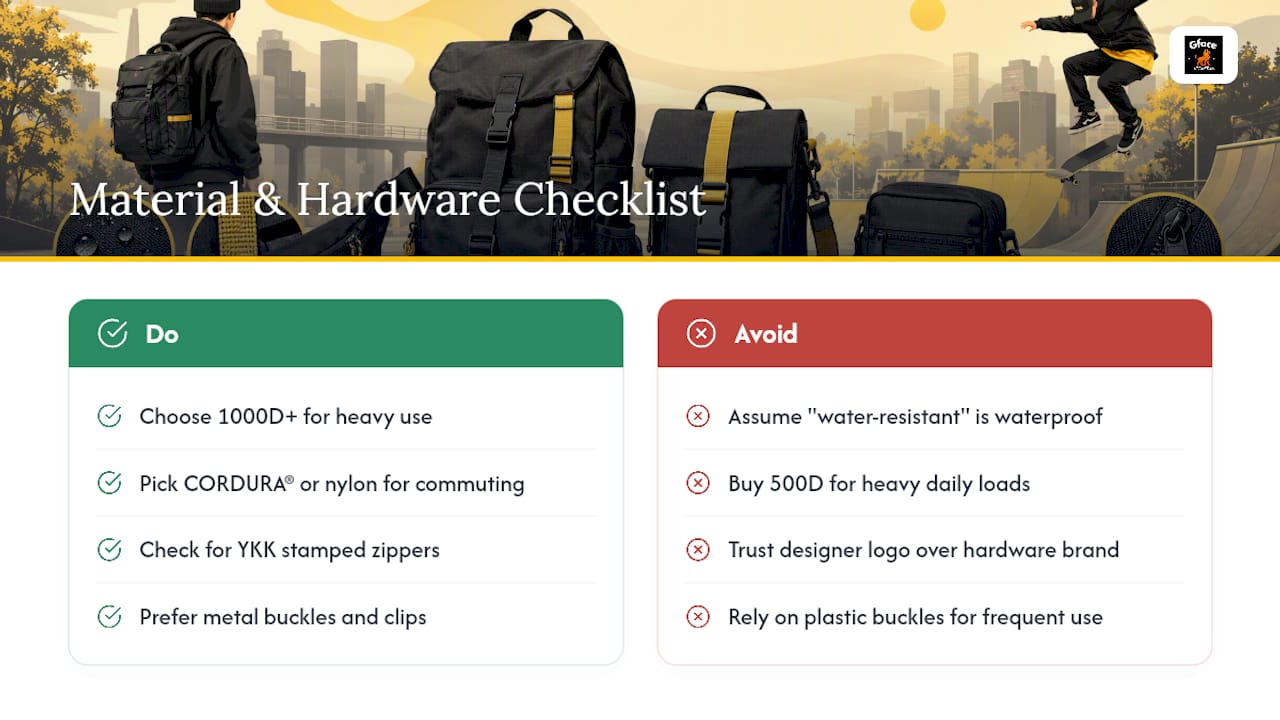
Denier rating tells you how thick the fabric thread is, and it is the single most useful spec on any bag's product page. A 500D nylon panel works fine for a lightweight sling that is not carrying much weight. Step up to 1000D or true ballistic nylon for anything getting thrown in a gym bag, dragged across a subway floor, or carrying a laptop daily. Bags built with durable technical fabric alongside YKK zippers simply outlast cheaper fashion bags, where the zipper pull or strap seam is usually the first thing to fail.
CORDURA® shows up across urban-use bags for a straightforward reason: it resists abrasion and tearing without the weight penalty that comes with pure canvas or leather. It is not a magic fabric, it is a durable one, and that is exactly why sellers highlight it as a selling point on product pages for bags meant to survive a commute.
Zipper and buckle quality is easier to check than most shoppers realize. Flip the zipper pull over and look for a stamped brand mark. YKK is the name to know here, and its presence on a $40 sling is a better sign than a designer logo on the outside. Metal buckles and clips generally outlast plastic ones, especially on waist bags that get buckled and unbuckled dozens of times a week.
Water resistance and waterproofing are not the same claim. A water-resistant coating sheds light rain and quick splashes but will eventually let moisture through at the seams. A genuinely waterproof bag uses welded or taped seams, which is a more expensive construction method and usually gets called out explicitly on the product page. If a listing just says "water-resistant" with no detail on seam construction, assume it means light rain protection only.
Fabric choice also drives weight and upkeep. Nylon and CORDURA® are lighter and wipe clean in seconds. Canvas has more visual texture but picks up stains more easily. Leather trim adds a premium look but needs conditioning to avoid cracking, which matters if you are pairing a bag with a long tshirt dress or a denim jacket where the leather trim is doing visible styling work.
How Do You Style Streetwear Bags With Your Outfit?
The bag is not an accessory bolted onto an outfit, it is doing structural work in how the whole look reads. Get the pairing wrong and even a great bag looks like an afterthought.
A waist bag worn cross-body over a hoodie or an oversized tee reads casual and intentional at once, especially in a neutral tone that does not compete with a graphic print. A sling works well layered over a puffer jacket in colder months, since the strap sits naturally across the chest without disrupting the jacket's shape, a pairing that shows up constantly in streetwear styling coverage. A daypack pairs cleanest with a jogging suit or track pants, where the utilitarian shape matches the rest of the outfit instead of fighting it. A shoulder bag or tote does the most work with a long tshirt dress or an oversized silhouette, adding a structured line against loose fabric.
Color and texture decisions come down to one rule: pick one loud element per outfit. If your sneakers or hoodie are already carrying bold color or a big graphic, keep the bag muted. If the rest of the fit is neutral, a bag in a statement color or a bold Greek Key style print becomes the focal point instead of clutter.
- Mix leather trim with denim for contrast, not with another leather piece.
- Pair nylon and CORDURA® bags with jersey or track fabric for a consistent, technical feel.
- Keep logo size proportional to bag size, a small bag with an oversized logo reads cheap regardless of the actual build quality.
- Size the bag to your frame: smaller slings and waist bags on shorter frames, larger totes and backpacks on taller frames, to keep proportions balanced.
Pro Tip: If you are building an outfit around a specific piece, like a lion-print streetwear top, let the bag stay in the background tonally and let the graphic do the talking. Two competing focal points is the fastest way to make a good outfit look busy.
How Do You Care for Streetwear Bags?
- Spot clean nylon and CORDURA® with a soft brush, mild soap, and water, working in small circles rather than scrubbing hard, then air dry away from direct heat.
- Wipe canvas with a barely damp cloth for surface dirt, and treat any stains immediately since canvas holds pigment longer than treated synthetics.
- Condition leather trim every few months with a proper leather conditioner, never a household cleaner, to stop cracking at fold points.
- Re-stitch loose seams yourself with a heavy-duty needle and thread if it is a single small section; send anything involving the strap attachment point or a zipper replacement to a professional.
- Store bags flat or lightly stuffed during off-season months, away from direct sunlight, which fades both dye and printed graphics over time.
- Keep original tags and packaging if a bag is part of a limited drop, since humidity control and original tags materially affect resale value on collectible pieces down the line.
Victor's Picks From GfaceGear's Bag Lineup
The picks below come down to one filter: does the silhouette match a real use case, and does the build hold up past the first month. Hype alone does not clear that bar.
A bag category covers three lanes worth knowing:
- Crossbody bags built for the minimal-carry crowd who want a phone, cards, and keys without a bulky waist bag.
- Daypacks sized for the commute-and-gym rotation, where the point is fitting a laptop and a change of shoes without the bag looking oversized.
- Totes that pair naturally with long tshirt dresses and oversized tees for a look that reads intentional rather than thrown together.
None of these claims a spec sheet this article has not already covered, but each one is built to match the silhouette logic laid out above: pick the shape that fits your day, then check the hardware and fabric before you commit.
A monthly membership plan offers early access to limited bag drops before they go public, plus sitewide discounts that make testing a new silhouette a lower-stakes decision. If you already know you want a lion-motif crossbody the day it drops instead of finding out it sold out overnight, that early access window is the entire point of joining.
Why Author Expertise and Brand Provenance Matter Here
A bag recommendation is only as good as the reasoning behind it, and that reasoning should be checkable, not just confident-sounding. Every silhouette and material claim in this guide ties back to a specific, sourced detail: denier ratings, YKK hardware, CORDURA® construction, the hype-versus-function split that defines resale behavior in streetwear. That is a deliberate choice. A bag guide built on vibes alone tells you what looks good in a photo. One built on verifiable specs tells you what survives a year of actual wear.
GfaceGear's own picks get folded into this framework for a specific reason: the brand's Brooklyn roots and ROAR identity, built around lion imagery and the Greek Key medallion, are not just aesthetic branding. They shape a product philosophy that treats limited drops as genuinely limited, not an infinite reprint disguised as scarcity. That matters if you are choosing between a hype piece and a daily driver, since knowing a drop is actually finite changes how you weigh the purchase.
Trusting a recommendation also means trusting that the person making it is not hiding the tradeoffs. This guide flags where hype outruns function, where a "water-resistant" claim is weaker than it sounds, and where a logo does not equal build quality. That transparency is worth more than a five-star badge with no explanation behind it.
Which Brands Define Streetwear Bag Culture Right Now?
Streetwear bag culture runs on a handful of recognizable signature moves, even without naming every label chasing them. The waist bag, popularized by hype-driven drop culture, remains the silhouette most associated with instant resale value and scarcity marketing, where a single drop listing can command a markup purely on release timing. That is the collectible end of the spectrum.
On the functional end, technical outdoor and utility brands built their reputations on daypacks and sling bags using ballistic nylon and heavy-duty buckles long before streetwear adopted those same specs. Their influence shows up now in nearly every daypack marketed toward commuters, padded laptop sleeves, YKK zippers, and molded back panels that trace directly back to technical gear design rather than fashion design.
GfaceGear sits closer to a third lane: heritage-driven streetwear, where the bag is an extension of an identity, in this case the lion and Greek Key motif tied to Boricua heritage and Brooklyn street culture. Instead of chasing scarcity for its own sake, the brand's limited swimwear and apparel drops apply the same finite-release model to bags and accessories, giving buyers a reason beyond hype to want a piece before it is gone.
Across all three lanes, the signature model matters less than the underlying construction. A waist bag from a hype label and a waist bag from a heritage brand can share the exact same denier rating and zipper hardware. What differs is the story stitched into the design.
What Features Make a Streetwear Bag More Functional?
Anti-theft construction is the feature category most shoppers skip past and later regret ignoring. Hidden back-panel pockets on daypacks let you keep a wallet against your body in crowded transit, out of reach from anyone bumping into you on purpose. Lockable zipper pulls, where two pulls can be clipped together, add a second layer of friction that is often enough to deter a casual grab.
Tech compartments have become close to standard on anything marketed as a commuter bag. A dedicated padded laptop sleeve, separate from the main storage area, protects a 13-inch laptop from the everyday bumps of a backpack getting set down, kicked, or dropped. Cable routing ports, small holes that let a charging cable run from an internal battery pack to an external device, are a smaller but genuinely useful detail for anyone who charges a phone on the move.
RFID-blocking pockets show up on some waist bags and slings aimed at commuters carrying transit cards or credit cards, adding a layer of protection against skimming in crowded stations. Compression straps on daypacks let you cinch down the bag's profile when it is not fully loaded, which keeps the silhouette tighter and more intentional-looking rather than baggy and half-empty.
None of these features replace the fundamentals covered earlier, capacity, hardware, and material quality. They are additions that separate a genuinely thoughtful design from one that just looks the part.
Silhouette Beats Hype: Victor's Take
The conventional wisdom says buy the drop everyone is talking about. I'd push back on that. A bag you actually use every day for two years beats a hype piece that sits in a closet after the resale hype cools off, and the data on scarcity-driven pricing backs that split up clearly: buyers are often paying for rarity, not for a better bag.
That does not mean limited drops are a trap. It means you should know which game you are playing before you buy. If you want a collectible, buy for scarcity and protect the tags. If you want a daily driver, buy for denier rating and zipper hardware, and let the design speak for itself. A certain streetwear brand's ROAR identity, lion imagery, Greek Key medallion, and limited-run mentality work because they apply scarcity to genuinely wearable pieces instead of treating scarcity as the entire product.
— Victor
Shop Streetwear Bags Built for Daily Wear
Most streetwear bag shopping means bouncing between hype drops chasing resale value and generic bags with no real identity behind them. GfaceGear skips both problems by applying the same limited-run model it uses for its lion sneakers and Boricua swimwear drops to bags built for actual daily use, not just a resale flip.

The lineup spans crossbody bags for minimal carry, daypacks for the commute, and totes that pair naturally with long tshirt dresses and graphic tees, all featuring similar lion imagery and Greek Key medallion motifs. If you want first access before a limited bag drop sells out, a membership costs $9.99 per month and includes early access plus sitewide discounts on everything in the shop. Browse the current bag drops now, or join the membership to lock in early access the next time a limited style goes live.
Sources
This guide draws on current market and trend coverage rather than a single source. StockX's product and trend notes inform the materials and hardware sections. SupremeCommunity's resale and hype-versus-function analysis shapes the buying-criteria and perspective sections. ModeSens product detail pages back the CORDURA® and styling claims. Men's Health's tested sling bag roundup informed the shortlist and "best for" labeling approach used throughout this article.
- StockX — Supreme waist bag listing and trend notes
- SupremeCommunity — note on Supreme waist bag materials and resale behavior
- ModeSens — Supreme logo-patch backpack product details
FAQ
What Are the Best Streetwear Bags Right Now?
The best streetwear bags in 2026 are waist bags and slings for hands-free daily carry, tech daypacks for commuting, and shoulder bags or totes for statement looks. The right pick depends on your daily use, not the brand name on the front, and durable CORDURA® nylon construction is showing up across most trending silhouettes this year.
What Are Some Popular Streetwear Bag Brands?
Streetwear bag culture splits between hype labels known for scarcity-driven drops, technical outdoor brands known for durable daypacks, and heritage streetwear brands like GfaceGear that build limited runs around a specific identity, in this case lion imagery and Greek Key motifs tied to Brooklyn and Boricua heritage. Each lane serves a different buyer, collector, commuter, or someone shopping for a look with meaning behind it.
What Bags Are Gen Z Wearing Right Now?
Gen Z shoppers are leaning heavily into waist bags and slings worn cross-body, paired with oversized tees, hoodies, and puffer jackets for a hands-free, layered look. Tech daypacks with padded laptop sleeves are also common among Gen Z buyers who need the bag to double as commuter gear, not just a style piece.
What Should I Look for in an Affordable Streetwear Bag?
Even at a budget price point, check for a stamped YKK zipper pull, a reinforced strap attachment point, and a denier rating appropriate to how hard you plan to use the bag. Skipping the hardware check is the most common reason an affordable bag fails within a few months.
How Much Does a GfaceGear Bag Cost?
Current bag prices are not published on a fixed list and are best checked directly on the GfaceGear shop page, where pricing varies by style and current drop. Members of The Pride Membership, priced at $9.99 per month, get sitewide discounts that apply to bags along with the rest of the catalog.