
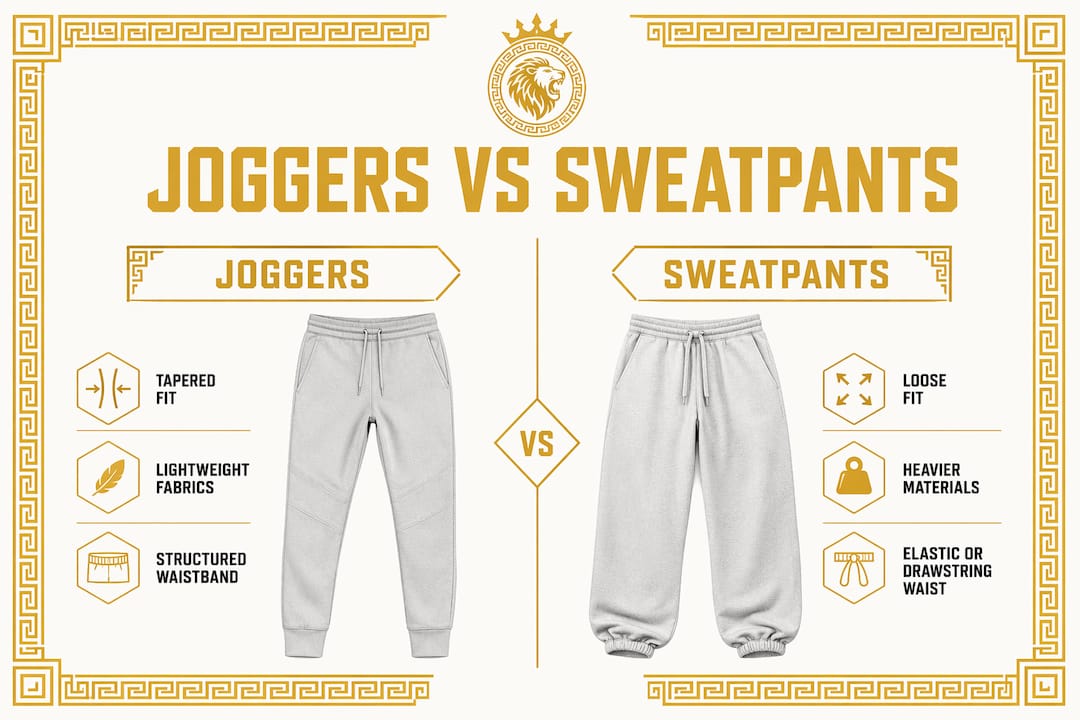
Joggers and sweatpants are not the same thing, even though people treat them like they are. The core difference comes down to three things: silhouette, fabric weight, and where you're actually going. Joggers have a tapered leg with a structured elastic cuff at the ankle, creating a cleaner, more intentional look suited for casual outings, errands, and light workouts. Sweatpants run straight or slightly baggy through the leg with an open or loosely elasticized hem, built for warmth and comfort at home or during recovery. Here is the short version:
- Silhouette: Joggers taper from hip to ankle with a defined cuff; sweatpants stay wide through the leg with a relaxed, open bottom.
- Fabric: Joggers use lighter technical materials (200–280 GSM) for breathability; sweatpants use heavier fleece or cotton blends (280–400+ GSM) for insulation.
- Style intent: Joggers read as polished casual and work in public settings; sweatpants signal comfort-first and belong at home or on low-key days.
- Function: Joggers support movement and versatility; sweatpants prioritize softness and warmth.
- Best use cases: Joggers for coffee runs, travel, gym transitions; sweatpants for lounging, cold-weather recovery, and downtime.
Table of Contents
- How joggers and sweatpants actually differ in fit and style
- What the fabrics actually tell you about each garment
- Functionality and features that set them apart
- When joggers are the right call
- When sweatpants make more sense
- How to choose the right fit for your body and lifestyle
- Styling joggers and sweatpants for the best look
- Gfacegear brings the streetwear edge your jogger fits deserve
- Key Takeaways
- FAQ
How joggers and sweatpants actually differ in fit and style
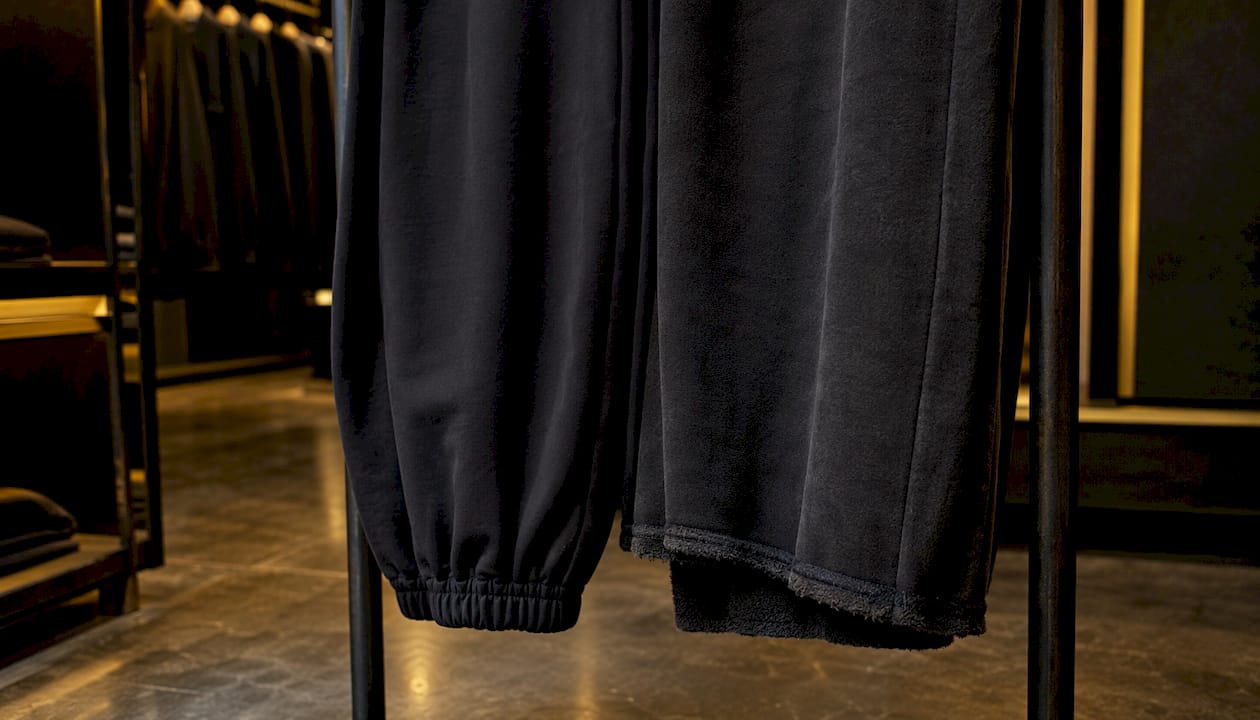
The fit difference is visible the moment you put them on. Joggers taper from the hip down to a fitted ankle cuff, which creates a streamlined silhouette that makes your footwear visible and your overall look intentional. Sweatpants keep a straight or slightly baggy leg that pools around the ankle, which is comfortable but reads as decidedly casual.
- Joggers let you show off sneakers or slides; sweatpants tend to swallow them.
- The cuffed ankle on joggers prevents fabric from bunching during movement, keeping the look clean whether you're sitting or walking.
- Sweatpants offer more room through the thigh and calf, which some people genuinely prefer for lounging or layering over thermal base layers in winter.
- For public settings, joggers carry a polished, intentional aesthetic that sweatpants rarely achieve without significant styling effort.
Men over 40 tend to do best with a relaxed-taper silhouette: enough room through the thigh to feel comfortable, but still narrowing at the ankle for a refined look. Skinny-fit joggers can feel restrictive and read younger; straight sweatpants can look sloppy. The relaxed-taper hits the sweet spot between comfort and style for most body types.
What the fabrics actually tell you about each garment
Fabric weight is the clearest technical separator between these two garments. Joggers typically use lightweight materials in the 200–280 GSM range, including polyester blends, moisture-wicking cotton blends, and spandex for four-way stretch. Sweatpants go heavier at 280–400+ GSM, relying on thick cotton fleece, French terry, or cotton/polyester blends that trap warmth.
- Jogger fabrics often include quick-dry and anti-odor treatments, making them practical for active wear.
- Spandex content in joggers (usually 5–15%) gives them recovery stretch, so they hold their shape after repeated wear.
- French terry sweatpants have a looped interior that feels soft against skin while providing real insulation.
- Fleece-lined sweatpants are the warmest option and genuinely outperform joggers in cold weather.
| Feature | Joggers | Sweatpants |
|---|---|---|
| Fabric weight | 200–280 GSM | 280–400+ GSM |
| Common materials | Polyester blend, cotton/spandex | Cotton fleece, French terry |
| Stretch | Four-way, high recovery | Moderate, comfort-focused |
| Breathability | High | Low to moderate |
| Best season | Year-round, warm to mild | Fall, winter, cold recovery |
| Warmth | Light to moderate | Moderate to high |
One thing worth knowing: jogger pants almost invariably have an elastic waistband, while sweatpants sometimes skip it for a flat-front or drawstring-only design. That structural difference affects how each garment sits on the body throughout the day.
Functionality and features that set them apart
Joggers are built with movement in mind: gusset crotches for unrestricted stride, secure zip or slip pockets that stay put during activity, and elastic cuffs that don't ride up. These aren't decorative choices. They solve real problems for people who are actually moving around.
Sweatpants take the opposite approach. Soft brushed interiors, loose waistbands, and an unstructured design make them feel like wearing a blanket. That's the point. There's no gusset, no technical pocket system, no cuff engineering. Comfort is the only brief.
- Joggers prevent sagging and bunching during dynamic movement, which matters for gym transitions or long travel days.
- Sweatpants offer unrestricted ease of movement but tend to look disheveled after a few hours of wear.
- Track pants occupy a third lane: straight-leg, open hem, often with ankle zips, built for athletic warm-ups rather than streetwear or lounging.
- Premium joggers include wide elastic waistbands with a drawstring, which distribute pressure evenly and stay comfortable all day. Thin elastic-only waistbands, common in budget versions, dig in and create discomfort.
When joggers are the right call
Joggers' tapered fit with elastic cuffs enables versatile styling from workouts to casual social settings. That versatility is their main selling point.
- Coffee runs, errands, and casual meetups where you want to look like you tried without actually trying hard.
- Travel days: the structure keeps you looking presentable at the airport while the stretch keeps you comfortable on a six-hour flight.
- Gym-to-street transitions where changing isn't an option or isn't worth the effort.
- Creative or relaxed professional settings where a clean casual look is acceptable.
- Any occasion where you're pairing with fashionable sneakers and want the footwear to actually show.
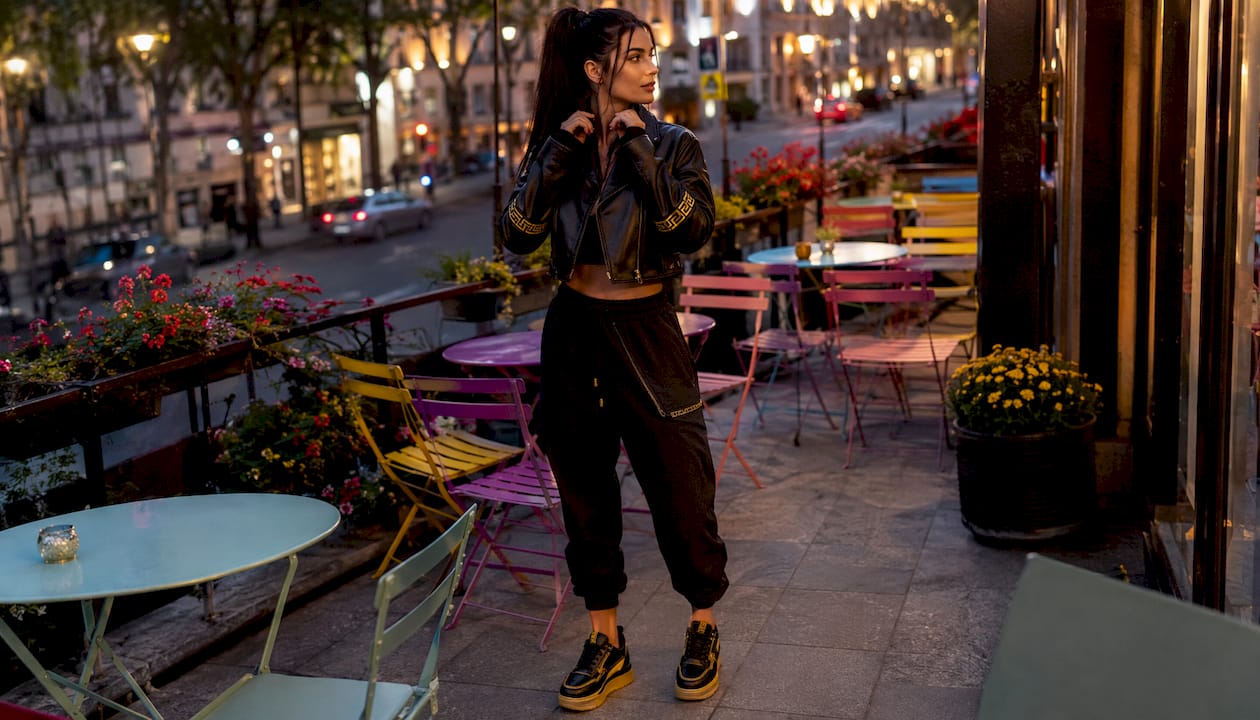
The key is fit. A well-fitted jogger with the cuff sitting just above the shoe line reads as intentional streetwear. A poorly fitted one that bunches at the ankle reads as a sweatpant that didn't quite make it.
When sweatpants make more sense
Sweatpants are ideal for lounging, recovery, and cold weather because the heavier fabric and relaxed fit do exactly what you need in those situations.
- Post-workout recovery at home, when your legs need to breathe and you're not going anywhere.
- Cold-weather days where insulation matters more than silhouette.
- Sleepwear or lazy Sundays where comfort is the only metric.
- Casual errands in winter when you're layering a heavy coat anyway and the pants won't be the focal point.
- Any situation where you're prioritizing coziness over how you look.
Sweatpants are less suited for fashion-forward streetwear scenarios. Wearing them to a casual dinner or a social outing requires significant styling effort to avoid looking underdressed, and even then, joggers would have been the easier choice.
How to choose the right fit for your body and lifestyle
Start with measurements. Take your natural waist, hip, and inseam, then compare them to the brand's size chart. The most versatile jogger silhouette is the relaxed-taper: roomy at the thigh, narrowing at the ankle, with a wide elastic waistband plus drawstring for all-day comfort.
Pro Tip: The inseam determines where the cuff sits. A standard 29–30" inseam places the cuff at the ankle for most people between 5'7" and 5'11". Go shorter for a cropped modern look; go longer if you're 6'0"+ and want the cuff to sit cleanly without pulling up.
- For a sleek, modern look: choose slim-taper joggers with a snug cuff and fitted waist.
- For all-day comfort and travel: relaxed-taper with a wide elastic waistband is the sweet spot.
- For maximum warmth and downtime: go heavyweight sweatpants in French terry or fleece.
- Avoid overly tight joggers if you have larger thighs; the leg taper can feel restrictive and look strained.
- For sweatpants, prioritize heavier fleece (300+ GSM) for cold climates and lighter cotton blends for indoor use in milder weather.
One common mistake: buying lounge pants and calling them joggers. True joggers have a structured cuff and a quality waistband. If the ankle hem is just a loose tube of fabric, it's a lounge pant, and it will look like one.
For minimalist streetwear outfits, the fit of the jogger does most of the work. Get the ankle cuff right and the rest of the outfit almost assembles itself.
Styling joggers and sweatpants for the best look
Joggers reward a little thought in the rest of the outfit. The cuffed ankle draws the eye down, so footwear matters.
- Pair slim-taper joggers with a fitted tee or structured hoodie for a clean, balanced silhouette.
- A blazer over a simple tee with tapered joggers works for smart-casual settings where you need to look put together without wearing trousers.
- Slides or low-profile sneakers complement the cuffed ankle without competing with it.
- For a streetwear-forward look, layer a premium graphic tee under an open overshirt with tapered joggers and bold sneakers.
Sweatpants work best when you lean into the comfort aesthetic rather than fighting it.
- Oversized hoodies, loose tees, and chunky slides are the natural companions.
- Keep footwear simple: slides, low-top sneakers, or clean white trainers. Avoid anything formal.
- Avoid mixing baggy sweatpants with a fitted top; the proportions read off. Match the relaxed energy throughout.
For mature wearers, quiet luxury streetwear principles apply directly to jogger styling: neutral tones, clean lines, and quality fabrics over logos. A relaxed-taper jogger in a muted color with a well-fitted crewneck reads sophisticated without trying too hard.
Gfacegear's aesthetic, built around lion imagery, Greek Key accents, and bold gold-on-black design, pairs naturally with tapered joggers. The brand's streetwear pieces are designed to command presence, and a clean jogger silhouette gives those statement pieces the right canvas.
Gfacegear brings the streetwear edge your jogger fits deserve
If you've figured out the fit, the next question is what you're pairing it with. Gfacegear is a Brooklyn-born streetwear brand built around the ROAR identity: lion imagery, Greek Key medallion designs, and a visual language that's equal parts bold and refined. The pieces are made for people who want their casual wear to say something.

The brand's print-on-demand model means limited-edition drops that don't stick around. Whether you're building a jogger outfit around a graphic tee, a premium hoodie, or a statement overshirt, Gfacegear's lineup gives you the kind of top layer that makes a tapered jogger look like a deliberate choice rather than a default. The Gfacegear lookbook shows exactly how the pieces come together in full streetwear fits. When you're ready to put on your Gameface, start at gfacegear.com.
Key Takeaways
Joggers are the more versatile, public-appropriate choice; sweatpants win on warmth and home comfort, and the right fit depends on your inseam, body type, and where you're actually going.
| Point | Details |
|---|---|
| Silhouette is the key difference | Joggers taper to a cuffed ankle; sweatpants stay straight or baggy through the leg. |
| Fabric weight determines function | Joggers run 200–280 GSM for breathability; sweatpants use 280–400+ GSM for warmth. |
| Inseam placement matters | A 29–30" inseam places the cuff at the ankle for most people between 5'7" and 5'11". |
| Styling follows the silhouette | Joggers pair with fitted tops and statement sneakers; sweatpants suit oversized, comfort-first layering. |
| Gfacegear fits the jogger aesthetic | Gfacegear's bold streetwear pieces are designed to pair with tapered jogger fits for a complete ROAR-worthy look. |
FAQ
Are joggers the same as sweatpants?
No. Joggers have a tapered leg with a structured elastic cuff at the ankle, while sweatpants have a relaxed, straight leg with an open or loosely elasticized hem. The fit, fabric weight, and intended use are all different.
What do Americans mean by joggers?
In the US, joggers refer to tapered casual pants with an elastic or ribbed cuff at the ankle, typically made from lightweight cotton blends or performance fabrics. They sit at the intersection of athleisure and streetwear, suitable for everything from gym transitions to casual outings.
Are joggers still in style for 2026?
Yes. The tapered jogger remains a streetwear staple, particularly in relaxed-taper silhouettes that balance comfort and a clean look. Slim-fit versions have softened in popularity, but well-fitted joggers with quality ankle cuffs are firmly in the mainstream casual wardrobe.
Should men over 40 wear joggers?
Absolutely, with the right fit. A relaxed-taper jogger offers enough room through the thigh to feel comfortable while still narrowing at the ankle for a refined silhouette. Avoid overly slim fits and opt for neutral tones or subtle designs for a polished casual look.
What is the best fabric for joggers vs sweatpants?
For joggers, a cotton/polyester/spandex blend in the 200–280 GSM range gives the best balance of softness, stretch, and breathability. For sweatpants, cotton fleece or French terry at 280–400+ GSM delivers the warmth and softness the garment is designed for.