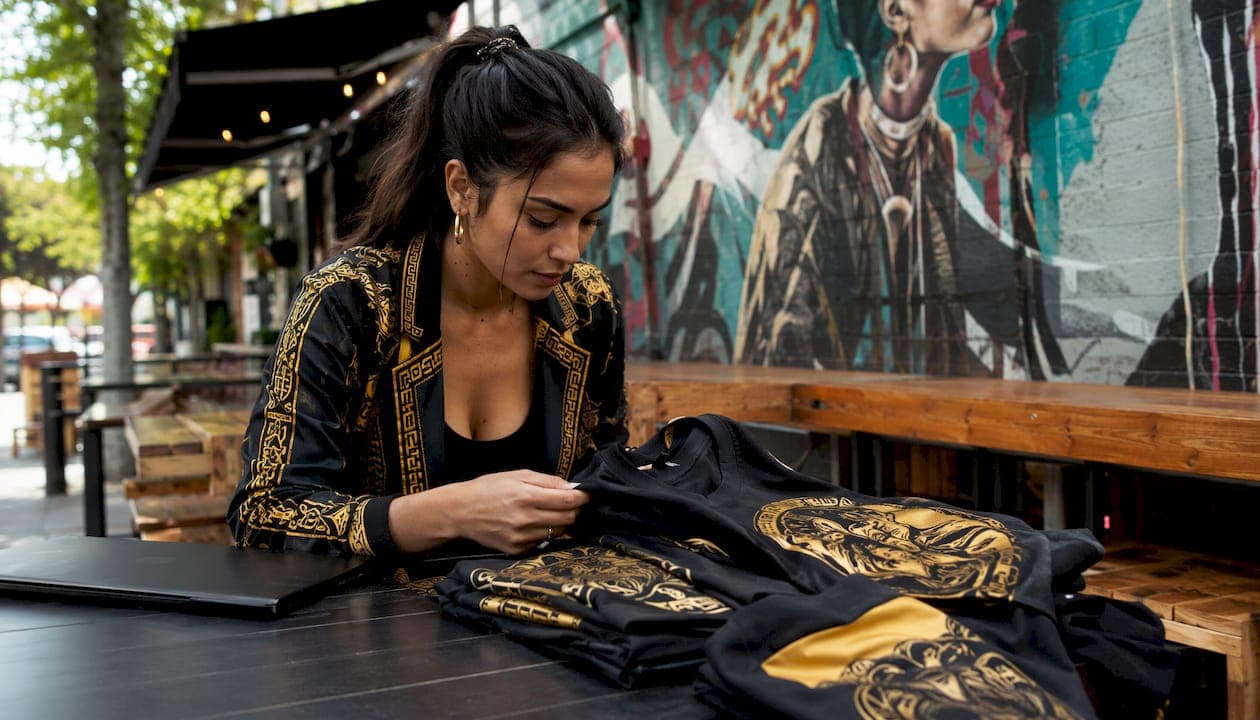
Which print-on-demand companies have the best quality in the US?
Printful leads on raw print quality, Printify wins on catalog depth and pricing flexibility, and the right choice between them depends almost entirely on your margin structure and how much consistency your brand demands. For US sellers in 2026, these four providers cover the realistic range of what's available.
| Provider | Quality Reputation | Product Range | Platform Integrations | Best For | Rating |
|---|---|---|---|---|---|
| Printify | Strong, partner-dependent | 1,300+ products | Shopify, Etsy, eBay, WooCommerce | Catalog depth and pricing flexibility | 4.7★ |
| Printful | Industry-leading DTG and embroidery | — | — | Premium brands needing consistency | 3.9★ (280 reviews) |
| TeePublic | Moderate, marketplace-dependent | T-shirts, hats, stickers, kids apparel | Marketplace only | Pop culture designs and promotions | 2.3★ (119 reviews) |
| Prodigi USA Inc | Good, eco-focused | 500,000+ customizable products | Shopify, Etsy, WooCommerce, Squarespace, Wix, BigCommerce | Sustainability and product variety | 3.4★ (5 reviews) |
Printify's network model routes orders to vetted regional print partners, which keeps fulfillment costs around $9.64 per T-shirt before shipping and taxes. That pricing flexibility is hard to beat for sellers building out a broad catalog. The tradeoff is partner-to-partner variation: the same design can look slightly different depending on which facility prints it.

How do these providers compare on quality and key factors?
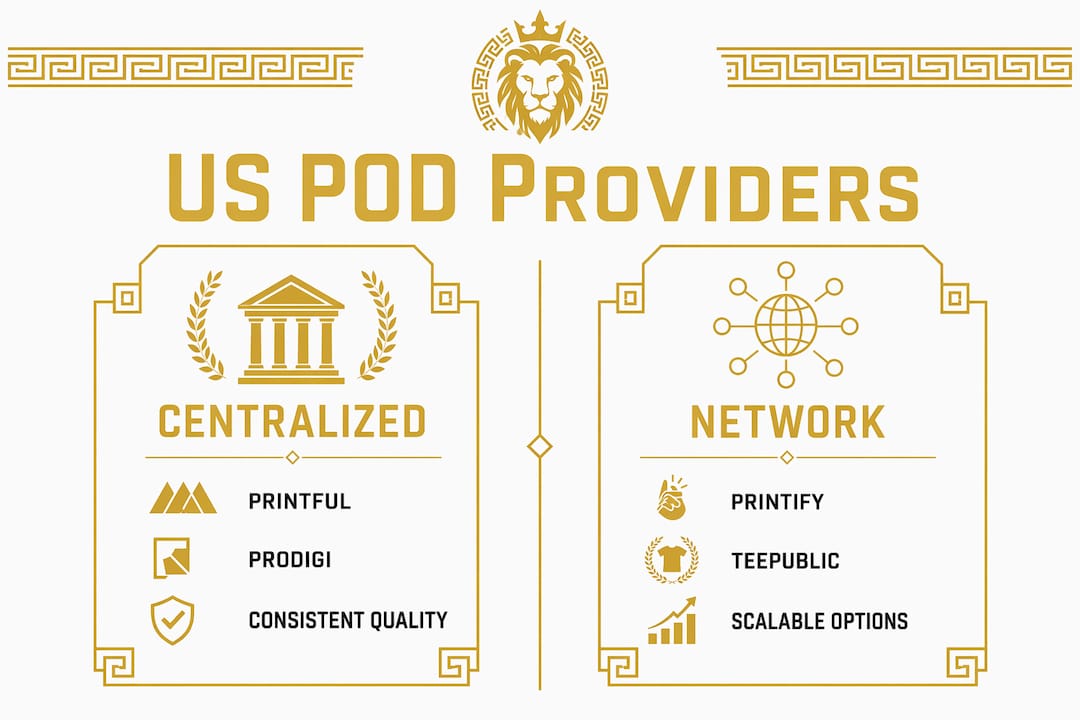
The single biggest structural difference in 2026 is whether a provider uses centralized in-house production or a decentralized partner network. That choice shapes everything from color consistency to how fast a defect gets caught.
Printful runs its own facilities and applies a three-step quality check on every order: graphics assessment, mid-print inspection, and a final check before packaging. Its reshipment rate sits at 0.19%, the lowest in the category by a wide margin. DTG color accuracy on core blanks like Bella+Canvas 3001 comes in within 2 Delta-E of the source file, a difference the average customer cannot detect without holding both side by side. Embroidery is arguably even stronger: Printful runs its own machines and matches thread to Madeira Polyneon standards, eliminating the batch variation you see when embroidery is brokered to third-party shops. The honest catch is cost. Printful's base prices run 15–35% above Printify on matching SKUs, so the premium only pays off if your retail price and repeat-purchase rate support it.
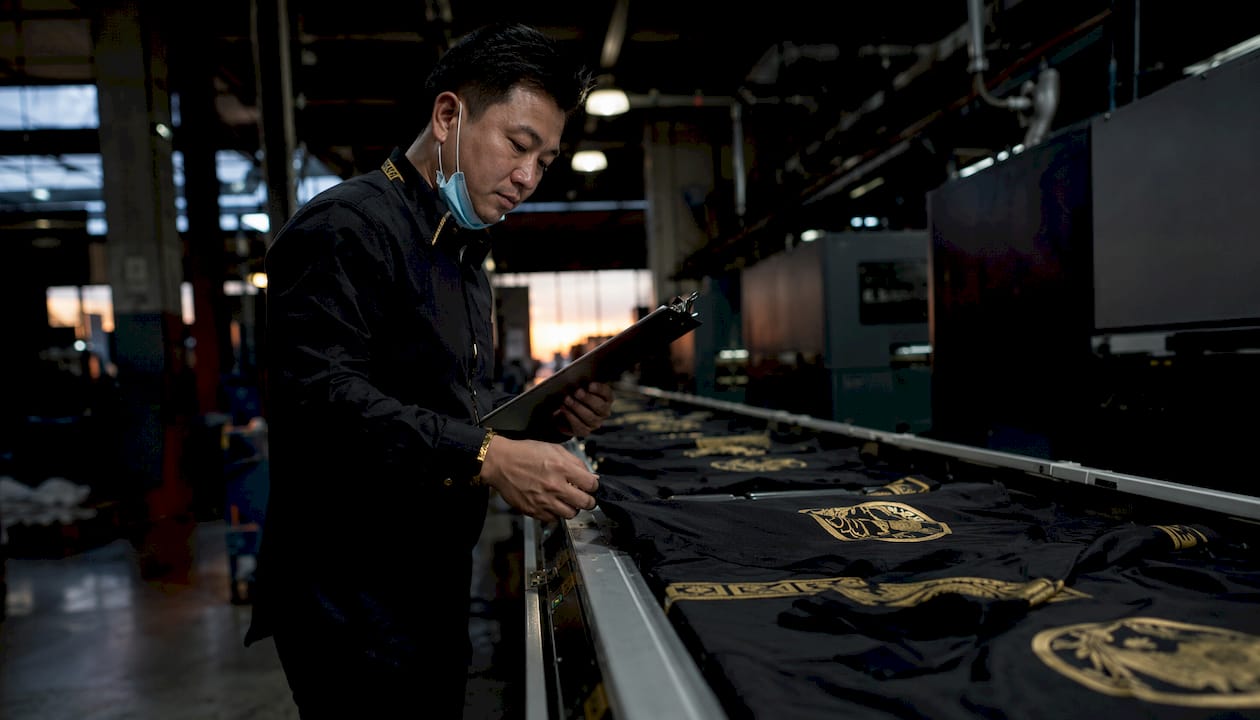
Printify's strength is scale and choice. Over 10 million sellers use the platform, and the catalog spans 1,300+ products with production partners across North America, Europe, and beyond. Printify Premium cuts production costs by up to 20%, which matters for sellers competing on Etsy or running high-volume drops. Quality is generally solid, but because multiple print partners fulfill the same SKU, stitch density and color output can vary between batches. Sellers who run limited-edition apparel drops, like graphic tees or custom jerseys, often find Printify's pricing model more workable than Printful's for initial runs.
Prodigi USA Inc stands out for its sustainability positioning and sheer product breadth. With over 500,000 customizable products and local US printing paired with global dropshipping, it suits sellers who want wall art, tech cases, and apparel under one roof. White-label packaging is included. The review base is thin, so sellers should order samples before committing to it for core products.
TeePublic operates as a marketplace rather than a fulfillment platform, which limits how much control sellers have over production quality. It works well for pop culture designs where frequent sitewide promotions (up to 35% off) drive volume, but it is not the right fit for brands that need tight quality control or custom branding.
For premium streetwear categories like jerseys, hoodies, and limited-edition swimwear, experts recommend a hybrid approach: Printify for catalog depth and lower-cost fulfillment, Printful for hero products where consistent quality directly affects brand perception.
How to choose the best print-on-demand company for your business in 2026
The decision framework comes down to five practical factors, and the order matters.
- Product type compatibility. DTG works best on 100% cotton. Sublimation suits polyester and all-over prints. Embroidery holds up better on structured items like hats. Match the print method to the product before you pick a provider.
- Fulfillment location. Routing orders to a print facility close to your customers shortens transit, reduces handling damage, and directly improves how buyers perceive quality. Providers with multi-region US networks outperform single-location operations for domestic sellers.
- Pricing and margin math. Run the full contribution margin per SKU: retail price minus base cost, shipping, processing, and expected refunds. A cheaper base cost with a higher defect rate often loses to a pricier provider with near-zero reshipping.
- Platform integrations. Shopify, Etsy, and WooCommerce are table stakes. If you sell across multiple channels, confirm the provider's integration handles inventory sync and order routing automatically.
- Community reviews. Check Reddit's r/printondemand, Trustpilot, and Etsy seller forums for recent complaints. Patterns in community feedback reveal quality drift that official ratings miss.
Pro Tip: Vet suppliers via community reviews and real user feedback before committing. Order physical samples for every new product before launch, then resample on a fixed cadence every three months and after any supplier change. Mockups cannot reveal fabric feel, stitching, or real-world color accuracy under normal lighting.
Set clear expectations on your product pages. State production times (2–5 business days is standard) separately from shipping times, and note that items are made to order. Buyers who understand the process complain far less. Keep a backup supplier mapped for every bestseller so a single printer's bad week doesn't stall your store.
Common print-on-demand quality issues and how to avoid them
Most quality failures trace back to one of three sources: file preparation, material choice, or a mismatch between the print method and the design.
- Print fading after washing. DTG prints are sensitive to pretreatment quality and fabric composition. Fading usually means the blank was undertreated or the file lacked sufficient ink density. Wash-test samples at least three times before launch.
- Alignment errors. Designs that sit off-center or too close to the neckline are almost always a placement issue in the upload, not a printer error. Use center guides, leave at least a 1-inch safe margin from edges, and check placement across every size from XS through 3XL.
- Color inconsistencies. Your monitor is not the shirt. Colors can shift between batches, especially on dark fabrics without a proper white underbase. Design with tolerance: choose palettes that still read well if they shift slightly, and avoid super-subtle gradients that depend on perfect reproduction.
- Garment quality complaints. Cheap blanks feel stiff, shrink, and lose shape. That reflects on your brand, not the printer. Upgrading blanks is one of the fastest ways to reduce complaints on feel and fit.
- File resolution failures. Prepare files at 300 DPI minimum, in the correct color profile, sized exactly to the print template. A low-resolution file stretched to fit produces blurry output that no printer can fix.
Quality signal to watch: Return rates above 2–3% overall, or a sharp month-over-month increase in any single defect category, should trigger an investigation. Tag returns by cause (misalignment, fading, sizing, damage) to identify which part of your process needs attention.
Encourage photo reviews and post-purchase emails that ask specifically about print alignment, material feel, and fit. Customer photos reveal real-world output across orders in ways that internal sampling cannot. When a pattern appears in those photos, re-order samples and investigate with the provider before the issue compounds. For sellers exploring alternatives to the four providers above, TeePublic alternatives worth reviewing include several platforms with stronger US fulfillment networks.
Gfacegear: a different approach to print-on-demand apparel
If you've read this far, you know the POD landscape well enough to make a smart choice. But there's another route worth knowing about, especially if you want to buy from a brand that has already done the quality vetting for you.
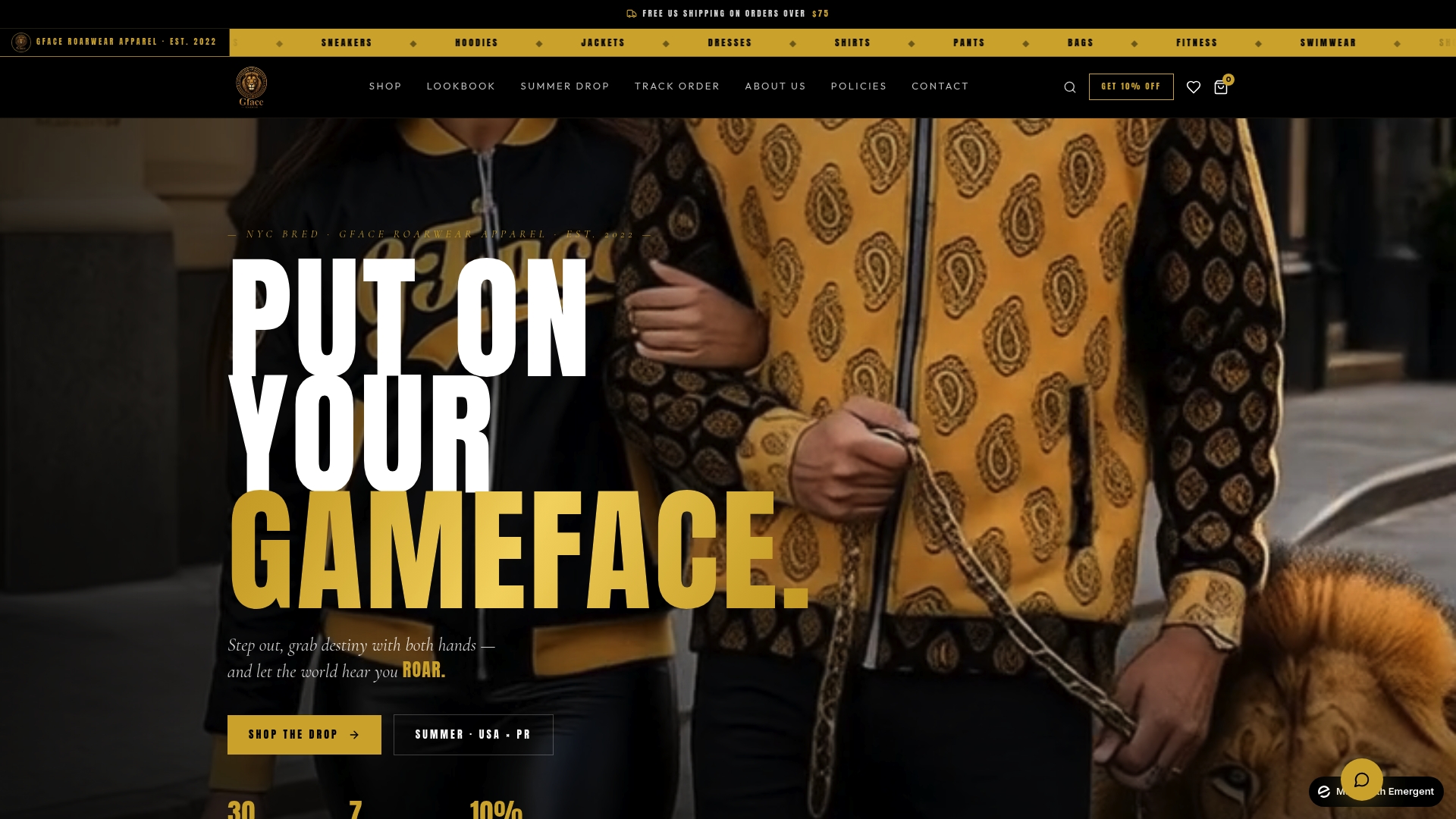
Gfacegear is a Brooklyn-born streetwear brand built on the "ROAR" identity: lion imagery, Greek Key medallion designs, and limited-edition drops that include men's tees, hoodies, jerseys, hats, and the brand's signature limited Boriqua swimwear. Every piece ships through a Shopify-powered direct-to-consumer store, with VIP membership perks and early access to new drops. Instead of building your own POD store from scratch, you can shop the collection and wear apparel where the quality decisions have already been made. For sellers who want inspiration on what a tight, identity-driven POD brand looks like in practice, the Gfacegear lookbook is worth a look.
FAQ
What print-on-demand company has the best quality?
Printful leads on print quality in 2026, with a reshipment rate of 0.19% and industry-leading DTG color accuracy. For sellers who need catalog depth at lower cost, Printify is the strongest alternative.
Is Printify or Printful better quality?
Printful produces more consistent output because it uses centralized in-house production, while Printify's quality varies by print partner. For premium apparel where consistency matters, Printful wins; for pricing flexibility and catalog breadth, Printify is the better fit.
Is print on demand still profitable in 2026?
Yes. Print on demand remains a low-risk, profitable model for sellers who focus on strong designs, quality control as a system, and realistic pricing. Margins are slimmer than bulk production, but the absence of inventory risk makes it viable for individual sellers and small brands.
What is the best print-on-demand system overall?
For most US ecommerce sellers, a hybrid setup works best: Printify for everyday catalog products and cost-sensitive SKUs, Printful for hero products and premium apparel where brand reputation depends on consistent quality.
Key Takeaways
Printful's 0.19% reshipment rate and Printify's 1,300+ product catalog define the two ends of the US print-on-demand quality spectrum in 2026, and most sellers benefit from using both.
| Point | Details |
|---|---|
| Printful leads on consistency | Its 0.19% reshipment rate and in-house DTG production make it the top choice for premium apparel. |
| Printify wins on breadth and cost | 1,300+ products and fulfillment costs around $9.64 per T-shirt give sellers the most pricing flexibility. |
| Sample before every launch | Order physical samples for every new product and resample every three months; mockups cannot reveal real-world quality. |
| File prep prevents most failures | Prepare files at 300 DPI minimum with correct color profiles; poor file setup causes the majority of print quality failures. |
| Gfacegear as a reference brand | Gfacegear's Brooklyn-born streetwear drops show what a tight, identity-driven POD brand looks like when quality decisions are made upfront. |