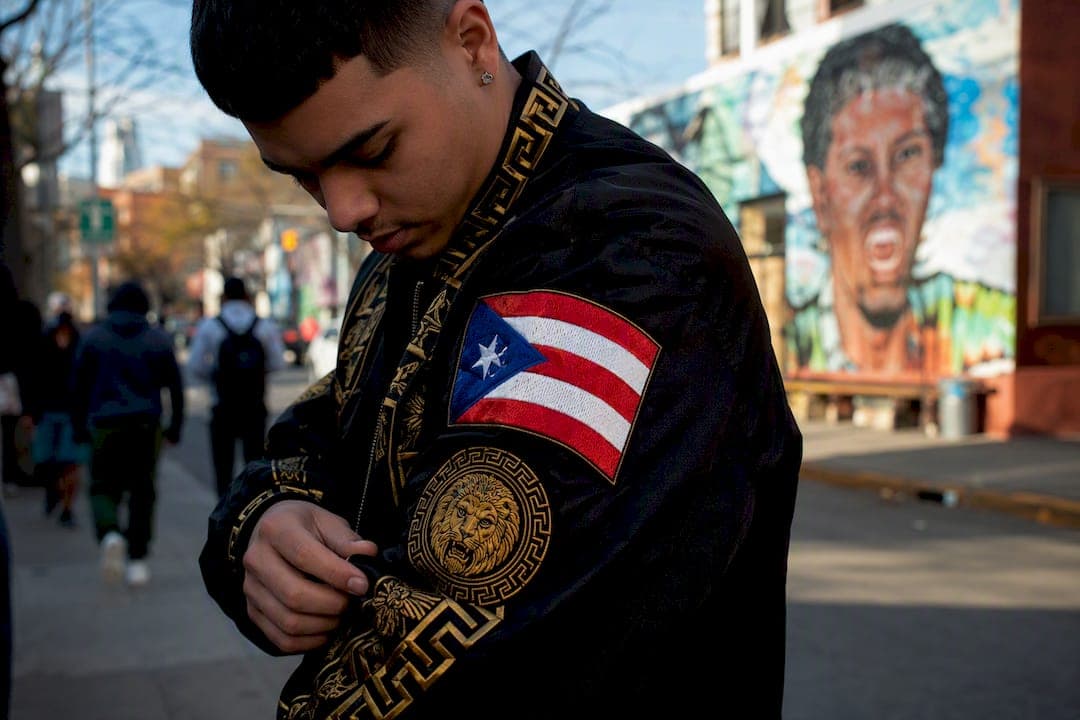
Wearing the Puerto Rican flag is a declaration, not a decoration. It says identity, pride, and historical memory in one visual line, and it carries political weight depending on the shade of blue and how the design gets used. That weight is exactly why flag apparel deserves more thought than a generic graphic tee, worn with awareness of what it represents and respect for where it came from.
TL;DR:
- Wearing the Puerto Rican flag on apparel signals pride and identity, especially within diaspora communities, and should be approached with respect for its symbolism.
- Features like the five stripes, the star, and the shades of blue carry specific meanings and vary to express political stance, cultural significance, or neutrality, influencing how the design is perceived.
- To wear the flag respectfully, ensure the star remains visible, choose placement intentionally, and avoid alterations that distort or mock the symbol, supporting authentic cultural brands when possible.
- No single shade of blue is correct, but maintaining proportion, centeredness, and integrity in design elements ensures recognition and respect across clothing styles.
- Daily wear is best with subtle, abstracted flag elements in neutral tones, reserving full flag prints for cultural events or moments that celebrate Puerto Rican heritage.
Table of Contents
- What Does the Puerto Rican Flag Represent? Origins and Symbolism
- Why the Flag Carries Weight in Streetwear and Diaspora Fashion
- How to Wear the Puerto Rican Flag Respectfully
- Design Choices: Color Shades, Proportions, and Print Styles
- Styling Puerto Rican Flag Apparel for Everyday Wear
- Why GfaceGear Builds Boricua Drops Around Heritage, Not Hype
- See the Boricua Drops in the GfaceGear Lookbook
- Sources
- FAQ
What Does the Puerto Rican Flag Represent? Origins and Symbolism
The story starts far from the island, in New York City, in 1895. The Puerto Rican section of the Cuban Revolutionary Party designed the Puerto Rican flag by taking the Cuban flag and reversing its red and blue placement. It was a exile's flag, built by patriots fighting Spanish rule from a distance, before it ever flew on the island it represents.
That design sat outside official use for decades. Puerto Rico's Commonwealth government did not formally adopt the flag until the early 1950s, which shifted it from an underground symbol of resistance into a government-sanctioned emblem almost overnight. The adoption fixed the layout but left the exact color tones open, a gap that still fuels debate today.
Every element on the flag carries a specific meaning, according to Puerto Rico's Department of State:
- The lone white star stands for Puerto Rico itself.
- The blue triangle is said to represent the three branches of government.
- Red stripes symbolize the blood that feeds those branches of power, according to official symbolism.
- White stripes stand for individual rights and freedom as described by the Puerto Rico Department of State.
Britannica's summary of the flag notes its graphic simplicity, five stripes and a triangle holding a single star, and that simplicity is part of why it translates so cleanly onto fabric. There's nothing to overcomplicate. The design was built to be recognized fast, and that's exactly what makes it powerful on a chest, a sleeve, or a hat brim.
Why the Flag Carries Weight in Streetwear and Diaspora Fashion
For Puerto Ricans living outside the island, in Brooklyn, Philly, Orlando, wherever the diaspora has landed, the flag on a shirt does something a passport can't: it makes identity visible on the street. Cultural analysts have described wearing the flag as an unbreakable bond connecting diaspora communities back to their heritage, a visible marker of resilience that travels with you into rooms where nobody else shares your background.
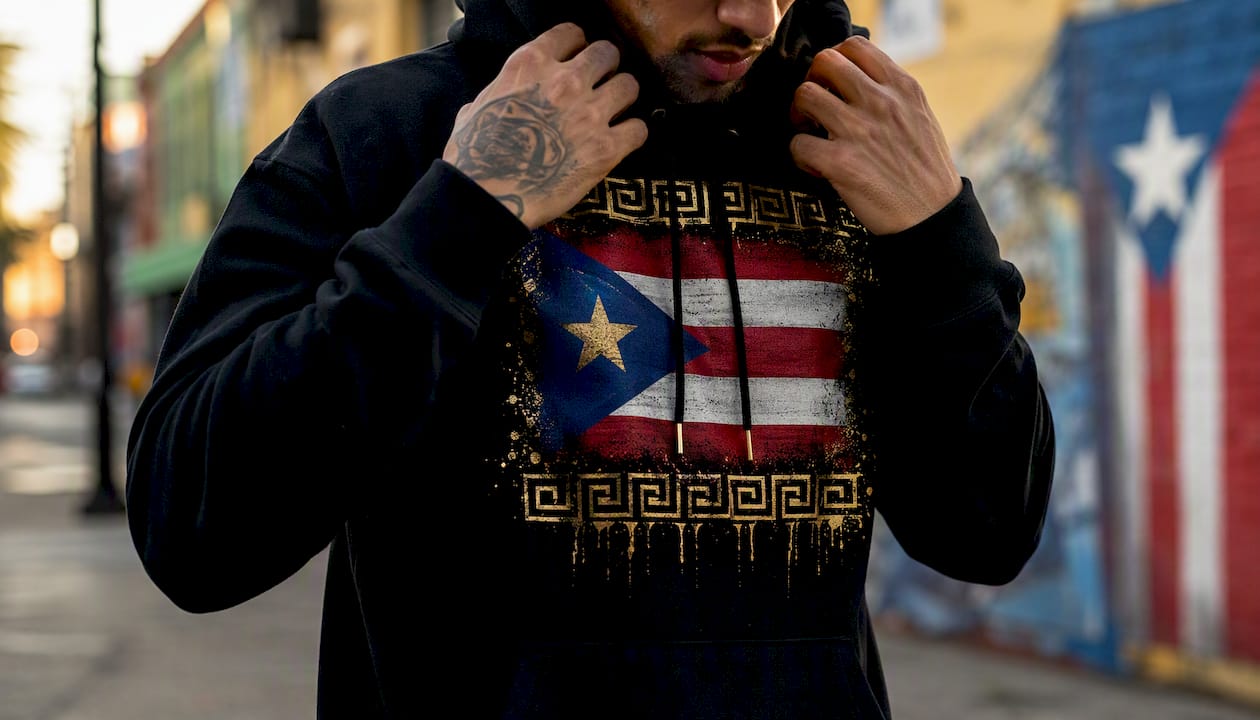
But the flag doesn't say one single thing. Because Puerto Rico's mid-20th-century adoption never legislated an exact shade of blue, that color choice became its own language. Light blue has historically aligned with pro-independence sentiment. Darker navy tones lean toward statehood or government contexts. A medium or royal blue has become the common, more neutral choice for everyday apparel, read as pride first and politics second.
Stylization changes the message too. A full flag print reads as a direct political and cultural statement. A single star patch on a sleeve, or an abstracted stripe pattern across a hoodie, softens that into something closer to fashion, still rooted in heritage, but less charged. Context does the rest of the talking:
- Worn at a parade or cultural festival, the flag reads as celebration and solidarity.
- Worn as an isolated design element in a streetwear drop, it reads more as aesthetic homage.
- Worn altered or paired oddly, it can read as disrespect, even when that's not the intent.
None of these readings are wrong. They just depend on who's looking and where you're standing when they see it.
How to Wear the Puerto Rican Flag Respectfully
Flag apparel isn't off limits. It's just not neutral, and treating it that way is where people get it wrong. A few working principles keep the message clear and the respect intact.
- Keep the star visible. Cropping, covering, or obscuring the star strips the design of its core meaning.
- Choose placements with intent. Chest, sleeve, and back panel placements read as proud and prominent; oddly cropped or partial placements can look careless.
- Credit the source. If a design borrows directly from flag imagery, note the inspiration rather than presenting it as an original creation with no roots.
- Support community when you can. Brands that donate or partner with Puerto Rican organizations around flag-themed drops earn more goodwill than those who simply print and sell.
- Skip mutilation and mockery. Warping the proportions, inverting the triangle, or pairing the flag with profane or degrading imagery crosses from stylization into disrespect, according to guidance from Topuertorico.
Pro Tip: If you're unsure whether a design crosses a line, ask whether it would still feel respectful printed full-size on a flagpole. If the answer is no, it's not right on a shirt either.
When in doubt, lean toward respectful stylization. A tasteful patch or a clean, proportional print will always outperform a gimmicky reinterpretation, both in how it looks and in how it lands with people who take the symbol seriously.
Design Choices: Color Shades, Proportions, and Print Styles
Since the 1952 adoption never locked in a single official blue, no shade is more "correct" than another; the variation itself is part of the flag's living history. What actually matters for apparel is proportion and integrity, not chasing one specific hex code.
A few things to watch for, whether you're designing or shopping:
- Don't stretch or compress the triangle. Distorted proportions change the visual balance the whole design depends on.
- Keep the star centered and upright. Rotated or oversized stars throw off recognition at a glance.
- Understand the difference between full-flag prints and abstracted elements. A complete flag graphic makes a direct statement; a single stripe accent or star motif makes a quieter one.
- Match the shade to the intent. A brighter, more saturated blue tends to read as modern and celebratory; muted or navy tones can feel more traditional or formal.
Good flag apparel treats the design like what it is: a national symbol first, a graphic second. Garments that respect that order tend to age better, both in how they look and in how they're received.
Styling Puerto Rican Flag Apparel for Everyday Wear
Flag pieces work hardest when they're the statement and everything else stays quiet. Pair a flag-print tee or hoodie with neutral black, white, or denim, and let the colors do the talking instead of competing with a busy outfit.
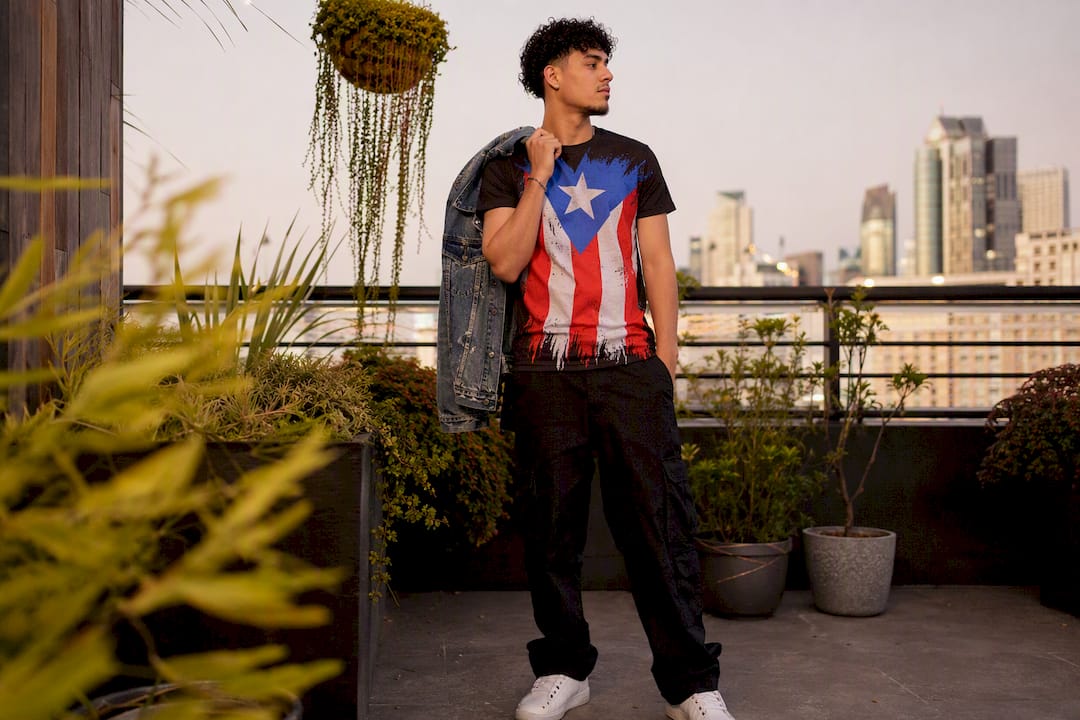
Save the boldest pieces, think limited-edition swimwear or a flag-accented jersey, for moments that match their energy: parades, community festivals, family cookouts, cultural celebrations where showing up loud is the whole point. Everyday flag apparel can be quieter: a cap with a small star patch, a tee with an abstracted stripe design, something that carries pride without shouting it in every room.
Sourcing matters as much as styling. Look for:
- Cultural authenticity in the design, not a flag slapped onto a generic template
- Artist or brand transparency about who created the piece and why
- Limited-edition runs tied to real cultural moments, not just seasonal marketing
| Occasion | Best Piece Type | Styling Note |
|---|---|---|
| Puerto Rican Day Parade | Bold flag tee or jersey | Pair with simple bottoms, let the graphic lead |
| Beach or pool event | Limited-edition swimwear | Best reserved for cultural gatherings, not generic beach days |
| Everyday streetwear | Cap or hoodie with abstracted flag element | Works with neutral, minimal outfits |
| Community festival | Full flag print outerwear | Layer over solid colors for contrast |
For real outfit inspiration, parade-specific looks show how far a well-placed flag graphic can carry an entire outfit without overdoing it.
Why GfaceGear Builds Boricua Drops Around Heritage, Not Hype
ROAR was never just a slogan. It's why GfaceGear's limited Boriqua Swimwear drops pair lion imagery and the Greek Key medallion with flag-inspired color and detail, heritage worn with the same confidence as the tagline demands. Victor's posts on parade outfits and swimwear releases dig into that intent further. Supporting drops like these, and the cultural makers behind them, means putting your money behind design that treats the flag as history first, graphic second.
— Victor
See the Boricua Drops in the GfaceGear Lookbook
If this has you rethinking your next flag piece, GfaceGear's limited Boriqua Swimwear drops are built exactly for that moment, heritage-driven design paired with the ROAR identity, not a mass-produced print run.
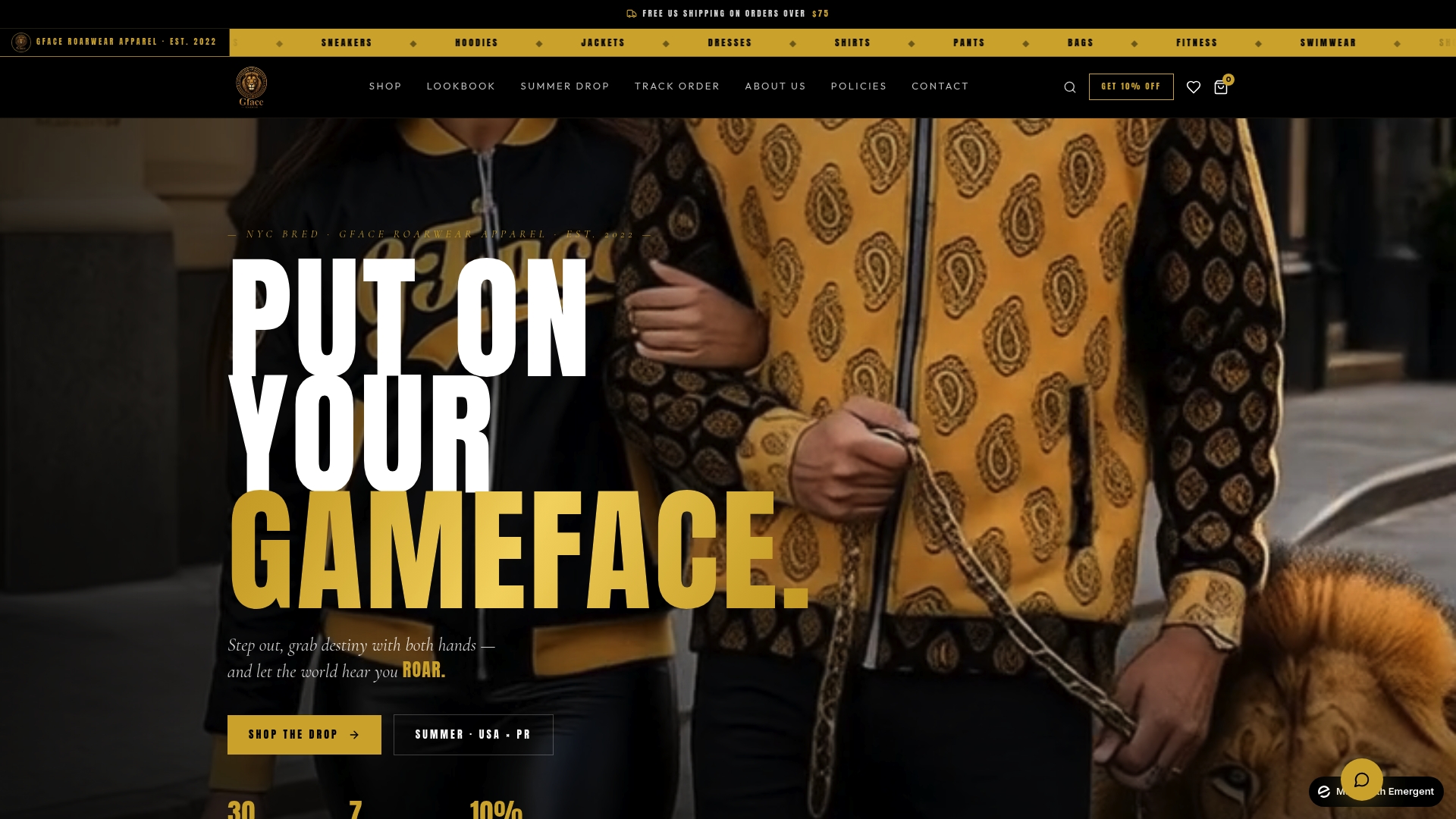
Every drop leans on the same signature motifs: the lion, the Greek Key medallion, and design choices that treat Puerto Rican heritage with the weight it deserves. VIP members get early access to limited runs before they sell out, plus sitewide discount perks that make it easier to build a full look instead of one piece at a time. Beyond swimwear, the catalog runs deep: lion sneakers, hats, long tee dresses, and men's tees all carry the same design language for those who want the ROAR aesthetic without the flag centerpiece. Diaspora shoppers looking to back culturally rooted goods more broadly can also see how that purchasing pattern plays out in Caribbean product culture more generally.
Browse the GfaceGear lookbook to see how the current drops style out, then check the main site for availability before the limited runs close.
Sources
Flag history and symbolism claims in this article draw from a small set of authoritative references worth reading directly if you want to go deeper:
- Flag of Puerto Rico — Wikipedia
- Flag of Puerto Rico — Britannica
- The Flag of Puerto Rico — Department of State
- Topuertorico
FAQ
What does the Puerto Rican flag represent?
The star represents Puerto Rico itself, the blue triangle stands for the three branches of government, red stripes symbolize blood and sacrifice, and white stripes represent rights and freedom.
When was the Puerto Rican flag officially adopted?
Puerto Rico's Commonwealth government officially adopted the flag in 1952, though the design itself was created in New York City back in 1895.
Does the shade of blue on the flag mean something political?
Yes. Light blue has historically leaned toward pro-independence sentiment, darker navy toward statehood or government contexts, and medium or royal blue is the more neutral, everyday choice.
Is it disrespectful to wear the Puerto Rican flag on clothing?
Wearing the flag is widely embraced as an expression of pride, but altering its proportions, obscuring the star, or pairing it with mocking imagery is generally considered disrespectful.
Where can I find culturally authentic Puerto Rican flag apparel?
Look for brands transparent about design intent and artist credit; GfaceGear's limited Boriqua Swimwear drops are one example built around heritage-forward, ROAR-driven design rather than generic flag prints.