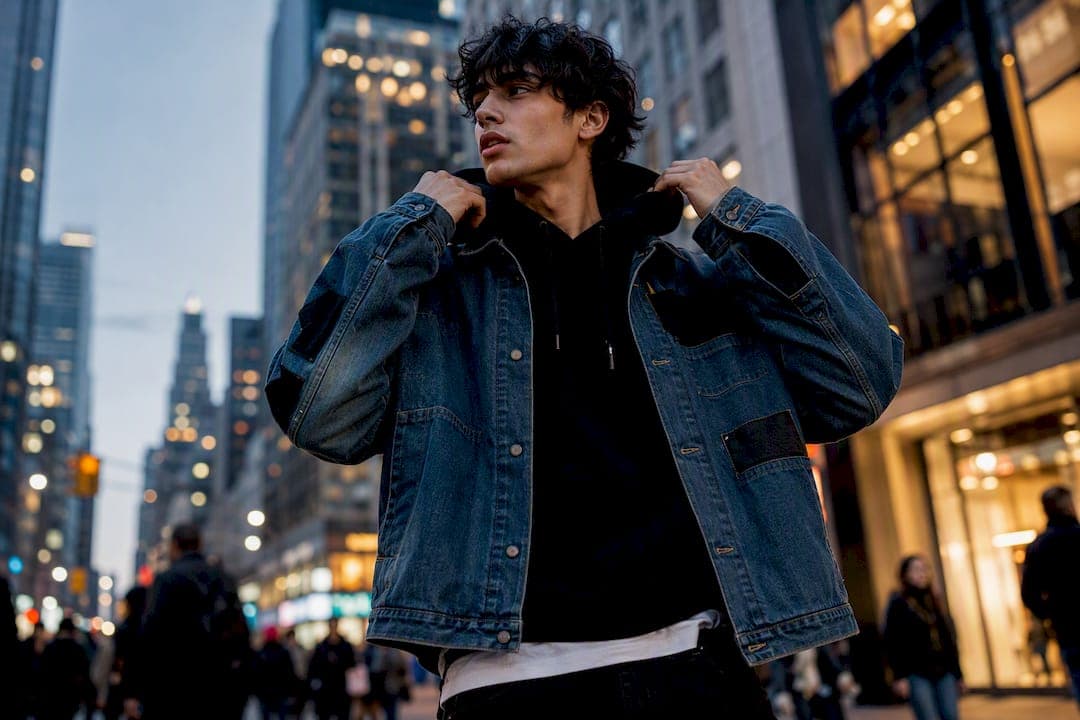
Fitted base. Volume mid. Structured outer. Three layers, max. That's the whole formula. Every strong streetwear fit you've ever screenshotted follows this rule, whether the wearer knows it or not.
The three-layer formula works because it gives your outfit a clear hierarchy: something to anchor, something to add shape, something to finish it. Break the hierarchy and you get bulk. Follow it and you get the silhouette every good fit pic is chasing.
One more rule locks it in: if one layer runs oversized, balance it with something fitted elsewhere. A boxy hoodie needs tapered pants underneath it, not another loose piece stacked on top.
Before you step out, run this checklist:
- Temperature check — can you actually wear this for the conditions, or are you overdressed for the drop scene?
- Removability — can you shed a layer without wrecking the fit?
- One graphic max — pick a single statement piece, keep the rest quiet
- Visible hems — each layer should peek out, not disappear into the one above it
Pro Tip: Before you leave the house, sit down and reach overhead in the full outfit. Style guides consistently push testing mobility while seated and moving so you catch bunching before it catches you mid day.
Key Takeaways
A layered streetwear outfit works when a fitted base, a volume mid-layer, and a structured outer layer each do a distinct job within a maximum of three pieces.
| Point | Details |
|---|---|
| Follow the three-layer formula | Build every outfit as fitted base, volume mid, structured outer, and stop at three layers. |
| Balance oversized with fitted | If one piece runs oversized, pair it with a fitted piece elsewhere to protect your silhouette. |
| Stagger your hems | Let each layer peek out below the one above it instead of ending at the same length. |
| Mix textures, match colors | Pair contrasting textures like cotton and denim while keeping the palette in one neutral family. |
| Build your capsule with Gfacegear | Fitted tees, graphic hoodies, and structured bombers from Gfacegear are cut specifically to layer clean, with limited drops built to anchor a look. |
Table of Contents
- How the Three-Layer System Actually Works
- Balancing Proportions So You Don't Look Bulky
- Mixing Textures, Materials, and Fabric Weights
- Seasonal Layering Formulas That Actually Hold Up
- Copyable Combos and Styling Techniques
- Common Layering Mistakes and How to Fix Them
- Building a Layering Capsule With Gfacegear Pieces
- Layering Accessories Without Overdoing It
- Choosing Footwear That Matches Your Layered Fit
- Blending Streetwear With Sportswear, Casual, and Formal Pieces
- Keeping Layered Pieces Looking Sharp Over Time
- Sources
- FAQ
How the Three-Layer System Actually Works
Every layer in a fit has a job. Skip a job, or double up on one, and the whole outfit reads as messy instead of intentional. Here's what each layer is actually for.
1. Base layer: your foundation, not an afterthought
The base layer sits closest to your skin and does two things: it regulates your temperature, and it anchors everything stacked on top of it. This is not the place to improvise. Streetwear guides consistently point to well-fitted base layers in neutral colors as the safest starting point, because a fitted tee or long-sleeve gives you a clean line that the rest of your outfit can build from.
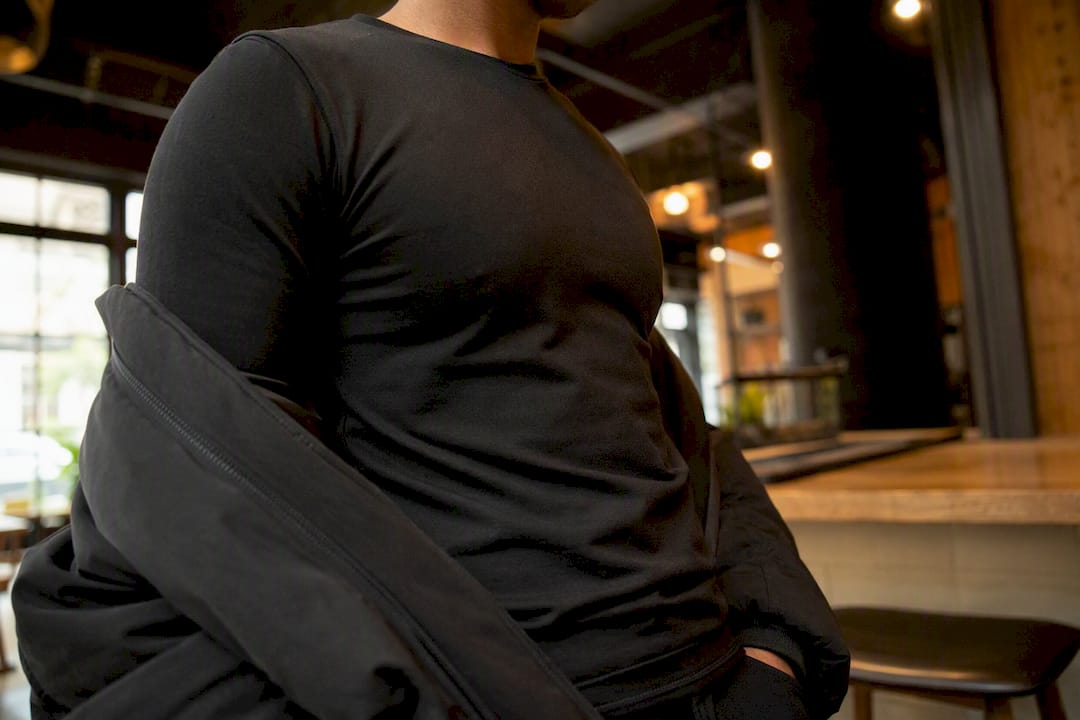
Think fitted crew-neck tees, long-sleeve thermals, or a snug mock-neck in black, white, gray, or a deep neutral tone. Avoid anything with a busy print here. Your base layer's whole purpose is to disappear into the fit while doing structural work, not to compete with your outer piece for attention.
If you're building a men's tee rotation specifically for layering, look for a slightly longer body length. That extra few inches at the hem is what lets it peek out from under a hoodie or jacket later, which is exactly the visual trick that makes a stacked outfit read as deliberate.
2. Mid-layer: where the volume and personality live
The mid-layer is your outfit's engine room. It's where graphic hoodies, flannels, and heavyweight sweatshirts do their work, adding both warmth and visual bulk without weighing down the whole look. This is also the layer most people size wrong.
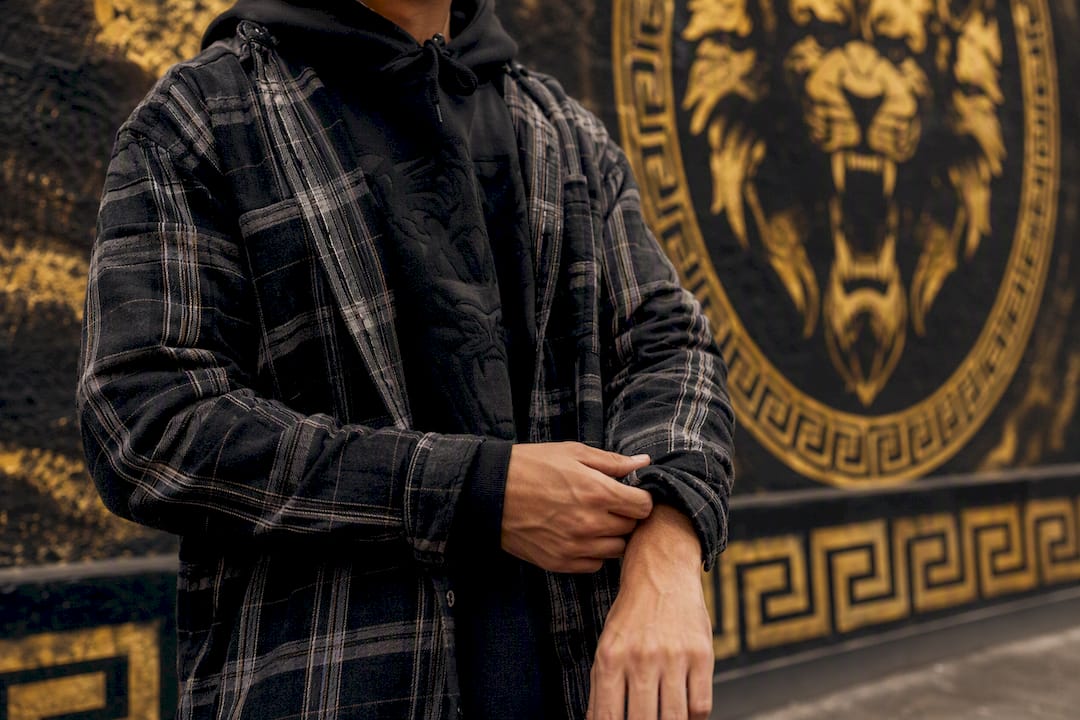
Here's the sizing logic that actually holds up: your mid-layer should be roughly one size up from your true fit, not two or three. Go too big and you lose the silhouette entirely, turning a deliberate drape into a shapeless blanket. Go too small and there's no visible layering effect at all; it just looks like you're wearing one shirt.
A few reliable mid-layer options:
- Graphic hoodie — the classic streetwear mid-layer, ideal for a single statement piece
- Flannel or overshirt, unbuttoned — adds texture and a casual, unstructured edge
- Heavyweight crewneck sweatshirt — quieter than a hoodie, good for a more understated fit
- Quarter-zip or half-zip pullover — layers cleanly under a jacket without adding hood bulk
If your mid-layer is a hoodie, keep the hood tucked or laid flat under your outer piece unless you're deliberately going for the hood-out look. Bunched hood fabric under a jacket collar is one of the fastest ways to turn a clean fit into a lumpy one.
3. Outer layer: the piece that finishes the story
Your outer layer is what a stranger notices first, so it carries the most weight in defining the outfit's whole personality. Bombers read athletic and sharp. Denim jackets read classic and rugged. Coach jackets split the difference with a clean, minimal shape. Puffers read technical and cold-weather ready.
The outer layer's job isn't just warmth. It's silhouette control. A structured piece, one with real shoulder seams and a defined hem, holds the shape of everything underneath it and keeps the whole outfit from collapsing into a soft blob. That's why a boxy bomber over a boxy hoodie is a mistake: nothing in the stack is doing structural work, so the whole fit sags.
Match your outer layer's structure to your mid-layer's volume. Heavy, loose hoodie underneath? Go with a more fitted or cropped bomber on top to reclaim the shape. Slim mid-layer? You've got more room to go oversized on the outer piece. For deeper guidance on picking the right cut and fabric for your outer piece, check out this breakdown of streetwear jackets built specifically for layering.
Balancing Proportions So You Don't Look Bulky
Streetwear lives and dies on proportion. Bulk isn't a fabric problem, it's a math problem: too much volume stacked on too much volume, with nothing fitted to break it up.
The rule that fixes almost every proportion mistake is what stylists call the loose-fitted contrast rule: if one piece in your outfit is oversized, something else in the outfit needs to be fitted. Oversized hoodie, tapered pants. Baggy cargo pants, fitted base layer and slim outer jacket. You never want two oversized elements stacked together with nothing to anchor the silhouette.
Hem length is your second lever. A well-built fit stairs its lengths: outer layer longest, mid-layer shorter so it's visible underneath, base layer shortest or tucked so a sliver shows at the collar or cuff. This staggering is what makes each layer register as a distinct choice instead of a fabric blob. Sleeve rolling and cuff reveals work the same way in miniature: pushing your outer sleeve up to show a base-layer cuff is a five-second move that instantly reads as intentional styling.
- Outer layer: longest hem, sets the outfit's overall length
- Mid-layer: mid-length, should peek below the outer hem by an inch or two
- Base layer: shortest or tucked, visible only at the collar, cuffs, or a small strip at the waist
Body type changes how you apply all of this, but the principle stays the same. If you're on the slimmer side, you can lean into oversized mid-layers without losing shape, since your frame gives the volume somewhere to sit. Average builds have the most flexibility and can play with either direction. Shorter frames should be more careful with horizontal breaks. Too many stacked hemlines at different heights chops up your visual line and can make you look shorter still, so lean toward slightly longer, more elongated cuts on the outer layer instead of boxy, cropped ones.
Pro Tip: Stand in front of a mirror and count your outfit's visible "blocks", the base peek, the mid hem, the outer hem. If you count more than three distinct horizontal lines, you've over-layered. Simplify before you leave the house.
Mixing Textures, Materials, and Fabric Weights
Texture is what separates a flat outfit from one with actual depth. Two smooth cotton pieces stacked together look fine but forgettable. Cotton against denim, or a smooth base under a chunky knit, creates visual contrast your eye actually registers.
Streetwear guides back this up directly: mixing textures like cotton with denim or leather, or smooth fabric with a chunky knit adds real depth to an outfit, as long as you keep the color palette cohesive. That last part matters more than people think. You can mix five different textures and still look put together if they're all in the same neutral family. Mix five textures across five clashing colors, and even a well-proportioned outfit falls apart.
Fabric weight matters just as much as texture, and it's the part most people skip entirely. A helpful rule of thumb from streetwear fabric guides: base layers generally run 120 to 160 GSM, light enough to sit close to skin without bulk. Mid-layers sit in the 180 to 250 GSM range, heavy enough to hold shape but not so heavy they fight with your outer piece. Outer layers typically run 300 GSM and up, since that's what gives a jacket or coat its structure and drape.
Practical texture pairings that consistently work:
- Cotton tee base + denim jacket outer, for a classic, low-effort combo
- Smooth long-sleeve base + chunky knit mid-layer, for cold-weather texture contrast
- Fleece hoodie mid + leather or faux-leather outer, for a harder, edgier look
- Ribbed base layer + brushed flannel mid, for a soft, casual stack
Technical fabrics earn their place when function actually matters, not just for looks. A nylon shell or a water-resistant outer changes how an outfit performs in real weather, and it also changes the silhouette, since technical fabrics tend to hold a stiffer shape than cotton or fleece. Use them when you need the performance, not just because they photograph well.
Seasonal Layering Formulas That Actually Hold Up
Layering isn't a cold-weather-only technique. The formula just adjusts based on what the thermometer is doing.
-
Summer: layer for depth, not warmth. Swap your mid-layer for something breathable, an open overshirt, a lightweight vest, or a mesh panel piece. The breathable-fabric approach lets you keep the visual stack of a layered outfit without trapping heat against your skin. A short-sleeve tee under an unbuttoned linen overshirt gives you the layered look at a fraction of the warmth. Browse a few summer streetwear outfit ideas if you want ready-made combos to copy.
-
Spring and autumn: this is where the three-layer formula shines brightest. Temperatures swing during the day, so build around a removable mid-layer. A fitted base tee, a graphic hoodie you can tie around your waist by afternoon, and a lightweight coach jacket or bomber outer gives you total flexibility. Windbreakers work particularly well here since they add visual structure without extra weight; check out a few streetwear windbreaker options built for exactly this in-between season.
-
Winter: this is when all three layers earn their keep. Start with a proper thermal base, not just a regular tee, since it's doing real insulating work. Add a heavyweight hoodie or fleece mid-layer for bulk and warmth. Finish with a puffer or overcoat outer. If you want serious warmth without looking like a marshmallow, pair a puffer vest under a structured overcoat rather than stacking two full puffer jackets, which just creates bulk with no added shape. For a proper outer piece, this rundown of puffer jackets built for streetwear covers cuts that layer clean.
Pro Tip: Winter is also when accessories carry the most weight. A beanie, a scarf tucked into your collar, and gloves in a matching neutral tone do more to finish a cold-weather fit than adding a fourth clothing layer ever will.
Copyable Combos and Styling Techniques
Theory is only useful once you can actually build a fit from it. Here's how the rules above translate into outfits you can put together right now.
The hoodie-under-jacket formula is the single most reliable streetwear combo, and it works because it follows every rule in this guide at once. Size your hoodie one step up from true fit, keep it in a solid color or a single subtle graphic, and layer a bomber or coach jacket over it that's slightly more fitted through the shoulders. The hoodie hem should show an inch or two below the jacket, and the hood should lay flat, not bunched, under the jacket collar.
The one-graphic-maximum rule governs everything else you add. Limiting visible graphics to a single layer keeps an outfit from reading as cluttered or trying too hard. If your hoodie has a bold front graphic, your base layer and outer piece stay solid. If your outer jacket has the statement print or logo, keep the hoodie and base plain underneath it. One focal point, always.
A few combos worth copying directly:
- Casual day fit: fitted white tee, oversized graphic hoodie (one focal graphic), tapered black joggers, low-top sneakers
- Transitional fit: long-sleeve base, solid quarter-zip mid, denim jacket outer, straight-leg pants
- Statement fit: solid base and mid, one limited-edition graphic piece as the outer or mid focal point, everything else neutral
- Layered formal-street crossover: fitted turtleneck base, unstructured blazer as the "outer," tapered trousers
Sleeve and hem play finishes each of these. Push your outer sleeve up slightly to reveal a base-layer cuff. Let your mid-layer hem show below your jacket. Add a cap or a chain if the outfit needs one more small detail, but stop there. For more full outfit inspiration built around this exact logic, this collection of men's streetwear outfit combinations is worth a scroll, and if you want graphic-tee-specific pairing advice, this partner guide on mixing graphic tees into layered fits covers ground this article doesn't.
Common Layering Mistakes and How to Fix Them
Most layering mistakes trace back to one of four problems, and every one of them has a fast fix.
- Stacking oversized on oversized. Two boxy pieces together erase your shape entirely. Fix it by swapping one layer for something fitted, usually the base or the bottoms.
- Graphic overload. Three loud prints in one outfit reads as noise, not style. Pick one statement piece and make everything else solid.
- Same-length layers. When your base, mid, and outer all end at the same point, the outfit reads as one flat block instead of three distinct layers. Stagger the hems.
- No mobility. If you can't sit down or raise your arms without your jacket riding up or your hoodie bunching, the fit fails in real life no matter how good it looks standing still. Swap a heavy mid-layer for something removable or lighter.
Run through this list before you leave the house. Most outfits that look "off" in a mirror are suffering from exactly one of these four issues, not some deeper style failure.
Building a Layering Capsule With Gfacegear Pieces
You don't need a packed closet to nail this formula. Six pieces, chosen right, cover almost every combo in this guide.
- Fitted crew-neck tee (base)
- Long-sleeve layering tee (base, cold-weather)
- Graphic hoodie, one statement print (mid)
- Flannel or overshirt (mid, texture layer)
- Bomber or coach jacket (outer)
- Tapered pants (bottom, keeps proportion balanced)
Three quick builds from that capsule: casual day is the fitted tee, graphic hoodie, tapered pants, no outer needed. Transitional weather adds the overshirt over the fitted tee with the bomber on top. Cold weather swaps in the long-sleeve base under the hoodie, bomber zipped over both.
Limited-edition drops change the math slightly. A drop piece, like a run from the Boricua-inspired swimwear or apparel line, becomes the automatic focal point of any fit it's in. That's the one-graphic rule in action: when your statement piece is a limited release, everything else in the outfit should go quiet and let it carry the look.
A single drop piece can anchor an entire outfit while the rest of the fit stays neutral, letting the limited-edition item do the visual work instead of competing with five other loud pieces.
Layering Accessories Without Overdoing It
Accessories are the fastest way to add a fourth layer of visual interest without adding a fourth clothing layer. A beanie or fitted cap gives your fit a finishing point up top, especially useful when your outer jacket is a plain, structured piece that needs a little more personality above the collar.
Scarves do double duty in cooler months: tucked into a jacket collar, they add texture and warmth while also softening the hard line where your outer piece ends and your neck begins. Keep the scarf's color inside your outfit's existing palette rather than introducing a new one, or it starts competing with your focal piece instead of supporting it.
Jewelry works best minimal. A single chain layered over a crewneck base, or a stack of thin rings, adds detail without pulling attention away from your outfit's actual statement piece. If your hoodie or outer jacket already carries a bold graphic, skip heavy jewelry entirely; you've already used your one focal point.
Bags and belts round things out functionally. A crossbody bag in a neutral tone works with almost any layered fit and adds a practical edge without disrupting proportion, while a visible belt can help define the waistline when you're wearing an oversized mid-layer over slimmer bottoms.
Choosing Footwear That Matches Your Layered Fit
Footwear either grounds a layered outfit or throws the whole proportion off, and there's no in-between. The general rule: chunkier, heavier layering on top calls for a slightly bulkier sneaker on the bottom to keep the outfit visually balanced from top to bottom.
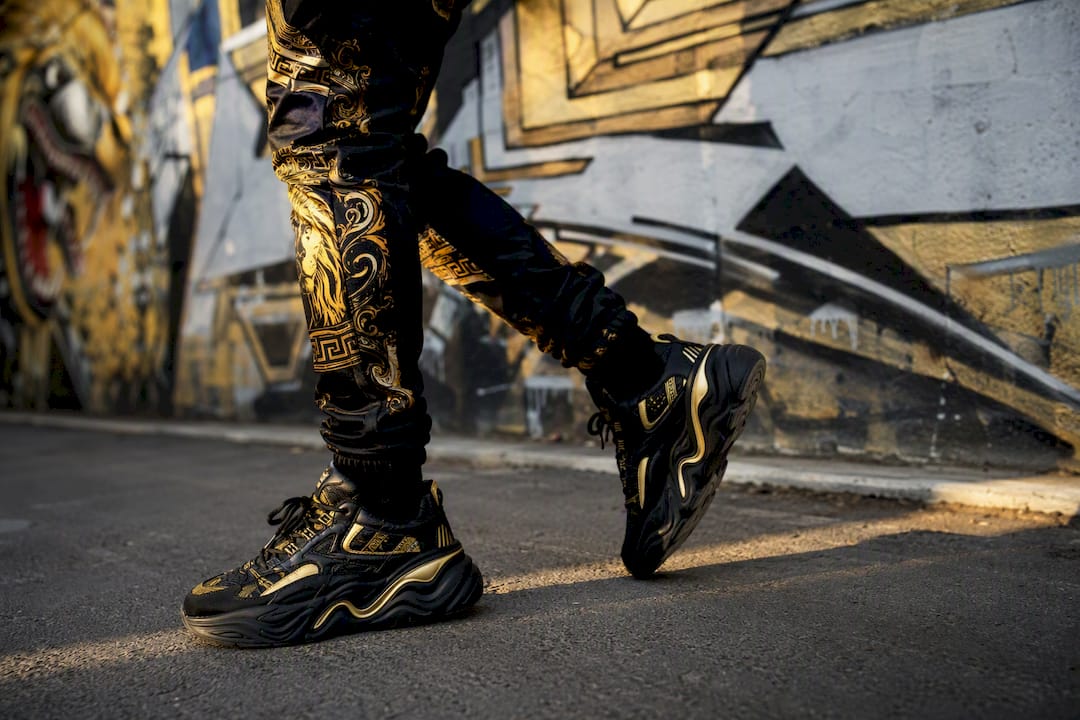
A minimal, low-top sneaker pairs cleanly with lighter layering combos, like a fitted tee under an unbuttoned overshirt. It keeps the whole look streamlined without adding extra visual weight at the base. Once you start stacking a hoodie under a bomber or a puffer over a heavyweight mid-layer, a bulkier silhouette, think chunky trainers or a high-top, holds its own against the volume up top instead of getting visually swallowed by it.
Color coordination matters here just as much as it does in your layers. Pull one color from your outfit's palette into your sneakers, whether that's matching your base layer's neutral or picking up an accent shade from a graphic piece, and the whole fit reads as coordinated rather than thrown together. A pair of clean lion-motif sneakers in a neutral gold-and-black colorway, for example, can tie directly into an outfit built around darker layered pieces without introducing a competing color. For more direction on matching kicks to a full outfit, this guide on sneaker outfit combinations breaks down pairings by style.
Blending Streetwear With Sportswear, Casual, and Formal Pieces
Streetwear layering doesn't have to stay in its own lane. The three-layer formula holds up whether you're mixing in sportswear, dressing it down further into pure casual, or pushing it toward something more polished.
Sportswear crossover usually means swapping your mid-layer for a technical piece, a zip-up track jacket instead of a hoodie, paired with joggers instead of denim. The base and outer rules stay identical; you're just borrowing texture and cut from athletic wear to change the outfit's energy. A fitted base tee under a track jacket, finished with a clean bomber, reads as elevated athletic rather than gym-only.
Pushing toward formal works the same way in reverse. Swap your outer bomber for a structured blazer or overcoat, keep a fitted turtleneck or crewneck as your base, and let tailored trousers replace joggers. The layering logic, fitted base, volume mid, structured outer, doesn't change even when the vocabulary of the pieces does. This is exactly the kind of fit that works for a slightly elevated occasion; a few examples of that middle ground show up in this rundown of date-night streetwear looks.
Casual crossover is the simplest shift: drop the outer layer entirely on warmer days and let your base and mid-layer do all the work, like a long-sleeve tee under an open flannel with nothing over it.
Keeping Layered Pieces Looking Sharp Over Time
Layered outfits put more wear on certain pieces than single-layer outfits do, since your mid and base layers get friction from rubbing against the piece above them every time you move. That friction shows up as pilling first, usually at the cuffs, underarms, and hem, exactly the spots where layers overlap most.
Wash graphic pieces inside out in cold water to protect the print from cracking or fading, and skip the dryer's high heat setting for anything with a screen-printed design. Air-drying flat preserves both the graphic and the garment's shape, which matters most for hoodies and heavier mid-layers that can stretch out of shape if hung wet.
Rotate your base layers more often than your outer pieces. Since base layers sit closest to skin and take on the most oil and sweat, they wear out faster even though they're often the cheapest piece in the stack. A solid rotation of three or four base tees will outlast trying to stretch one or two across an entire season of layering.
Store structured outer pieces, bombers and coach jackets especially, on proper hangers rather than folded in a drawer. Folding a structured jacket for weeks at a time creases the shoulder seams that give it its shape in the first place, and that's the exact structure doing the silhouette work described earlier in this guide.
A Few Rules I'd Tell Any Friend Starting Out
Before you build any fit, run three quick checks: is it right for the temperature, can you actually move in it, and do you have one focal piece instead of five competing ones? Nail those three and the rest of the styling mostly takes care of itself.
My own go-to combo is a plain long-sleeve base, an oversized graphic hoodie, and a fitted bomber on top. It hits the loose-fitted contrast rule without me thinking about it.
Don't treat any of this as fixed law. Try the proportions, see what your mirror tells you, adjust from there.
— Victor
Shop the Pieces Built for This Exact Formula
Gfacegear cuts every core piece with layering already in mind, so you're not guessing whether a hoodie will size right under a bomber or whether a tee's body length will actually peek out from a jacket hem. Fitted base tees are cut close without clinging, graphic hoodies are sized for the one-up rule this guide walks through, and outer pieces like bombers and coach jackets hold structure instead of collapsing into whatever's underneath them.

The ROAR identity runs through every drop, lion imagery, the Greek Key medallion, the kind of detail that gives a mid-layer or outer piece enough presence to serve as your outfit's one statement focal point without you needing to add anything else. That matters most during limited-edition runs, including pieces from the Boricua-inspired swimwear line, where a single drop item is built to anchor a whole layered look while everything else stays quiet around it.
VIP membership gets you early access to those drops plus sitewide discounts, which is the difference between building your six-piece capsule at full price over months or catching it early and complete. Head to the Gfacegear shop to browse current layering pieces and sign up for VIP access before the next drop lands.
Sources
For more on the fundamentals covered here, the original breakdowns on layering rules, seasonal formulas, and texture pairing go deeper into specific technique.
To keep building your rotation, browse streetwear jacket picks, zip-up hoodie options, and this rundown of current streetwear trends shaping 2026 fits.
FAQ
What are the most common streetwear layering mistakes?
The biggest ones are stacking two oversized pieces together, wearing three or more clashing graphics at once, and letting every layer end at the same hem length so the outfit reads as one flat block instead of distinct pieces.
How do you put together a streetwear outfit from scratch?
Start with a fitted base layer, add a mid-layer with more volume like a hoodie or overshirt, and finish with a structured outer piece such as a bomber or jacket, keeping the whole stack to three layers max.
What are the basic rules for layering clothes?
Use a fitted base, a volume mid, and a structured outer; balance any oversized piece with something fitted elsewhere; stagger your hem lengths so each layer is visible; and limit yourself to one visible graphic across the whole outfit.
What are the unwritten rules of streetwear style?
Beyond fit and proportion, streetwear culture tends to favor one statement piece per outfit, whether that's a graphic hoodie or a limited-edition drop item, with everything else styled to support it rather than compete with it.
Do I need expensive pieces to layer streetwear well?
No. The formula depends on proportion and fit, not price. A well-cut, layering-friendly capsule from a brand like Gfacegear, built around a fitted tee, graphic hoodie, and structured bomber, covers most of the combos in this guide.