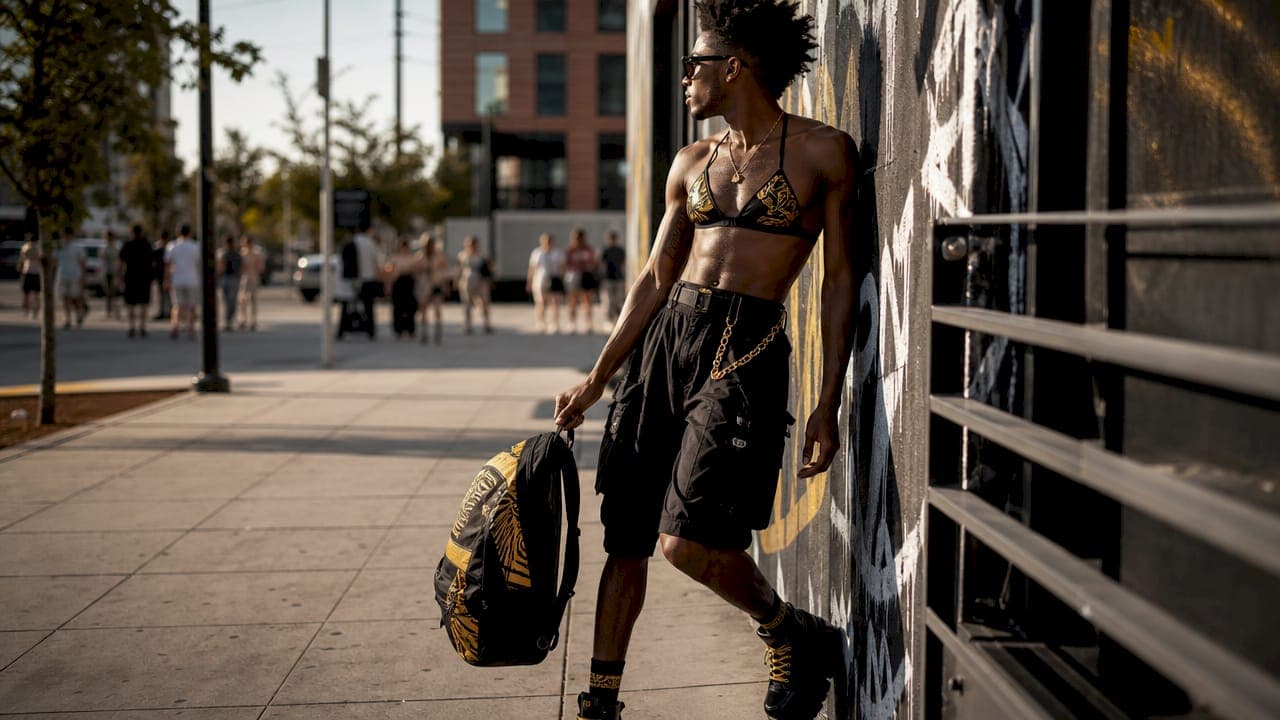
Swimwear crossed into streetwear territory for real this summer. Not as a styling trick or a magazine editorial concept, but as a full shift in how people buy, wear, and think about swim pieces. The 2026 swimwear trends are built around athletic construction, hyper-saturated Y2K colors, graphic logos, and technical fabrics that let a one-piece pull double duty as a bodysuit on a city block. Miami Swim Week 2026 made it official: the minimalist, quiet-luxury era of swimwear is giving way to bold, visible, purpose-built pieces that go from pool to pavement without missing a beat.
Here is what is driving the shift right now:
- Athletic construction: reinforced seams, compression panels, wider support bands, and asymmetric cuts borrowed from performance wear
- Color intensity: electric orange, lime green, vivid pink, and cobalt blue designed for social media visibility and street presence
- Y2K hardware and trims: contrast edging, acrylic closures, oversized graphic logos, and synthetic hardware as design statements
- Dual-function silhouettes: plunging one-pieces, high-cut bikinis, and rash guards that read as outerwear in urban contexts
- Matte and textured fabrics: crinkle, ruching, puckered finishes, and crochet details that feel editorial rather than purely functional
The consumer demand powering all of this is simple: people want wardrobe pieces that do more than one thing. A swimsuit that also works as a statement top for a coffee run or a festival outfit is not a compromise. It is the whole point.
What style elements define 2026 streetwear swimwear?
The clearest visual signal of 2026's urban swimwear styles is the rejection of soft, neutral minimalism in favor of deliberate contrast and graphic energy. Bright cobalt blues, electric oranges, and vivid pinks appeared in sharp color-blocked compositions at Miami Swim Week 2026, not as seasonal accents but as primary design strategy. These combinations hit harder in fast-scrolling digital environments, which is exactly why brands are leaning into them.
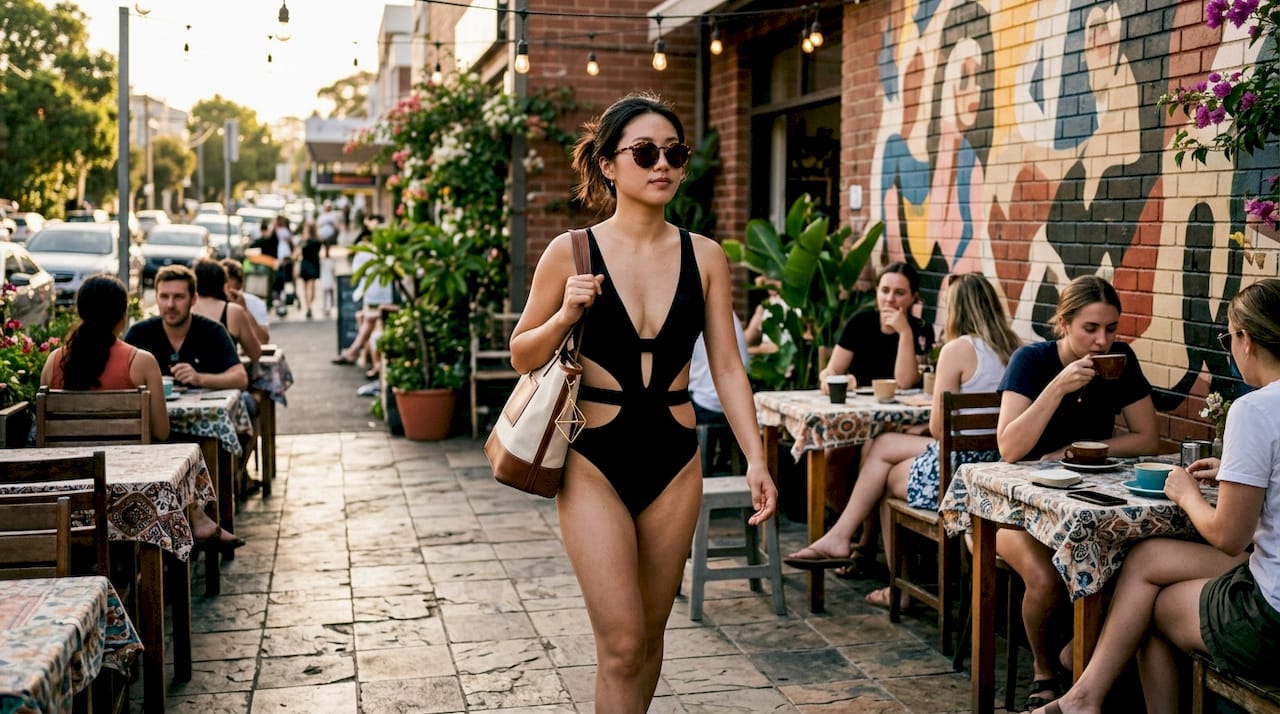
Silhouettes have shifted just as dramatically. Plunging one-pieces, high-cut bikini bottoms, cutout constructions, and one-shoulder asymmetric straps dominate the 2026 lineup. These shapes borrow from performance wear without being purely athletic. They frame the body confidently and photograph well, which matters when swimwear is expected to function as a social media statement as much as actual swim gear.
Print and pattern trends break down into a few distinct lanes. Zebra print is having a major moment, from classic black-and-white to bolder colorways. Polka dots are back in a way that reads modern rather than retro, especially in mismatched scales or unexpected color pairings. Moto-core graphics, including racing stripes and logo placements, bring an urban, high-energy edge that translates directly from streetwear into swim. Crochet accents and textured fabrics round out the material story, adding richness to silhouettes that might otherwise feel too spare.
Key design details worth knowing:
- Contrast trim: piping, edging, and color-blocked bands that make even simple silhouettes feel intentional
- Graphic logos and typography: oversized emblems and bold numerals borrowed from moto-core and racing culture
- Jewelry-like hardware: beaded straps, shell accents, and gem embellishments that eliminate the need for accessories
- Rash guards as outerwear: surf-inspired layers that work as actual tops in urban settings
- Crochet and puckered textures: fabric choices that feel editorial and styled rather than purely functional
Technical fabric choices matter as much as aesthetics. Reinforced seams and compression panels make swimwear perform as a bodysuit throughout a full day of city wear, not just a few hours at the pool. Matte finishes and textured surfaces read less like traditional swimwear and more like considered fashion pieces, which is exactly the crossover effect the trend depends on.
How tastemakers style streetwear swimwear in 2026
Fashion influencers are not just wearing swimwear to the beach anymore. The most compelling 2026 looks treat swim pieces as the foundation of a full urban outfit, layered and accessorized the same way you would build any streetwear look from the ground up.
The most effective styling approach pairs a graphic bikini top or structured one-piece with cargo pants, wide-leg trousers, or oversized denim. The swimwear becomes the top, and the bottoms do the work of grounding the look. Mesh tops layered over bikinis add texture and complexity while keeping the graphic print visible as the focal point. Oversized shirts worn open over a one-piece create the same effect with less effort.
Accessories are where the streetwear identity really locks in. Chunky sneakers, structured caps, goggle sunglasses, and logo hardware lean directly into the Cyber-Y2K aesthetic that dominates 2026 street style. Jewelry-like hardware on the swimwear itself, including beaded straps and shell details, means you can skip most accessories entirely and still look fully styled.
Cosmopolitan's 2026 summer feature documented 22 tastemakers who put swimwear-as-streetwear to the test across real-world urban settings. Their collective verdict: swimwear wins on versatility, boldness, and the freedom to move between environments without changing. The looks that worked best shared a few consistent traits:
- Structured, athletic-cut swim pieces rather than string-heavy styles
- High-contrast color combinations or bold graphic prints
- Bottoms with weight and structure (cargo, wide-leg, tailored trousers)
- Accessories that signal streetwear rather than beach (sneakers over sandals, caps over sun hats)
- Minimal string ties and no overtly beachy details
Pro Tip: When building a swimwear-as-streetwear outfit, choose a swim piece with at least one technical detail, such as a compression panel, reinforced seam, or structured cup. It will hold its shape through a full day of city wear in a way that a simple string bikini simply will not.
Color-blocking is the styling shortcut that makes these looks land fast. Pairing a vivid pink one-piece with lime green cargo pants sounds aggressive on paper, but in practice it reads as intentional and fashion-forward rather than chaotic. The key is keeping the rest of the look clean, letting the color combination do the talking.
Notable brands embracing the streetwear swimwear aesthetic in 2026
The brands leading this trend are not all coming from the same place. Some are heritage swim labels evolving their aesthetic. Others are streetwear-first brands moving into swim. A few are doing something genuinely new at the intersection of both.
- Sandy Liang: Swim-inspired bra tops paired with floor-length skirts at her spring/summer 2026 show. The look was more ready-to-wear than beachwear, which is exactly the point.
- Rabanne: Surf-ready rashguards folded down and worn as pants. A genuinely unexpected silhouette that proved rash guards have a life beyond the water.
- Vitamin A Classic: Contrast-trim one-pieces with elegant, restrained detailing. The brand's athletic construction makes pieces work as bodysuits without looking like they are trying too hard.
- Triangl: Graphic bikinis with bold color-blocking and logo-forward designs. The brand's red-and-white zebra print bikini became one of the most-referenced pieces of the season.
- Vix Swimwear: Daring cutout styles in animal prints. The brand's approach to cutout construction creates a bikini-adjacent look with the coverage and structure of a one-piece.
- Tropic of C: Clean, athletic silhouettes with a luxury edge. The brand sits at the intersection of performance wear and high-end resort dressing.
- The Attico: A striking yellow zebra-print one-piece that reads as a fashion statement first and swimwear second. The kind of piece that works at a rooftop party as easily as a pool.
- Zara: Accessible entry point into the trend with contrast-stripe one-pieces, polka dot bikinis, and surf-inspired layers at mass-market prices.
- Peixoto: The brand's Honeycomb bikini in a summery colorway captures the playful polka-dot trend without tipping into retro territory.
- Faithfull: Vintage-inspired florals and retro silhouettes with a modern, editorial sensibility. The brand's swim pieces layer well with streetwear basics.
- Juillet Swimwear: A striking black-and-white one-piece that anchors the polka-dot trend in a graphic, fashion-forward direction.
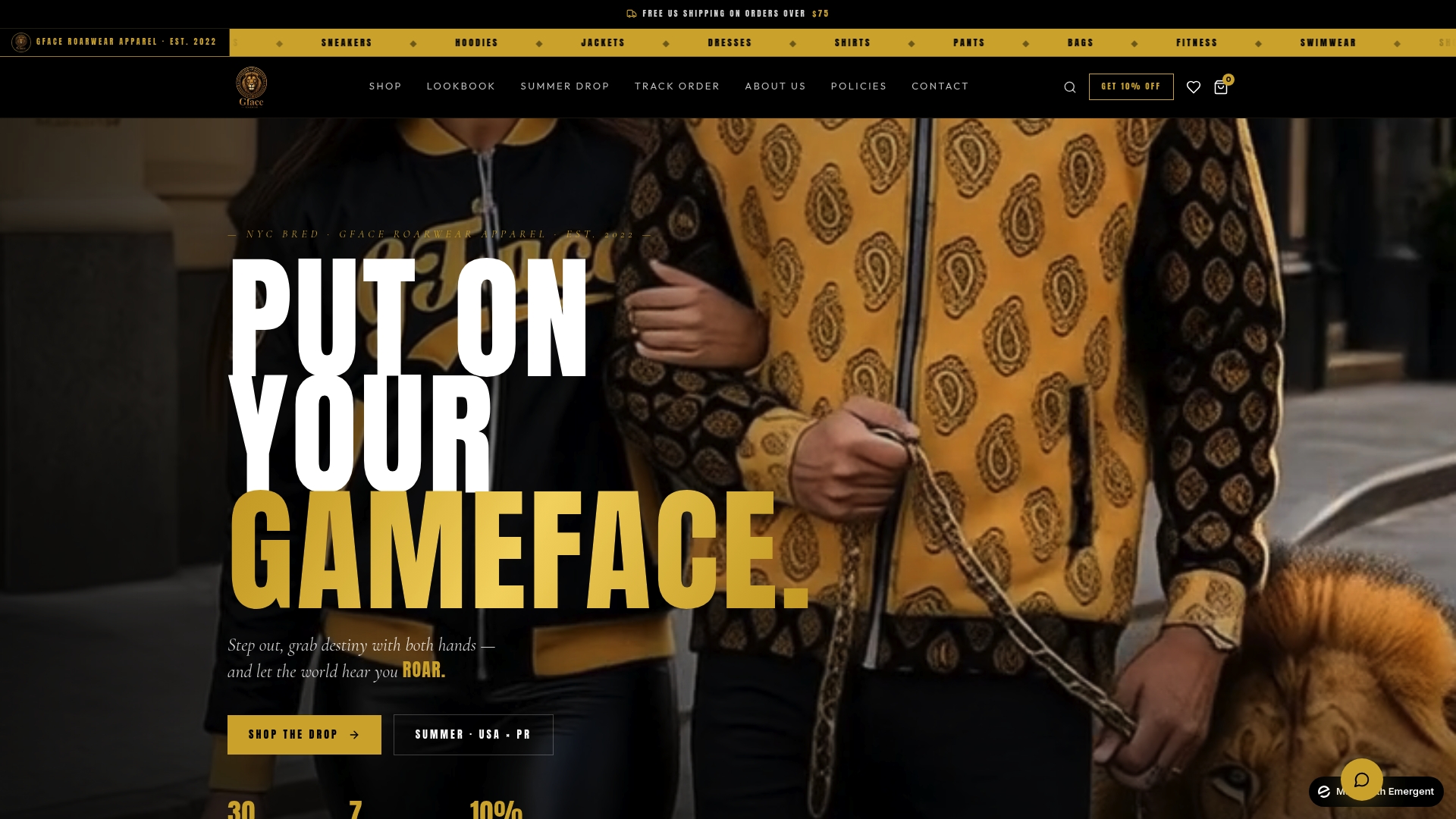
- Gfacegear: Brooklyn-born and built around the ROAR identity, Gfacegear brings lion motifs, Greek Key medallion graphics, and limited-edition drops to the streetwear swimwear space. The brand's Limited Boriqua Swimwear collection channels the same bold, high-visibility energy as the season's biggest runway moments, with a cultural specificity that sets it apart from generic graphic swim labels.
How to wear swimwear as streetwear in urban everyday looks
Getting this right comes down to a few decisions made before you leave the house. The wrong swim piece in an urban context looks like you forgot to change. The right one looks like you planned the whole outfit around it.
Start with the swim piece itself. Structured silhouettes, such as plunging one-pieces, high-cut bikinis with athletic construction, or rash guards with clean lines, translate to city wear far better than string-heavy or ruffle-forward styles. Layering swimwear as a base layer under contrasting streetwear bottoms or mesh tops is the most reliable formula. The swim piece handles the visual interest; the bottoms handle the context.
Pro Tip: Avoid traditional beach overexposure by minimizing string ties and choosing matte or textured fabrics. A matte-finish one-piece reads as a bodysuit. A shiny string bikini reads as swimwear, no matter what you layer over it.
Fabric choice matters more than most people realize. Matte and textured finishes signal fashion rather than function. Crinkle fabrics, ruching, and puckered textures add the kind of visual richness that makes a swim piece look like it belongs in a streetwear outfit rather than a beach bag.
A few practical guidelines for different settings:
- Street and daily errands: One-piece under an open oversized shirt, paired with cargo pants and chunky sneakers. Keep accessories minimal and streetwear-coded.
- Dining and social settings: Structured one-piece or high-cut bikini top with tailored wide-leg trousers. Add a structured hat and statement sunglasses.
- Festivals: Graphic bikini top with high-waist shorts or a mesh skirt. Layer with a technical jacket or mesh top for texture contrast.
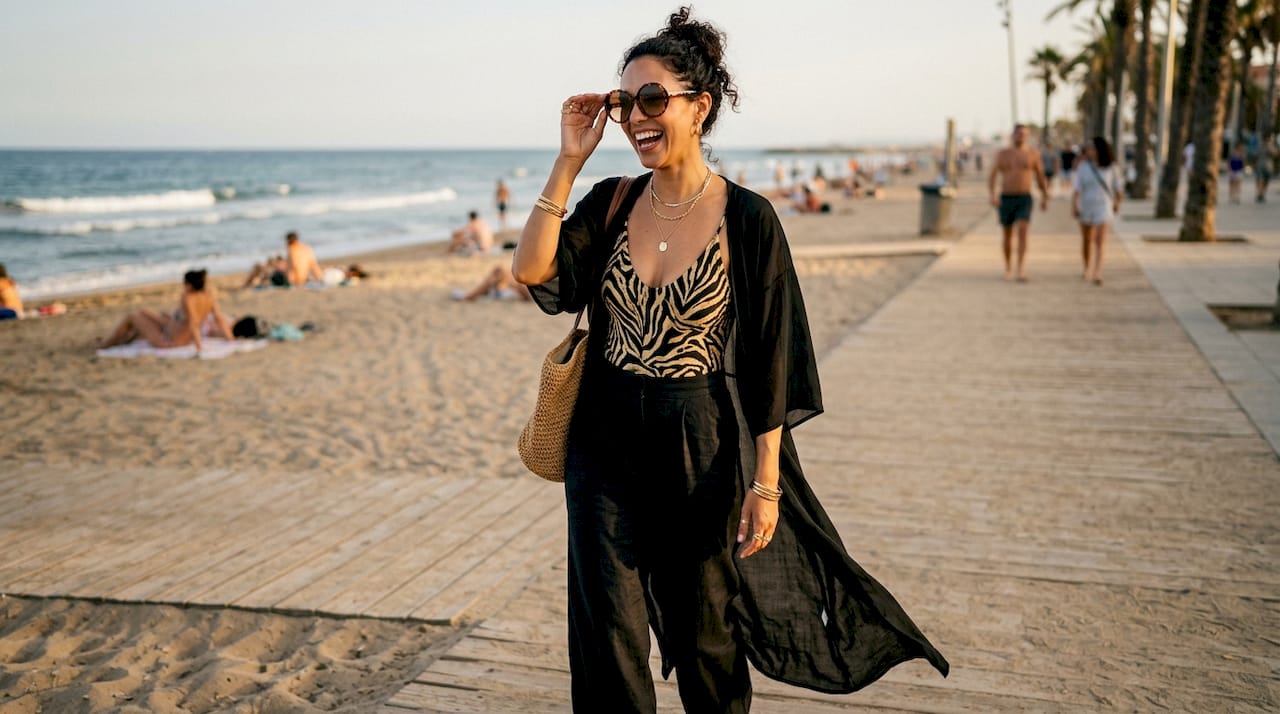
- Transitions from pool to city: A contrast-trim one-piece with linen pants and a raffia bag reads as resort-chic without looking like you just left the water.
Mixing textures is the move that separates a good look from a great one. A moto-core graphic bikini top against a soft knit or flowing skirt creates the kind of contrast that reads as intentional fashion rather than accidental layering. The tension between the swim piece's technical edge and the softness of the other fabrics is exactly what makes the outfit work.
Gfacegear's limited edition streetwear swimwear collection
Gfacegear was built in Brooklyn around a single idea: when you step out, you put on your Gameface. The brand's ROAR identity, centered on lion imagery and Greek Key medallion graphics, was always going to find its way into swimwear. The Limited Boriqua Swimwear collection is the result, and it lands squarely in the middle of everything 2026 streetwear swimwear trends are about.
The collection's design language pulls directly from the brand's core aesthetic: bold lion motifs, Greek Key patterns, and the kind of high-visibility graphic energy that performs on social media and on the street with equal force. These are not generic graphic swim pieces. They carry cultural specificity, Boricua heritage themes, and the limited-edition scarcity that makes a drop feel worth showing up for.
What sets Gfacegear's swim pieces apart in the 2026 context:
- Limited-edition drops: scarcity built into the model, which aligns with how streetwear culture actually operates
- Bold graphic identity: lion and Greek Key motifs that function as wearable statements, not background patterns
- Dual-function design: pieces built to work as swimwear and as streetwear bodysuits, consistent with the season's athletic construction trend
- Cultural authenticity: Boricua heritage themes that give the collection a specific identity rather than generic streetwear aesthetics
- Brooklyn streetwear roots: the brand's urban origin story is baked into every design decision
Gfacegear's approach to limited-edition swimwear reflects exactly what the broader market is moving toward: pieces that signal community membership, carry a visual identity strong enough to anchor an outfit, and do not need a beach to make sense. If you want swim pieces that carry the same weight as the rest of your streetwear wardrobe, the ROAR collection is worth a look.
Sustainability and ethical production in streetwear swimwear
The sustainability conversation in swimwear has gotten more specific. It is no longer enough to use recycled nylon and call it a day. The brands gaining credibility in 2026 are the ones combining material responsibility with small-batch production and genuine design integrity.
Independent streetwear swim labels are leading this shift, prioritizing eco-conscious practices alongside bold design experimentation. Small-batch craftsmanship reduces overproduction, which is the fashion industry's most persistent sustainability problem. When a brand drops a limited run of 200 pieces rather than manufacturing thousands, the environmental math changes significantly.
Material choices are evolving alongside production models. Recycled polyester and regenerated nylon, such as Econyl, have become baseline expectations rather than selling points. The brands standing out now are those using these materials in combination with technical construction, such as reinforced seams and compression panels, that extends the garment's lifespan well beyond a single season. A swim piece that holds its shape and color through years of use is more sustainable than one made from recycled materials that degrades after a summer.
The limited-edition model that defines brands like Gfacegear also carries an inherent sustainability logic. Drops create demand rather than chasing it, which means less unsold inventory and less waste. For fashion-forward consumers who care about both aesthetics and ethics, that alignment between scarcity and sustainability is increasingly a deciding factor.
Seasonal and weather considerations for urban swimwear styling
Wearing swimwear as streetwear in a city is not a summer-only proposition, but it does require thinking about context and temperature more carefully than a beach setting demands.
In warm-weather months, from late May through September in most American cities, the layering formula is straightforward. A structured one-piece or graphic bikini top works as a base layer under lightweight bottoms and open overshirts. The challenge is heat management: matte technical fabrics breathe better than shiny synthetic ones, and compression panels that feel supportive at the pool can feel restrictive on a hot city block. Choose swim pieces with some stretch and airflow built into the construction.
Transitional weather, particularly early june and late september, is where the styling gets interesting. A rash guard worn as an actual top under a structured jacket reads as intentional streetwear. A one-piece under wide-leg trousers with a light layer on top works for evenings when temperatures drop after a warm afternoon. The key is treating the swim piece as a base layer with the same logic you would apply to a fitted bodysuit, not as outerwear that needs to stand alone.
Urban settings also create specific practical demands that beach contexts do not. City pavement, restaurant seating, and transit all require swim pieces that stay in place without constant adjustment. This is where athletic construction, specifically reinforced seams, secure closures, and compression panels, earns its keep. A swim piece that shifts or requires readjusting every twenty minutes is not a streetwear piece, regardless of how good it looks.
Pure swimwear vs. streetwear swimwear: what actually makes them different?
The distinction is not about coverage or silhouette. It is about design intent and construction.
Pure swimwear is optimized for water performance and beach comfort. It prioritizes chlorine resistance, UV protection, quick-dry properties, and secure fit during active swimming. The aesthetic choices, whether a floral print or a solid black maillot, are secondary to function. A traditional swimsuit does not need to look good walking down a city block because that was never the brief.
Streetwear swimwear starts from a different premise. The design intent is a piece that functions in water but is built to be seen and worn outside of it. This changes every design decision: fabric finish (matte over shiny), graphic placement (bold and legible at distance), silhouette (body-framing rather than purely streamlined), and construction (reinforced for daily wear, not just swim sessions). The result looks different from traditional swimwear even when the coverage is similar.
The practical test is simple. Can you wear it to lunch after leaving the pool without changing? Does it hold its shape through a full day of city movement? Does it read as a fashion choice rather than a functional necessity? Streetwear swimwear answers yes to all three. Pure swimwear was never designed to.
Key Takeaways
The defining shift in 2026 streetwear swimwear is athletic construction combined with bold graphic identity, making swim pieces genuinely functional as urban outerwear rather than just beach-adjacent fashion statements.
| Point | Details |
|---|---|
| Athletic construction is the foundation | Reinforced seams, compression panels, and structured silhouettes make swim pieces work as bodysuits in city contexts. |
| Color and graphics drive the trend | Hyper-saturated hues and moto-core graphic logos are primary design strategies, not seasonal accents. |
| Layering unlocks the streetwear look | Pairing swim pieces with cargo pants, mesh tops, or oversized shirts transforms them into full urban outfits. |
| Fabric finish determines context | Matte and textured fabrics read as fashion; shiny synthetic finishes read as swimwear regardless of styling. |
| Limited-edition drops add cultural weight | Brands like Gfacegear use scarcity and bold graphic identity to give swim pieces the same status as core streetwear drops. |
FAQ
What swimwear trends are defining summer 2026?
The biggest 2026 swimwear trends are athletic construction, hyper-saturated colors, graphic logos, zebra and polka dot prints, contrast-trim one-pieces, and rash guards worn as streetwear tops. Miami Swim Week 2026 confirmed the shift from minimalist swim toward bold, visible, dual-function pieces.
How do you wear a swimsuit as streetwear?
Layer a structured one-piece or graphic bikini top under cargo pants, wide-leg trousers, or a mesh top, then accessorize with chunky sneakers and a structured cap. Avoid string-heavy styles and shiny fabrics; matte or textured finishes read as fashion rather than beachwear.
Is a one-piece or bikini better for streetwear styling?
A structured one-piece generally works better as a streetwear base layer because it stays in place through a full day of city movement and reads more like a bodysuit than swimwear. Bikini tops work well when layered under mesh or sheer tops, keeping the graphic print visible as the focal point.
What is a pubikini?
A pubikini is a bikini bottom cut to sit extremely low on the hips, exposing the pubic area above the waistline. It is a micro-coverage style that has appeared in some avant-garde and festival contexts but sits outside mainstream streetwear swimwear styling.
What streetwear styles are trending in 2026?
Beyond swimwear, 2026 streetwear favors moto-core graphics, Cyber-Y2K hardware, cargo silhouettes, color-blocking, and athletic-inspired construction across all categories. The crossover between activewear, swimwear, and streetwear is the defining aesthetic movement of the year.