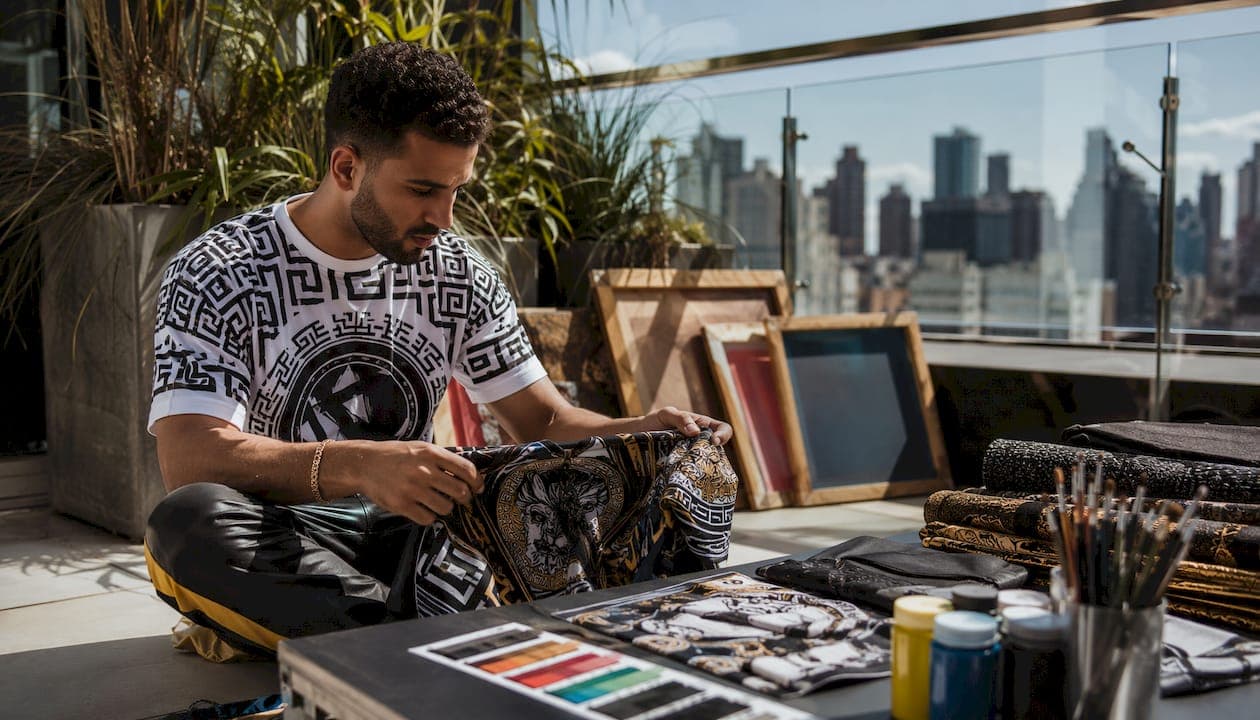
How sublimation and screen printing actually compare
Sublimation bonds dye permanently inside polyester fibers using heat. Screen printing pushes ink through a mesh stencil onto the fabric surface. Those two sentences explain most of what you need to know before choosing. The rest is about your fabric, your order size, and how complex your design is.
| Factor | Sublimation | Screen Printing |
|---|---|---|
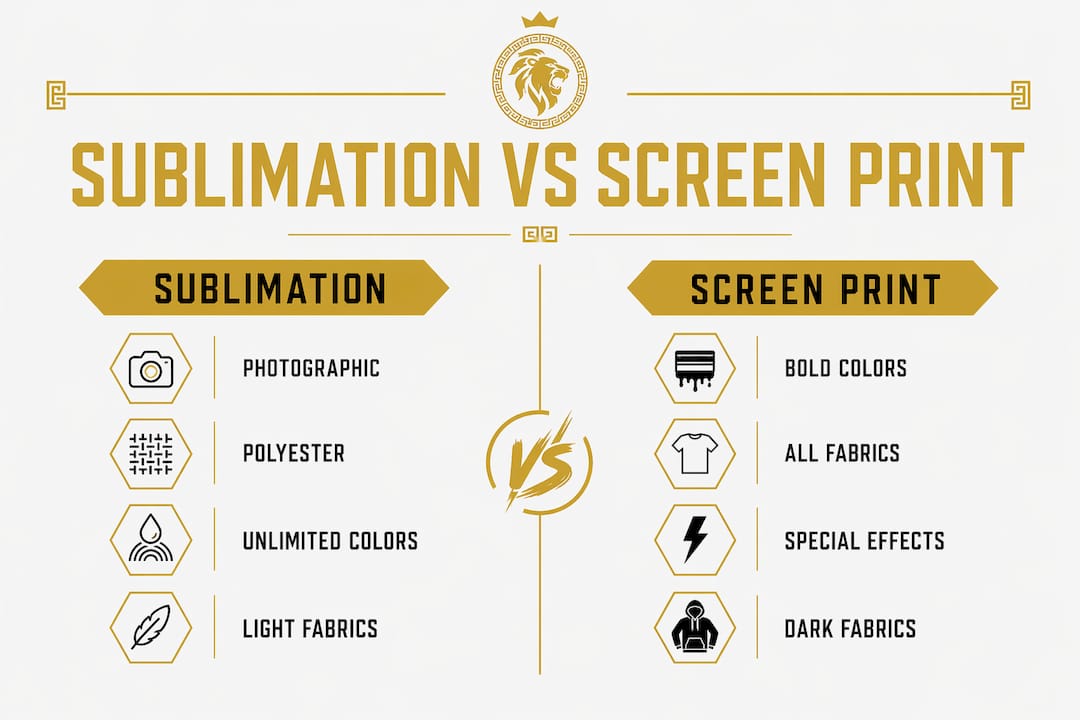
| Print quality | Photographic, smooth gradients | Bold, opaque spot colors |
| Durability | Won't crack or peel on polyester | Very durable; can crack over years |
| Print complexity | Unlimited colors, full-bleed | Best with 1–6 solid colors |
| Color blending | Full CMYK, seamless gradients | Limited; one screen per color |
| Special effects | None | Metallic, puff, foil, neon inks |
| Fabric compatibility | 95%+ polyester, light colors only | Cotton, blends, nylon, canvas |
| Setup cost | None | ~$25–$30 per color screen |
| Best run size | Single units to medium runs | Bulk orders over 36 pieces |
What is sublimation printing and how does it work?
Sublimation converts solid dye into a gas under heat and pressure. That gas permeates polyester fibers and re-solidifies as a permanent color bond inside the fabric, not on top of it. The result is zero surface texture and prints that won't crack, peel, or wash away on compatible materials.
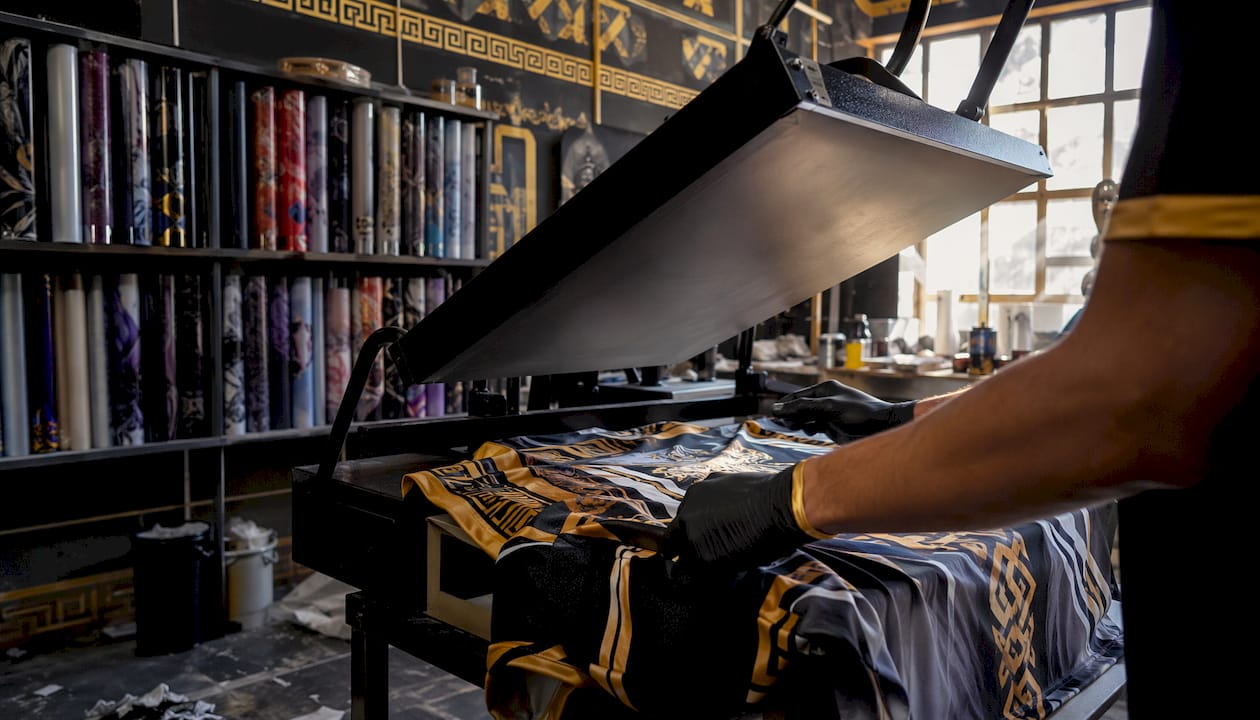
The process runs in three steps. First, a design is printed onto transfer paper using sublimation inks. Second, a heat press applies roughly 380–400°F for 45–60 seconds. Third, the dye gas infuses into the fabric and locks in permanently once the press lifts.
Key facts about sublimation:
- Requires 95%+ polyester content for accurate, saturated color
- Only works on white or light-colored garments because the dye is transparent
- Produces zero hand feel — the printed area feels identical to the rest of the fabric
- No setup cost per design; per-unit cost stays flat regardless of run size
- Ideal for all-over prints, sports jerseys, swimwear, and photo-quality designs
- Cannot print on dark fabrics or natural fibers like cotton
Sublimation is the go-to method for Gfacegear's limited-edition swimwear drops and full-coverage jersey designs, where edge-to-edge color and wash durability matter most.
What is screen printing and how does it work?
Screen printing forces ink through a mesh stencil onto the garment surface, one color at a time. The ink sits on top of the fabric, cures in a conveyor dryer at around 320°F, and produces bold, opaque graphics that pop on virtually any material, including dark cotton.
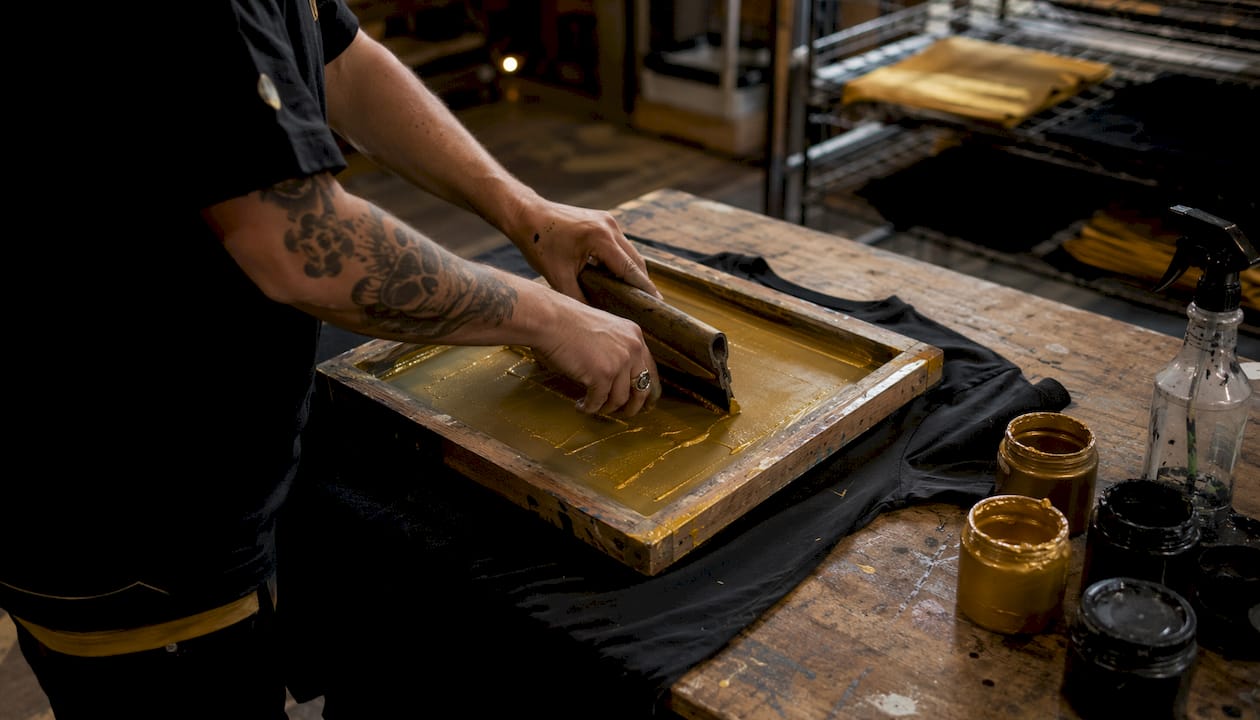
Each color in a design requires its own screen, which is why setup costs exist per color. Once those screens are made, running hundreds of shirts costs almost nothing extra beyond ink and blanks.
Key facts about screen printing:
- Works on cotton, polyester, nylon, canvas, and blends with predictable results
- Plastisol ink is opaque enough to print bright white on a black shirt
- Setup fees run roughly $25–$30 per color screen
- Per-unit cost drops steeply as volume increases
- Supports specialty inks: metallic, puff, foil, discharge, and glow-in-the-dark
- Physical ink layer can crack or peel after extended wear if not properly cured
Screen printing dominates bulk branded merchandise, event tees, team uniforms, and anything where a bold logo repeats across a large stack of cotton garments.
12 key differences between sublimation and screen printing
1. Print quality
Sublimation delivers photographic resolution with smooth gradients and sharp detail because the dye becomes part of the fiber. Screen printing produces bold, vivid spot colors, but each color requires its own screen, making photorealistic images difficult to reproduce.
2. Durability
Both methods are genuinely durable when applied correctly. Sublimation dye infuses permanently into the fiber, so it cannot crack or peel. Properly cured plastisol screen prints on cotton routinely survive several hundred commercial wash cycles without significant color loss. The durability gap is about substrate match, not method superiority.
3. Print complexity
Sublimation handles unlimited colors, gradients, and full-bleed designs without any additional cost per color. Screen printing gets expensive fast with complex artwork because every color adds another screen, another setup fee, and more press time.
4. Color blending
Sublimation uses full CMYK printing, producing seamless transitions and photographic color ranges. Screen printing blends colors only through halftone dot patterns, which works for most logos but falls short on continuous-tone photography.
5. Special effects
Screen printing wins here outright. Metallic, puff, foil, neon, and discharge inks are exclusive to screen printing. Sublimation supports no specialty ink effects whatsoever.
6. Fabric compatibility
Sublimation is locked to synthetic materials, preferably 100% polyester, on light or white garments. Cotton produces washed-out results because dye gas has no polymer fiber to bond with. Screen printing works across nearly every fabric type, including dark cotton, which makes it the more flexible long-term option for shops serving broad garment markets.
7. Dark fabric capability
Screen printing handles dark garments easily by laying a white underbase first. Sublimation physically cannot print on dark fabric because the dye is transparent and the design disappears into the garment color.
8. Cost structure
Sublimation per-unit cost stays flat regardless of run size. Screen printing costs drop steeply with volume once setup charges spread across a larger unit count. For single units or short runs, sublimation is almost always cheaper. For runs over 36 pieces with simple artwork, screen printing wins on cost.
9. Setup time
Sublimation requires under five minutes of setup per new design. Screen printing setup, including screen exposure, ink mixing, and press registration, takes 30–90 minutes before the first shirt prints.
10. Production speed for small runs
Sublimation is faster for one-offs and small batches. Screen printing is faster once screens are on press and a large run is rolling.
11. Environmental impact
Sublimation uses water-based, non-toxic inks and requires no water in cleanup. Screen printing involves cleaning agents, screen reclaiming chemicals, and excess ink disposal. For brands prioritizing sustainability, sublimation carries a lighter footprint. Shops running screen printing can reduce impact by using closed-loop water systems that capture and recycle washdown water.
12. Limitations summary
| Method | Core Limitation |
|---|---|
| Sublimation | Light polyester only; no dark fabrics; no specialty effects |
| Screen printing | One screen per color; less suited for photorealistic art |
Pro Tip: If your design has more than six colors or uses gradients, sublimation will cost you less and look better. If your order is over 36 pieces on cotton with a bold logo, screen printing will save you money every time.
When to choose sublimation vs screen printing for your project
The decision usually sorts itself the moment you name the fabric and the quantity. Here is how to read your own project.
Choose sublimation when:
- Your garment is white or light-colored polyester (95%+ content)
- The design is full-coverage, photographic, or uses unlimited colors
- You need a single unit or a small run with no minimum order
- The product is swimwear, a sports jersey, a race kit, or performance apparel
- You want zero hand feel on the finished print
Choose screen printing when:
- Your garment is cotton, a blend, or any dark color
- The design is a bold logo, large text, or solid shapes with fewer than six colors
- Your run is over 36 pieces and you want per-unit cost to drop
- You need specialty ink effects like metallic, puff, or foil
- Opacity on dark fabric is non-negotiable
For Gfacegear's lion tees and Greek Key medallion graphics on dark cotton, screen printing delivers the opacity and boldness the design demands. For the limited-edition swimwear and all-over jersey drops, sublimation is the only method that covers every seam with full-color fidelity.
Many decorators treat these as complementary tools rather than competing options, routing polyester performance gear to sublimation and bulk cotton orders to screen printing. That split covers nearly every project type without compromise.
If you're exploring retail apparel options that use both methods across different product lines, this guide to alternative apparel platforms covers how print method choices affect product quality and pricing in the streetwear market.
Key Takeaways
Screen printing wins on bulk cotton orders and dark fabrics; sublimation wins on full-color polyester prints and small runs with no setup cost.
| Point | Details |
|---|---|
| Fabric decides the method | Sublimation needs 95%+ polyester on light garments; screen printing works on cotton, blends, and dark colors. |
| Cost crossover at 36 pieces | Sublimation cost stays flat per unit; screen printing becomes cheaper past 36 pieces as setup fees spread across the run. |
| Durability is about execution | Properly cured plastisol survives hundreds of wash cycles; sublimation on high-poly fabric won't crack or peel. |
| Special effects belong to screen printing | Metallic, puff, foil, and neon inks are exclusive to screen printing; sublimation offers none of these. |
| Complexity favors sublimation | Unlimited colors and gradients cost nothing extra in sublimation; each additional color adds a screen setup fee in screen printing. |
FAQ
What is better, screen print or sublimation?
Neither is universally better. Screen printing wins for bulk orders on cotton and dark fabrics with bold designs; sublimation wins for full-color, photographic prints on light polyester garments and small runs with no minimum order.
What lasts longer, sublimation or screen printing?
Both last well when applied correctly. Sublimation dye bonds inside the fiber and won't crack or peel on compatible polyester. Properly cured plastisol screen prints on cotton survive several hundred wash cycles without significant color loss. Longevity depends on substrate match and process quality, not the method alone.
Is sublimation still popular?
Yes. Sublimation remains the dominant method for all-over print apparel, sports jerseys, swimwear, and performance gear because it delivers edge-to-edge coverage with no surface texture and no cracking over time on polyester fabrics.
Can a Cricut do sublimation printing?
A Cricut machine alone cannot do sublimation printing. Sublimation requires a dedicated sublimation inkjet printer loaded with sublimation inks, transfer paper, and a heat press. A Cricut can cut sublimation-printed transfers, but it does not print them.