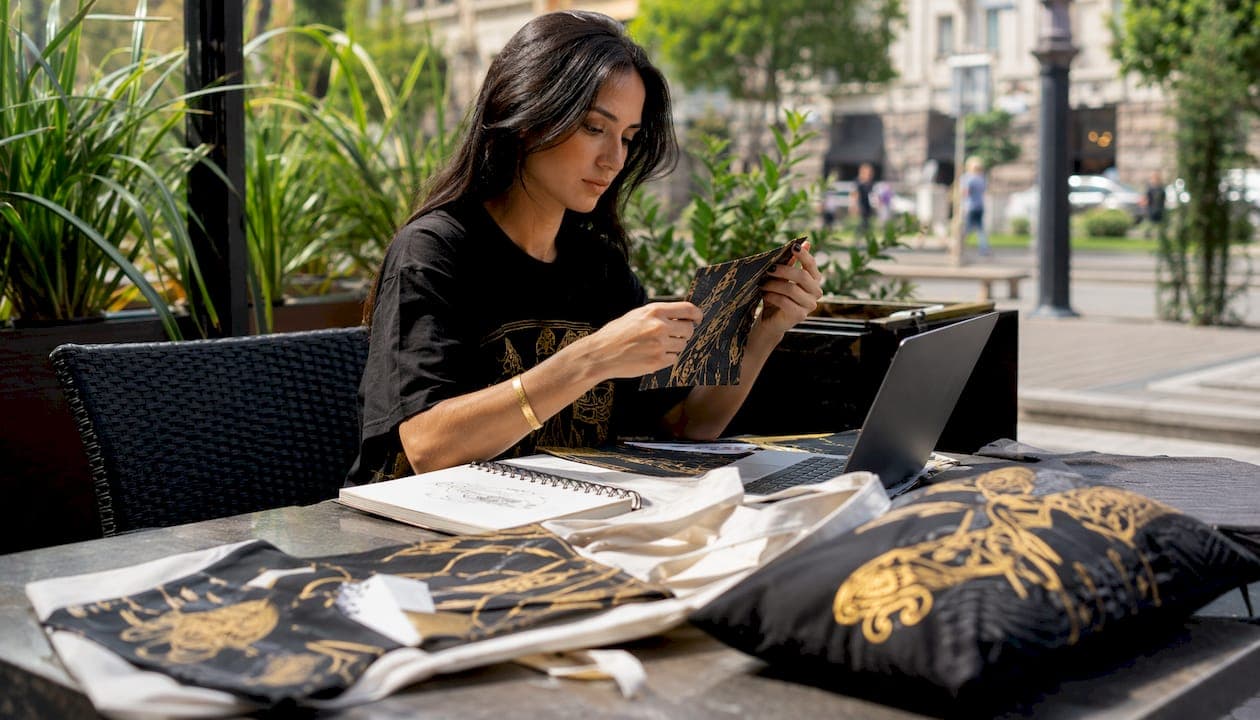
What is print on demand, exactly?
Print on demand (POD) is a business model where products are made only after a customer places an order. No inventory. No bulk production runs. No boxes stacked in your garage. A third-party fulfillment partner prints, packs, and ships each item directly to your customer under your brand name.
Here's what that looks like in practice:
- No upfront stock: You only pay production costs after a sale clears.
- Third-party fulfillment: Your POD partner handles printing, packaging, and shipping.
- Custom products on demand: T-shirts, hoodies, swimwear, hats, sneakers, phone cases, home goods, and more.
- Your brand, their infrastructure: The customer receives a package that looks like it came from you.
- Low barrier to entry: No warehouse, no equipment, no minimum order quantities.
The model works because digital printing technology can produce a single item cost-effectively. That's what makes it fundamentally different from traditional screen printing, which typically requires bulk orders to break even.
How print on demand works, and who it's built for
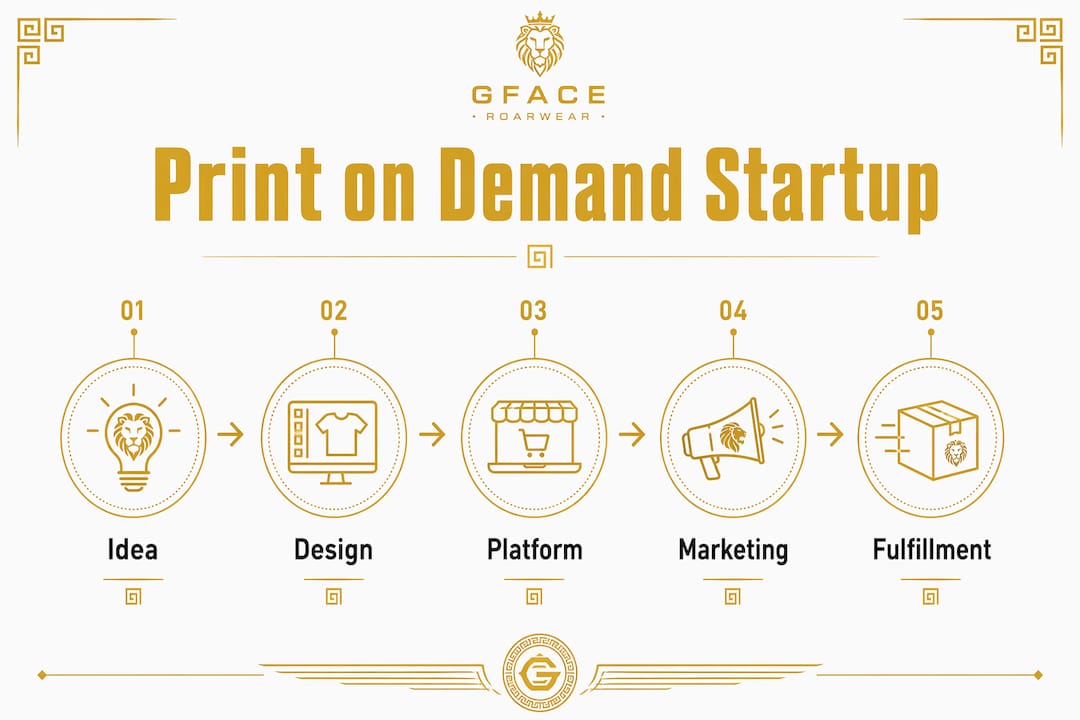
The workflow is fully automated once your store is live. A customer visits your online store, picks a product, and checks out. That order routes automatically to your POD provider, who prints the design, packages the item, and ships it directly to the buyer. You collect the difference between your retail price and the production cost.
POD fits a wide range of entrepreneurs and creatives:
- Artists and designers who want to sell their work without managing logistics
- Influencers and content creators building merchandise around their audience
- Niche brand builders targeting specific communities (streetwear, fitness, cultural identity)
- Small retailers testing new product lines without inventory risk
- Side-hustle entrepreneurs who want low overhead and flexible hours
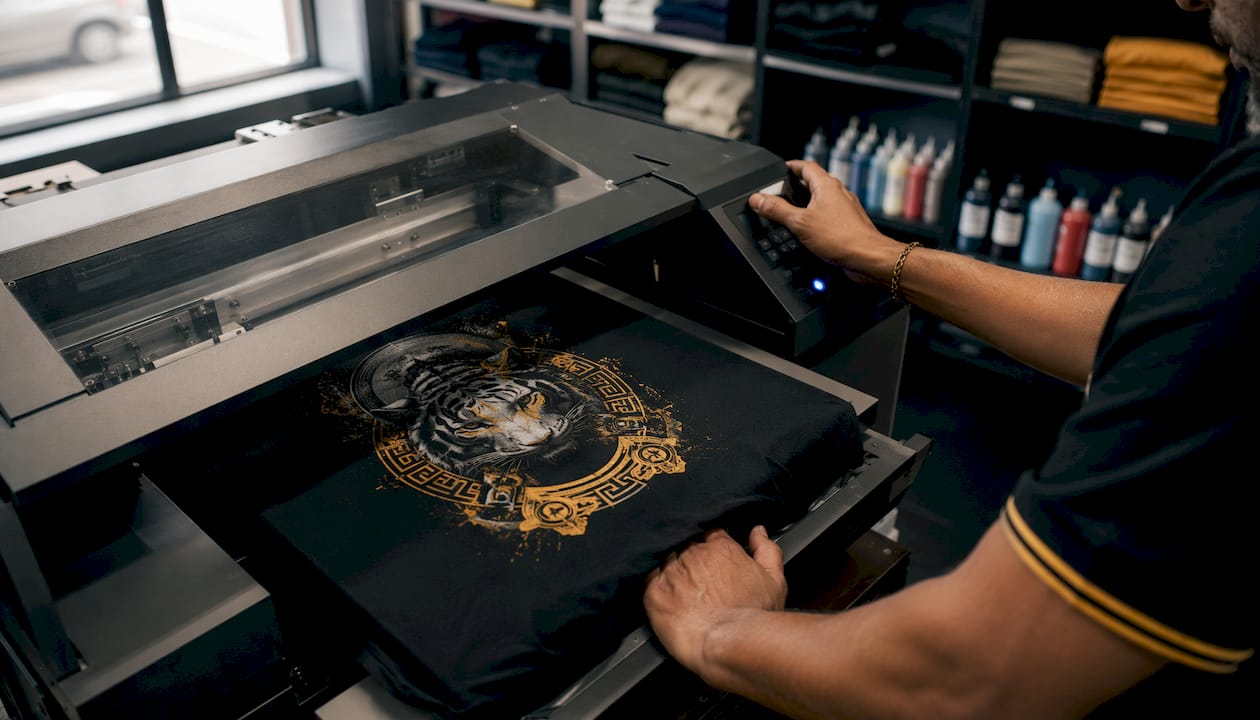
The technology behind it, specifically direct-to-garment (DTG) and all-over print (AOP) methods, makes it possible to produce complex designs on a single item without sacrificing quality. That's how a brand can offer lion-print sneakers or custom swimwear across a full size run without holding a single unit in stock.
How to start a print on demand business in the US
Getting started takes less time than most people expect. The real work is in the decisions you make before you launch.
- Pick your niche. Generic stores rarely win. Choose a specific audience, whether that's streetwear fans, gym culture, Boricua pride, or pet lovers, and build your designs around that identity.
- Create your designs. Use tools like Adobe Illustrator, Canva, or Procreate. Your designs are your product. Invest in them.
- Choose a POD provider. Printify and Printful are the two dominant US options. Both integrate directly with Shopify and other platforms.
- Build your online store. Shopify is the most common choice for POD sellers. Connect your store to your POD provider so orders route automatically.
- Set your pricing. Calculate your production cost, add your desired margin, and price competitively. A T-shirt with a fulfillment cost of $9.64 might retail at $30 depending on your brand positioning.
- Address the legal basics. You don't legally need an LLC to start, but forming one protects your personal assets as revenue grows. A sole proprietorship works for testing the concept.
- Plan your marketing. Social media, short-form video, and UGC content drive most POD sales. Build your audience before or alongside your store launch.
Pro Tip: Order samples of every product before you list it. You need to see the print quality, feel the fabric, and check sizing accuracy firsthand. Customers who receive something that doesn't match the mockup don't come back.
Which product categories and niches perform best in 2026?
The most profitable POD items combine unique, high-demand designs with high perceived value. Generic products at average prices rarely generate meaningful margins. Niche targeting is what separates a store that earns from one that stalls.
Top-performing product categories:
- Apparel: T-shirts, hoodies, joggers, and jerseys remain the core. Streetwear with bold graphic identities commands premium prices.
- Swimwear: Limited-edition swimwear drops generate urgency and strong sell-through. Brands like Gfacegear have built entire campaigns around pieces like the Limited Boriqua Swimwear collection.
- Footwear and accessories: Custom sneakers, hats, and bags are growing POD categories with high perceived value.
- Home goods: Posters, mugs, and throw pillows serve lifestyle-driven niches well.
Profitable niche angles in 2026:
- Cultural identity apparel (Latinx, Caribbean, African diaspora themes)
- Luxury streetwear with limited-edition drops
- Fitness and athleisure with branded design systems
- Fan-driven merchandise tied to creators or communities
The lion imagery and Greek Key medallion aesthetic that Gfacegear built its identity around is a textbook example of niche specificity. It's not just a T-shirt. It's a statement for a specific person who wants to wear their confidence.
Printify and Printful: the two leading US POD providers
Both platforms dominate the US market and integrate directly with Shopify, Etsy, WooCommerce, and other major storefronts.
Printify is trusted by over 10 million sellers globally and offers more than 1,300 customizable products. It holds a 4.8 rating on both Shopify and Trustpilot. The platform is free to use, and sellers set their own profit margins. A standard T-shirt fulfillment cost runs around $9.64, though pricing varies by product and print provider within the network.
Printful operates printing and fulfillment facilities in Charlotte, NC, giving it strong domestic shipping speeds. It specializes in apparel and accessories with deep integration across major ecommerce platforms. Printful is also free to start, with no monthly fees, and charges only when an order is placed.
Both platforms handle printing, packing, and shipping under your brand. The key difference is scale of catalog versus control of production. Printify connects you to a global network of printers; Printful owns its facilities.
Is print on demand profitable? What you can realistically earn
POD is low-risk but not guaranteed profitable. Your costs include production, platform fees, and marketing. Profit depends on how well you build your brand and how targeted your niche is.
A few honest realities:
- Margins vary widely. A $30 T-shirt with a $9.64 production cost leaves about $20 gross before marketing spend.
- Volume matters. Low-ticket items require consistent sales to generate meaningful income.
- Brand positioning drives price. A generic tee competes on price. A branded, story-driven piece commands a premium.
- POD is not passive income. Active management of marketing, customer service, and product quality is required.
Do you need an LLC? No, not to start. But as your revenue grows, an LLC separates your personal finances from business liability. Most POD sellers start as sole proprietors and formalize later.
Is POD still profitable in 2026? Yes, when approached as a real brand-building exercise. Sellers who treat POD as a passive income shortcut consistently underperform. Sellers who invest in design, community, and limited-edition drops consistently outperform.
How branding drives POD success: lessons from a streetwear brand
Gfacegear is a Brooklyn-born POD streetwear brand built around the "ROAR" identity: lion imagery, Greek Key medallions, and the tagline "grab destiny with both hands and let the World Hear You ROAR." The brand runs limited-edition drops like the Limited Boriqua Swimwear collection and markets primarily through social media and short-form UGC video.
What makes this model work is specificity. The lion motif isn't decoration. It's a worldview that attracts a specific customer who sees themselves in it. That clarity of identity is what allows a POD brand to charge premium prices and build genuine loyalty, rather than competing on cost against every other generic storefront.
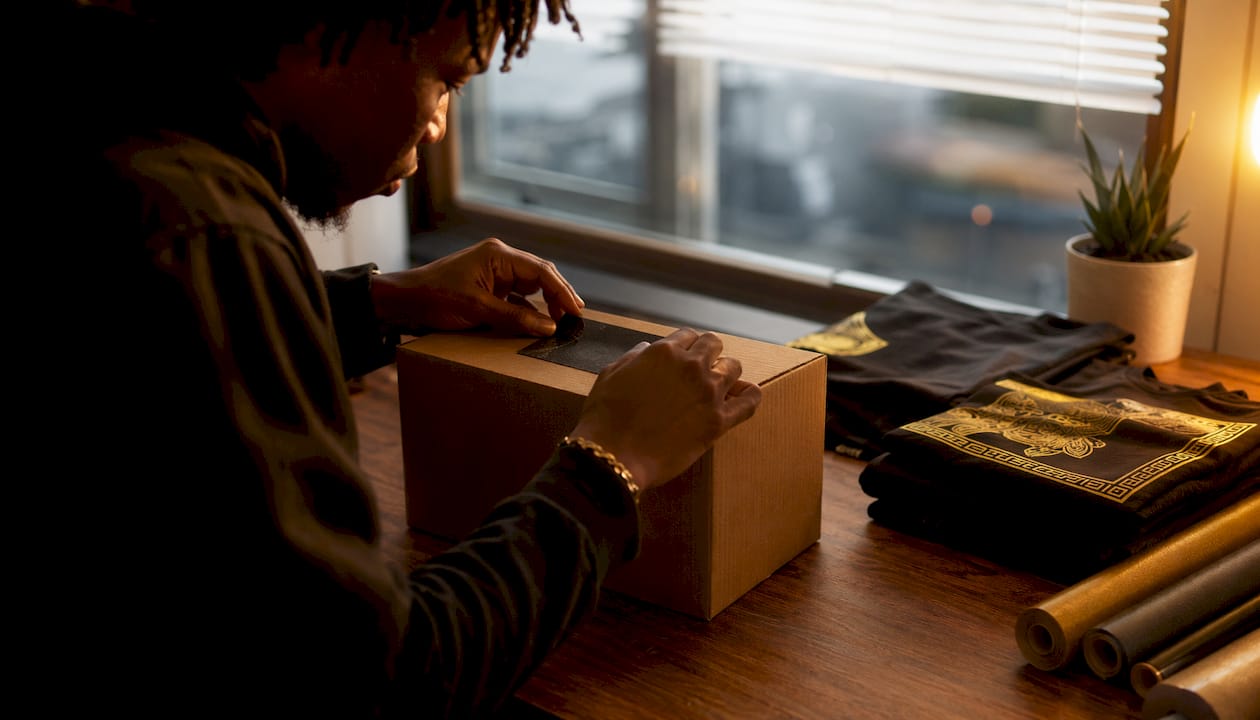
Limited drops create scarcity. Scarcity creates demand. And branded packaging, even simple touches like a custom sticker or branded packing slip, turns a fulfillment package into a brand experience.
What printing technologies power print on demand?
Two methods dominate the POD industry for apparel:
Direct-to-garment (DTG) printing works like an inkjet printer for fabric. It produces detailed, full-color designs on individual items without setup costs. Best for complex artwork and photographic prints on cotton-heavy fabrics.
All-over print (AOP) uses sublimation or cut-and-sew techniques to cover the entire surface of a garment. This is how POD brands produce single-item swimwear and athletic wear with edge-to-edge patterns. It's the technology behind lion-print sneakers and full-coverage hoodies.
Both methods enable just-in-time production, meaning no item is made until it's sold. That's the core technical advantage that makes the POD model economically viable at small scale.
Common challenges in print on demand, and how to handle them
Thin margins. Production costs plus platform fees plus ad spend can eat your profit fast. The fix is brand positioning that justifies higher retail prices, not racing to the bottom on cost.
Quality inconsistency. POD providers vary in print quality across product types. Order samples before listing. Check color accuracy, print placement, and fabric feel.
Shipping times. Domestic fulfillment typically runs 3–7 business days. International orders take longer. Set clear expectations on your product pages and confirmation emails.
Design theft. Your designs can be copied. Register original artwork with the US Copyright Office for legal protection.
Customer service load. Brand owners handle all customer service even though the POD provider handles fulfillment. Returns, sizing complaints, and lost packages land on your desk. Build clear size charts and a transparent return policy before you launch.
Quality control and delivery logistics in print on demand
You don't control the print floor, but you do control what gets listed and how expectations are set. Accurate mockups, detailed size charts, and honest product descriptions reduce returns significantly.
For delivery, most US-based POD providers ship domestically within 3–7 business days after production. Production itself typically adds 2–5 business days. Communicate this timeline clearly. Customers who know what to expect rarely complain; customers who don't, always do.
Branded packaging inserts, custom stickers, and thank-you cards can be added through some providers and go a long way toward making a third-party-fulfilled package feel like it came directly from your brand.
Legal considerations: copyright, trademarks, and business structure
Three legal areas matter most for POD sellers:
Copyright: Your original designs are automatically protected under US copyright law the moment you create them. For stronger legal standing, register them with the US Copyright Office.
Trademarks: Never use trademarked logos, characters, or phrases on POD products without a license. This includes sports team logos, cartoon characters, and celebrity likenesses. POD platforms will remove listings that violate trademark law, and you can face legal action.
Business structure: A sole proprietorship is fine to start. An LLC becomes worth the filing cost once you're generating consistent revenue and want to separate personal liability from business risk.
Key Takeaways
Print on demand lets you build a real brand and sell custom products with zero inventory risk, but profitability requires active brand building, niche focus, and consistent marketing.
| Point | Details |
|---|---|
| Zero inventory required | Products are made only after a customer orders, eliminating upfront stock costs. |
| Top US providers | Printify (10M+ sellers, 4.8 Shopify rating) and Printful (Charlotte, NC facilities) lead the US market. |
| Profitability is earned | Margins depend on brand positioning and niche targeting, not just listing products. |
| Branding drives premium pricing | Limited-edition drops and cohesive design identity, like Gfacegear's ROAR theme, justify higher prices. |
| Legal basics matter | Use original designs, avoid trademarked content, and consider an LLC as revenue grows. |
FAQ
What is the most profitable print-on-demand item?
Limited-edition apparel with strong brand identity, such as streetwear, custom swimwear, and graphic tees tied to a specific niche, consistently outperforms generic products because brand positioning supports higher retail prices.
Do I need an LLC to start a print-on-demand business?
No. You can start as a sole proprietor with no formal business structure. An LLC becomes worth forming once you have consistent revenue and want to protect personal assets from business liability.
Is print on demand still profitable in 2026?
Yes, for sellers who treat it as a real brand-building effort. POD sellers who invest in design quality, community engagement, and limited drops outperform those who list generic products and wait for passive income.
How much money can you make from print on demand?
Earnings vary widely based on niche, pricing, and marketing. A T-shirt with a $9.64 production cost sold at $30 leaves about $20 gross before marketing expenses. Volume and brand strength determine whether that adds up to a side income or a full business.