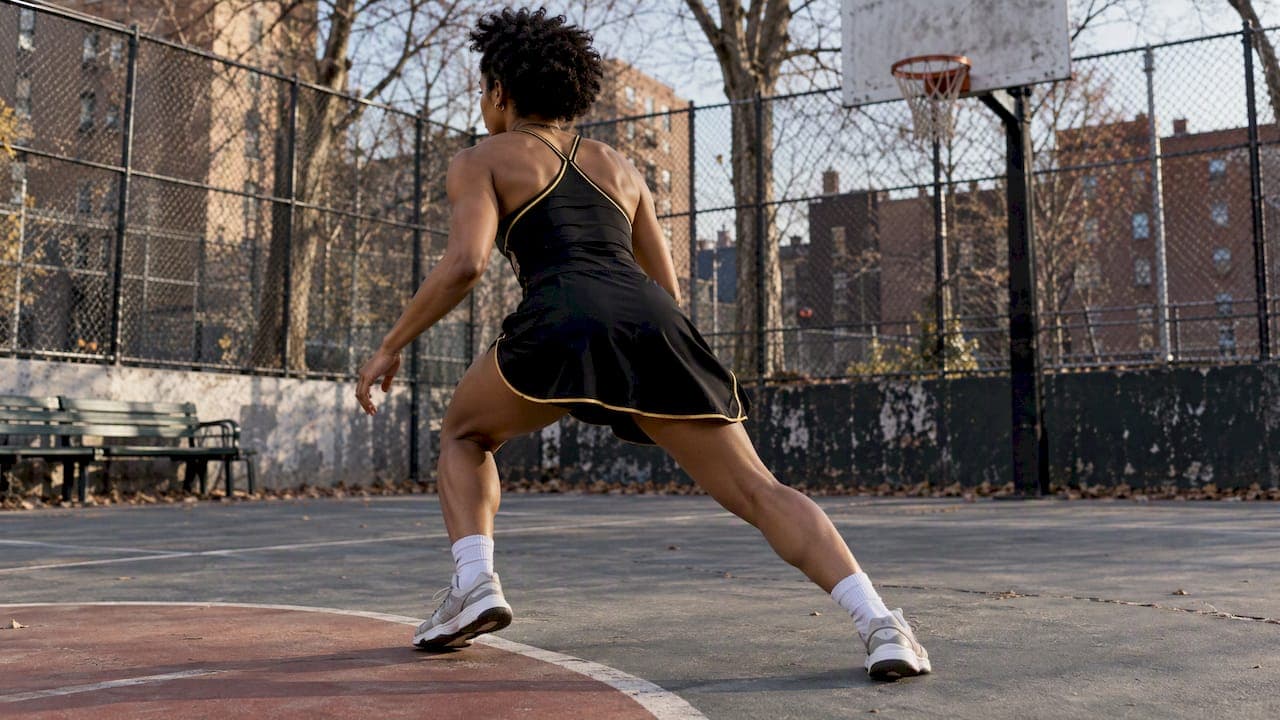
The easiest athletic dress outfit to live in pairs a sport-adjacent dress with built-in support, a secure waistband, and court-style sneakers. That combination moves with you, holds everything in place during a squat or a sprint for the bus, and still reads put-together when you walk into a coffee shop. Match the shoe to the activity, layer for the temperature, and the rest of the outfit takes care of itself.
TL;DR:
- Choosing a fabric with moisture-wicking and stretch properties improves comfort and durability in active settings, especially in warmer weather.
- Support features like built-in bras, liners, and flat waistbands are essential for maintaining security during high-movement activities.
- A-line or relaxed silhouettes provide the versatility needed for travel or casual wear, while compressive cuts suit intense workouts like running or tennis.
- Proper fitting involves performing movement tests to ensure the dress supports and moves with your body without shifting or rolling.
- Investing in multiple styles across different price points offers more functional options than splurging on one high-end piece.
Table of Contents
- Six athletic dress outfits you can copy today
- How to choose the right athletic dress for your body and activity
- Styling rules: shoes, socks, layers, and accessories
- Victor's fit-and-style checklist for athletic dresses
- Caring for your athletic dress so it lasts
- What to budget for an athletic dress
- A note on confidence, movement, and showing up
- Shop athletic dresses and sport-adjacent gear at GfaceGear
- FAQ
- Sources
Six athletic dress outfits you can copy today
Tenniscore has turned the athletic dress into one of the most flexible pieces in a closet. The strongest sport-adjacent looks work as versatile investment pieces that move from the court to the sidewalk without a wardrobe change, and that's the whole appeal: one dress, several occasions.
- Tennis dress, court sneakers, and a visor for active errands or actual court play. The pleated skirt moves freely, the built-in shorts handle lunges, and the visor keeps glare out of your eyes between games.
- A-line athletic dress, chunky sneaker, and a denim jacket for travel days and casual outings. The A-line cut forgives a long flight or a long walk, while the denim jacket covers the shift from a cold terminal to a warm destination.
- Fitted racerback dress, running shoes, and a zip hoodie for runs and studio classes. The racerback keeps your shoulders free through a full range of motion, and the zip hoodie comes off fast once you warm up.
- Skort-style dress and cross-trainer sneakers for the gym or a HIIT circuit. The built-in shorts mean you can drop into a lunge or jump rope without worrying about coverage.
- Sweater-knit athletic dress, slides, and a cap for athleisure days and coffee runs. This is the low-effort version: soft fabric, zero structure, maximum comfort.
- Long tee dress over leggings, high-tops, and a varsity jacket for layered streetwear looks. This one leans furthest from sport and furthest into style, borrowing the oversized silhouette that works just as well with basketball jersey outfits off the court.
What ties these six together is that none of them are costume-like. Each outfit reads as something you'd actually wear outside of a gym, which is the real test of sport-adjacent dressing. For more combinations that lean into the sneaker-forward side of this trend, our sneaker outfit ideas guide breaks down eight more looks you can build around a single pair of shoes.
How to choose the right athletic dress for your body and activity
Picking the right athletic dress comes down to five decisions: fabric, support, silhouette, features, and size. Get those right and the dress works as hard as you do.
- Fabric: choose breathable, moisture-wicking, stretch fabric over cotton blends, since cotton holds sweat and loses its shape under movement.
- Support: look for a built-in bra, a liner or attached shorts, and a waistband that sits flat without digging in.
- Silhouette: go compressive for runs, HIIT, or tennis, and relaxed A-line for travel, errands, or all-day wear.
- Features: pockets, UV protection, and odor-control finishes matter more during long or high-output activities than during a casual walk.
- Sizing: size down for a compressive fit you'll train in, size up for a relaxed fit you'll live in.
Fabric choice matters more in warmer months, when breathability determines whether a dress feels functional or miserable. Our breathable fabric guide covers the three rules worth knowing before you buy anything for summer.
Pro Tip: If you're unsure between two sizes, size toward the activity you'll do most often in the dress, not the one you do occasionally.
Styling rules: shoes, socks, layers, and accessories
Once you've picked the dress, the rest of the outfit follows a few simple rules.
- Shoes: court sneakers for tennis-adjacent looks, running shoes for cardio, chunky sneakers for travel and casual wear, and slides for low-effort days.
- Socks: no-show socks work with court sneakers and running shoes, while crew socks pair better with chunky, retro-styled sneakers.
- Layers: a zip hoodie or denim jacket handles temperature swings without covering the dress entirely; a varsity jacket adds structure for streetwear looks.
- Accessories: visors, belt bags, and crew socks are practical additions, while statement jewelry or scarves tip the look toward decorative rather than sport-adjacent.
- Color and texture: stick to solid colors, mesh panels, or ribbed knits to keep the sport-adjacent feel intact, and save prints for the casual layers on top.
The goal is a look that still feels functional even when you're not actively working out. That's the line between athleisure and costume.
Victor's fit-and-style checklist for athletic dresses
Before you commit to a dress, run it through a few quick checks instead of just looking in the mirror.
- Two-minute move test: lift your arms overhead, squat, and jog in place to see if the support holds and the fabric moves with you.
- Waistband and bra check: confirm the waistband sits flat without rolling, and the built-in support feels secure, not just snug.
- Length and coverage: shorter hems work for court and gym activities, while longer hems suit travel and casual wear.
- Sizing call: size down for compressive fits built for training, size up for relaxed fits built for comfort.
Pro Tip: Do the move test in the dressing room before you buy. A dress that looks great standing still can shift completely once you squat or reach overhead.
Feeling supported in what you wear isn't just about looks. Comfortable, confidence-boosting activewear reduces the mental distraction of constant outfit adjustments, which means you can focus on your run, your match, or your day instead of your hemline.
Caring for your athletic dress so it lasts
Athletic fabrics need gentler handling than your average cotton tee, mostly because the stretch and moisture-wicking properties break down faster under heat and harsh detergent.
Wash athletic dresses in cold water and skip the fabric softener, since softener coats synthetic fibers and blocks the moisture-wicking finish that makes the fabric useful in the first place. Turn the dress inside out before washing to protect any built-in shelf bra or printed details, and use a mesh laundry bag if the dress has delicate mesh panels or lace trim.
Skip the dryer when you can. Air-drying keeps the elastic in the waistband and shorts liner from breaking down early, which is usually the first part of an athletic dress to wear out. If you must use a dryer, choose the lowest heat setting.

Spot-clean sweat stains as soon as possible rather than letting them sit, since body oils and sweat salts can yellow light-colored fabrics over time. A quick rinse right after a workout extends the life of a dress far more than an occasional deep wash.
Store athletic dresses folded rather than hung on thin hangers, which can stretch out the shoulder straps on racerback and fitted styles over weeks of storage.
What to budget for an athletic dress
Athletic dresses span a wide price range depending on the brand, the fabric technology, and whether the piece is mass-produced or made in smaller batches. Budget options prioritize basic moisture-wicking fabric and simple construction, while higher-priced pieces usually add compression paneling, UV protection, or more durable built-in support.
If you're building a small rotation rather than one dress, it's worth spreading your budget across a few silhouettes instead of one expensive piece: one compressive dress for workouts, one relaxed A-line for travel and errands, and one knit style for low-key athleisure days. That spread covers more occasions than a single splurge item.

Limited-edition or made-to-order pieces, including small-batch drops, often carry a different price logic than mass-market activewear since they're produced in smaller runs rather than restocked indefinitely. Factor that into your budget if a specific print or colorway matters to you, since those pieces may not come back once they sell out.
A note on confidence, movement, and showing up
The right outfit doesn't just look good, it clears your head. When a dress fits and moves with you, you stop adjusting and start focusing on what you came to do. That's the whole point of Gameface: put on something built for movement, and let the rest of your day follow.
— Victor
Shop athletic dresses and sport-adjacent gear at GfaceGear
Our made-to-order dresses are built with the same sport-adjacent, streetwear-forward silhouettes covered above: pieces designed to move from a workout to a casual day without missing a beat. Every drop is produced on demand, so sizing and fit stay consistent with what you choose.

- Browse dresses, sneakers, and more across our full shop.
- Check out hoodies and jackets for layering over fitted or racerback styles.
- Join The Pride Membership for sitewide discounts, early access to limited drops, and VIP perks, according to our membership page.
Limited-edition drops move fast and don't restock once they're gone, so grab your size while it's available.
FAQ
What to wear with an athletic dress?
Pair an athletic dress with sneakers that match the activity: court sneakers for tennis-style dresses, running shoes for fitted racerback styles, and chunky sneakers for A-line or travel looks. Add a zip hoodie, denim jacket, or varsity jacket depending on the temperature and how dressed up you want the look.
What is the most flattering athletic dress?
The most flattering style depends on your activity and comfort preference rather than one universal cut. Sport-adjacent dressing works best when the dress is a versatile piece, so a compressive fit suits active use while a relaxed A-line suits all-day comfort.
What dress shape is most flattering for an athletic build?
A-line and racerback silhouettes tend to work well for an athletic build because they balance a fitted top with room to move through the shoulders and hips. The right shape ultimately depends on the activity: compressive cuts for training, relaxed A-line cuts for everyday wear.
What kind of shoes to wear with an athletic dress?
Match the shoe to the activity: court sneakers for tennis-style dresses, running shoes for workouts, cross-trainers for the gym, and chunky or retro sneakers for casual and travel looks. Slides work for low-effort athleisure days when you're not planning to move much.
How do I know if an athletic dress fits correctly?
Run a quick movement test by lifting your arms overhead, squatting, and jogging in place to check that the support holds and the fabric doesn't pull at the seams. If the waistband rolls or the built-in bra shifts during that test, size up or down depending on whether you need a compressive or relaxed fit.
Sources
- Keely Hodgkinson is Proof: Clothes Change the Way We Move | Marie Claire UK
- Clothing size guide | Built for Athletes