
For most hot-weather days, grab linen or an open-weave lightweight cotton first. TENCEL or lyocell earns its spot for drape and moisture handling, lightweight silk covers evening wear, and fine merino steps in when you need warmth regulation, not just cooling. It comes down to three things: the fibre, how open the weave is, and how much the fabric weighs. Here's how to pick right, test it yourself, and keep it performing all season.
TL;DR:
- Linen remains the top choice for prolonged daytime heat because its hollow fibers absorb and quickly release moisture, keeping you cooler.
- Fabrics with a GSM below 160 are most breathable, while those above 250 GSM tend to trap heat, regardless of fiber type.
- Open-weave fabrics like voile and muslin are ideal for high airflow, but their lightweight and open texture can snag or thin over time.
- TENCEL and lyocell outperform most cottons in humidity and active conditions due to their superior moisture vapor management.
- Proper care, such as avoiding high heat in laundry and choosing loose cuts, is essential to maintain fabric breathability and performance.
Table of Contents
- Breathable Fabrics for Summer: A Quick Shopper Reference
- Why Fibre, Weave, and Weight Decide How Cool You Feel
- Best Fabrics by Situation: Heat, Humidity, Travel, Work, and Evening
- How to Check Breathability Before You Buy
- Care and Laundering Tips to Keep Fabrics Breathing
- How Gfacegear Picks Fabrics for Summer Streetwear Drops
- Gear Up for the Heat With Gfacegear
- Sources
- FAQ
Breathable Fabrics for Summer: A Quick Shopper Reference
You don't need a textile degree to shop smart. You need to know what each fabric does well and where it falls short. Here's the roster worth knowing before you hit checkout:
- Linen (flax): The heat-beating standard. Flax fibres are hollow, which lets air move through the cloth and moisture escape fast. The trade-off is wrinkling. Linen creases the second you sit down, and no amount of steaming fully fixes that.
- Cotton voile, poplin, gauze, muslin: Lighter cotton weaves that trade durability for airflow. Voile and muslin run especially open and soft, ideal for everyday wear, but they can snag and thin out faster than a tighter weave like poplin.
- Seersucker: Puckered cotton weave that holds itself off your skin, creating a built-in air gap. Great for travel since it barely wrinkles. The catch: it only works if it's all cotton. Blends kill the texture and the cooling effect with it.
- Chambray: A lightweight, plain-weave cotton that looks like denim but breathes like a summer shirt. Versatile for work or travel, though it runs a bit heavier than voile or muslin.
- TENCEL/lyocell: A regenerated cellulose fabric that wicks moisture efficiently and drapes like a heavier fabric while staying light. It handles humidity better than most cottons, but it can run pricier and needs gentler laundering.
- Modal/rayon: Soft, absorbent, and quick-drying in lightweight knits. Rayon in particular can lose shape when wet, so check the care label before you buy.
- Lightweight cotton jersey: Comfortable and breathable in a loose cut, but knit jerseys trap more heat than an open weave once they're fitted tight to the body.
- Silk chiffon/crepe: Lightweight and elegant for evening, with real cooling properties, but it shows sweat marks fast and demands careful handling.
- Fine merino wool: Counterintuitive but real. Merino regulates temperature and resists odor, making it a smart pick for travel or situations where you need one fabric to do more than just cool you down.
Why Fibre, Weave, and Weight Decide How Cool You Feel
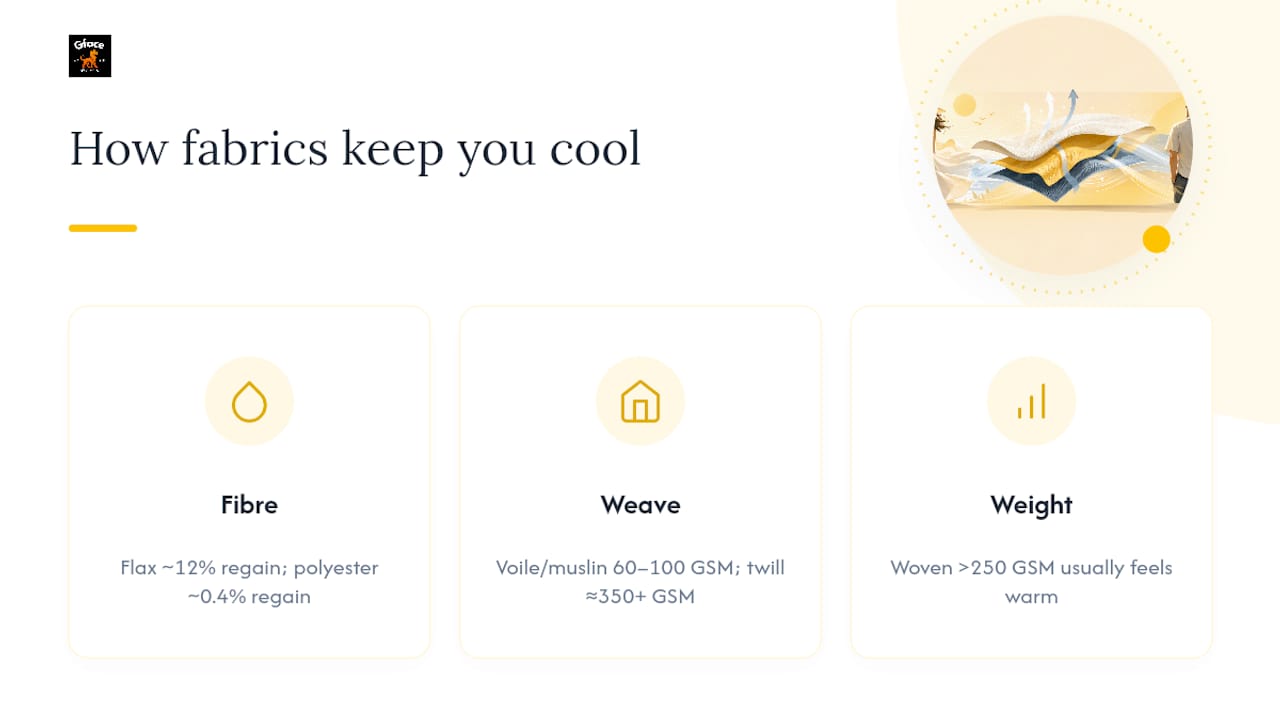
A fabric feels cool for one of three physical reasons, and usually all three at once: the fibre absorbs and releases moisture vapor, the weave is open enough to let air pass through, and the fabric weighs little enough that it doesn't sit heavy against your skin.
Start with moisture regain, which measures how much water a fibre can absorb relative to its own weight. Flax absorbs roughly 12% of its weight in moisture and releases it quickly, which is why linen dries fast even when it's soaked through with sweat. Polyester, by contrast, holds around 0.4% moisture regain, which explains why a poly shirt feels clammy the second humidity climbs. Wool and silk sit higher on the regain scale than cotton, which is part of why merino performs better in heat than people expect.
Weave matters just as much. Voile and muslin run around 60 to 100 grams per square meter (GSM) as open plain weaves, while denim twill can hit 350 GSM or more and traps heat regardless of the fibre used to make it. Watch for named constructions like voile, batiste, poplin, chambray, seersucker, and twill on the label. As a rough rule, woven shirts above 250 GSM tend to feel warm no matter what they're made of.
You can test both without a lab. Hold the fabric up to light. If you can see daylight through it clearly, air is moving through it too.
Best Fabrics by Situation: Heat, Humidity, Travel, Work, and Evening
Matching fabric to moment beats chasing one "best" material for everything. Here's how the picks shift by scenario:
- Daytime, sustained heat: Lightweight linen, muslin, or gauze in a loose cut. Fit matters here almost as much as fibre. A loose linen shirt outperforms a tight cotton tee because airspace against the skin does real work.
- Humid, active days: Open-weave cottons, TENCEL/lyocell, or modal. Lyocell scores high for moisture vapor transmission, which matters more than pure lightness once sweat is heavy and constant.
- Travel, low-maintenance needs: Seersucker, chambray, or linen blends. Seersucker's puckered texture provides its own airflow gap and needs no pressing, which is a real win when you're packing light.
- Work, tailored settings: Tropical worsted wool, cotton poplin, or unlined linen blends. These hold a crease and a silhouette while still breathing far better than standard suiting wool.
- Evening, dressed up: Silk chiffon or fine lyocell. Both look sharp under lights, though silk shows perspiration marks more visibly than most synthetics or cottons, so plan your color choices accordingly.
How to Check Breathability Before You Buy
You can judge a garment's summer performance in under a minute, whether you're standing in a store or scrolling a product page.
- Read the fiber content first. Look for high percentages of cotton, linen, TENCEL, lyocell, or modal. Blends running past roughly 30% polyester in a woven shirt tend to lose most of the natural-fiber cooling advantage.
- Hold it to light. If light passes through evenly, air will too. A dense, shadowy weave stays warmer no matter what fibre it's made from.
- Check the texture. Puckered seersucker, visible open weaves like voile, or a slightly rough hand on chambray are all good signs.
- Ask for the GSM if you're unsure. Sellers who know their product will have this number. Under roughly 160 GSM is a solid target for hot-weather wear.
- Choose your cut. Looser fits preserve airspace and boost any fabric's real-world performance. For actual workouts, switch to a moisture-wicking technical knit instead of a natural fibre.
Pro Tip: Breathe through the fabric like you would a mask. If air moves easily, that garment is going to earn its spot in your summer rotation.
Care and Laundering Tips to Keep Fabrics Breathing
Breathability doesn't survive bad laundry habits. Linen and cotton handle machine washing in cool or warm water fine, but high heat in the dryer tightens the weave over time and dulls the airflow that made you buy the piece in the first place.
- Linen and cotton: Machine wash cool to warm, and reshape linen while it's still damp since that's when it's most cooperative.
- TENCEL/lyocell: Gentle cycle, cold water, air-dry when possible to protect the drape.
- Silk: Hand wash or gentle cycle only, always air-dry, never wring.
- Blends with a touch of synthetic: Often preferable for reduced ironing while keeping most of the breathability, a fair trade if you travel often.
- On the road: Hang pieces to air out between wears and use a light steam instead of a hot iron to keep the fibres relaxed and breathing.
How Gfacegear Picks Fabrics for Summer Streetwear Drops
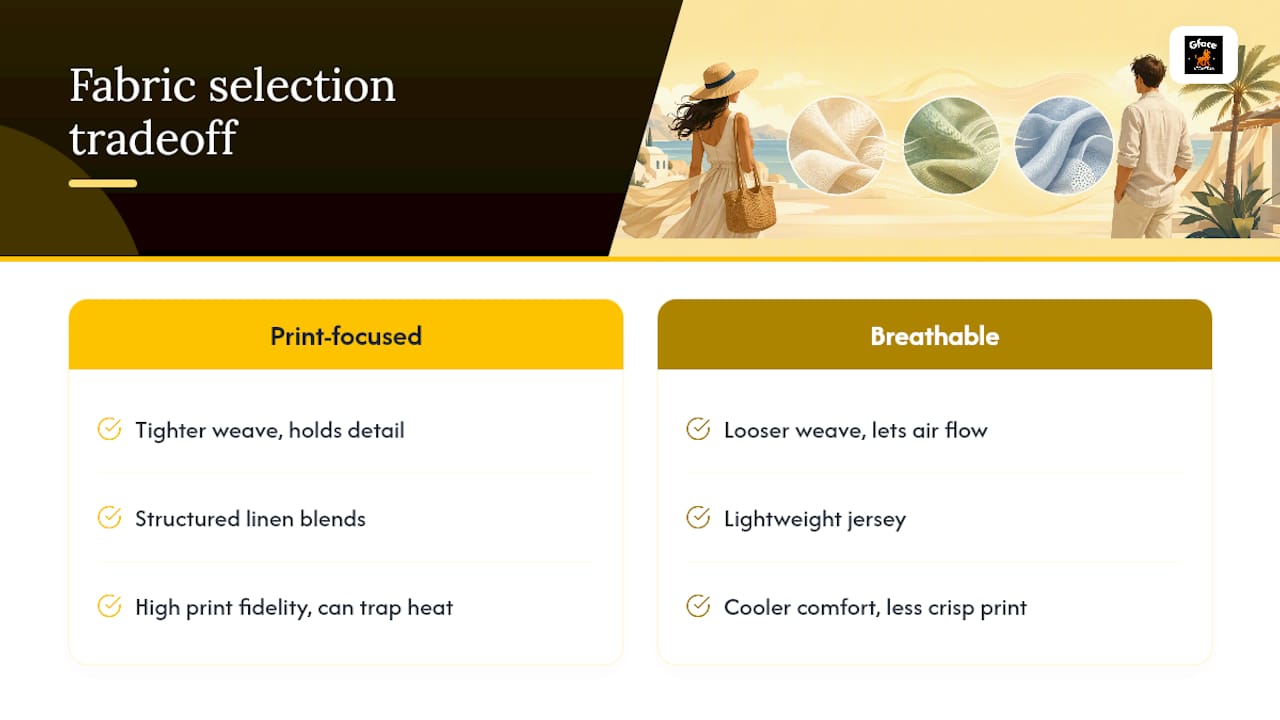
Every drop out of Brooklyn runs through the same filter: does this fabric let you move, sweat, and still look sharp when you step out. That's the tension behind every limited run, including pieces like the Limited Boriqua Swimwear. Print quality wants a tighter weave to hold detail. Breathability wants the opposite. We balance lightweight jersey against structured linen blends depending on the silhouette, because a piece that looks fire but traps heat isn't wearable past ten minutes outside. That's not the standard. The Roar doesn't come with a side of discomfort.
Gear Up for the Heat With Gfacegear
You've got the fabric knowledge now. Time to put it to work. Gfacegear builds its warm-weather drops around exactly what this guide covers: loose-cut tees, lightweight long shirts, and limited-edition swimwear cut for airflow, not just looks. Whether you're chasing that lion-and-Greek-key energy on the block or repping the Roar poolside, the pieces are built to move with you, not against you.
Check the current swim trunks streetwear lineup for cuts that work in and out of the water, or browse the full summer streetwear outfit ideas to build a rotation that breathes as hard as you move. For a deeper technical reference on fabric properties beyond streetwear, the fabric comparison chart from Darius Designer Fabrics is worth a look. Head to Gfacegear and shop the drop before your size sells out.
Sources
- Best Fabrics For Summer | What Keeps You Cool And What Fails - Mojeh
- How to Pick the Most Breathable Fabrics | REI Expert Advice
- What Are Breathable Fabrics? 12 Best Materials for Hot Summer | Suvetah
- Best Fabrics for Summer & Warm Weather | Fabriculture Inc.
FAQ
What Is the Most Breathable Fabric for Summer?
Linen leads the pack for sustained daytime heat because its hollow flax fibres absorb roughly 12% of their weight in moisture and release it fast, but open-weave lightweight cottons like voile and muslin come close at a lower price point.
Is TENCEL or Lyocell Better Than Cotton for Hot Weather?
TENCEL and lyocell manage moisture vapor more efficiently than most cotton, making them a stronger pick for humid or active days, while cotton stays the easier, more affordable everyday choice.
What GSM Is Considered Breathable for Summer Fabric?
Fabrics under roughly 160 GSM generally perform best in heat, and woven shirts above 250 GSM tend to feel warm regardless of the fibre used.
Is Moisture-Wicking the Same as Breathable?
No. Moisture-wicking synthetics move sweat along the surface of the yarn for active use, while breathable natural fibres like linen and cotton absorb moisture into the fibre itself and release it, which works better in still, humid air.
Does this brand offer breathable summer clothing?
Yes. Warm-weather drops often focus on loose-cut tees, lightweight shirts, and limited-edition swimwear chosen to balance airflow with print detail.