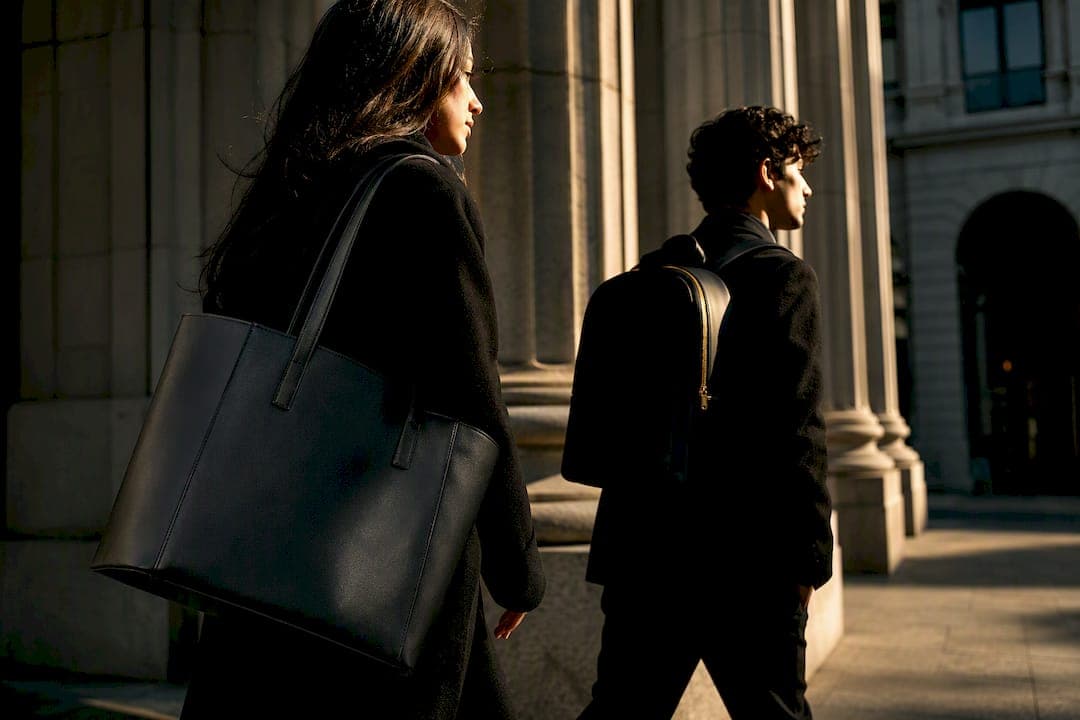
For heavier daily loads and long walks, pick a backpack. For light, style-forward days, pick a tote. If you regularly carry more than 5 to 6 pounds or walk 20 minutes or more, the backpack wins on comfort. Sensitive back or shoulders, frequent commuting, or a packed schedule all point the same direction: strap in, not sling on.
TL;DR:
- Backpacks are preferable for carrying more than 5 to 6 pounds or walking over 20 minutes, as they distribute weight evenly and reduce lumbar stress.
- A well-designed backpack at 15% of your body weight handles daily loads better than standard styles, minimizing strain on your back and shoulders.
- Medium backpacks with dedicated laptop sleeves excel at organizing heavier tech and work essentials compared to most totes.
- Zip-top backpacks with security features are more suitable for travel and crowded environments than open-top totes, which trade safety for quick access.
- For style, structured totes match formal or polished outfits, while nylon or canvas backpacks suit casual or active looks, depending on your occasion.
Table of Contents
- Ergonomics and health: how each carry style affects your back and shoulders
- Capacity and organization: what fits and which layout works for your needs
- Security and travel suitability: pick the safer, more practical design for trips
- Style, occasions, and aesthetics: when a tote fits and when a backpack wins
- How to choose: a checklist and 6 questions before you buy
- How to carry and adjust straps for safety and comfort
- Victor's perspective: streetwear styling meets practical utility
- Where to shop your next everyday bag
- Sources
- FAQ
Ergonomics and health: how each carry style affects your back and shoulders
Your spine cares which bag you pick, and the research backs that up. A combined musculoskeletal and finite element study found that handbags and single-shoulder bags create stress on your spinal discs that climbs fast as the bag gets heavier, while backpacks spread that same weight across both shoulders and produce the least burden on the lumbar spine. Once your load creeps past a light threshold, that gap in strain becomes hard to ignore.
An ergonomic backpack design study tested loads at 15% and 20% of body weight and found well-designed packs handled both levels better than standard carrying. The takeaway for your closet:
- Keep daily carried weight around 10 to 15% of your body weight when possible.
- Typical day bags usually carry less than this amount.
- A phone, wallet, water bottle, and light layer usually land well under that line.
Backpacks reduce lumbar and paraspinal stress compared to single-shoulder bags, according to finite element modeling of bag-carrying styles, which matters most on days when your bag doesn't come off your body for hours.
Strap fit changes the equation too. Short, snug straps that sit the pack near your T11 to T12 vertebrae (roughly mid-back) beat long, loose straps every time.

Pro Tip: When you're loading up for a heavy day, grab the backpack over the tote and tighten those straps before you walk out the door.
Capacity and organization: what fits and which layout works for your needs
Bag size should match what you're actually hauling, not what looks good on a shelf. Small packs (10 to 15 liters) suit a wallet, phone, and light jacket. Medium packs (16 to 22 liters) handle a laptop, notebook, and lunch. Large packs (23 to 30 liters) fit a full workday plus gym clothes or a light overnight kit.
- Light office day: a tote easily handles a laptop sleeve, notebook, and makeup bag with room to spare.
- Heavy tech day: a 15 to 16 inch laptop, charger, lunch, and water bottle push past what most totes can organize cleanly, a medium backpack with a dedicated sleeve does it better.
- Parent or day trip: diapers, snacks, a change of clothes, and toys call for a large pack with multiple pockets so nothing gets lost in one giant compartment.
Most totes offer one open compartment, great for grabbing things fast, rough for keeping them sorted. A packing organizer or zip pouch inside a tote closes that gap without giving up the style.
Security and travel suitability: pick the safer, more practical design for trips
Open-top totes trade security for speed. You can grab your phone in half a second, but so can anyone standing behind you in line. Zippered backpacks with hidden or interior pockets close that risk down considerably, which is why they're the stronger pick for airports, transit, and crowded travel days.
For a trip, a backpack works best as your main carry-on or daypack. A zip-top tote can still work as a personal item if you keep your passport, cash, and electronics inside a zipped pouch rather than loose in the main compartment. Travel reviews of top tote bags point to structured, zip-top nylon or TPU totes as the stronger travel choice among tote styles, though backpacks generally win on carrying convenience across multiple stops.
Look for these features before you travel with either bag:
- Lockable zipper pulls to slow down opportunistic theft.
- Water-resistant fabric that shrugs off rain and spills.
- A luggage sleeve on the back of a backpack so it slides over a rolling suitcase handle.
Style, occasions, and aesthetics: when a tote fits and when a backpack wins
Your bag says something before you say a word. A structured tote reads polished walking into a meeting, running errands in a minimalist outfit, or meeting friends for coffee. A backpack reads active and ready, better suited to long commutes, campus days, or keeping a hand free while chasing a toddler.
Material shifts the read too. Leather signals formality and tends to hold its shape longer. Canvas leans casual and durable. Nylon trades a little polish for weather resistance and lighter weight, a tradeoff worth knowing before you commit to either style.
- Structured leather or canvas totes pair naturally with tailored pants, dresses, or a clean sneaker.
- Compact nylon daypacks pair naturally with hoodies, joggers, and streetwear sneakers.
- A worn-in canvas tote splits the difference for casual weekend errands.
Pro Tip: Match your bag's structure to your outfit's structure. Polished clothes want a polished tote, relaxed fits want a relaxed pack.
How to choose: a checklist and 6 questions before you buy
Before you commit, run through these six questions:
- How much do you actually carry on a typical day?
- Is your commute a quick walk or a longer haul across town?
- Do you need a padded laptop sleeve?
- Do you need zip closures or anti-theft pockets?
- Does the material need to handle rain or heavy wear?
- Do you need adjustable straps and back support?
In store, test the fit: strap height should sit the pack near your mid-back, and a sternum strap should close without pinching. Online, check the liter volume and laptop sleeve dimensions before you buy.
| Price tier | What to expect |
|---|---|
| Entry | Basic canvas or nylon, minimal padding, fewer pockets |
| Mid | Padded straps, dedicated laptop sleeve, water-resistant fabric |
| Higher | Reinforced stitching, lockable zippers, premium materials like leather or ballistic nylon |
How to carry and adjust straps for safety and comfort
- Set your backpack so the bottom rests near your T11 to T12 vertebrae, roughly the middle of your back.
- Tighten the shoulder straps until the load sits snug against your body, not swinging loose.
- Use the sternum and waist straps on heavier loads to shift weight off your shoulders.
- With a tote, alternate shoulders regularly, or switch to a crossbody strap when one is available.
Quick checks before you head out: can you breathe comfortably with the straps tightened? Is the weight centered rather than pulling to one side? Any pinching under the straps means it's time to loosen and readjust.
Pro Tip: Long, sagging straps let a backpack ride low and pull on your neck, tighten them and check your posture in a mirror before committing to that setting all day.
Victor's perspective: streetwear styling meets practical utility
Material and structure decide both look and function. A stiff canvas daypack pairs naturally with a hoodie and sneakers, built for movement. A structured tote pairs naturally with a long t-shirt dress or a clean office outfit, built for polish. GfaceGear breaks this down further in Skip the Hype: 4 Streetwear Bags Built With CORDURA® and YKK. Keep one ergonomic pack for the grind and one tote for the days you want to show up different.
— Victor
Where to shop your next everyday bag
Bags built to run alongside the rest of your rotation, including hoodies, sneakers, and jerseys, help your daypack and your fit match without extra thought. Pair a compact daypack with your sneakers for a streetwear look that moves with you, or carry a structured tote alongside a long t-shirt dress for something more polished.

- Browse current bags and drops on the main shop.
- Grab a hoodie built for daypack days from the hoodies collection.
- Check the long t-shirt dresses and swimwear drops in the lookbook.
Join The Pride Membership for $9.99 a month and unlock sitewide discounts and early access to limited drops through GfaceGear. Grab destiny with both hands, put on your Gameface, and let the world hear you ROAR.
Sources
- Development and Experimental Verification of an Ergonomic Backpack
- The Biomechanical Effects of Different Bag‐Carrying Styles on Lumbar Spine and Paraspinal Muscles: A Combined Musculoskeletal and Finite Element Study
- Best tote bags (Condé Nast Traveler)
FAQ
Is it better to wear a backpack or a tote bag?
A backpack is better for heavier loads, long walks, or daily commuting since it spreads weight across both shoulders and reduces lumbar strain compared with single-shoulder carrying, according to research on bag-carrying styles. A tote works fine for light loads and short trips where quick access and style matter more than comfort over distance.
What are the disadvantages of tote bags?
Open-top totes sacrifice security since valuables sit exposed rather than behind a zipper, and carrying weight on one shoulder increases strain compared with a backpack over a full day, per finite element modeling of bag-carrying styles. Totes also lack dedicated organization, so loose items tend to shift around in one open compartment.
Which is better for travel, a backpack or a tote bag?
A backpack generally works better as a main carry-on or daypack since it distributes weight and often includes zippered security. A structured, zip-top tote can work as a personal item for travel, especially when made from durable materials like nylon or TPU, as long as valuables stay in a zipped pouch.
Can I wear a tote bag as a backpack?
Some totes come with convertible straps that let you wear them on your back, but most lack the padded, adjustable straps and back support that actual backpacks use. If you need to carry a tote for a long walk, alternating shoulders or using a crossbody strap helps limit strain better than wearing it on one side the whole time.