
The top ASOS alternatives right now cover every shopper need. Here is the shortlist:
- Best overall: Shopbop — designer-to-contemporary range, fast US shipping, and a return window that actually works
- Best budget: PrettyLittleThing or Boohoo — trend-forward pieces at prices that let you experiment without regret
- Best sustainable picks: Pact, Kotn, and Outerknown — verified certifications (GOTS, Fair Trade, OEKO-TEX) and published supply-chain transparency
- Best resale: Vestiaire Collective — authenticated pre-owned pieces that extend garment life and cut waste
- Best ethical fast-fashion alternative: ABLE — radical wage transparency and published factory lists
- Best limited-edition streetwear drops: Gfacegear — Brooklyn-born print-on-demand brand with lion sneakers, hats, long Betty Boop dress tees, men's tees, and limited-edition swimwear built around the ROAR identity
Each pick earns its spot for a different reason. Shopbop wins on breadth and reliability. Pact and Kotn win on verified materials. Gfacegear wins when you want something nobody else is wearing. Lock in your pick below.
Table of Contents
- How do these ASOS alternatives compare across the criteria that matter?
- What should you actually expect from each brand?
- How do you choose the right alternative for your priorities?
- What do sustainability certifications actually mean?
- Which alternative should you pick for your shopping scenario?
- Which brands are genuinely sustainable, not just marketing it?
- How do prices compare across these alternatives?
- How do these stores compare on customer service and shopping experience?
- How inclusive are these brands on sizing?
- Key Takeaways
- Why the "sustainable vs. stylish" framing misses the point
- Gfacegear brings the drop energy ASOS never could
- Useful sources
- FAQ
How do these ASOS alternatives compare across the criteria that matter?
| Brand | Best for | Style range | Price range | Sustainability signals | Sizing | US shipping & returns | Unique selling point |
|---|---|---|---|---|---|---|---|
| Shopbop | Style variety + quality | Contemporary to designer | $$ to $$$ | Limited public info | XS–XL (some extended) | Free 2-day shipping; free returns | Amazon-backed reliability |
| Boohoo | Ultra-budget trend pieces | Fast fashion, wide categories | $ | Low transparency; check Good On You | XS–3XL | Paid returns | Constant new arrivals |
| Nasty Gal | Bold, going-out looks | Party, vintage-inspired | $ to $$ | Low transparency | XS–3XL | Paid returns | Edgy aesthetic at low cost |
| Mango | European minimalism | Workwear, casual, occasion | $$ | Committed sustainability program | XS–XL | Free returns on orders over threshold | Elevated basics, real fabric quality |
| PrettyLittleThing | Budget trend drops | Fast fashion, wide categories | $ | Low transparency | XS–3XL | Paid returns | Aggressive discounts, frequent sales |
| Forever 21 | Gen Z trend basics | Casual, streetwear-adjacent | $ | Low transparency | XS–3XL | In-store returns available | Physical + online presence |
| Outerknown | Sustainable surf/casual | Denim, tees, outerwear | $$ to $$$ | Fair Trade, Bluesign, recycled | XS–XXL | Free returns | Bill Nye co-designed; radical transparency |
| Pact | Certified organic staples | Basics, loungewear, activewear | $$ | GOTS certified, Fair Trade | XS–3XL | Free returns | Every item GOTS-certified |
| Kotn | Ethical Egyptian cotton | Basics, tees, dresses | $$ | OEKO-TEX, direct-trade cotton | XS–XL | Free returns over $75 | Traceable cotton from farm to garment |
| Vestiaire Collective | Pre-owned designer pieces | Luxury, contemporary resale | $$ to $$$$ | Circular fashion model | All sizes (resale) | Buyer protection; returns vary | Authentication on every item |
| ABLE | Ethical women's fashion | Basics, denim, accessories | $$ to $$$ | Published wages, Fair Wear | XS–3XL | Free returns | Publishes employee wages publicly |
| Nasty Gal | Vintage-inspired bold looks | Party, casual, going-out | $ to $$ | Low transparency | XS–3XL | Paid returns | Strong aesthetic identity |
| Gfacegear | Limited-edition streetwear drops | Lion sneakers, hats, Betty Boop dress tees, men's tees, swimwear | $$ | Print-on-demand (no overstock waste) | S–3XL | US-based Shopify fulfillment | ROAR identity drops nobody else carries — shop the lookbook |
Pro Tip: Sort this table mentally by the column that matters most to you. Prioritizing sustainability? Go straight to Pact, Kotn, or Outerknown. Prioritizing price? Boohoo and PrettyLittleThing lead. Prioritizing something truly original? Gfacegear's limited drops are the move.
What should you actually expect from each brand?
These mini-profiles cut through the marketing and tell you what you get at checkout.
-
Shopbop stocks hundreds of contemporary and designer labels in one place, making it the closest thing to ASOS for shoppers who want variety without sacrificing quality. Sizing runs standard US, and the Amazon-backed logistics mean your order actually arrives when they say it will. Pro Tip: Filter by "New Arrivals" under a specific category rather than browsing the full site — the volume is overwhelming otherwise.
-
Boohoo is pure volume and speed. New styles drop daily, prices stay low, and the range covers everything from going-out dresses to loungewear. Sustainability transparency is thin, so run the brand through Good On You before committing to a haul. Pro Tip: Size up one size — Boohoo's measurements run small and inconsistent across categories.
-
Nasty Gal owns the bold, vintage-inspired aesthetic. Think sequined blazers, platform boots, and going-out sets at accessible prices. Like Boohoo (they share a parent company), sustainability disclosures are limited. Pro Tip: Check the sale section first — Nasty Gal runs deep discounts regularly, and quality varies less at mid-price points.
-
Mango punches above its price point on fabric and construction. The brand has a published sustainability roadmap and uses some certified materials, though it is not fully certified across the board. A strong pick for elevated basics and workwear. Pro Tip: Mango's denim and knitwear hold up far better than its price suggests — prioritize those categories.
-
PrettyLittleThing is the go-to for trend pieces you want to wear once or twice before the trend moves on. Prices are aggressive. Sustainability signals are minimal, so treat it as a trend-testing tool rather than a wardrobe-building one. Pro Tip: Use PLT's student discount and wait for their frequent 60–80% off sales rather than paying full price.
-
Forever 21 is back online and in stores, offering Gen Z basics and streetwear-adjacent pieces at entry-level prices. Size range goes up to 3XL. Sustainability transparency remains low. Pro Tip: In-store returns save you the return shipping cost — use that option if you have a location nearby.
-
Outerknown was co-founded with sustainability as the core brief, not an afterthought. Bluesign-certified fabrics, Fair Trade factories, and recycled materials are standard. The aesthetic is surf-meets-casual with real construction quality. These are ethical fashion alternatives worth the price premium.
-
Pact certifies every single product to GOTS standard, meaning the organic claim covers the full supply chain from fiber to finished garment. Basics, loungewear, and activewear are the sweet spots. Pro Tip: Pact's bundle deals on basics (tees, underwear, socks) offer the best per-item value on the site.
-
Kotn traces its Egyptian cotton directly from farming communities and holds OEKO-TEX certification. The range is intentionally narrow: tees, dresses, and home goods done well. Not a trend destination, but a staples destination. Pro Tip: Free returns kick in at $75 — plan your order to hit that threshold.
-
Vestiaire Collective is the resale platform for shoppers who want designer quality at reduced prices while keeping garments in circulation longer. Every item is authenticated. Sizing is all over the map because it is resale, so read measurements carefully. Pro Tip: Use the "Verified by Vestiaire" filter to see only items that have passed physical authentication.
-
ABLE publishes the wages of its lowest-paid workers. That single act of transparency sets it apart from every other brand on this list. The range covers women's basics, denim, and accessories, with sizing up to 3XL. Worker rights are assessed against ILO international labour standards, which form the backbone of certifications like Fair Wear Foundation.
-
Gfacegear is the pick when you want a drop that hits different. Lion sneakers, hats, long Betty Boop dress tees, men's tees, and limited-edition swimwear — all print-on-demand, which means no overstock waste and no two seasons the same. The ROAR identity is built for people who show up fully. Check the urban fashion alternatives guide for more context on where Gfacegear sits in the streetwear space.
How do you choose the right alternative for your priorities?
Choose Shopbop when you need reliable variety and fast delivery. Choose Pact or Kotn when certified materials are non-negotiable. Choose Gfacegear when you want a limited drop that nobody else has. The decision flows from one question: what does this piece need to do for you?
Work through these criteria in order:
- Style fit — Does the brand's aesthetic match what you actually wear? Browse three pages before committing.
- Price — Set a per-item ceiling before you browse. Budget brands make it easy to overspend on volume.
- Verified certifications — Look for GOTS, OEKO-TEX, Fair Trade, or GRS on product pages, not just in brand mission statements.
- Shipping and returns to the US — Check the returns window and whether return shipping is free or paid before you order.
- Size range — Confirm your size is in stock and check the brand's own size chart, not generic S/M/L assumptions.
- Resale or responsibility — If reducing consumption matters to you, Vestiaire Collective and ABLE offer circular or transparent alternatives.
Pre-purchase checklist:
- Does the brand publish a factory list or supplier map?
- Are certifications listed at the product level or only in a general "about" page?
- What is the returns window for US shoppers, and who pays return shipping?
- Does the size chart include actual measurements, not just S/M/L?
Red flags to walk away from:
- Vague "eco-friendly" or "conscious" language with no certification names attached
- No returns policy or a policy buried in fine print
- Size charts that only show S/M/L with no measurements
- No mention of factories, suppliers, or labor practices anywhere on the site
What do sustainability certifications actually mean?
Trust certifications and third-party ratings — but verify their scope and assurance. A "certified organic" label on a hangtag can mean the fiber, the fabric, or the finished garment, and those are very different claims. Certifications vary in scope and assurance, and knowing the difference separates real sustainability from greenwashing.
| Certification | What it covers | Consumer signal |
|---|---|---|
| GOTS (Global Organic Textile Standard) | Organic fiber + processing + social criteria | Product-level: fiber to finished garment |
| OEKO-TEX Standard 100 | Harmful substance testing on finished textiles | Product-level: chemical safety |
| Fairtrade | Fair prices and labor conditions for farmers/workers | Supply-chain level: farming and production |
| GRS (Global Recycled Standard) | Recycled content claims and chain of custody | Product-level: recycled material verification |
| Fair Wear Foundation | Factory labor conditions and worker rights | Brand-level: audited against ILO standards |
| PETA Vegan | No animal-derived materials | Product-level: material sourcing only |
Good On You evaluates up to 1,000 data points across more than 100 issues and converts scores into five labels from "We Avoid" to "Great." It considers all of the above certification and standards systems when building a brand's score, weighting each by scope and assurance. That scoring depth is what makes it the most practical single verification tool for shoppers.
Pro Tip: When a brand you like is unrated on Good On You, search for its certifications directly on the certifying body's website (GOTS has a public database; OEKO-TEX has a label check tool). An unrated brand is not automatically a bad one — it may simply be too small to have been assessed yet. Check Good On You's values and certifications guide to understand what badge thresholds mean.
Which alternative should you pick for your shopping scenario?
The best overall pick for style breadth and US reliability is Shopbop. For verified sustainable staples, Pact and Kotn lead. For limited-edition streetwear that carries real identity, Gfacegear is the answer.
- "I want cheap trend pieces to test a look" — PrettyLittleThing or Boohoo. Buy intentionally, check Good On You first, and treat these as trend-testing tools rather than wardrobe anchors.
Before checkout anywhere: confirm the size chart uses actual measurements, and look for a certification badge on the product page rather than only in the brand's mission statement.
Which brands are genuinely sustainable, not just marketing it?
The fashion industry produces around 92 million tonnes of waste per year, and most "eco" claims on fast-fashion sites do not hold up to scrutiny. The brands below earn their sustainability positioning through third-party verification, not just copy.
Pact is the clearest case. Every product carries GOTS certification, which covers organic fiber, processing chemistry, and social criteria from farm to finished garment. That is product-level assurance, not a brand-level promise.
Kotn traces its Egyptian cotton directly to farming communities and holds OEKO-TEX Standard 100 certification, confirming the finished textile has been tested for harmful substances. The brand also publishes its factory partners.
Outerknown uses Bluesign-certified fabrics (which cover chemical and resource use in fabric production), Fair Trade-certified factories, and recycled materials across its range. It is one of the few brands where the sustainability story holds at every tier of the supply chain.
ABLE takes a different approach: radical wage transparency. Publishing the wages of its lowest-paid workers is a direct accountability mechanism that most brands avoid. Its supply chain is assessed against Fair Wear Foundation standards, which are grounded in ILO conventions.
Vestiaire Collective earns its sustainability credentials through the circular model itself. Buying pre-owned extends garment lifetime, which research identifies as one of the most effective ways to reduce fashion's environmental footprint.
For any brand not on this list, run it through Good On You's rating system before buying. The five-label scale cuts through marketing language fast.
How do prices compare across these alternatives?
| Brand | Entry price (tees/basics) | Mid-range (dresses/jeans) | Premium (outerwear/occasion) |
|---|---|---|---|
| Boohoo / PrettyLittleThing | $5 | $15 | $40 |
| Forever 21 | $8 | $20 | $50 |
| Nasty Gal | $15 | $30 | $60 |
| Mango | $20 | $40 | $90 |
| Pact | $20 | $35 | $75 |
| Kotn | $25 | $45 | $90 |
| Shopbop | $40 | $80 | — |
| Outerknown | $35 | $65 | $150 |
| ABLE | $30 | $60–$150 | $150–$250 |
| Vestiaire Collective | $30–$80 (resale) | $80–$300 (resale) | $300+ (resale) |
| Gfacegear | $30–$50 | $50 | $90–$150 |
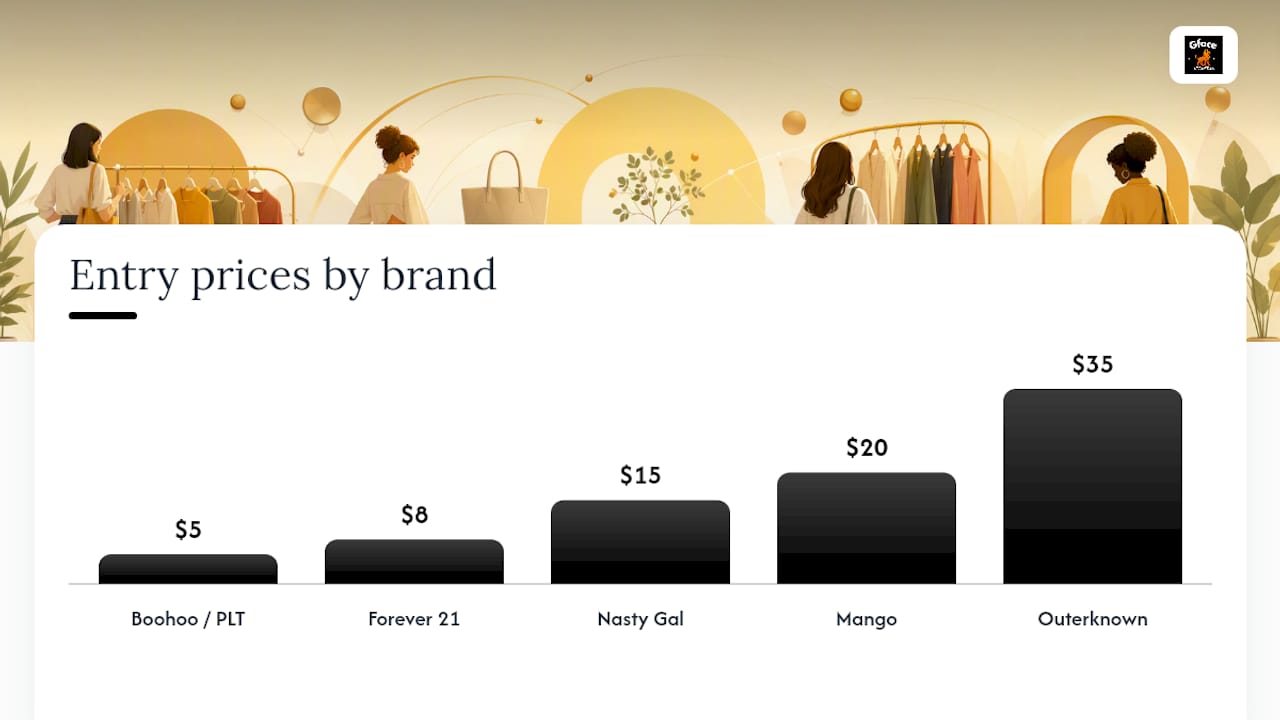
Budget brands (Boohoo, PLT, Forever 21) win on entry price but carry higher per-wear cost when items wear out quickly. Certified sustainable brands (Pact, Kotn, Outerknown) cost more upfront and typically deliver longer garment life. Gfacegear sits in the mid-range with limited-edition positioning: you are paying for exclusivity and identity, not just fabric.
How do these stores compare on customer service and shopping experience?
Shopbop leads on logistics. Amazon-backed fulfillment means two-day shipping is real, not aspirational, and the returns process is frictionless. For US shoppers who have been burned by slow international shipping from ASOS, that reliability alone is worth switching.
Boohoo and PrettyLittleThing are fast on dispatch but slow on resolution when something goes wrong. Both charge for return shipping to the US, which adds friction. Customer service response times are inconsistent across review platforms.
Mango's US experience has improved significantly. Returns are free above a threshold, the site is clean and easy to navigate, and product photography accurately represents colors and fit.
Pact and Kotn both run tight, direct-to-consumer operations with responsive customer service and clear return policies. Kotn's free returns kick in at $75; Pact offers free returns across the board. Both brands are straightforward to deal with.
Vestiaire Collective's experience depends on the seller, but the platform's authentication process and buyer protection reduce risk. Expect longer shipping times since items ship from individual sellers worldwide.
ABLE's customer service is consistently rated well by shoppers, and the brand's transparency ethos extends to how it handles complaints and returns.
Gfacegear operates through Shopify with US-based fulfillment, keeping the checkout and post-purchase experience clean. Limited-edition drops sell out, so the streetwear swimwear trends page is worth bookmarking ahead of new releases.
How inclusive are these brands on sizing?
Size inclusivity varies sharply across this list, and it is one of the most important filters to apply before you commit to a brand.
Boohoo, PrettyLittleThing, Nasty Gal, and Forever 21 all run XS–3XL across most categories, making them among the most size-inclusive options at the budget tier. The trade-off is that extended sizes are not always available in every style.
ABLE offers XS–3XL in most women's categories and is one of the few ethical brands that has genuinely committed to extended sizing rather than treating it as an afterthought.
Pact covers XS–3XL in basics and loungewear, which is strong for a certified sustainable brand. Kotn's range is narrower (XS–XL in most categories), which is the brand's main limitation for shoppers outside standard sizing.
Shopbop and Outerknown run XS–XL in most styles, with limited extended options. Both skew toward standard sizing, which is worth checking before you browse.
Mango has expanded its size range and now offers up to XXL in many categories, with a dedicated "Violeta" line for plus sizes in some markets.
Vestiaire Collective is resale, so sizing is entirely dependent on what is listed. The advantage is that rare sizes in discontinued styles are often available. Always read the seller's measurements rather than relying on the labeled size.
For men's streetwear sizing, Gfacegear runs S–3XL across tees, hoodies, and jerseys. The men's streetwear outfits guide has fit guidance for building a look across the range.
Key Takeaways
The strongest ASOS alternatives balance style variety with verified sustainability signals — and the right pick depends entirely on your priorities, not on which brand has the biggest marketing budget.
| Point | Details |
|---|---|
| Shortlist by need | Shopbop for variety, Pact/Kotn for certified sustainability, Vestiaire for resale, Gfacegear for limited streetwear drops. |
| Verify before you buy | Use Good On You's five-label rating system to confirm planet, people, and animal scores before committing to a brand. |
| Mix staples with trend pieces | Combine a few trend buys with durable certified basics to reduce per-wear cost and fashion waste over time. |
| Check size charts and returns | Always confirm actual measurements (not just S/M/L) and the US returns window before checkout. |
| Gfacegear for streetwear drops | Lion sneakers, hats, Betty Boop dress tees, men's tees, and limited-edition swimwear ship from US-based Shopify fulfillment. |
Why the "sustainable vs. stylish" framing misses the point
Most roundups frame this choice as a trade-off: you either get style variety (ASOS-style breadth) or you get ethics (certified sustainable brands). That framing is wrong, and it keeps shoppers stuck.
The real lever is garment lifetime. Research published in Nature Reviews Earth & Environment identifies reducing purchase frequency and increasing how long you wear each piece as the most effective consumer-level response to fashion's environmental footprint. That means the smartest wardrobe strategy is not to "only buy sustainable brands" — it is to "buy fewer things, buy them better, and make them last."
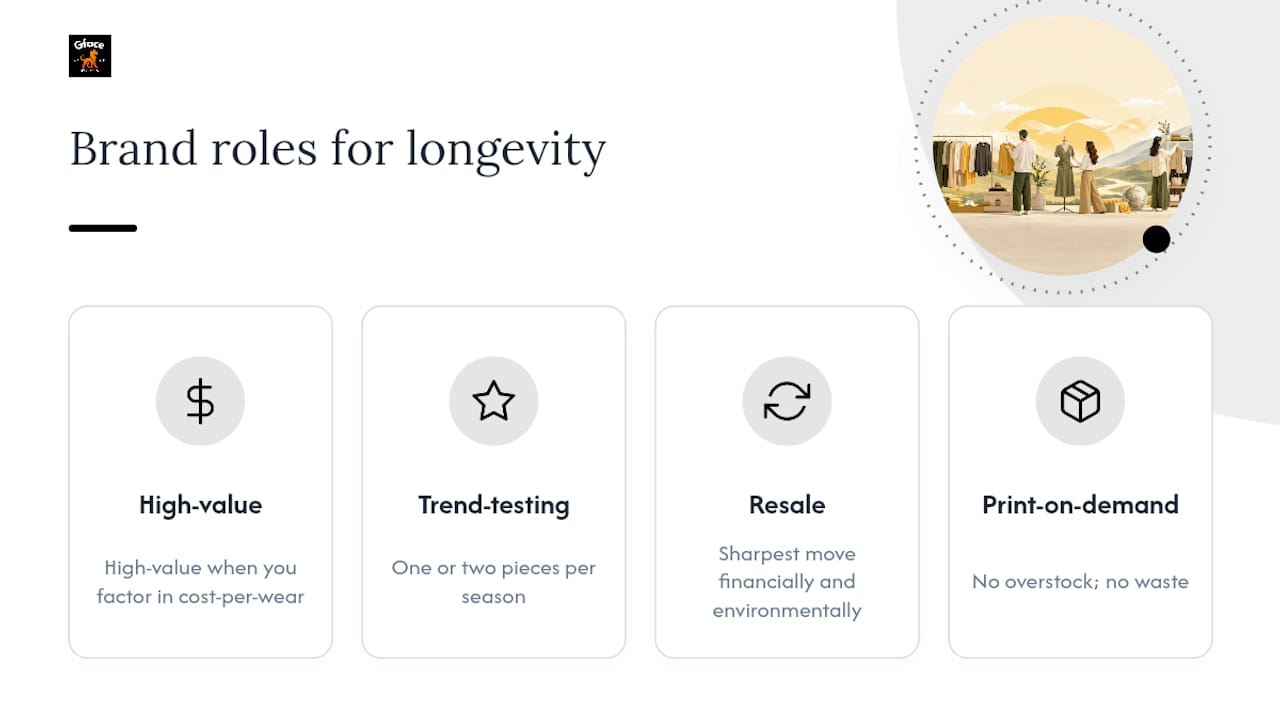
That reframes the whole list above. Pact and Kotn are not the "sacrifice" options. They are the high-value options when you factor in cost-per-wear. Boohoo and PLT are not automatically wrong choices — they are trend-testing tools, best used for one or two pieces per season rather than a full haul. Vestiaire Collective is not a compromise — it is often the sharpest move financially and environmentally at the same time.
Gfacegear fits this framework differently. Limited-edition drops by definition do not sit in a warehouse waiting to be discounted. Print-on-demand means no overstock, no clearance pile, no waste from unsold inventory. When you wear a ROAR piece, you are wearing something made for you, not something that almost went to landfill. That is a different kind of sustainability story — not certified organic, but structurally anti-waste.
The shoppers who get the most out of this list are the ones who stop asking "which brand is best" and start asking "which piece earns its place in my wardrobe." That question leads to better decisions every time.
Gfacegear brings the drop energy ASOS never could
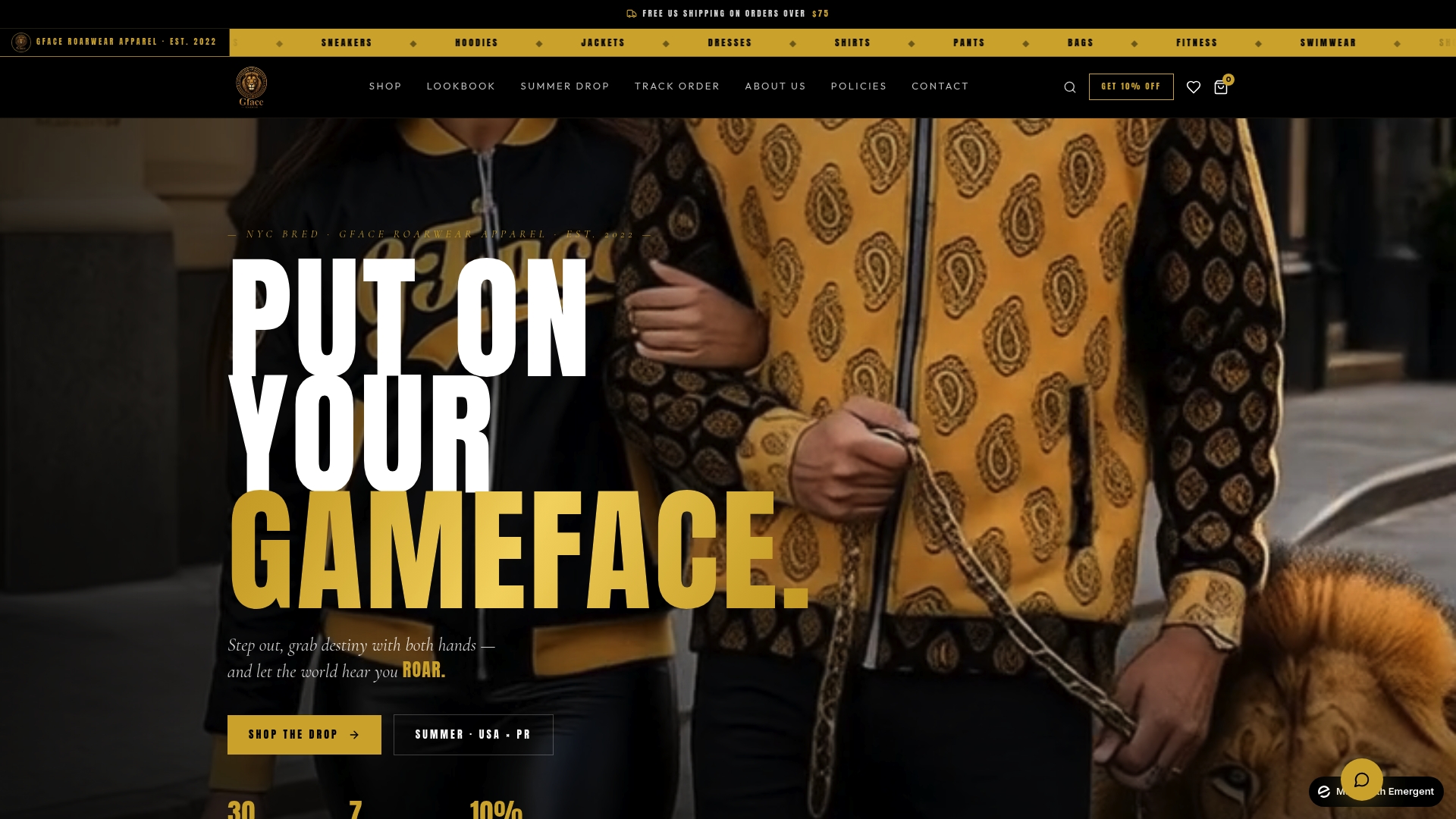
If you have been scrolling ASOS looking for something that actually hits, you already know the problem: everything looks the same. Gfacegear is the Brooklyn-born streetwear brand built for shoppers who want a drop that carries real identity. Lion sneakers, hats, long Betty Boop dress tees, men's tees, and limited-edition swimwear — all print-on-demand, all built around the ROAR identity that says you showed up fully.
US shoppers get clean Shopify checkout and domestic fulfillment. No international shipping delays, no customs surprises. Limited drops sell out, so the move is to check the Gfacegear lookbook now and lock in your size before the run ends. The on-demand manufacturing model also means every piece is made to order — no overstock, no waste, no compromises.
Put on your Gameface. Shop the drop at gfacegear.com/lookbook.
Useful sources
- How We Rate Brands - Good On You
- Certifications and standards systems
- Ethical Fashion Certifications and Standards: What Do the Labels Mean?
- The environmental price of fast fashion | Nature Reviews Earth & Environment
- The 10 Best Ethical Alternatives to ASOS
- Values and certifications (Good On You help)
- 10 Stores Like ASOS For Your Online Style Exploration
- Introduction to international labour standards — ILO
FAQ
Who is ASOS's biggest competitor for US shoppers?
Shopbop is the closest direct competitor on style breadth and US logistics, backed by Amazon's fulfillment infrastructure. For budget shoppers, Boohoo and PrettyLittleThing compete most directly on price and new-arrivals volume.
What brands are Gen Z wearing instead of ASOS?
Gen Z shoppers are splitting between budget platforms (PrettyLittleThing, Nasty Gal) for trend pieces and identity-driven brands (Gfacegear, Outerknown) for statement drops. Resale through Vestiaire Collective is also growing as a Gen Z-preferred shopping method.
What is the 3-3-3 rule for clothes?
The 3-3-3 rule is a capsule wardrobe approach where you select three categories, three items each, and wear only those nine pieces for a set period. It is a practical way to test whether you actually need more clothes before buying.
Does ASOS sell dupes?
ASOS carries its own label alongside third-party brands, and some own-label pieces closely resemble designer silhouettes at lower price points. For shoppers who want the real thing at a reduced price, Vestiaire Collective's authenticated resale is a more reliable route than dupe hunting.
How do I verify a brand's sustainability claims quickly?
Search the brand on Good On You, which scores up to 1,000 data points across planet, people, and animals. If the brand is unrated, look for GOTS, OEKO-TEX, or Fair Trade certification marks on individual product pages and verify them on the certifying body's public database.