Brooklyn acted as a cultural incubator that translated local music, retail, and art scenes into the streetwear codes that spread nationwide. The borough's history runs from 1970s hip-hop and DIY tailoring through 1990s boutique culture into today's hype economy of limited drops and resale. What follows traces that arc decade by decade, with on-the-ground perspective on how Brooklyn-born brands still build authenticity the same way the originals did.
TL;DR:
- Authentic Brooklyn streetwear evolved from DIY customization and luxury remixes in the late 1970s, laying the foundation for modern scarcity-driven drops.
- Local stores historically served as community hubs, cultivating genuine credibility through repeated neighborhood presence rather than mass-scale expansion.
- Scarcity signals in streetwear originate from limited local capacity and have been intentionally mimicked by brands through timed drops and resale markets.
- Building neighborhood-specific signals, community visibility, and authentic scarcity are proven methods for brands to establish borough credibility that lasts.
- Contemporary brands like GfaceGear replicate Brooklyn's legacy with genuine limited editions, print-on-demand, and motifs rooted in local identity and history.
Table of Contents
- The Real Brooklyn Streetwear History, Decade by Decade
- What Cultural Forces Actually Shaped the Look?
- Why Local Stores Functioned Like Social Clubs
- The Business of Scarcity: Drops, Collabs, and Resale
- A Brooklyn Brand's View: What Actually Builds Borough Credibility
- Who Actually Built This Culture
- How Brooklyn's Changing Population Shaped the Clothes
- Why This History Still Matters to Me
- GfaceGear: Built on the Same Borough Instincts
- Sources
- FAQ
The Real Brooklyn Streetwear History, Decade by Decade
Streetwear did not start on a runway. It started in late-1970s and 1980s New York, built primarily by African American and Latino hip-hop culture, and Brooklyn was one of the boroughs where that DIY energy took physical form in fabric, spray paint, and hand-lettered tees, according to the general history of streetwear's origins. The borough didn't invent hip-hop alone, but it gave the culture a retail and tailoring infrastructure that turned music-scene style into wearable identity.
Academic work tracing street style back to 1970s crews links that early identity-formation period directly to the commercial developments that followed decades later, including luxury appropriation and brand collaborations, per research on street style's origins and commercialization. Here's how that played out across four distinct eras.
-
Late 1970s to 1980s: hip-hop roots and DIY customization. Before there were brands, there were tailors reworking what already existed. Custom airbrushed tees, hand-cut denim, and bootleg logo remixes were the original streetwear language, born out of necessity as much as style. This is the same era that produced Harlem's Dapper Dan, whose custom luxury remixes and tailoring set the template for how streetwear would appropriate and rework high-fashion iconography for decades to come, a practice documented in the same academic analysis of streetwear's commercial roots. Brooklyn tailors and small operators followed that same instinct: take something exclusive, make it locally legible.
-
1990s: skate, punk, and boutique culture collide. The 1990s brought a second influence stream into Brooklyn's hip-hop base: skate and punk silhouettes, functional cuts, and an anti-establishment attitude that fit naturally alongside rap's confrontational energy. This is also when the neighborhood boutique became more than a store. It became a hub. Small shops started stocking limited runs of local gear, and the relationship between shop owner and customer got personal, almost tribal.
-
2000s: store culture and the co-sign economy. This is the decade Brooklyn's borough identity solidified. Vinnies Styles, one of the borough's defining retailers, released its now-iconic "Brooklyn" script tee in 2004 and built lasting cultural weight by appearing repeatedly in local music videos and backing neighborhood artists directly, according to Highsnobiety's retrospective on the store. That tee did something bigger brands couldn't: it made "Brooklyn" itself the logo. Other stores followed the same playbook, and the artist co-sign became the primary growth engine, a mechanism confirmed across oral-history interviews with designers and store owners collected by Highsnobiety's long-form retrospective on streetwear's global spread.
-
2010s to 2020s: drops, resale, and the DTC pivot. Limited-edition drops, artist collaborations, and secondary-market resale turned scarcity into the dominant business model. At the same time, independent Brooklyn brands increasingly bypassed traditional wholesale altogether, building direct-to-consumer channels and in-person community events instead.
Each era layered onto the last rather than replacing it, which is exactly why Brooklyn streetwear culture still reads as continuous rather than as a series of fashion reboots.
What Cultural Forces Actually Shaped the Look?
The visual language of Brooklyn streetwear didn't come from a mood board. It came from four overlapping subcultures that each contributed a specific design instinct, and understanding them explains why certain silhouettes and graphics still dominate the borough's aesthetic decades later.
- Hip-hop set the terms for status signaling: tracksuits, fresh sneakers, and gold accents became shorthand for arrival and confidence, with artist co-signs functioning as the era's version of a marketing campaign.
- Graffiti and street art handed streetwear its graphic vocabulary. Bold lettering, tags, and mural-style compositions moved straight off brick walls and onto tees and jacket backs.
- Skate and punk culture brought the functional cuts and oversized proportions that gave the look its ease of movement, along with an anti-establishment attitude that matched hip-hop's own defiance.
- Local music scenes and collectives acted as accelerants. A crew wearing the same unreleased design in a music video did more for a brand's visibility than any ad buy could.
The influence of Brooklyn style on national fashion often traces back to this exact combination: a garment that signals status, carries a graphic story, moves like streetwear should, and gets worn by someone whose local scene has real cultural gravity. Miss any one of those four ingredients and the garment reads as costume rather than culture.
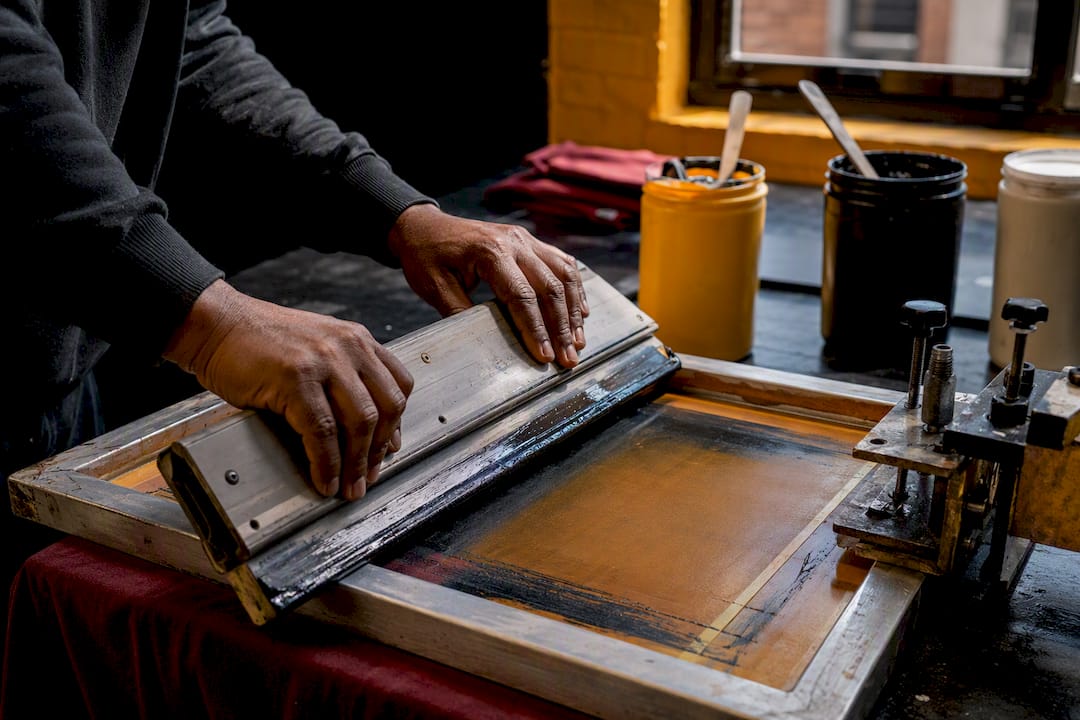
The scarcity signal predates the hype drop. Long before "limited edition" became a marketing term, Brooklyn boutiques were already operating on genuine scarcity. A shop might stock six units of a design because that's all the local screen printer could run that week. Modern brands manufacture that same scarcity on purpose. The instinct is identical; only the intent behind it changed.
Why Local Stores Functioned Like Social Clubs
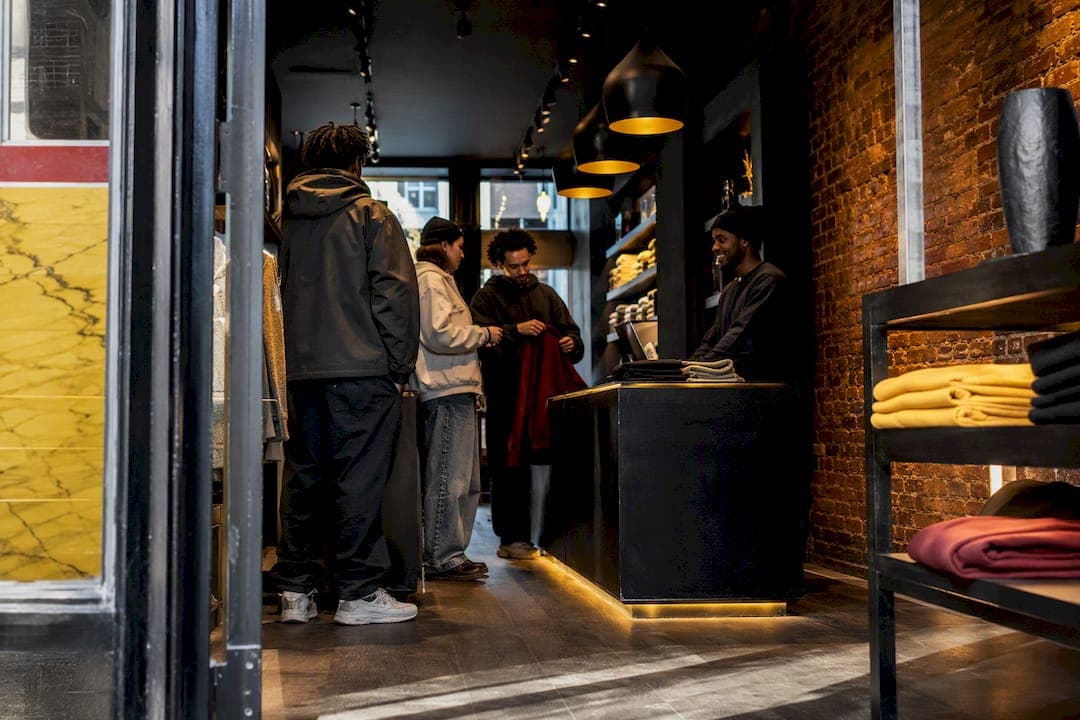
A Brooklyn boutique in the 1990s or 2000s wasn't a retail transaction. It was a gathering point, a validation stamp, and often the only place in the neighborhood where a young designer's work could get seen by the right people. That function, more than any single garment, is what built the borough's reputation as a source of authentic urban fashion.
Vinnies Styles is the clearest case study. Its founders tied the brand's aesthetic directly to neighborhood identity, and the store's repeated appearances in drill and local music videos reinforced its status as a cultural anchor rather than just a shop, according to Highsnobiety's reporting on the retailer. Tailors and small operators reinforced that identity further, using custom stitching, borough-specific script, and one-off remixes to create garments that couldn't be bought anywhere else.
That local-store model has evolved rather than disappeared:
- Independent shops that once relied purely on foot traffic now run pop-ups timed to drops, treating the physical space as an event rather than a standing storefront.
- In-store customization sessions replaced some of the old tailor relationships, letting customers watch a design get made rather than just buying it off a rack.
- Community events, artist meet-and-greets, and small-batch releases now do the trust-building work that a permanent storefront used to handle on its own.
- Digital storefronts inherited the "hub" function, with social content standing in for the old habit of hanging around the shop.
Brooklyn's streetwear pioneers understood something that a lot of national brands still miss: the store is the message. A brand's own catalog of Brooklyn-born labels shows how many contemporary operators still build around that same principle rather than chasing mall-brand scale.
Pro Tip: If you're starting a brand and want borough-level credibility, resist the urge to scale distribution before you've built a physical or digital "hub" where your actual community gathers. The store came before the brand recognition, not after.
The Business of Scarcity: Drops, Collabs, and Resale
Scarcity works because it signals that a garment carries a story, not just fabric. Editorial coverage of streetwear's rise consistently frames limited drops as a storytelling device, one that connects the wearer to a specific place and moment rather than to a mass-produced SKU, a dynamic described in coverage from The Brooklyn Initiative. That's the mechanism behind every countdown-timer drop you've seen on Instagram: it's borrowing the emotional logic of a six-piece boutique run and applying it at scale.
Artist and influencer collaborations function as the modern version of the local co-sign. Where a 2000s brand needed a rapper wearing its tee in a music video, a 2020s brand needs a creator posting an unboxing. The mechanism is identical. Only the platform changed.
Resale markets add a second layer of cultural effect. A sold-out drop reselling above retail confirms the scarcity was real, which in turn makes the next drop more anticipated. It's a feedback loop that rewards restraint over volume, and it's part of why so many independent labels resist restocking even when demand is obvious.
The business model underneath all of this has shifted hardest in the last few years:
- Traditional wholesale relationships, where a brand needed a buyer at a department store to say yes, have given way to direct-to-consumer selling through owned platforms.
- Print-on-demand manufacturing let small brands run true limited editions without holding inventory risk.
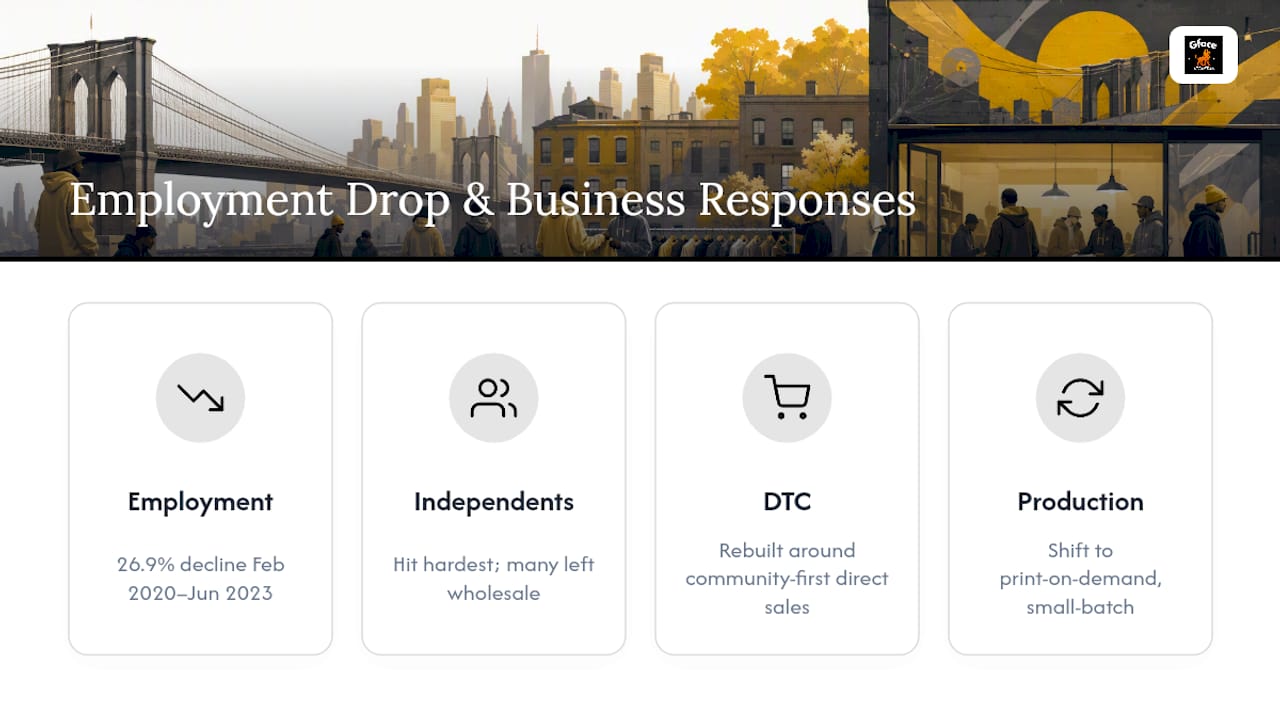
- NYC clothing store employment actually dropped 26.9% between February 2020 and June 2023, and the independent Brooklyn brands that survived did it by shifting away from wholesale and leaning into community-driven, in-store experiences instead, according to RMCAD's analysis of streetwear's evolution.
| Era | Primary business model | Scarcity mechanism |
|---|---|---|
| 1980s to 1990s | Independent boutique, low-volume manufacturing | Limited local supply, tailor capacity |
| 2000s | Storefront retail with regional distribution | Store-exclusive releases, artist co-signs |
| 2010s to 2020s | Direct-to-consumer, print-on-demand | Timed drops, capped quantities, resale premiums |
KidSuper, the studio built by Colm Dillane, is a useful modern example of this shift. Dillane built a creative studio that functions as an artist hub, and that studio culture, more than any single product drop, generated the cultural momentum that turned KidSuper into a global name.
A Brooklyn Brand's View: What Actually Builds Borough Credibility
I've watched a lot of streetwear brands chase "hype" without doing the one thing that actually earns it: showing up locally, repeatedly, in a way people recognize. GfaceGear is a Brooklyn-born label, and the lion imagery and Greek Key medallion running through the brand's identity aren't decoration. They're a claim about presence and confidence, the same kind of claim Vinnies Styles made with a single script tee.
The parallel to Pro Era matters here too. That collective proved that a crew built around shared identity, not just shared products, can carry an entire aesthetic into the mainstream faster than any single brand acting alone.
Authenticity in this category has never come from a logo alone. It comes from small, repeatable, hyperlocal signals, a neighborhood script, a store ritual, an artist co-sign, that a customer can recognize before they even read the tag.
That's the same instinct behind GfaceGear's limited swimwear drops. A run that isn't meant to restock forces the same choice a 1990s Brooklyn shopper faced: buy it now, or don't get it at all. The brand's swimwear trend coverage digs into how that scarcity model plays out for warm-weather product specifically.
For new founders trying to build real credibility rather than borrowed hype, the guidance is simple. Pick a visual signature people can recognize at a distance. Show up in the same community spaces consistently. Let scarcity be a function of genuine capacity, at least at first, not a manufactured gimmick. The borough didn't build its reputation through slogans. It built it through repetition, specificity, and people actually wearing the thing in the neighborhood where it was made.
Who Actually Built This Culture
Every era of Brooklyn streetwear history has a name attached to it, even when the brand outlasted the person. Dapper Dan, working out of Harlem in the 1980s, set the tailoring precedent that Brooklyn operators absorbed: take a luxury logo, rework it by hand, and make it locally legible. That reuse instinct became foundational to how streetwear treats appropriation as a creative act rather than a violation.
Vinnies Styles, though a store rather than a single designer, functioned as a pioneer in its own right by turning "Brooklyn" into a wearable brand identity that spread through drill music before most national labels noticed it existed.
Colm Dillane took a different path with KidSuper, treating design as an extension of an art practice rather than a product line first. His studio hosts other creatives, and that hub model produced cult loyalty that eventually pulled in major collaborations, proof that cultural momentum can outperform early retail numbers.
Pro Era, the collective associated with rapper Joey Bada$$, showed how a crew's shared visual identity, rooted in Brooklyn specifically, could carry streetwear codes into hip-hop's national conversation without ever operating as a traditional apparel company first.
What connects all of them isn't a shared business model. It's a shared refusal to design for anyone outside the neighborhood first. National attention came after the local identity was already locked in, never before.
How Brooklyn's Changing Population Shaped the Clothes
Brooklyn's demographic and economic shifts over the past three decades didn't just change who lived where. They changed what streetwear had to communicate. In neighborhoods that saw rapid gentrification, longtime residents and legacy brands leaned harder into borough-specific signifiers, precisely because the visual language became one of the few ways to assert continuity against rising rents and new arrivals.
That pressure shows up in the retail data too. The 26.9% drop in NYC clothing store employment between February 2020 and June 2023 hit independent operators hardest, forcing many Brooklyn labels to abandon wholesale entirely and rebuild around community-first, direct-to-consumer models instead, per RMCAD's retail analysis. Brands that survived weren't necessarily the biggest. They were the ones with the tightest local relationships.
Economic pressure also accelerated the shift toward print-on-demand and small-batch manufacturing, since it let brands with less capital compete without the risk of unsold inventory. That change in production model is arguably as important to the culture's evolution as any single design trend, because it determined who could afford to start a brand in the first place. The borough's population changes didn't dilute streetwear's roots so much as force the culture to get more specific about what "authentic" actually meant.
Why This History Still Matters to Me
Brooklyn's streetwear story isn't finished, and it's not a museum piece either. It's a living instruction manual for anyone starting a brand today. If there's one thing I'd tell someone new to this culture, it's to go find the primary sources: visit a local exhibit if you can, read the oral histories that store owners and designers have given over the years, follow the creators still working in the neighborhoods where this all started.
The borough's biggest lesson is that imitation without context reads as hollow immediately. A lion motif, a script logo, a limited drop, none of it means anything if it's copied without understanding why the original signal worked. Brooklyn earned its influence one neighborhood relationship at a time. That's not a shortcut you can buy. It's a practice you commit to.
— Victor
GfaceGear: Built on the Same Borough Instincts
GfaceGear didn't start as an outsider's guess at what Brooklyn streetwear should look like. It started as a Brooklyn-born label built around the ROAR identity: lion imagery, a Greek Key medallion, and a tagline that means exactly what it says, when stepping out, put on your Gameface, grab destiny with both hands, and let the world hear you roar. That's the same confidence signal hip-hop and boutique culture were built on decades ago, just carried into today's product lineup.
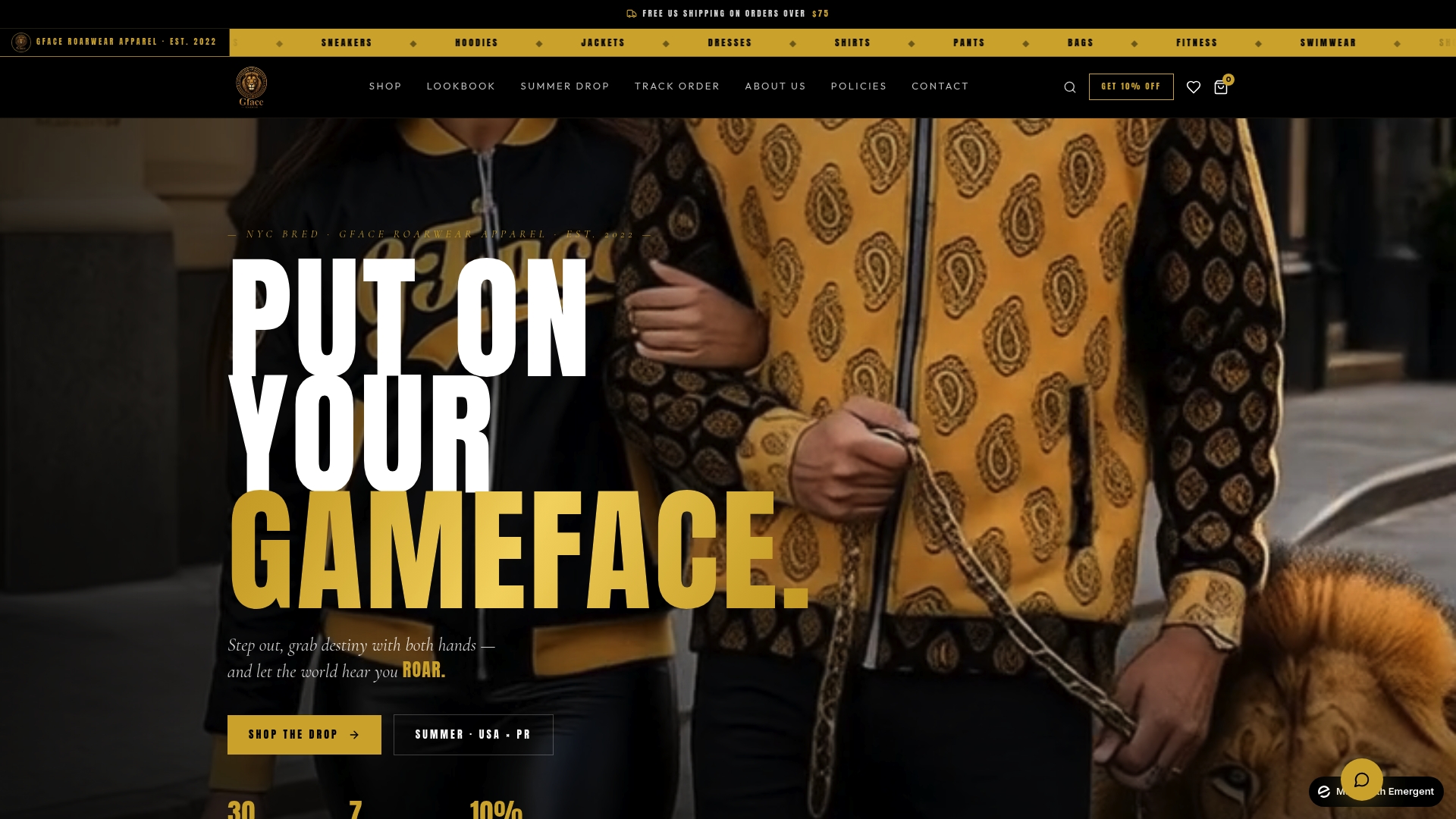
The practices are the same too. Limited-edition drops, like the Limited Boricua Swimwear collection, run on genuine scarcity rather than manufactured hype, print-on-demand production means every piece gets made deliberately instead of stockpiled, and the catalog leans into borough-rooted motifs the same way Vinnies Styles leaned into its script tee. Whether you're building a look around lion sneakers, a hat that carries the medallion, or a long tee dress cut for movement, the goal is the same one Brooklyn shops have chased since the 1980s: a garment people recognize as theirs. Explore the current drops and shop GfaceGear's lineup to see how that history translates into what you can wear today.
Sources
For readers who want to go deeper than this overview, a few sources stand out. Highsnobiety's oral history of streetwear's global rise collects firsthand interviews with the designers and store owners who lived this timeline. Its companion piece on Vinnies Styles is the best single case study on how one Brooklyn store built lasting cultural authority. For the academic backbone connecting 1970s origins to modern commercialization, the CHIAIS analysis is worth the read. RMCAD's breakdown of streetwear's retail evolution covers the post-2020 business model shift in useful detail.
- Streetwear — Wikipedia
- The evolution of streetwear from subculture to high fashion — RMCAD blog
- How OG Brooklyn retailer Vinnies Styles became drill rap's favorite store — Highsnobiety
FAQ
Who made the original Brooklyn cloth?
There's no single inventor of "Brooklyn cloth," but Vinnies Styles is widely credited with popularizing the borough's most recognized garment, its 2004 "Brooklyn" script tee, which spread through local and international drill music culture.
What is the 3-3-3 rule for clothes?
The 3-3-3 rule is a wardrobe-minimalism method where you build outfits from three tops, three bottoms, and three pairs of shoes for a set period, and it's unrelated to streetwear's historical development, though many Brooklyn boutiques encouraged a similar less-is-more approach around limited-run pieces.
Where did streetwear originally come from?
Streetwear originated in late-1970s and 1980s New York City, growing primarily out of African American and Latino hip-hop culture before absorbing skate, surf, and punk influences through the 1990s.
What role did Brooklyn play compared to other boroughs?
Brooklyn functioned as a hub for local retail, tailoring, and music-scene collaboration, with stores like Vinnies Styles and studios like KidSuper turning neighborhood identity into nationally recognized style codes.
How do modern Brooklyn brands keep that history alive?
Brands like GfaceGear continue the borough's core practices, genuine scarcity through limited drops, print-on-demand manufacturing, and design motifs tied to identity and heritage, rather than copying the aesthetic without the substance behind it.