A hoodie is a sweatshirt with a hood attached, full stop. That is the whole rule, according to the Cambridge Dictionary, which defines a sweatshirt as the broader family and a hoodie as one hooded member of it. Zip it up, pull it over, the hood makes the call. Victor and the GfaceGear crew build both, so here is the practical breakdown before you spend a dollar.
TL;DR:
- Hoodies are defined by the presence of a hood, not by the zipper or style, and both pullover and zip-up variants qualify as hoodies.
- Fabric weight is critical: heavyweight fleece above 330 GSM is suitable for cold weather, while mid-weight French terry between 280 and 320 GSM is better for daily wear.
- Proper fit involves sizing up for layering, with the sleeve cuff landing at the wrist bone and the hood sitting flat when down; these details predict durability and comfort.
- Pockets, zippers, and features like lined hoods or water-repellent outer shells should be chosen based on weather protection needs and intended use.
- Washing carefully inside-out with low heat and avoiding harsh detergents extends the hoodie’s look and lifespan.
Table of Contents
- Quick comparison: hoodie vs sweatshirt at a glance
- Fleece, French terry, and the fabric weight that decides everything
- Where a hoodie fits and where a sweatshirt takes over
- Getting the fit right for layering and silhouette
- Pockets, zippers, and the hoodless variants worth knowing
- Washing without wrecking the fabric or the print
- How to choose: a checklist for your next purchase
- What years of building hoodies taught us about the details
- Get your hood right with GfaceGear
- Where these facts come from
- Sources
- FAQ
Quick comparison: hoodie vs sweatshirt at a glance
Before you scroll further, run your situation against this list. It settles most closet debates in ten seconds flat.
- Hood: hoodies have one, sweatshirts (crewnecks especially) do not.
- Neckline: sweatshirts sit at a plain crewneck, hoodies open into a hood and drawstring.
- Pockets: hoodies usually bring a kangaroo pocket up front, sweatshirts often skip pockets entirely.
- Formality: sweatshirts read cleaner and layer easier, hoodies lean loud and expressive.
- Variant note: both come in pullover or zip-up form, but a zip-up hoodless piece is called a zip-up sweatshirt, not a hoodie.
Fleece, French terry, and the fabric weight that decides everything
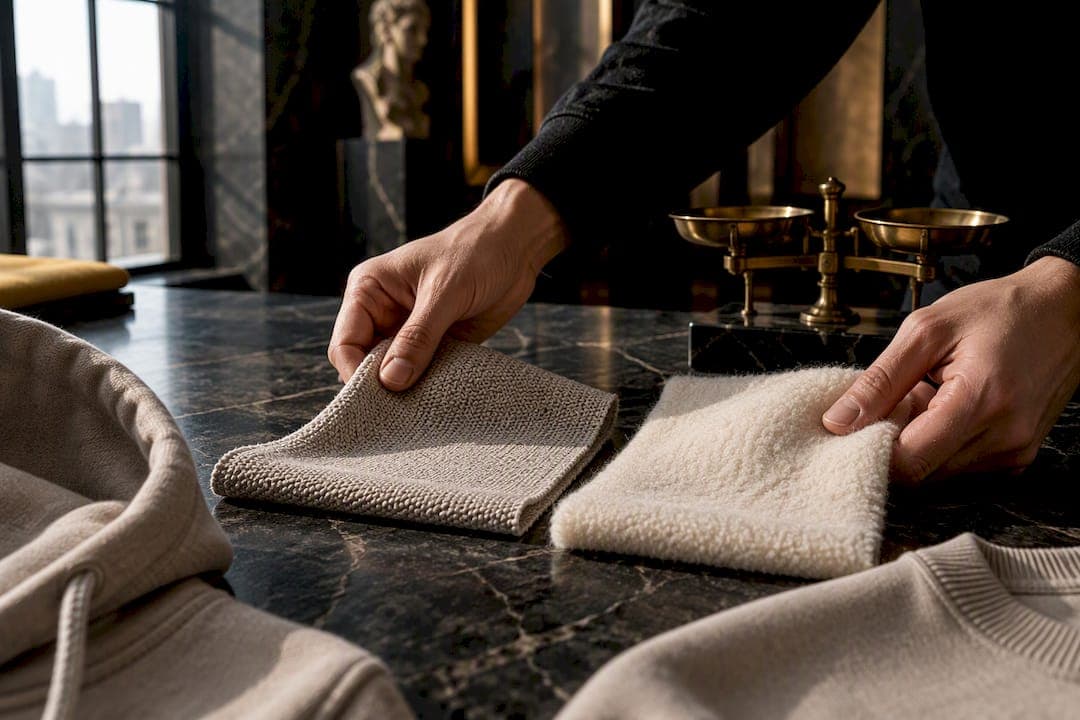
Fabric decides how a hoodie or sweatshirt actually performs, not just how it looks on a hanger. Cotton fleece brushes the inside of the fabric for a soft, insulating layer, the move when you want real warmth for a Brooklyn winter walk. French terry skips the brushing and keeps loops intact, so it breathes better and drapes lighter, better suited to spring layering or gym sessions where you run hot.
Weight tells the rest of the story. A light hoodie or sweatshirt sits around 240 GSM and works as a warm-weather layer, mid-weight pieces run 280 to 320 GSM for daily wear, and heavyweight versions push past 330 GSM for genuine cold-weather insulation, according to weight breakdowns in midweight sweatshirt guidance built for makers who need the numbers right. Ribbed cuffs and hems hold shape wash after wash, and taped seams keep a graphic print from cracking at the stress points first.

Where a hoodie fits and where a sweatshirt takes over
The hood did not start as a fashion statement. According to Smithsonian reporting on the garment's history, hooded sweatshirts began as practical sports and labor wear in the 1930s before hip-hop, skate culture, and college campuses turned the hood into a cultural signal, a shift also touched on in coverage of hip-hop's influence on classroom style. A graphic hoodie now reads as a statement piece, front and center, the way a lion-crest design or a bold medallion print demands attention on the street.
A crewneck sweatshirt plays a quieter role. It layers clean under a jacket, pairs with anything, and carries a small logo without shouting. Think commute mornings under a bomber, gym sessions where a hoodie's bulk gets in the way, date nights where a sweatshirt and jeans look put together without trying, or travel days where you want one warm layer that folds flat in a bag.
Getting the fit right for layering and silhouette
Size up when you plan to layer a hoodie under a jacket or coat, since the hood adds bulk at the shoulders and collar that a slim cut will fight against. Size true to your usual fit when the hoodie or sweatshirt is the outer layer and you want a clean line instead of extra fabric bunching at the waist.
Sleeve length matters more than most buyers expect: the cuff should land at your wrist bone, not creep past your knuckles or stop short at the forearm. A hood that sits flat between the shoulder blades when down signals a correct cut, one that bunches up or pulls the collar tight usually means the size runs small for your frame.
Pockets, zippers, and the hoodless variants worth knowing
A pullover hoodie keeps warmth locked in and usually carries a kangaroo pocket for hands or a phone. A zip-up hoodie trades a little warmth for quick venting and easier layering, since you can crack it open without pulling anything over your head, a distinction covered in detail in zip-up hoodie picks built for exactly this comparison.
On the hoodless side, crewneck sweatshirts stay simple, mockneck versions add a touch more coverage at the neck, and half-zip sweatshirts split the difference between a crewneck and a full zip. If you shop for cold-weather gear, look for a lined hood or a water-repellent finish on the outer shell, features that turn a casual hoodie into something that handles real weather instead of just posing in it.
Washing without wrecking the fabric or the print
Wash both inside-out on a cold or warm gentle cycle to protect prints and slow down pilling. Skip the high-heat dryer setting entirely, air-dry when you can, since heat is what shrinks fleece and cracks graphics faster than normal wear ever will.

Treat pilling early with a fabric shaver or a de-pilling comb before it spreads, and stick to a gentle detergent without harsh brighteners on anything with a printed design, a routine broken down further in how to stop hoodie pilling. When the care tag disagrees with general advice, follow the tag. It knows the exact blend you are working with.
How to choose: a checklist for your next purchase
Buying either piece comes down to three questions, answered in order.
- Define the job first. Warmth for winter, a layering piece for spring, or a standalone look for a night out each point toward a different weight and cut.
- Match the fabric to that job. Reach for heavyweight fleece near 330 GSM or above for real cold, mid-weight French terry around 280 to 320 GSM for daily wear, and lighter fleece near 240 GSM for mild days.
- Lock in the features and fit last. Decide if you need a zip, a lined hood, or extra pockets, then choose relaxed for layering or slim for a cleaner line.
Pro Tip: If you layer often, grab a zip-up hoodie over a pullover. You get the warmth without the wrestling match to get it on and off over a jacket.
What years of building hoodies taught us about the details
Victor's checklist from testing runs short: check the GSM, check the seam tape, check how the hood sits when it's down. Those three things predict more about how a hoodie holds up than any tag or price point. We build our hoodies with ribbed cuffs that hold shape, taped seams that protect the print, and a hood cut that lays flat instead of bunching.
— Victor
Get your hood right with GfaceGear
We design our hoodies to meet standards including appropriate fabric weight, a hood that fits well, and prints that last through washing. We offer limited drops that are made-to-order and built around the ROAR identity and the Gameface mentality.

Shop the current lineup at GfaceGear's hoodie collection and check the sizing notes on each product page before you order. Join The Pride Membership for a monthly fee and unlock sitewide discounts plus early access to new drops, straight from GfaceGear. Grab destiny with both hands. Let the world hear you roar.
Where these facts come from
- Cambridge Dictionary: hoodie definition
- Wikipedia: hoodie
- Smithsonian: the tangled history of the hoodie
- MoMA Design Store: Champion hoodie
Sources
- HOODIE | Cambridge Dictionary
- Hoodie — Wikipedia
- Unraveling the tangled history of the hoodie — Smithsonian
FAQ
Is a hoodie still a hoodie if it has a zipper?
Yes, a zip-up hoodie is still a hoodie because the hood is what defines the category, not the closure. According to the Wikipedia entry on hoodies, pullover and zip-up styles both count as hoodies as long as the hood is attached.
Which is best, a sweatshirt or a hoodie?
Neither wins outright, since the right pick depends on the job. A sweatshirt layers cleaner under jackets and reads more polished, while a hoodie adds hood coverage and a bolder, more expressive look for casual days.
Is a sweatshirt a hoodie without a hood?
Not quite, since sweatshirt is the broader category that includes hoodies, crewnecks, and other hoodless styles. Per the Cambridge Dictionary, a hoodie is one specific type of sweatshirt, so every hoodie is a sweatshirt but not every sweatshirt has a hood.
What GSM should I look for in a warm hoodie?
Look for heavyweight fleece at 330 GSM or higher for genuine cold-weather warmth, based on weight guidance from sweatshirt weight breakdowns. Mid-weight options between 280 and 320 GSM cover most daily wear without feeling bulky.