
For most sustained or high-intensity activity, moisture wicking fabric outperforms cotton — it moves sweat off your skin and dries fast instead of soaking it up. Cotton still earns its place for low-sweat, short-duration, or casual wear where soft hand-feel matters more than performance. The right call depends on what you're actually doing, not brand loyalty to one fiber.
TL;DR:
- Moisture-wicking fabrics outperform cotton during high-intensity or sustained activities by maintaining dryness and drying quickly, reducing discomfort and chafing.
- Cotton absorbs and holds up to 27 times its weight in water, which increases weight, accelerates heat loss in cold conditions, and promotes odor buildup.
- Wicking fibers use capillary action to pull sweat outward for faster evaporation, while cotton's fiber structure makes it absorbent and slow to dry.
- For base layers and activewear, synthetic wicking fabrics are recommended, especially in hot or wet environments, because cotton becomes heavy and unsafe when damp.
- Proper care involves washing synthetics in cold water without softeners and avoiding high heat drying, unlike cotton, which benefits from gentle handling to maintain shape and odor resistance.
Table of Contents
- Moisture Wicking vs Cotton: Quick Comparison
- How Does Moisture-Wicking Fabric Actually Work?
- What Cotton Actually Does When You Sweat
- Which Fabric Should You Wear for Your Activity?
- Caring for Moisture-Wicking Gear and Cotton
- Do Blended Fabrics Split the Difference?
- What Fabric Science Means for Streetwear Drops
- Balancing Comfort, Performance, and What You Actually Wear
- Gear Up With Gfacegear for Comfort That Moves With You
- Sources
- FAQ
Moisture Wicking vs Cotton: Quick Comparison
You don't need a lab coat to make this call. Here's the breakdown that matters before you grab a shirt off the rack.
Moisture-wicking fabric:
- Pulls sweat to the surface for fast evaporation, keeping skin drier during long efforts
- Dries quickly between wears and holds up well through repeated washing
- Can trap odor faster without antimicrobial treatment or proper care
Cotton:
- Soft, breathable, and comfortable against skin at rest or low output
- Absorbs sweat instead of moving it, so it gets heavy and stays wet
- Loses shape faster and can chafe once it's saturated
Three scenarios, three answers. A hot-weather run at race pace: go moisture wicking, full stop — you'll fry in soaked cotton. A cold-weather hike: wicking base layer, always, because wet cotton against skin in cold air is a real hazard. A casual gym warm-up or a walk to grab coffee: cotton is fine. Nobody's chafing on a stroll.
How Does Moisture-Wicking Fabric Actually Work?
Wicking comes down to capillary action. Engineered synthetic fibers act like microscopic channels, pulling sweat along the fiber surface and pushing it outward to evaporate, instead of letting it soak into the material the way cotton absorbs and holds moisture. The fiber shape matters here. Manufacturers cut synthetic filaments with grooves or channels, and finer denier fibers create more surface area for that capillary pull, which speeds up how fast sweat moves and evaporates.
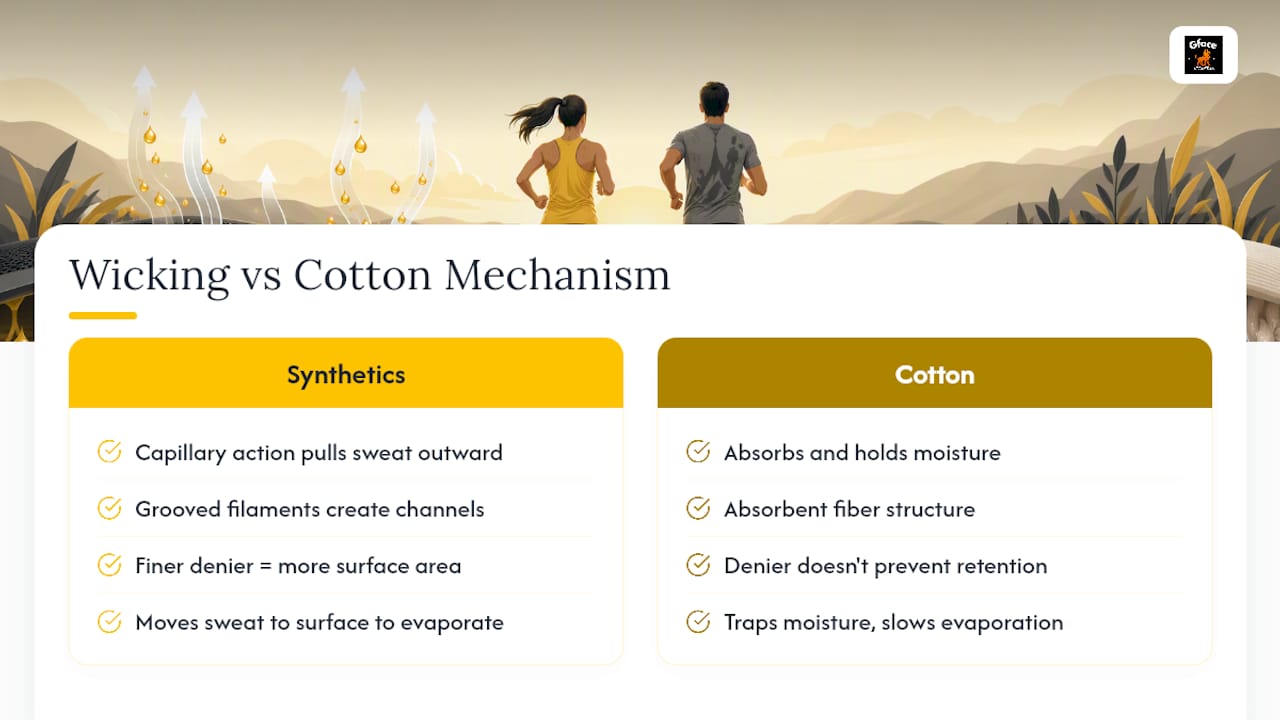
Not all wicking fibers behave the same. Polyester, nylon, and polypropylene each have distinct performance profiles, with polyester blends dominating general performance wear because they balance stretch, durability, and moisture transport. Merino wool takes a different route entirely: it's a natural fiber, but its structure gives it wicking-like behavior along with odor resistance synthetics can't match. None of this works if cotton's in the mix untreated. Cotton's fiber structure is built to grab water molecules and hold them, which is the exact opposite job.
What Cotton Actually Does When You Sweat
Cotton is hydrophilic. It doesn't resist water, it invites it in, and the numbers back that up: cotton can hold up to 27 times its weight in water. That's not a small margin. A cotton tee that starts at half a pound can end a heavy session carrying several times that in absorbed sweat, and that added weight drags on your movement and increases friction against skin.
Wet cotton also changes how your body loses heat. Water conducts heat far faster than dry air, so a soaked cotton shirt against your skin in cool conditions accelerates heat loss. That's a comfort issue on a mild day. In cold or wet outdoor conditions, it becomes a genuine safety issue.
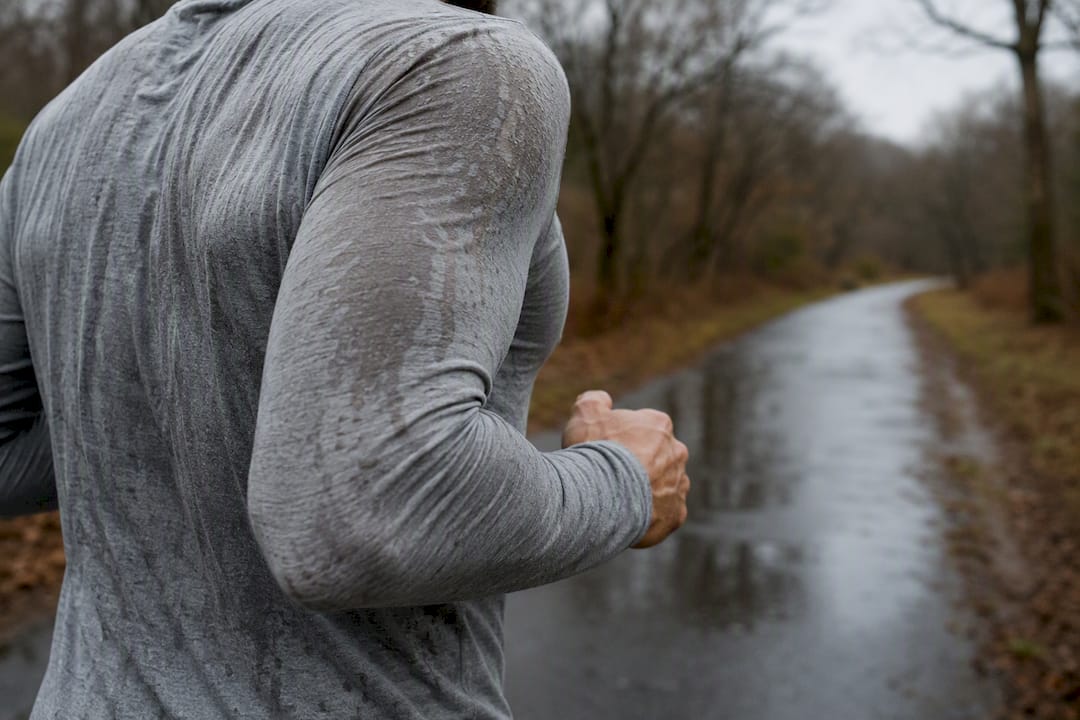
There's a third problem hiding in that absorbency: odor and microbial growth. Cotton fibers that stay damp for hours give bacteria exactly the environment they need to multiply, which is why a sweaty cotton shirt left in a gym bag smells worse, faster, than most people expect. Add in that cotton loses shape and durability faster through repeated wash cycles than synthetic fabric, and you've got a fiber that's comfortable at rest but works against you once you're sweating hard.
Which Fabric Should You Wear for Your Activity?
Run this three-step check before you get dressed:
- Gauge the intensity. Anything that gets your heart rate up for 20+ minutes calls for moisture-wicking fabric. Low-output activity like errands or a slow walk leaves room for cotton.
- Read the environment. Hot and humid means you need fast evaporation, so wicking wins. Cold and wet means wicking wins even harder, because a damp cotton layer next to skin accelerates heat loss when you can least afford it.
- Match the layer to the job. Base layers touching skin should almost always wick. Mid layers and outerwear have more flexibility since they're not managing sweat directly.
For base layers, socks, and undergarments, moisture-wicking fabric keeps you drier and reduces chafing during long or intense sessions, while cotton in that same position turns heavy and clingy the moment you start sweating. For mid layers like a zip hoodie over a wicking base, cotton blends are more forgiving since they're not fighting moisture directly against skin. Cotton tees remain a solid pick for lounging, travel days, or casual streetwear where sweat management isn't the point.
One safety note worth repeating: never use cotton as your next-to-skin layer in cold or wet outdoor conditions. That's the one situation where the wrong fabric choice isn't just uncomfortable, it's genuinely risky.
Caring for Moisture-Wicking Gear and Cotton
Wicking treatments are a coating, and coatings wear off if you're not careful.
- Wash synthetics in cold water and skip the fabric softener entirely, since softener and dryer sheets coat fibers and reduce wicking performance over time.
- Hang-dry or use low heat. High heat degrades the elastic fibers and technical finishes that make wicking fabric work.
- For cotton, skip repeated high-heat drying cycles, which accelerate shrinking, and pull garments out of the dryer promptly to avoid set-in odor.
- Treat stubborn odors on either fabric type with an occasional soak, not more detergent.
Pro Tip: Once wicking fabric starts holding onto odor after workouts, run it through a wash cycle with a half cup of white vinegar or a scoop of baking soda instead of regular detergent. It strips the buildup that regular washing leaves behind and restores the fabric's ability to move moisture.
Do Blended Fabrics Split the Difference?
Poly-cotton blends are the middle ground, and they work if you understand the tradeoff. That's often the right call for everyday streetwear you'll sweat in occasionally but not push hard.
Merino wool sits in its own category. It's genuinely useful for multi-day outdoor trips because it resists odor for days and stays warm even when damp, a property synthetics and cotton both lack. Specific blend ratios materially affect wicking performance, so check the label, not just the marketing copy, before you buy.
What Fabric Science Means for Streetwear Drops
Fabric choice doesn't just affect how you sweat. It affects how a design actually looks on the shirt. Fabric selection changes print quality and garment hand-feel, which matters enormously for print-on-demand drops where the design is the whole point. Heavier cotton takes ink differently than a poly blend, and that changes vibrancy, wash durability, and how the print feels against skin over time.
That's part of why blend selection isn't an afterthought for limited-edition runs. When Gfacegear puts together a fitness set or a tee for a drop, the fabric weight and blend ratio get chosen with both fit and print performance in mind, not comfort alone. A heavyweight cotton tee tells a different story on your back than a poly-blend fitness top, and both have their place depending on what you're stepping out to do.
Balancing Comfort, Performance, and What You Actually Wear
Keep both fabric types in your rotation and let the activity make the call, not habit. Cotton earns its spot for comfort and for the lower environmental footprint of a natural fiber, while synthetics earn theirs when you're pushing hard and need the sweat gone. For tees, fitness sets, and socks especially, the fabric matters more than the design. Pick with intention.
— Victor
Gear Up With Gfacegear for Comfort That Moves With You
Whether you're building a rotation for hard training days or dressing for the block, Our tees and fitness sets are made with fabric weight and blend chosen for both comfort and how they hold up in motion. You still want to check the fabric details on each product page before you buy, since blend ratios vary by drop and by piece.

The current lookbook runs limited-edition pieces built around the ROAR identity, from lion-graphic tees to fitness sets designed for real movement, not just standing still in a mirror. We offer a membership that unlocks early access to new drops and sitewide perks. Browse the lookbook, check the fabric specs on the piece you want, and grab your size before the drop closes.
Sources
- What Makes Cotton So Absorbent? | Sciencing
- What is moisture-wicking? | Nike
- Moisture-Wicking vs. Cotton Training Apparel | RepFitness
- Synthetic fiber vs cotton | Cotton Ginners and Growers
FAQ
What Are the Downsides of Wearing Dri-Fit Clothing?
Dri-fit and other wicking synthetics can trap odor faster than cotton without proper washing, and fabric softener degrades their wicking coating over repeated cycles.
Why Don't Athletes Wear Cotton During Workouts?
Cotton absorbs sweat instead of moving it away, holding up to 27 times its weight in water, which adds weight, increases chafing, and keeps skin wet during sustained effort.
Is 100% Cotton Too Hot for Summer Workouts?
Cotton itself is breathable, but once it absorbs sweat it stays wet and heavy, which makes it feel hotter and more uncomfortable during high-intensity summer activity than a wicking alternative.
Does 100% Cotton Absorb Sweat?
Yes. Cotton is hydrophilic and pulls sweat directly into its fibers rather than transporting it to the surface for evaporation, which is the core reason it underperforms moisture-wicking fabric during exercise.
Is Cotton Ever Better for Sweat Management?
Cotton works fine for low-intensity or short-duration activity where sweat volume is minimal, since testing shows it's acceptable for casual, low-output wear even though it lags behind synthetics under real exertion.