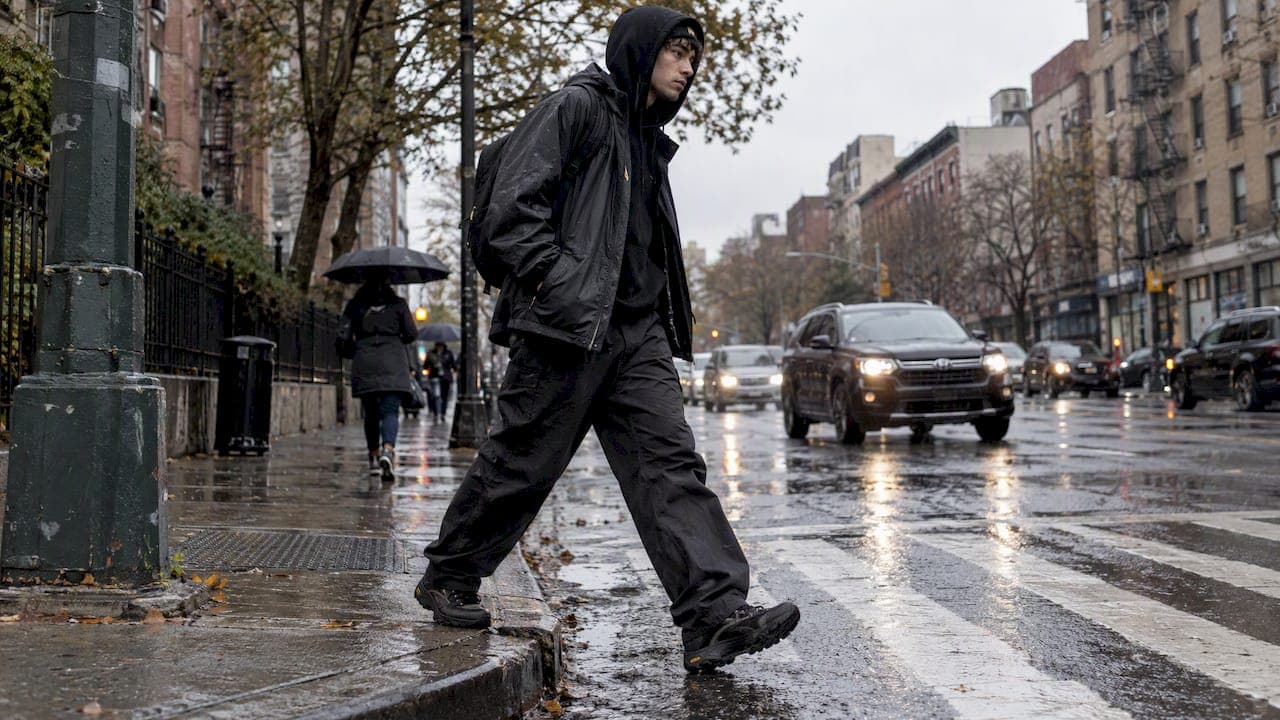
One technical outer layer over street basics, waterproof footwear, and a quick plan for drying your gear out is all it takes to look sharp and stay dry on rainy days. That's the whole formula. Everything below breaks it into five outfit builds, the fabric science backing them up, footwear picks, care tips for your delicate pieces, and a few curated picks to round out your rotation.
TL;DR:
- Choose a shell built with three layers for regular wet commutes; its membrane and inner lining improve durability and breathability over simpler constructions.
- Wear a shell on mild, wet days when movement keeps you warm; choose an insulated puffer with a water resistant outer in cold rain.
- Check jackets for a millimeter waterproof rating, taped seams, and a durable water repellent coating; each feature addresses a different route water can enter.
- Choose trail style sneakers or waterproof boots with deep, multidirectional lug soles and treated leather or ripstop nylon uppers; avoid untreated canvas and suede.
- Skip suede and raw canvas in heavy rain; if suede gets wet, blot it, air dry fully, then restore its nap with a brush.
Table of Contents
- 1. Five outfit formulas to copy for rainy days
- 2. Layering and fabric choices that actually keep you dry
- 3. Footwear: what to wear for traction and street style
- 4. Protecting suede, leather, and canvas: practical care tips
- 5. Styling tips and palette rules to keep looks city-ready
- Author notes and curated picks from Victor and GfaceGear
- What rainy-day streetwear gets wrong, and what actually matters
- Finish the look: GfaceGear picks and a membership option
- FAQ
- Sources
1. Five outfit formulas to copy for rainy days
Gorpcore, the trend of mixing technical outdoor gear with everyday streetwear, is the fastest way to stay dry without looking like you're headed up a mountain. The rule is simple: one or two technical pieces anchor the look, and everyday basics do the rest, according to this gorpcore outfit guide. Here's how that plays out:
- Shell plus hoodie plus joggers. A waterproof shell over a hoodie reads clean and urban while keeping your core dry. Swap: size up the hoodie for a baggier, Brooklyn-leaning silhouette.
- Puffer plus long tee plus cargo pants. Great for colder rain days when you need warmth, not just waterproofing. Swap: trade cargos for straight-leg pants if you want a slimmer line.
- Windbreaker plus tank plus track pants. Built for warmer rain, light rain, or a fast commute. Swap: layer a thin fleece underneath on cooler mornings.
- Trench-style technical coat plus tee plus relaxed denim. This one leans more fashion than function, perfect for a date night or dinner reservation. Swap: belt the coat for shape if your build runs lean.
- Rain poncho plus hoodie plus shorts. Unexpected, but it works for shorter commutes and keeps your legs free. Swap: go with fitted leggings instead of shorts for cooler temperatures.
Hoodies and joggers aren't just comfortable, they're also two of the biggest sellers in the entire streetwear category, which is why they anchor most of these builds, per streetwear industry data. If you're building from our own racks, our Hoodies and Jackets categories slot directly into formulas one and two.
Pro Tip: Pick one formula as your rainy-day default and keep it ready by the door, wet mornings move fast.
2. Layering and fabric choices that actually keep you dry
Not all rain shells are built the same, and the construction matters more than the brand name on the tag. 3-layer jackets, which combine a durable face fabric, a waterproof and breathable membrane, and a protective inner lining, outperform 2-layer and 2.5-layer jackets on both durability and breathability, according to this 3L rain jacket review. That makes a 3-layer shell the smarter buy if you're commuting through rain regularly.
Choosing between a shell and an insulated puffer comes down to temperature and activity. A shell works for mild, wet days or anywhere you're moving enough to generate your own heat. An insulated puffer with a waterproof or water-resistant outer makes more sense in cold, wet conditions where you need warmth and protection at once. For more on building these layers together, our streetwear layering guide walks through the base, mid, and outer logic in detail.
When you're shopping, check the label for:
- Look for a waterproof rating listed in millimeters, indicating the level of protection in sustained rain.
- Taped or sealed seams, which stop water from seeping through stitch holes.
- A DWR (durable water repellent) coating, which helps water bead and roll off the surface fabric.
3. Footwear: what to wear for traction and street style
Wet pavement is slippery, and street fashion doesn't excuse bad traction. Trail-adjacent sneakers and waterproof boots give you grip and weather resistance without sacrificing style, since footwear choice is one of the clearest signals in gorpcore styling, per this gorpcore guide.
- Look for deep, multi-directional lug soles, they grip better on wet concrete and painted crosswalk lines.
- Choose uppers made from ripstop nylon or treated leather rather than untreated canvas or suede.
- Reapply a DWR spray every few weeks if you're wearing the same pair through regular rain.
- Wipe down and air-dry sneakers after a soak, never force-dry them near a heater or radiator.
Go technical with your shoes when the rest of your outfit is clean and simple, and go clean with your shoes when your jacket is already doing the technical heavy lifting. One statement piece per outfit is the rule, not two.
4. Protecting suede, leather, and canvas: practical care tips
Suede and raw canvas are the two materials rain punishes hardest, so plan ahead before you step out in them.
- Apply a suede or leather protector spray before wearing either material outdoors, and reapply it every few months with regular use.
- Skip suede sneakers and bags entirely on days with heavy rain in the forecast, save them for dry streets.
- If suede gets wet anyway, blot it gently with a clean cloth, let it air-dry completely, then restore the nap with a suede brush.
- Never use direct heat (hair dryers, radiators) to speed-dry leather or suede, it cracks and warps the material.
Pro Tip: Save your suede and leather pieces for accessories or inner layers on rainy days, and let your technical outer take the hit instead.
5. Styling tips and palette rules to keep looks city-ready
The easiest way to blow a rainy-day outfit is to over-coordinate. Experts point to this as the single biggest styling mistake: stacking too many technical pieces until the look reads more like a hiking trip than a city outfit, according to this gorpcore trend piece. Keep it to one or two technical statement pieces, and let basics carry the rest.
- Stick to muted, nature-adjacent tones (olive, slate, rust, black) with one accent color to break up the palette.
- Keep proportions street-first: a slightly oversized jacket over a fitted base reads sharper than head-to-toe baggy.
- Finish with a water-resistant bag or a structured waterproof hat, both add function without adding bulk.
- A water-resistant necklace or pendant, like the options in this guide to water-resistant jewelry, can carry your personal detail through a downpour without tarnishing.
Author notes and curated picks from Victor and GfaceGear
author_bio] Victor has covered layering logic before in our [streetwear layering guide and cold-weather builds in our winter streetwear outfits roundup, both useful companion reads here.
Our own categories map cleanly onto the formulas above: Jackets for your technical anchor, Hoodies for your mid-layer, Sneakers for traction, and Hats for the finishing accessory. One example worth copying: a jacket from our Jackets line over a hoodie, paired with joggers and a structured hat, available through our sitewide shop.

What rainy-day streetwear gets wrong, and what actually matters
The biggest misconception about rainy-day streetwear is that staying dry means dressing down. It doesn't. The gear that performs best (taped seams, 3-layer construction, real lug soles) also happens to anchor some of the sharpest outfits of the season when you stop treating it as separate from your regular wardrobe.

Where most advice falls short is the obsession with full technical fits. Nobody needs a head-to-toe gear closet to dress well in rain. One strong piece, chosen for real waterproofing rather than just the look of it, does more work than five mediocre ones stacked together.
If you take one thing from this, prioritize your outer layer first. Get that piece right (true waterproofing, taped seams, a fabric that breathes) before you spend another dollar on accessories or footwear. Everything else is easier to fix after the fact.
— Victor
Finish the look: GfaceGear picks and a membership option

Building a rainy-day rotation gets easier when your core pieces already fit the formula. Our Jackets and Hoodies categories cover the technical-plus-basic pairing this whole guide is built on, and our Sneakers and Hats round out the rest.
- Browse Hoodies for your mid-layer basics.
- Check The Pride Membership at Gfacegear for early access to limited drops and sitewide perks.
FAQ
What is the 3-3-3 rule for clothes?
The 3-3-3 rule is a minimalist packing and wardrobe method: 3 tops, 3 bottoms, and 3 pairs of shoes mixed and matched to create multiple outfits with a small rotation. It works well for rainy-day streetwear because it forces you to pick versatile, weather-ready pieces rather than single-use items.
What is the best outfit to wear on rainy days?
The most reliable rainy-day outfit pairs one weather-ready technical piece (a 3-layer shell or insulated puffer) with street basics like a hoodie and joggers, finished with waterproof or trail-style footwear. Keeping the rest of the outfit simple lets the technical piece do the work without looking overdone.
Is streetwear still popular?
Yes, demand for streetwear remains strong and continues to grow, with hoodies and joggers among the top-selling product categories in the space, according to streetwear industry data. Gorpcore, the blend of outdoor technical gear with everyday streetwear, is one of the trends driving that continued interest into 2026.
What are the best clothes to wear on rainy days?
The best rainy-day clothing combines a waterproof or water-resistant outer layer with breathable basics underneath and footwear that has real traction, like trail-adjacent sneakers or waterproof boots. Save delicate materials like suede and raw canvas for dry days or indoor occasions instead.
Sources
- REI Co-op Xerocloud 3L rain jacket review | BetterTrail
- Gorpcore outfit guide: How to wear outdoor gear as urban fashion | COVL
- Streetwear fashion industry statistics 2026 | Gitnux