Yes, sustainable streetwear is real, but it's not automatic. Whether a hoodie, tee, or drop earns that label comes down to three levers: the materials in the fabric, the manufacturing practices behind it, and the business model deciding how much gets made in the first place. A print-on-demand piece built after you order it starts from a stronger position than a mass-produced run sitting in a warehouse. Some brands operate in the on-demand lane, and this guide breaks down exactly what to check before you believe any brand's claim.
TL;DR:
- Brands must combine verified certifications, transparent supply chain disclosures, and eco-friendly packaging to truly qualify as sustainable streetwear.
- Overproduction and deadstock remain major waste sources, which print-on-demand models significantly reduce by manufacturing only after sales are confirmed.
- Certifications like GOTS, GRS, and OEKO-TEX verify different sustainable aspects but need context and lifecycle details for genuine impact.
- Sustainable practices require more than labels, including honest supply chain info, repair and resale options, and plastic-free packaging to avoid greenwashing.
- A consistent, multi-lever approach involving materials, manufacturing, business model, and transparency is necessary for authentic sustainable streetwear.
Table of Contents
- What Sustainable Streetwear Actually Means
- How Brands Actually Make Streetwear Greener
- How to Shop and Vet Sustainable Streetwear: A Practical Checklist
- Print-on-Demand and Made-to-Order: The Waste Math
- Common Greenwashing Tactics and How to Spot Them
- The Gfacegear Approach: Drops Built to Order, Not Stockpiled
- Sustainable Streetwear Isn't a Label. It's a Checklist.
- Shop Streetwear Made to Order, Not Stockpiled
- Sources
- FAQ
What Sustainable Streetwear Actually Means
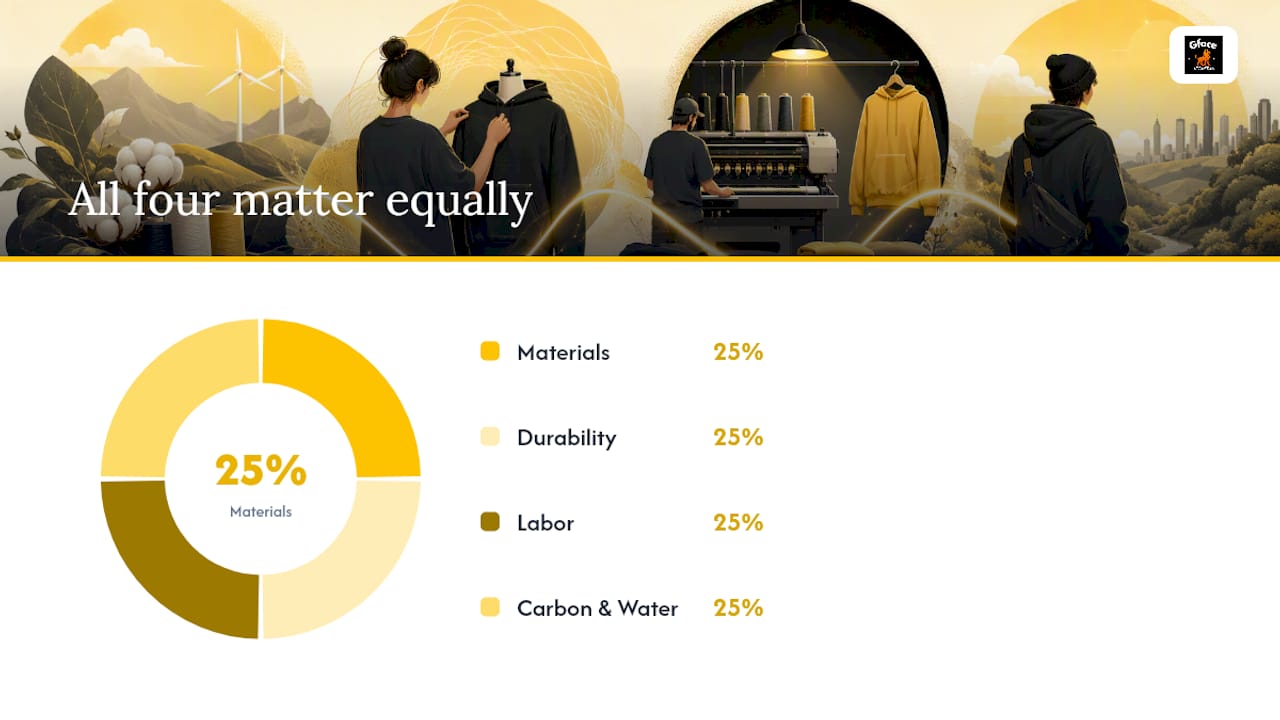
Sustainability in clothing isn't one thing. It's the sum of four forces: what the fabric is made of, how long the piece lasts and what happens to it after, whether the people making it are paid and treated fairly, and how much carbon and water the process burns along the way. A brand that nails materials but ships from a factory with zero labor oversight isn't sustainable. It's half the story dressed up as the whole thing.
Material choice sets the floor. Organic cotton skips the synthetic pesticides used in conventional cotton farming. Certified recycled fibers cut down on virgin material extraction. Synthetic blends like polyester and spandex hold up well and print beautifully, but every wash cycle sheds microplastics into the water supply. That's the tradeoff nobody puts on the hangtag.
Three certifications actually mean something when you see them:
- GOTS (Global Organic Textile Standard): Certifies organic fiber content and restricts harmful chemical processing from farm to finished garment.
- GRS (Global Recycled Standard): Verifies recycled material content and tracks it through the supply chain.
- OEKO-TEX: Tests the finished product and its inks for harmful substances, independent of what the fiber is made from.
A cotton tee with GOTS certification and a polyester jersey with GRS-certified recycled content solve different problems. One reduces chemical load, the other reduces landfill input. Neither is automatically "greener." Context and lifecycle matter more than a single buzzword on a label.
How Brands Actually Make Streetwear Greener
Real sustainability lives in the operational details most shoppers never see. Four levers determine how much impact a piece of clothing actually has, and brands that only pull one of them are cutting corners.
Materials. Organic natural fibers biodegrade and skip synthetic pesticide use, but they're thirstier to grow and slower to scale. Certified recycled content diverts waste from landfills, though recycled synthetics still shed microplastics and eventually hit a recycling ceiling. Standard synthetics perform great athletically but carry the heaviest end-of-life baggage.
Manufacturing. Water and dye management separates a responsible factory from a reckless one. Runoff from unregulated dyeing is one of the textile industry's dirtiest secrets. Facilities that run on renewable energy, keep production local or vertically integrated, and submit to third-party audits close the gap between marketing copy and reality. Some certified textile producers combine GOTS-certified garments with OEKO-TEX inks and single-site production specifically to cut transport emissions and keep the whole chain traceable in one place.

Trims and packaging. Plastic polybags, foil hang tags, and synthetic drawstrings add up fast across thousands of units. Recycled paper labels, compostable mailers, and metal or wood hardware instead of plastic trim close a gap that most sustainability conversations skip entirely.
Business model. This is the lever most articles ignore, and it might matter most. Made-to-order and print-on-demand production only cut fabric after a sale happens, which means zero deadstock. Limited-edition drops cap production intentionally instead of guessing at demand and overshooting. Repair programs and resale initiatives keep garments circulating instead of landfill-bound.
Pro Tip: Check a brand's return policy before you buy. Sustainable operations that make-to-order usually have stricter return windows because every piece is already committed to a specific order. That's not bad service. It's proof the model is real.
How to Shop and Vet Sustainable Streetwear: A Practical Checklist
Run this five-step check before you trust any streetwear brand's sustainability claim:
- Confirm material composition. Look for the exact fiber breakdown (percentage cotton, percentage recycled polyester, and so on), not vague phrases like "eco fabric."
- Check for certificates and verification pages. GOTS, GRS, and OEKO-TEX all maintain public databases where you can confirm a license number is real and current.
- Read the supply-chain disclosure. A brand that names its factory, mill, or fulfillment partner is telling you something a brand that stays silent does not.
- Check repair, return, and resale options. Brands that plan for a garment's second life usually built durability into the first one.
- Evaluate the packaging. Plastic-free mailers and recyclable labels are cheap to implement, so their absence is a real signal.
Watch for these red flags:
- Claims like "eco-friendly" or "green" with zero supporting detail
- "Recycled materials" with no percentage or sourcing named
- Missing country-of-origin or factory information anywhere on the site
- Certification logos with no license number or verification link attached
Two questions expose a brand fast. Ask customer service: "Can you share your GOTS or GRS license number?" and "Where specifically is this garment manufactured?" A brand with nothing to hide answers both without hesitation.
Print-on-Demand and Made-to-Order: The Waste Math
Overproduction is a structural problem in fashion, not an occasional mistake. Print-on-demand attacks it directly by manufacturing only after an item is ordered, which means no deadstock sitting in a warehouse waiting for a markdown rack. That single shift removes one of the biggest waste sources in the entire industry before a single stitch happens.
Overproduction and deadstock rank among the largest drivers of textile waste industry-wide, and on-demand manufacturing is one of the clearest structural fixes available to smaller brands.
But POD alone doesn't finish the job. A truly sustainable made-to-order operation layers in:
- GOTS-certified garment bases, not just any blank
- Water-based, non-toxic inks instead of solvent-heavy alternatives
- Plastic-free shipping and packaging
- Renewable-energy-powered production facilities
- Fair-labor audits across every manufacturing partner
Providers built around this model, like Teemill's sustainable POD framework, pair organic materials with circular design and plastic-free packaging as standard practice, not an upsell. Vertically integrated facilities that handle printing, cutting, and sewing under one roof also cut down on the transport emissions that pile up when a garment bounces between three or four separate factories before it ships. Shipping distance and packaging choice still matter here, so ask any POD brand what their fulfillment footprint actually looks like before assuming "on-demand" automatically means "sustainable."
Common Greenwashing Tactics and How to Spot Them
Greenwashing usually hides behind language that sounds specific but says nothing. "Eco-conscious," "responsibly made," and "kind to the planet" carry zero verifiable meaning on their own. Watch for single-issue claims too: a brand touting "recycled packaging" while staying silent on the fabric, dyes, or labor conditions behind the actual garment.
The clearest tell is a "recycled" claim with no percentage attached. Recycled synthetic fibers can still shed microplastics, and a brand that won't name its recycled content percentage or source usually can't back the claim with paperwork.
Verify before you buy:
- Request an actual certificate scan, not just a logo on a product page
- Cross-check certifying body databases (GOTS, GRS, OEKO-TEX all publish searchable license lists)
- Confirm the recycled content percentage and ask what happens to the garment at end-of-life
Overproduction and deadstock remain among the biggest drivers of textile waste industry-wide, which is exactly why the business model behind a garment deserves as much scrutiny as the fabric tag. A lifecycle view, covering materials, inks, packaging, transport, and labor together, is the only honest way to judge a single claim.
The Gfacegear Approach: Drops Built to Order, Not Stockpiled
Some streetwear brands run print-on-demand, which means items like lion sneakers, hats, long T-shirt dresses, mens T-shirts, and limited-edition swimwear get made after you claim them, not stacked in a warehouse hoping someone buys a size.
That model maps directly to the sustainability levers covered above. No deadstock. Focused runs instead of guessing at demand months in advance. Limited-edition drops like the Boriqua Swimwear stay exclusive by design, not by accident, and membership perks reward the Pride for showing up early instead of rewarding overproduction. If you want the mechanics behind how on-demand manufacturing actually works, our on-demand manufacturing guide breaks down the full process.
Sustainable Streetwear Isn't a Label. It's a Checklist.
Here's what conventional wisdom gets backwards: most people think sustainable streetwear is about finding "the right brand." It's not. It's about finding the right combination of decisions, made consistently, and verifiable by anyone who bothers to ask.
The uncomfortable truth is that plenty of brands nail one lever and market it like they nailed all four. Organic cotton with a factory that dumps untreated dye runoff isn't sustainable. Recycled polyester shipped from three continents away in plastic packaging isn't sustainable either, no matter how green the checkout page looks.
Print-on-demand doesn't solve everything on its own, but it removes the single biggest structural failure in fashion: making stuff nobody asked for. Combine that with real certifications, honest supply-chain disclosure, and packaging that skips the plastic, and you've got something worth calling sustainable. Skip any one of those, and you've got a marketing costume. The Pride deserves better than a costume. Ask the questions, check the certificates, and buy from brands that make you earn nothing but pride in returning.
— Victor
Shop Streetwear Made to Order, Not Stockpiled
Gfacegear exists for exactly the reader who just finished this checklist: you want streetwear that hits hard visually, lion imagery, the Greek Key medallion, Boricua heritage woven through every drop, without buying into the overproduction problem this article just walked through. Because everything runs print-on-demand, your gear gets made after you claim it, not before, and limited-edition runs like our swimwear drops stay exclusive because we cap them on purpose.

If you're ready to put on your Gameface, browse the current lineup of lion sneakers, hats, long T-shirt dresses, mens T-shirts, and the latest limited swim drop in the Gfacegear lookbook. Check what's live, grab your size before the drop closes, and join the Pride while the run is still open.
Sources
For deeper verification, check Printful's eco-friendly production overview, Teemill's sustainable POD model, Caspar's certified textile practices, and sublimation printing durability from Capra Sports for printing technique context.
- Custom eco-friendly t-shirt printing | Printful
- Sustainable Print on Demand & Certified Textile Production | Caspar
- Handle with care | World Wildlife Fund
FAQ
Are Streetwear Brands Sustainable?
Some are and many aren't. It depends entirely on materials, manufacturing practices, and whether the brand avoids overproduction through models like made-to-order or limited drops rather than mass inventory.
Is Zara Sustainable or Fast Fashion?
Zara operates as a fast-fashion retailer built on rapid, high-volume production cycles, which sits structurally opposite to the made-to-order and limited-run models covered in this guide.
Do Gen Z Shoppers Want Sustainable Fashion?
Younger shoppers increasingly favor brands that disclose materials, certifications, and manufacturing practices, which is exactly why transparent labeling and verifiable claims matter more now than they did a decade ago.
What Are the 7 R's of Sustainable Fashion?
Definitions vary across sources, but common versions include Reduce, Reuse, Recycle, Repair, Rethink, Refuse, and Resell, all aimed at keeping garments in circulation longer instead of discarding them quickly.
Is Print-on-Demand Actually Sustainable?
Print-on-demand meaningfully reduces waste by manufacturing only after an order is placed, but it only qualifies as fully sustainable when paired with certified materials, non-toxic inks, fair labor practices, and plastic-free packaging.