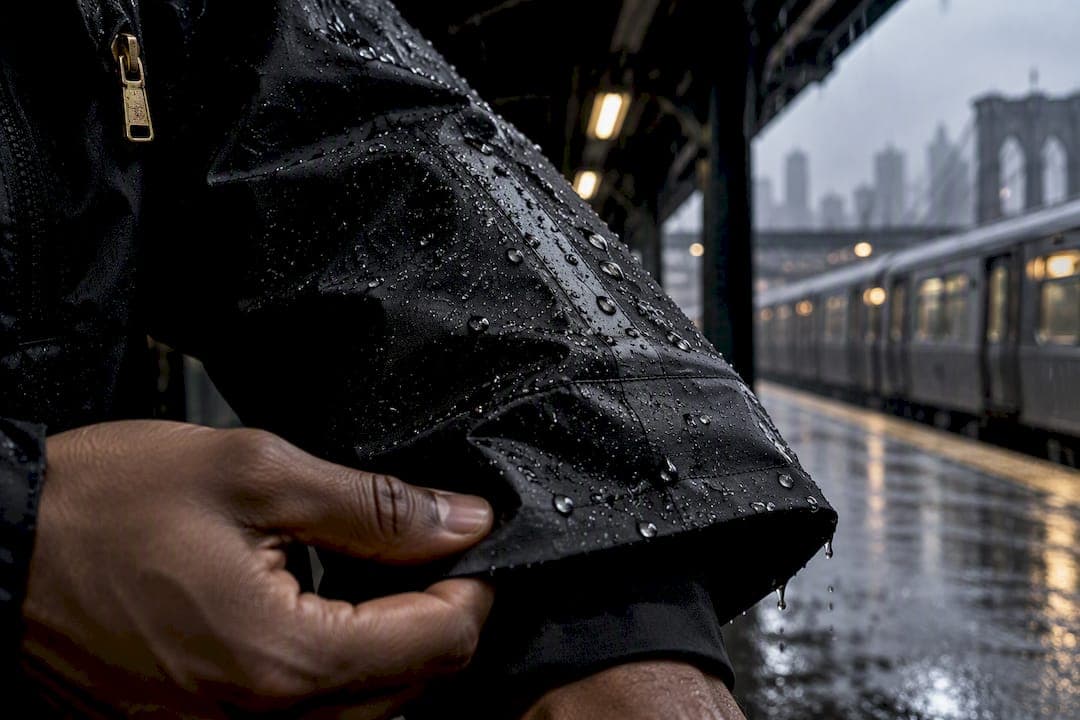
Waterproof means a continuous barrier built from a membrane and sealed seams; water resistant means temporary protection that holds off light wetting before it soaks through. Water repellent, the DWR finish on most shells, just makes rain bead up and roll off for a while. For commuting or light drizzle, water resistant is fine. For hiking in sustained rain or high-exertion days out, you want a taped, membrane-built waterproof jacket, and breathability matters just as much as the label on the tag.
TL;DR:
- Water resistant jackets rely on a tight weave and light coating, making them suitable only for brief exposure to light rain or drizzles.
- A waterproof jacket combines a membrane and sealed seams, capable of handling sustained heavy rain and prolonged exposure without leaking.
- Consumers should verify hydrostatic pressure ratings above 5,000mm for moderate rain, accompanied by taped seams for true waterproofing.
- Reproofing DWR finishes before they fail can restore water repellency, but seam repairs often require professional help to maintain integrity.
- Non-fluorinated DWR options now performance comparable finishes, and seam taping remains a crucial construction detail for waterproof guarantees.
Table of Contents
- Water Resistant vs Waterproof Jacket: The Real Definitions
- How to Read the Labels: Water Column, Spray Tests, and Taped Seams
- Choosing by Activity: When Waterproof Beats Water Resistant
- Keeping the Rain Out: Cleaning, Reproofing, and Seam Repair
- The PFAS Question: What's Actually in Your DWR
- What I Look For Before I Buy an Outer Layer
- Gear Up: Gfacegear Jackets Built for the Street and the Storm
- Sources
- FAQ
Water Resistant vs Waterproof Jacket: The Real Definitions
The confusion around water resistant vs waterproof jacket labeling starts because both terms describe water blocking, but they operate on completely different mechanics. A water-resistant jacket relies on a tightly woven fabric, sometimes paired with a light DWR coating, that slows moisture from soaking through immediately. It works for a quick walk in drizzle or a subway commute, but sustained rain will eventually wet it out.
Water repellent describes the surface treatment itself, not the garment. DWR, or durable water repellent, is a topical coating applied to the fabric's outer face that makes water bead and roll off instead of soaking in. It is the reason a brand-new rain jacket sheds water so cleanly, and it is also the first thing to wear down with use.
Waterproof is a different animal entirely. A true waterproof jacket is built in layers: a face fabric on the outside, a DWR finish on top of that, an actual waterproof-breathable membrane laminated underneath, and often a lining to protect the membrane from oils and abrasion. That membrane, not the coating, is what stops water under sustained pressure and heavy rain.
Here's the quick breakdown:
- Water resistant: tight weave, light coating, good for short exposure and low-intensity weather
- Water repellent (DWR): a surface finish that beads water, found on nearly every rain shell, and it degrades over time
- Waterproof: membrane plus sealed seams, built for extended exposure and heavy downpours
None of this works in isolation. A waterproof membrane with unsealed seams still leaks, and a water-resistant shell with fresh DWR can outperform a tired waterproof jacket that hasn't been reproofed in two years.
How to Read the Labels: Water Column, Spray Tests, and Taped Seams
Manufacturers back up their waterproof claims with actual measurements, and knowing three of them puts you ahead of most shoppers standing in a store aisle.
- Hydrostatic pressure (water column) rating — measured using methods like AATCC TM 127, this number tells you how many millimeters of water a fabric can hold before it leaks. A rating of 5,000mm to 10,000mm handles light to moderate rain; serious mountain shells often push past 20,000mm.
- AATCC 22 spray test — this test rates how well a fabric beads water versus soaking it in, on a scale from 0 (total wet-out) to 100 (perfect bead-up). It measures DWR performance specifically, not the waterproofness of the whole garment.
- Seam taping — waterproof fabric with untapped seams still lets water through the needle holes at every stitch line. Taped seams are a separate construction step, and their presence (or absence) is often listed right on the product page.
Statistic Callout: A jacket can carry a high hydrostatic rating and still leak like a screen door if the seams aren't taped. Waterproofness is a construction claim, not just a fabric spec, and seam taping is treated as a distinct integrity requirement across the industry, separate from the fabric's own water column number.
Choosing by Activity: When Waterproof Beats Water Resistant
The right choice depends on how hard you're working and how long you'll be out in it, not just how heavy the rain looks.
- City commuters and daily wear: a water-resistant shell with fresh DWR usually covers you between bus stops and short walks.
- Day hikers: lean toward a taped, waterproof-breathable shell, especially if the forecast shows sustained rain rather than passing showers.
- Multi-day backpackers: waterproof, taped, and durable construction is non-negotiable when you can't dry out gear overnight.
- Runners and high-exertion athletes: a breathable water-resistant shell often keeps you drier than a fully waterproof one, because membranes trap sweat during vigorous activity, and trapped sweat feels just as wet as rain.
Breathability is the trade-off nobody puts on the hangtag. A waterproof membrane blocks rain from coming in, but it also slows how fast your body heat and sweat vapor get out. Runners and cyclists often do better layering a wicking base with a light, vented shell, similar to the approach covered in moisture-wicking versus cotton for runners, than sweating it out inside a fully sealed jacket.
Pro Tip: If you only get rained on a few times a year, an inexpensive water-resistant shell with good DWR is a smarter buy than an expensive waterproof jacket that sits in your closet nine months out of twelve.
Keeping the Rain Out: Cleaning, Reproofing, and Seam Repair
DWR failure looks obvious once you know what to check for: water stops beading on the fabric's surface and instead darkens it, soaking straight through. That "wet-out" look is your first sign it's time for maintenance, not a sign the jacket is done.
- Test it: splash a few drops on the shoulder. If it beads and rolls, DWR is intact. If it darkens the fabric, it's time to reproof.
- Wash it right: use a technical cleaner made for waterproof fabrics, skip fabric softener entirely, since it clogs the membrane's pores.
- Reactivate the finish: a short tumble-dry cycle on low heat or a warm iron on a protective cloth can reactivate existing DWR before you assume it's gone.
- Reproof if needed: restoring water repellency through cleaning and reapplication is standard practice, using either a spray-on or wash-in DWR product depending on the garment.
- Repair the seams: small tape peels can be patched with seam sealant; larger failures are worth a professional repair rather than risking the membrane.
Pro Tip: Reproof before your jacket fully wets out, not after. It's easier to maintain a good DWR finish than to revive a dead one. For general fabric upkeep between reproofing sessions, the same washing discipline used in preventing hoodie pilling applies, gentle cycles and no harsh softeners extend any garment's life.
The PFAS Question: What's Actually in Your DWR
DWR chemistry has a real environmental cost, and it's worth knowing before you buy your next shell. Traditional DWR finishes often rely on fluorinated compounds, and research shows weathering from UV, heat, and humidity can increase extractable PFAS levels in treated textiles over time, sometimes revealing PFAS compounds that weren't detectable in the fabric when new.
Aging and outdoor exposure don't just wear down a jacket's water resistance. They can also change the chemical profile of the finish itself, which is part of why the outdoor industry has been pushing toward non-fluorinated alternatives.
The good news: non-fluorinated and PFAS-free DWR options have closed much of the performance gap. Some PFAS-free industrial treatments now achieve high AATCC spray ratings comparable to older fluorinated finishes. Look for brands that publish their test results, and reach for PFAS-free wash-in reproofing products at home when you maintain your gear.
What I Look For Before I Buy an Outer Layer
Commuters need water resistant and light. Outdoor athletes need breathable first, waterproof second. Occasional users are better served saving money on a treated shell than overspending on a membrane they'll rarely test.
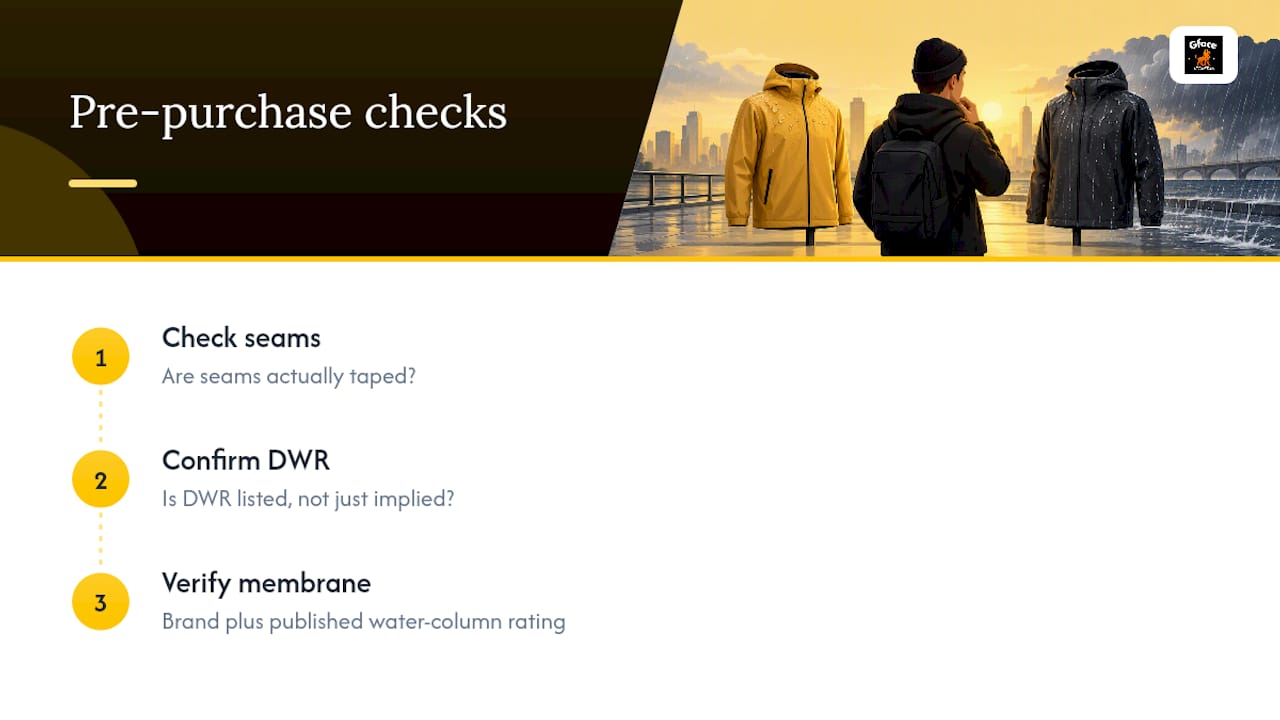
Before checkout, I check three things every time: are the seams actually taped, is the DWR status listed or just implied, and does the membrane brand back its numbers with a published water column rating? If a listing skips all three, that's the answer.
For style-forward options that don't ignore performance, streetwear jackets built for men and urban windbreakers are worth a look before you settle for something purely technical and forgettable.
— Victor
Gear Up: Gfacegear Jackets Built for the Street and the Storm
Gfacegear doesn't make you choose between looking sharp and staying dry. Every jacket in the Jackets collection carries the ROAR identity, lion imagery, the Greek Key medallion, made-to-order so you're never wearing something off a rack a hundred other people grabbed too. When you check a listing, look at the DWR and construction specs the same way you would any outer layer, and match the finish to what you'll actually wear it for: subway commutes, weekend runs through Brooklyn, or standing out in weather that would send anyone else running for cover.

Join The Pride Membership for $9.99 per month and unlock sitewide discounts, early access to limited drops, and VIP perks before the rest of the crowd even sees them. Grab your Gameface, check the Jackets page for the fit and finish that matches your grind, and let the world hear you ROAR through whatever the forecast throws at you.
Sources
- Water Resistant Versus Waterproof Jackets
- Waterproof vs. Water Resistant: What’s the Difference?
- Durable Water and Soil repellent chemistry in the textile industry – a research report
FAQ
What Is Better, Waterproof or Water Resistant?
Neither wins outright; it depends on exposure and exertion. Waterproof wins for sustained heavy rain and multi-day trips, while a breathable water-resistant shell often performs better during high-exertion activity where sweat buildup matters more than rain.
Is Water Resistant OK in Rain?
Water resistant handles light, short-duration rain fine, like a quick walk between buildings. It will eventually wet through in sustained or heavy downpours, since it lacks the sealed membrane that true waterproof construction provides.
How Do I Know if My Jacket Is Waterproof or Water Resistant?
Check the product tag or listing for a hydrostatic pressure rating and whether the seams are taped; both are required for genuine waterproofness. If those details aren't listed, assume it's water resistant at best, and test it by splashing water on the fabric to see if it beads or soaks in.
Does Water Resistant Mean It Is Waterproof?
No, water resistant and waterproof are not the same thing. Water resistant fabric slows moisture temporarily through a tight weave or light coating, while waterproof requires an actual membrane plus taped seams to block water entirely under sustained pressure.