
Your inseam is the distance from the crotch seam down to the hem of the pants, and the fastest way to get an accurate number is to lay a well-fitting pair flat and measure straight down that inner seam. No helper, no tape gymnastics. If you don't have a pair that already fits right, a helper-assisted body measurement or the solo "book method" gets you there too. Just know that shoes and your preferred pant break can shift the final number by an inch or more.
TL;DR:
- Measuring your inseam with a flat pair of pants provides the most consistent reference for matching desired silhouettes across brands.
- Using a helper to measure from your crotch to the hem yields accurate results, especially when you include footwear choice and repeat measurements to confirm consistency.
- The "book method" is the best solo technique, but it requires adjusting for shoe height and break preferences to get an accurate real-world inseam.
- Shoes and desired pant break can shift the final inseam requirement by up to two inches, so adjusting based on footwear and style intent is crucial.
- Always verify measurements by repeating twice or thrice, compare garment and body measurements, and log your lengths for future accurate sizing decisions.
Table of Contents
- What You Need Before You Measure Pants Inseam
- How Do You Measure a Pair of Pants Laid Flat?
- How Do You Measure Inseam With a Helper?
- Can You Measure Your Inseam Without a Helper?
- How Do Shoes and Pant Break Change Your Inseam?
- How Do You Verify Your Inseam Is Accurate?
- How Do You Convert Inseam Into the Right Size?
- Why Accurate Inseams Matter for Streetwear Silhouettes
- Find Your Fit at Gfacegear
- Sources
- FAQ
What You Need Before You Measure Pants Inseam
Grab your gear before you start. Half of bad measurements come from rushing this part, not the actual math.
- A soft, flexible measuring tape (the kind seamstresses use, not a metal one from the tool box)
- A flat, hard surface like a floor or table
- A helper, if you're going the body-measurement route
- A hardcover book or small level for the solo method
- Pen and paper to log your numbers on the spot
If you're measuring your body, wear tight-fitting clothes or go barefoot for a clean baseline reading, unless you're specifically dialing in a shoe-based break. Stand on a hard floor, not carpet, keep your posture natural, and make sure that tape runs straight, not looped or twisted. Small setup mistakes compound fast when you're talking about a measurement this precise.
How Do You Measure a Pair of Pants Laid Flat?
This is the gold-standard move for matching a finished garment length, and it's the method Gfacegear recommends first when you're trying to nail a silhouette you already love.
- Button and zip the pants, then lay them flat on a table or floor.
- Smooth out the fabric and align the inner leg seams so there's no bunching.
- Locate the crotch seam, the spot where the two inner-leg seams meet.
- Run your tape straight down the inside leg seam from that crotch point to the bottom of the hem.
- Record the number to the nearest half inch, and note whether you rounded up or down.
This finished-garment inseam is the most repeatable way to buy the same cut across brands, since it captures the rise and leg shape already built into that pair. If a jogger fits you perfectly, this number becomes your reference for every future purchase, according to WikiHow's sizing breakdown.
Pro Tip: Keep a small notebook or note on your phone with the flat-measured inseam of every pair you own that fits well. When a new drop launches, you'll compare against real data instead of guessing.
How Do You Measure Inseam With a Helper?
When you don't have a reference pair, or a brand specifically asks for a body measurement, this is your move. Two sets of hands beat one, every time.
- Stand with feet shoulder-width apart and your posture relaxed, not stiff.
- Have your helper place the tape at the crotch, right where the upper inner thigh meets your torso.
- Run the tape straight down the inside of your leg to your desired hem point, whether that's the ankle bone or the top of your shoe.
- Decide on footwear first. Barefoot gives you a clean body number; wearing the shoes you'll actually pair with the pants gives you a real-world number.
- Repeat the measurement two to three times and average the results to cancel out small posture shifts.
TM Tailor's guide on pro inseam measurement confirms both the flat-pants and helper-assisted methods work reliably at home, and that repeating readings tightens accuracy. Prefer this method when a size chart explicitly calls for a body measurement rather than a garment length, since the two numbers rarely match exactly.
Can You Measure Your Inseam Without a Helper?
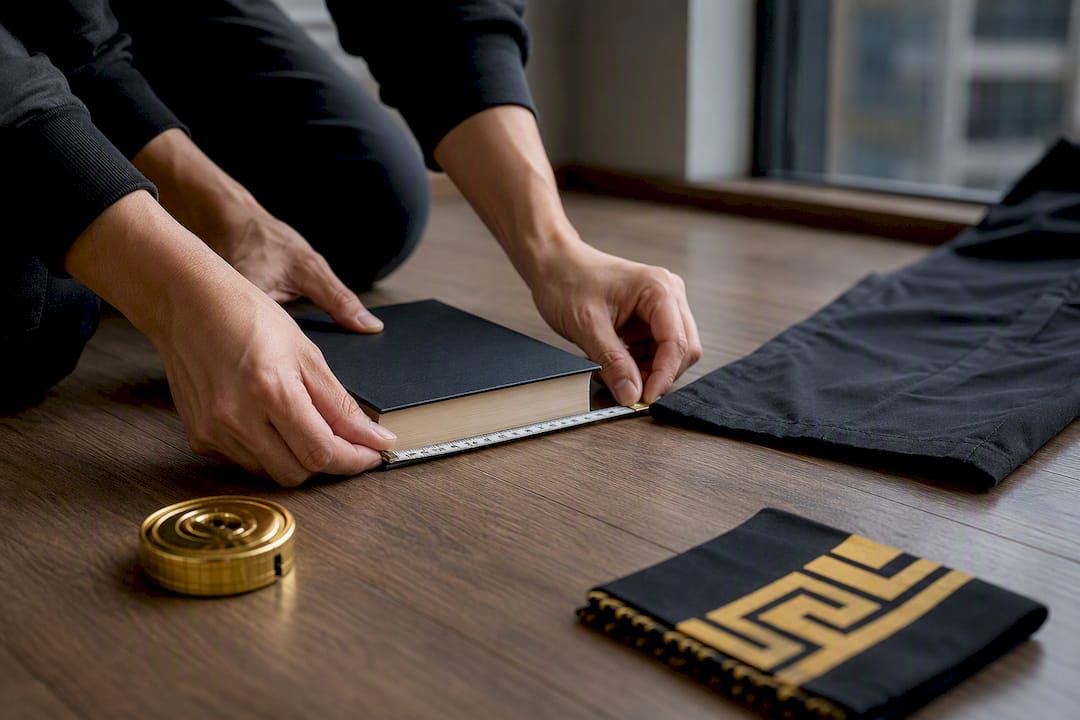
Yes, and the "book method" is the most trusted solo technique out there. It works because it creates one fixed, repeatable point at crotch height instead of relying on someone else's tape placement.
- Stand on a hard floor, feet shoulder-width apart, and hold a hardcover book flat between your legs.
- Press the book up so its top edge sits snug against your crotch, mimicking where a waistband would hit.
- Keep the book level and measure straight from its top edge down to the floor.
- Repeat the whole process two or three times to confirm the reading holds steady.
This method shines when you're measuring alone and can't get a helper to hold the tape steady. Wabicycles' inseam guidance backs it as one of the more dependable solo techniques available. Its main limitation: it measures straight to the floor, so you'll still need to adjust for shoe height and your preferred break afterward.
Pro Tip: Use a book with a stiff, flat cover rather than a paperback. A floppy edge throws off your measurement by a quarter inch or more, and that adds up over multiple readings.
How Do Shoes and Pant Break Change Your Inseam?
The number on your tape isn't the end of the story. What you wear on your feet, and how much fabric you want pooling at the ankle, both shift the final length you order.
- No break (cropped look): subtract roughly 1 to 2 inches from your full body inseam for that clean, ankle-baring cut.
- Slight break: stay close to your true measured inseam, just enough fabric to graze the top of your shoe.
- Full break: add about 1 inch so the fabric folds once over your shoe.
- Flats or sneakers: measure in the actual pair you'll wear regularly, since a flat sole barely changes your reading.
- Heels: account for the added height, which can shift your ideal inseam by close to an inch depending on heel size.
These adjustments are heuristics, not hard rules, so always cross-check against the specific brand's fit notes before you commit. Measuring in the shoes you actually plan to wear gives you the most honest real-world result, since heel height alone can swing the break by close to an inch, per TM Tailor's fit research.
How Do You Verify Your Inseam Is Accurate?
Before you buy or hem anything, run a quick check. It takes two extra minutes and saves you a return shipment.
- Repeat every measurement two to three times and average the results to smooth out posture or tape-placement errors.
- Compare your flat-garment reading against your body reading. A gap of half an inch or more usually means rise or cut differences, not a mistake.
- Double-check the tape ran straight, not at an angle, and that you measured on a hard floor rather than carpet, which compresses under your feet.
Common slip-ups include measuring to the sole of your shoe instead of the hem point, letting the tape sag mid-leg, or standing with uneven weight distribution. Fix these by re-measuring on a bare floor with the tape pulled snug but not stretched. When your two readings disagree, use the garment measurement to match a specific cut you already love, and use the body measurement when a brand's chart is explicitly labeled as body-based, a distinction Arrisco's measuring guide lays out clearly.
Pro Tip: Log both numbers side by side. When a size chart doesn't specify which type it wants, the gap between your two readings tells you how much wiggle room you have either way.
How Do You Convert Inseam Into the Right Size?
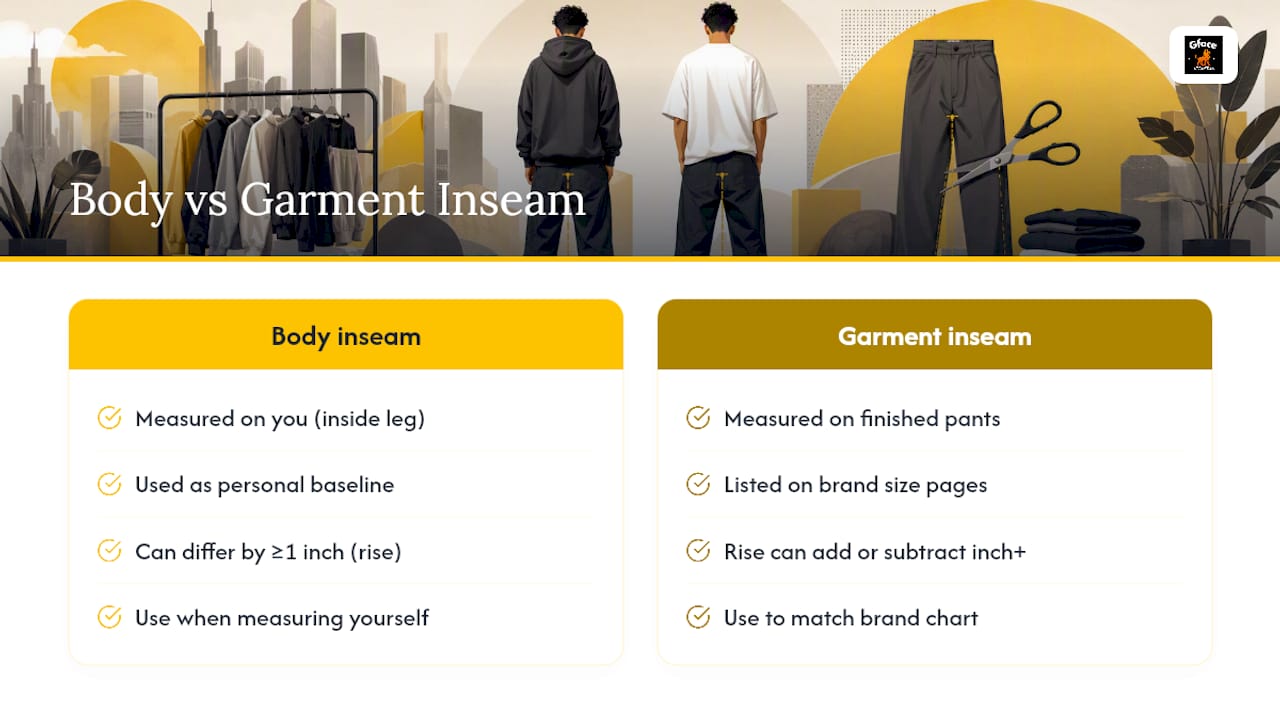
Brand size pages usually specify whether their chart uses garment inseam (measured on the finished pants) or body inseam (measured on you). Check that detail before you order, since the two can differ by an inch or more depending on the rise of the cut.
Converting between inches and centimeters is simple math: multiply inches by 2.54 to get centimeters, and round to the nearest half centimeter for practical use. Most streetwear brands, including drops built around joggers and cargo silhouettes, list sizing in inches, so this conversion mostly matters if you're cross-shopping international labels.
A height-to-inseam reference table gives you a starting point when you can't measure directly yet, though it's a baseline, not a substitute for your own numbers once you have them.
These ranges echo the height-based estimates from DenimBulk's inseam calculator, where a height around 170 cm lines up with roughly a 30-inch inseam. Adult inseams commonly fall within a typical range for most adults, though your actual number depends heavily on your build and the cut you're after, according to WikiHow's size chart data. Use the table as your rough starting lane, then confirm against the brand's own chart before you check out.
Why Accurate Inseams Matter for Streetwear Silhouettes
Streetwear runs on silhouette, and silhouette runs on inseam. A jogger that stacks perfectly at the ankle on one drop can pool wrong on the next if the rise or taper shifts even slightly, and cargo pants punish a sloppy measurement even harder because of the extra pocket bulk pulling on the leg line. Long t-shirt dresses have their own version of this problem: get the length wrong and the whole proportion of the piece falls apart.
Here's the rule worth locking in before you shop any limited drop: keep three numbers on hand at all times. Your body inseam, your favorite garment's flat inseam, and whatever the brand's own chart specifies. Cross-reference all three before you commit to a size, especially on a Gfacegear limited-edition run where restocks aren't guaranteed and a wrong-size return can mean missing the piece entirely.
— Victor
Find Your Fit at Gfacegear
Now that you've got real numbers, put them to work. This brand built its whole identity around gear that fits right when you step out. Joggers, cargo pants, long t-shirt dresses, mens tshirts, and limited-edition swimwear drops all move fast, and the pieces that fit best the first time are the ones people actually wear on repeat.

Check your measured inseam against the jersey size guide before you size up or down on any print-on-demand piece, since garment measurements there map directly to how Gfacegear builds its charts. If you're eyeing something cropped, the streetwear shorts guide walks through length and break the same way we covered above. For a broader fit reference outside streetwear, Horology Kings' sizing guide shows how other categories approach the same fit-first thinking.
Once your numbers are locked in, head to the Gfacegear lookbook and browse the current drop. Grab your gameface, pick your fit, and let the world hear you roar.
Sources
- How to Measure Pants Size (with Men’s & Women’s Size Charts) — WikiHow
- How to Measure Your Inseam Like a Pro — TM Tailor
- Inseam measurement guidance — Wabicycles
- Inseam calculator – Find inseam by height (Men & Women) — DenimBulk
FAQ
What Does a 32-Inch Inseam Mean on Pants?
An inseam of about 30 inches means the distance from the crotch seam to the hem measures that length, typically fitting someone in a common adult height range depending on build and cut.
How Do I Correctly Measure My Inseam?
Lay a well-fitting pair of pants flat and measure from the crotch seam straight down to the hem, or use a helper to run a tape from your crotch to your desired hem point while you stand naturally.
What Should My Inseam Be if I'm 5'2"?
At a height around 160 cm, your inseam typically falls within a common range, varying by individual proportions and style, though your exact number depends on leg-to-torso proportion and the cut's rise.
How Long Is a 30-Inch Inseam?
An inseam around 30 inches measures the distance from the crotch seam to the hem, landing in a common range for many adults within a typical height span.