
A puffer vest is a go-to layering piece that instantly upgrades a hoodie, a fine-gauge knit, or even a midi dress. Zip it over a hoodie with leggings and trainers for errands, throw it over a turtleneck and jeans with ankle boots for daytime structure, or drop it over a midi dress with knee boots for a night out. Below, you get the exact formulas, fit rules, and pro tips to make it work in every closet, every season.
TL;DR:
- Choose a hip-length vest for versatility and proportion, and size up when layering over bulkier clothing like hoodies or sweaters.
- Layer a puffer vest over different base outfits by adjusting fit, fill weight, and styling for casual, smart-casual, or night-out looks.
- Cinch long vests with a wide belt to transform bulk into a tailored silhouette and avoid overwhelming your frame.
- Opt for lightweight fill for shoulder seasons and heavier fill for winter layering under coats, depending on your climate needs.
- Stick to neutral colors like black, cream, or khaki initially, and add focal-point colors like forest green or burgundy once comfortable with neutrals.
Table of Contents
- Puffer Vest Outfit Ideas You Can Copy Today
- How to Pick the Right Puffer Vest: Fit, Length, and Fill
- Styling by Occasion: Casual, Smart-Casual, Athleisure, and Night-Out
- Troubleshooting and Pro Tips From Victor and GfaceGear
- Puffer Vest Care and Maintenance Tips
- Best Fabrics and Insulation Types in Puffer Vests
- How to Choose a Puffer Vest Based on Body Shape
- Accessories That Complete a Puffer Vest Outfit
- Trending Styles and Popular Brands for Puffer Vests
- The Puffer Vest as a Wardrobe Multiplier
- Shop Complementary Pieces to Build These Looks
- Style Resources Behind This Guide
- Sources
- FAQ
Puffer Vest Outfit Ideas You Can Copy Today
Every look here starts from the same place: a solid base layer, a vest that fits with room to move, and a footwear choice that either grounds the outfit or gives it edge. Style editors at Glamour point to the same handful of templates repeating across street style, and for good reason. They work because the vest does the heavy lifting on silhouette while everything underneath stays simple.
-
Hoodie + leggings + trainers. Zip the vest halfway over an oversized hoodie, add leggings and chunky trainers, and you've got the easiest cold-weather uniform in your closet. Swap: trade leggings for joggers if you want more coverage.
-
Turtleneck + straight jeans + ankle boots. This is the smart-casual workhorse. A fine-gauge turtleneck under a sleek vest reads polished, not sporty, especially with tailored trousers instead of jeans on dressier days. Harper's Bazaar leans on this exact combination to bridge casual and refined wardrobes.
-
Midi dress + vest + knee boots. Belt the vest at the waist over a fitted midi dress, add knee boots, and the vest stops looking utilitarian and starts looking intentional.
-
Monochrome black-on-black. Vest, hoodie, joggers, sneakers, all in the same tone. It's the fastest way to look put-together with zero decision fatigue, and it pairs naturally with an all-black streetwear formula if you want more combinations in the same palette.
-
Oversized-on-fitted contrast. Slide a fitted vest over an oversized flannel or graphic tee, then tuck into slim joggers. The proportion swap is what makes streetwear silhouettes pop, according to trend coverage from WEAR2AM.
-
Shirtdress + vest. Layer a lightweight vest over a button-front shirtdress and cinch with a belt. This one transitions from brunch to a chilly office without a coat change.
-
Full skirt + cropped vest. A cropped puffer vest over a fitted top with a full midi skirt creates volume up top and structure below, a combination Glamour calls out as a current favorite among stylists.
-
Sheer layer + vest. For fall nights out, a sheer long-sleeve top under an unzipped vest adds texture without adding bulk.
-
Packable travel outfit. A lightweight, packable vest over a merino base layer and joggers gets you through airports and shoulder-season cities without extra suitcase weight. Check the layering guide for more combinations built around packability.
Color rule for all of these: start with black, cream, or khaki. Neutrals mix with almost anything already in your closet. Once you own one, a color vest, think forest green, rust, or burgundy, works better as a focal point layered over neutral basics than as your everyday piece.
How to Pick the Right Puffer Vest: Fit, Length, and Fill
The outfit formulas above only work if the vest itself fits right. Three decisions matter more than anything else: length, sizing for layering, and fill weight.
- Length. Hip-length vests are the most versatile and work over hoodies, turtlenecks, and jeans without disrupting proportion. Longer, thigh-length vests read more fashion-forward and pair best belted over dresses or skirts.
- Sizing for layering. If you plan to wear the vest over a hoodie or a chunky sweater, size up one from your usual fit. A vest that's snug over a t-shirt will strangle you over a hoodie.
- Fill weight. Lightweight fill works for packable, shoulder-season pieces. Heavier insulated fill functions as a genuine mid-layer under a coat in real winter cold, a use case The North Face builds its shoulder-season guidance around.
- Hood or no hood. Choose a crewneck base under a hooded vest, or a hoodie under a hoodless vest. Never stack two hoods.
- Color order. Buy black or navy first. WEAR2AM's seasonal layering breakdown confirms navy pairs cleanly with earth tones, which makes it your second-safest buy after black.
Pro Tip: If you're between sizes, size up. A puffer vest that fits snug leaves nowhere to layer, and layering is the entire point of owning one.
Styling by Occasion: Casual, Smart-Casual, Athleisure, and Night-Out
The same vest should work for four completely different days. Here's how the formula shifts by occasion.
- Casual/streetwear: Hoodie, straight jeans, trainers, vest half-zipped. Low effort, high payoff.
- Smart-casual: Fine-gauge knit, tailored trousers, sleek solid-colored vest, loafers or clean boots. This combination is the one Harper's Bazaar's editors return to for bridging casual and polished dressing.
- Athleisure: Fitted vest, leggings, technical sneakers, hair pulled back. Keep the vest closer to the body here so it doesn't fight your movement.
- Night-out: Vest over a midi dress or skirt, heeled boots or an elevated sneaker, one statement accessory.
- Travel/shoulder-season: A packable vest folds into a bag and adds real warmth without the bulk of a full coat. Pull ideas from a festival-ready packable formula if you're building a capsule for a trip.
Troubleshooting and Pro Tips From Victor and GfaceGear
Bulk is the number one complaint about longer vests, and the fix is simpler than people think.
Cinch a long puffer vest with a wide belt and the whole silhouette shifts. What looked bulky over a dress now looks tailored. That one move turns a utility piece into a statement piece, no tailoring required.
Pro Tip: Half-zip is your default setting. Fully zipped reads functional, fully unzipped reads relaxed, but half-zip gives you a defined torso line that works with almost any base layer.
Once the vest is doing its job, build the rest of the fit around it. A ROAR hoodie underneath, a fitted hat on top, and a pair of statement sneakers on your feet turn a simple vest outfit into a full statement, without a single piece competing with the others.
Puffer Vest Care and Maintenance Tips
Down and synthetic fill both lose loft if you wash them wrong, and loft is what keeps a vest warm and keeps its shape sharp under a hoodie or dress.
Spot clean small stains with a damp cloth and mild soap first. When a full wash is unavoidable, use a front-loading machine on a gentle, cold cycle with a down-specific or synthetic-safe detergent, never regular laundry powder, which strips natural oils from down clusters. Skip fabric softener entirely; it flattens fill and kills insulation.
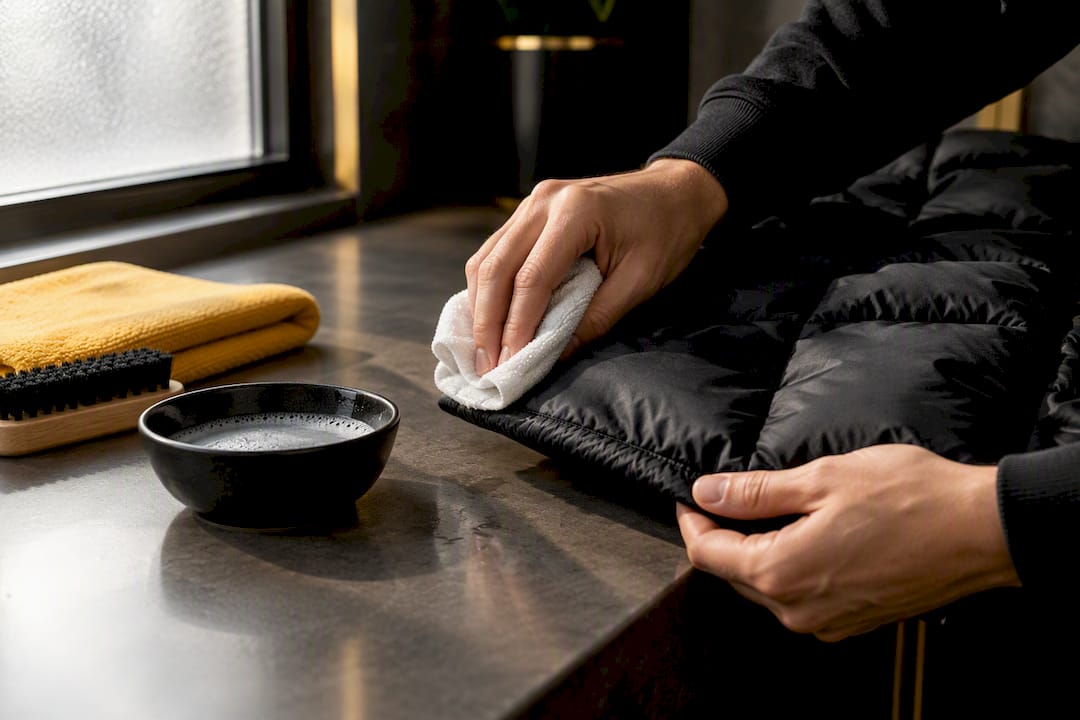
Drying matters more than washing. Tumble dry on low with a couple of clean tennis balls or dryer balls to break up clumps and restore loft. Pulling a damp vest straight from the machine and hanging it to air dry leaves the fill matted in flat, cold patches that never fully recover.
Store vests loosely, never compressed under heavy items on a closet shelf, since constant compression breaks down both down and synthetic fibers over a season. If a vest is genuinely packable, only compress it for travel, then let it fully decompress before wearing.
Check zippers and baffle seams every few wears. A small tear leaks fill fast, and catching it early with a bit of seam tape saves the whole piece.
Best Fabrics and Insulation Types in Puffer Vests
Fill type decides how a vest performs, and it's worth understanding before you buy.
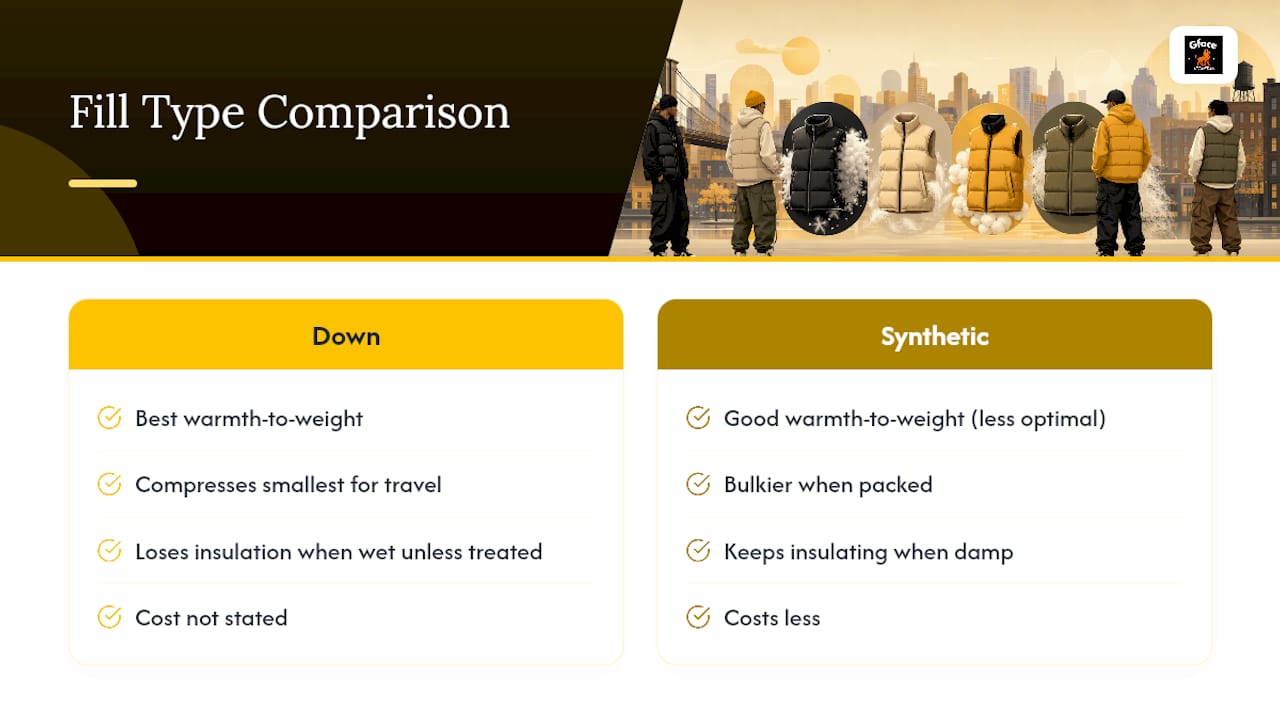
Down fill, usually rated by fill power, delivers the best warmth-to-weight ratio and compresses smallest for travel, but it loses insulating power when wet unless treated with a water-resistant finish. Synthetic fill, often polyester-based, keeps insulating even when damp and costs less, which makes it the more practical pick for unpredictable weather or everyday errands where dry cleaning isn't realistic.
Shell fabric matters just as much as fill. A ripstop nylon shell resists tears and abrasion, useful if your vest is doing double duty as an outdoor layer. A matte, brushed finish leans dressier and photographs better for smart-casual and night-out looks. Quilted diamond or box-baffle stitching patterns affect both warmth distribution and how structured the vest looks on the body, with box baffles generally reading cleaner and more tailored than horizontal channel quilting.
For shoulder-season wear, a lighter fill in a 60 to 80 gram range (a common range in outdoor apparel construction) keeps you comfortable without overheating indoors. For genuine winter mid-layering under a coat, heavier fill in the 100 gram-plus range holds up against real cold.
How to Choose a Puffer Vest Based on Body Shape
Fit changes everything about how a vest sits on your frame, and the right length and cut work with your proportions instead of against them.
If you're petite, a cropped or hip-length vest keeps your torso from looking shortened. Avoid anything that hits below the hip, since longer lengths on a shorter frame tend to swallow your leg line.
For taller or longer-torso frames, a slightly longer, thigh-length vest actually balances proportion better than a cropped one, which can look abrupt against a longer midsection.
If you carry more volume through the midsection, a vest with a defined waist seam or one you belt (see the belt trick above) creates shape instead of adding bulk. Skip anything boxy and unstructured.
Broader shoulders pair well with a sleeker, less puffy fill and a V-neck or scoop front, which softens the shoulder line rather than exaggerating it. Narrower shoulders can handle more volume and a fuller collar without looking overwhelmed.
Whatever your frame, the sizing rule from the fit section still applies: size for what's underneath, not for your body alone.
Accessories That Complete a Puffer Vest Outfit
The right accessories finish a vest outfit the same way a good belt finishes a dress, by adding shape and intention instead of clutter.
A wide leather belt is the single most useful accessory in this entire guide, cinching a longer vest at the waist to kill bulk instantly. A structured crossbody or mini tote keeps your hands free and adds a clean line without competing with the vest's volume, while an oversized tote reads more casual and works better with the hoodie-and-leggings formula.
Scarves work best in thin, lightweight fabrics tucked inside the vest rather than bulky knit scarves layered on top, which fight the vest for space around your neck. A fitted beanie or a structured cap adds a finishing point up top and pulls focus away from the torso if you're wearing a bulkier fill. Gloves and ankle boots round things out for genuinely cold days, while sneakers keep the same outfit feeling relaxed for milder ones.
Trending Styles and Popular Brands for Puffer Vests
The biggest shift in vest styling right now is streetwear framing: instead of treating the vest as pure outdoor utility, stylists are using it as a silhouette-defining piece, oversized over fitted layers, or fitted over oversized ones, per WEAR2AM. Cropped vests are having a real moment paired with full skirts, and sheer layering under an unzipped vest is showing up across fall and winter street style, a trend Glamour has tracked closely this season.
Outdoor-heritage brands remain the default for technical performance and packability, while streetwear labels are leaning into bolder colorways and graphic branding on vests rather than keeping them purely functional. If you want more full-outfit inspiration built around this same layered, streetwear-first approach, the winter streetwear outfit roundup has several looks worth adapting.
The Puffer Vest as a Wardrobe Multiplier
A puffer vest is Brooklyn streetwear logic in one piece: low effort, high payoff, endlessly remixable. It multiplies whatever's already in your closet instead of demanding a new one. A limited-edition drop just gives that same multiplier a fresh face.
— Victor
Shop Complementary Pieces to Build These Looks
You don't need a puffer vest from GfaceGear to make these outfits hit, our lane is what goes underneath and around it. A ROAR hoodie gives the hoodie-and-leggings formula its foundation, a fitted hat sharpens the athleisure look, and a pair of lion sneakers grounds the whole silhouette without competing with your vest.

That's the honest version of where GfaceGear fits into this guide: a complementary source for the pieces that make a vest outfit look finished, not the vest itself. Browse the full lookbook for outfit inspiration built around Brooklyn street culture, check hoodies and jackets for your next base layer, and if you're building a full rotation, The Pride Membership runs $9.99 a month for sitewide discounts, early drop access, and VIP perks. Put on your Gameface and grab the pieces that let the rest of the outfit ROAR.
Style Resources Behind This Guide
For deeper reading on fit and editorial examples: Glamour covers stylist-approved outfit templates, The North Face breaks down shoulder-season function, WEAR2AM explains streetwear silhouette rules, and Harper's Bazaar details smart-casual pairing.
Sources
- Here’s How to Style a Puffer Vest, According to Style Editors — Glamour
- Puffer Vests in Streetwear: The Layering Piece That Works Year-Round — WEAR2AM
- How To Style Puffer Jackets and Vests | The North Face
- How To Wear A Puffer Vest: Stylish, Practical And Perfect For Layered Looks | Harper's Bazaar
FAQ
What Goes Well With a Puffer Vest?
Hoodies, turtlenecks, chunky knits, midi dresses, and tailored trousers all pair well with a puffer vest. Neutral colors like black, cream, and khaki work with almost anything you already own, while a colored vest works best as the focal point over a simple base.
Are Puffer Vests Still In Style?
Yes. Style editors and streetwear coverage both point to the puffer vest as a current layering staple, not a passing trend, especially as stylists reframe it from purely functional to silhouette-defining according to WEAR2AM. Cropped styles, monochrome pairings, and sheer-layer combinations are all showing up in current street style coverage.
What Is the Point of Wearing a Puffer Vest?
A puffer vest adds warmth to your core without restricting your arms, which makes it more practical for layering than a full jacket in many situations. It also works as a styling tool, adding structure and visual interest to an otherwise simple hoodie, knit, or dress outfit.
How Do I Keep a Puffer Vest From Looking Bulky?
Cinch a longer vest with a wide belt to define your waist and cut the bulky look immediately. Sizing correctly for what's underneath and choosing a hip-length cut over an oversized one also keeps the silhouette clean.