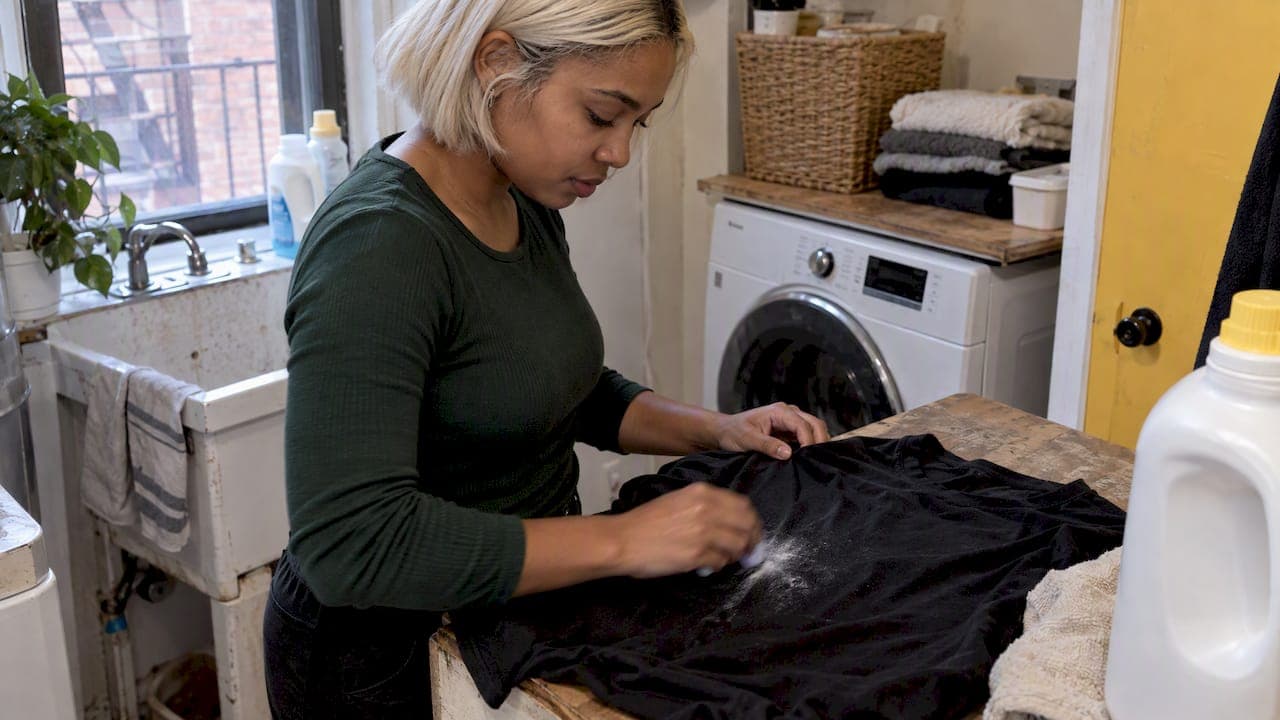
Black tee. White streaks under the arms. Not the look. The good news: most deodorant marks come off in under a minute, and even set-in stains usually give up with a soak and a little patience. Start with a dry rub for fresh marks. If that fails, soak in white vinegar or a hydrogen peroxide mix, check the spot before the dryer, then wash. Here is the full playbook, plus how to stop it happening again.
TL;DR
- Fresh white marks are transferred product. Rub them off dry with a dry sheet, pantyhose or a bit of foam rubber. No wash needed.
- Set-in stains need a soak: white vinegar for about an hour, or a cold water and hydrogen peroxide mix for cotton and poly blends.
- Patch-test first, check the care tag, and never put the shirt in the dryer until the stain is gone.
- Let deodorant dry fully before you dress, use less, and consider a clear or gel formula.
Table of Contents
- Marks vs. stains: know what you are fighting
- Fresh white marks: the no-water fixes
- Set-in stains: soak, treat, wash
- Match the method to the fabric
- Stop it before it starts
- Our take: black is a statement, so keep it sharp
- Fresh black tees, ready to ROAR
- FAQ
- Sources
Marks vs. stains: know what you are fighting
Two different problems get lumped together, and the fix depends on which one you have.
Marks are product that rubbed off onto the fabric. Think chalky white streaks on a black shirt right after you pulled it on. According to a fabric-care scientist at Procter and Gamble quoted by Reader's Digest, marks are simply transferred product, while stains come from a chemical reaction between body oils and deodorant compounds that builds up over time.
Stains are the stiff, crusty, sometimes yellowed or faded patches that survive the wash. A dry cleaner quoted in the same piece points to aluminum in antiperspirants reacting with sweat as the cause of white underarm staining. University extension guidance adds that deodorants and antiperspirants with aluminum chloride are acidic and may change the color of some dyes. That is why black fabric can end up looking dull or patchy where the product sat.
Quick test: if it brushes away with your hand or a dry cloth, it is a mark. If it is stuck, stiff or discolored after washing, treat it as a stain.

Fresh white marks: the no-water fixes
This is the move for the "I'm already dressed and about to leave" moment. All of these work on dry fabric, so you can do them before you walk out the door.
Dryer sheet
A completely dry dryer sheet is the easiest option. The Spruce reports that a used sheet is best on dark fabrics. Rub the marked area in small circles, then check it in good light. The streaks should lift away.
Pantyhose or knee-highs
Ball up a pair of pantyhose or a knee-high and rub the residue with a brisk wrist action. You do not need heavy scrubbing, and heavy force is not what you want on black cotton anyway, since it can rough up the surface and leave a shiny patch.
Foam rubber
The foam padding from a dry-cleaning hanger works the same way. Wipe across the mark in short strokes and the product rolls off the fabric.
The fabric-on-fabric trick
No tools? Pinch a clean, dry section of the same shirt and rub it against the mark. Fabric friction lifts the surface product. It is not as thorough as a dryer sheet, but it is free and fast.
Do it right after dressing
Here is a habit worth locking in: do the dry rub after you pull the shirt on and before you leave the house. You catch the transfer while it is still loose. Wait until it has been sitting under a jacket for a day and the product starts working into the weave.
Set-in stains: soak, treat, wash
If rubbing did not work, the residue has bonded with the fibers. Go one step at a time and always start with the gentlest option.
Step 1: Check the label and patch-test
Read the care tag first. Then test your chosen solution on an inconspicuous spot, like an inside hem, to make sure it will not discolor the fabric. Black dye can fade or go cloudy, so this step matters more on dark clothes than on anything else you own.
Step 2: White vinegar soak
The cheapest fix is probably already in your kitchen. Martha Stewart's team recommends soaking the shirt in white vinegar for about an hour, then gently brushing the stain. Use a soft-bristled brush and light pressure.
- Fill a basin with enough white vinegar to cover the underarm area.
- Submerge the stained section and leave it for about an hour.
- Brush gently, working with the weave rather than against it.
- Check the spot. If it is gone, wash as normal. If not, repeat or move to the next method.
One safety rule: never mix vinegar with chlorine bleach, because the combination can produce a dangerous gas. Rinse out vinegar fully before any other cleaner touches the shirt.
Step 3: Hydrogen peroxide soak
For cotton or polyester-blended shirts, the same source suggests a 30-minute soak in 2 cups of cold water mixed with ½ cup of hydrogen peroxide. Cold water matters here. Patch-test first, since peroxide can lighten dye, and keep an eye on the time rather than leaving it overnight.
Step 4: Detergent pretreat
Rinse the area in warm water, apply laundry detergent directly to the stain and let it sit for 20 minutes, per Reader's Digest. Then wash as usual.
On the dish soap question: university extension guidance says to rub undiluted hand dishwashing liquid into the stain and then launder the garment. Dish detergent is built to cut grease, which is exactly what body oils and deodorant residue are made of.

Step 5: Oxygen-based booster
If you prefer a laundry product, Tide's stain guide suggests mixing 1/4 scoop of its Ultra OXI powder with 3/4 scoop of warm water into a paste, applying it to the stain and letting it sit for five minutes before laundering. That is a short contact time, which helps on dark fabric where you do not want a cleaner lingering.
Step 6: Look before you dry
This is the step people skip. Heat can lock in whatever is left. After washing, hold the shirt up to a window. If you can still see residue, repeat the treatment and air-dry in the meantime. Only toss it in the dryer once the stain is gone.
What about chlorine bleach?
Extension guidance lists chlorine or sodium perborate bleach, or hydrogen peroxide, as the next step for stubborn yellow stains. On black clothes, though, chlorine bleach is a bad idea: it strips color. Skip it here. Peroxide is the safer pick, and a bleach-based fix belongs on white tees only.
Match the method to the fabric
Not every black shirt is a basic cotton tee. Before you soak anything, run this check:
| Fabric | What to do |
|---|---|
| Cotton tees and jersey knits | The most forgiving. Vinegar, peroxide mix or detergent pretreat all work. Patch-test first. |
| Polyester blends and athletic fabric | Peroxide mix and detergent pretreat work. Keep soaks to the times above. |
| Silk, wool, cashmere | Gentler treatment only. These may need a dry cleaner. |
| Spandex-heavy pieces | Avoid chlorine bleach. It can damage the fibers. |
| "Dry clean only" | Use only a dry-cleaning agent or ask a dry cleaner for help. |
The guidance behind the table: cotton is more forgiving while finer fabrics like silk and wool need gentler treatment. New Mexico State University's extension service says to follow the permanent care label, and for dry clean only items use a dry-cleaning agent or a dry cleaner. A Pacific Northwest extension guide warns that chlorine bleach can damage silk, wool and spandex.
Fabric choice also changes how much sweat and product your shirt holds in the first place. If you are weighing options, this look at merino wool versus cotton helps you decide which fiber suits how you wear and wash a shirt. And if you train in your tees, our guide to moisture wicking vs. cotton covers how fabric handles sweat.
Commercial spot removers: use with care
Many specialized spot removers in the US contain flammable or toxic chemicals such as petroleum distillates. Extension guidance says to follow label instructions, work in a well-ventilated room and wear protective gloves. For deodorant stains, the household options above usually do the job without any of that.
Stop it before it starts
Removing stains is a chore. Not getting them is better. These habits cut down on both marks and buildup.
- Let it dry. Give deodorant a minute or two to dry completely before you dress. This one habit prevents most surface marks, according to Martha Stewart's cleaning experts.
- Use less. Over-application is the main cause of chalky transfer. One or two swipes per side is plenty.
- Switch formulas. Consider a clear or gel formula. Higher-aluminum deodorants tend to leave more chalky marks on dark fabric.
- Wash soon after spot treating. Launder the shirt shortly after any spot-removal method. Embedded deodorant can trap bacteria and cause stiffening or yellowing over time.
- Do not let it sit. Wash black tees after wearing instead of stacking them in the hamper for a week with product baked in.
- Turn them inside out. Washing black pieces inside out helps protect the outside surface from rubbing and fading.
Same logic applies across your closet. Sweat, sunscreen and product all hit fabric differently, which is why we wrote about how to wash limited edition swimwear before sunscreen sets in, how to stop hoodie pilling and how to keep white sneakers bright. Care for your gear and it stays loud.
Our take: black is a statement, so keep it sharp
Black in a Brooklyn wardrobe is never the safe choice. It is the confident one. A clean black tee says you showed up on purpose. A shirt with chalky streaks says you rushed.
Here is how we see it at Gfacegear: your gear is part of your Gameface. When you step out, you want every line crisp, from the lion graphic on your chest to the fabric under your arms. That means treating your tees like the investment they are. Dry rub before you leave. Soak when it sticks. Check before you dry. Wash inside out.
We make our apparel on demand, so every piece is made for you and not sitting in a warehouse. That is worth honoring with a little care. A tee you love should last, and basic stain know-how is how it does.
Black tees, long tee dresses and bold lion graphics are staples for a reason. They work with everything, they hit hard, and with the steps above they stay sharp wash after wash. Grab destiny with both hands, and keep your sleeves clean while you do it.
— Victor
Fresh black tees, ready to ROAR
Once your stains are handled, upgrade the rotation. Browse men's shirts and tees built around lion and Greek Key imagery, or lock in the look with the black camo-incognito men's polo shirt.

Want first access to limited drops, including our limited edition swimwear? Join The Pride Membership for $9.99 per month and get sitewide discounts, early access and VIP perks. Shop now. Let the world hear you ROAR.
FAQ
How do you get armpit stains out of black shirts?
Start by rubbing fresh marks with a dry dryer sheet or pantyhose. For set-in stains, soak the shirt in white vinegar for about an hour, brush gently, then wash. Check the area before drying, because dryer heat can set what is left.
Does OxiClean get rid of deodorant stains?
Oxygen-based laundry boosters can help. Tide, for example, suggests making a paste of its Ultra OXI powder with warm water, applying it and letting it sit for five minutes before laundering. Patch-test on black fabric first and follow the product label.
Will dish soap remove deodorant stains from clothes?
Often, yes. University extension guidance says to rub undiluted hand dishwashing liquid into the stain and then launder the garment. It is made to cut grease, which is a big part of deodorant buildup.
Can I remove deodorant marks without washing the shirt?
Yes, for fresh marks. Rub the area with a dry dryer sheet, pantyhose or foam rubber from a dry-cleaning hanger. You can do it right after you dress. Marks that have been sitting for days usually need a soak and wash.
How do I prevent deodorant stains on black shirts?
Let your deodorant dry completely before dressing, apply less, and try a clear or gel formula. Higher-aluminum products tend to leave more chalky marks. Wash shirts promptly after wearing so residue does not build up.
Sources
- How to Remove Deodorant Marks From a Shirt, The Spruce
- How to Remove Deodorant Stains From Black Shirts, Martha Stewart
- 5 Ways to Remove Deodorant Stains, Martha Stewart
- How to Get Deodorant Stains Out of Shirts, Reader's Digest
- How to Remove Deodorant Stains, Tide
- Remove Stains From Antiperspirant, Deodorant, University of Georgia Extension
- C-502: Removing Clothing Stains, New Mexico State University
- Stain Removal Guide for Washable Fabrics, Pacific Northwest Extension