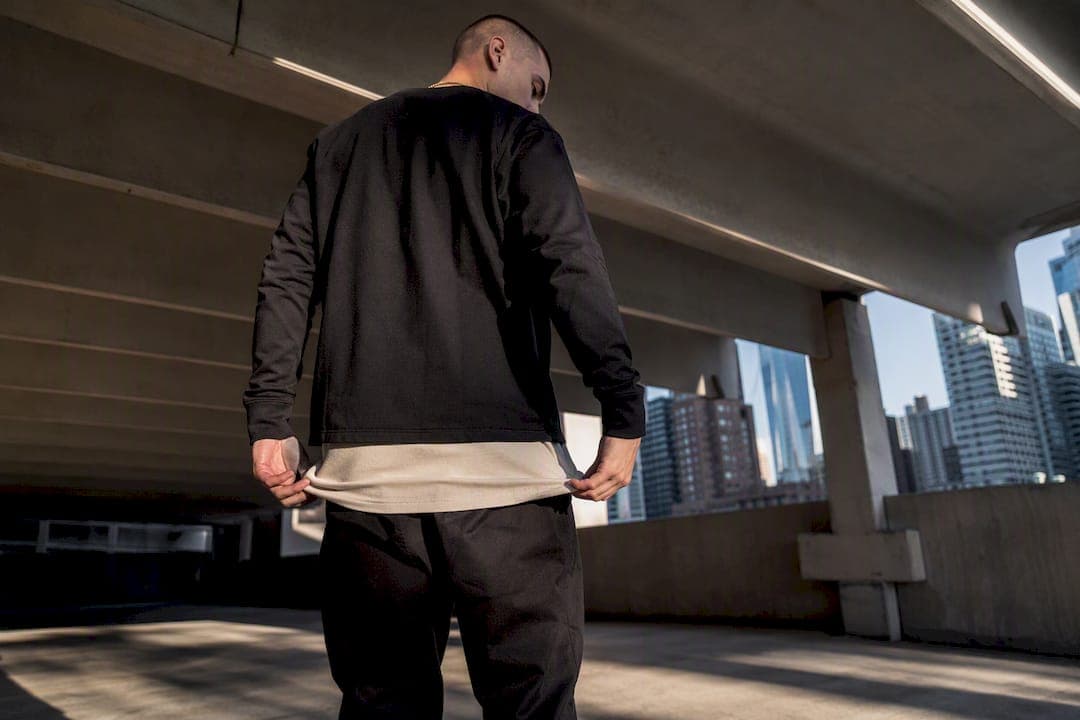
If you're over 6'2", the fix for bad streetwear starts with one decision: stop buying generic sizes and start buying length-first. That means tall-specific cuts or made-to-measure for your two or three most visible pieces, plus tailoring for everything else. Before you shop, measure your sleeve, inseam, and torso length once and save the numbers. Then check tees, hoodies, jackets, pants, and shoes for length before anything else — width and style come second.
TL;DR:
- Most streetwear brands do not add sufficient length in larger sizes, making it essential for tall men to focus on length-specific cuts and proper measurements before shopping.
- Key measurements include sleeve length, inseam, and torso length, which should be checked against product details rather than relying solely on size labels or general "tall" tags.
- Prioritize tailoring sleeves and jacket hems first, as these are the most visible and cost-effective fixes, while waist adjustments and other alterations come second.
- Longer, structured fabrics in solid colors and horizontal details help balance tall proportions, while layering with deliberate lengths creates more proportionate looks.
- Stores and brands that publish detailed inseam and sleeve length data, like Gfacegear, provide the best options, and avoiding generic sizing traps helps avoid ill-fitting purchases.
Table of Contents
- What Streetwear Categories Actually Need Length Fixes?
- How Do You Measure Yourself for Streetwear Sizing?
- Which Alterations Should Tall Guys Prioritize First?
- Five Streetwear Outfit Formulas Built for Tall Frames
- Where Should Tall Guys Actually Shop?
- Why Trust This Guide on Tall Men's Streetwear?
- Which Fabrics Work Best for Tall Streetwear Fits?
- Which Streetwear Brands Actually Cater to Tall Men?
- How Do You Layer Streetwear Without Looking Boxy?
- What Accessories Actually Work for Tall Guys?
- The Real Problem With Tall Menswear Advice
- Gfacegear: Longline Streetwear Built for Tall Frames
- Sources
- FAQ
What Streetwear Categories Actually Need Length Fixes?
Every category on your rack fails tall guys the same way: brands add width for bigger sizes but rarely add length. That's the whole problem in one sentence, and it's why "tall" on a tag doesn't always mean what you think it means.
Here's what to check in each category before you hit "add to cart."
- Tees and hoodies: Look at torso length and sleeve length specifically, not just the size label. Shoulder seams should sit at your actual shoulder, not halfway down your arm. Search for "slim-tall" or "athletic-tall" cuts over a generic "tall" tag, since retail 'tall' often just means baggy 'big and tall' sizing built for a different frame than yours.
- Jackets: Aim for a hem that hits just below the glutes, or mid-thigh for longer coats. Sleeves should show about half an inch of shirt cuff. Structured lapels and boxy or double-breasted cuts add visual width without adding bulk, which matters when you're already working with a long frame.
- Pants and joggers: Most guys 6'2" and up need a 36 to 38 inch inseam or longer, with a rise that doesn't ride up when you sit down. Tapered legs read cleaner on tall frames than baggy ones, though a wide leg can work if the rise and hem are dialed in.
- Shoes and socks: Pick a shoe profile that doesn't compete with a long pant break, and wear over-the-calf socks. Exposed ankle skin between a too-short hem and a low sock is one of the fastest ways to look like you're wearing someone else's clothes.
Get these five categories right and the rest of your outfit has somewhere solid to stand.
How Do You Measure Yourself for Streetwear Sizing?
Grab a tape measure and take five numbers once, then write them down somewhere you'll actually find them later.
- Sleeve length: Measure from the shoulder seam to your wrist bone with your arm slightly bent, the way a jacket would sit.
- Inseam: Measure from the crotch to the ankle bone, standing straight, using pants that already fit well as a guide if you have them.
- Torso length: Measure from the nape of your neck down to wherever you want your shirt hem to land.
- Chest: Measure around the fullest part of your chest, keeping the tape level across your back.
- Shoulder width: Measure seam to seam across your back, shoulder point to shoulder point.
Once you have those numbers, compare them directly against product listings for sleeve length and body length, not just the size chart's chest and waist columns. A shirt marked "XL Tall" that only lists chest and waist is a guess. A listing that spells out a 35-inch sleeve and a 32-inch body length lets you actually compare against your own numbers.
Pro Tip: Keep your five measurements in your phone's notes app. Every time a brand's size chart doesn't list sleeve or body length, that's your cue to size up, check the returns policy first, or skip the item entirely.
When a listing is vague, order two adjacent sizes if the return window is generous. It costs a little in shipping, but it beats guessing wrong twice in a row.
Which Alterations Should Tall Guys Prioritize First?
Not every piece is worth altering, and not every alteration is worth the same money. Rank your priorities like this: sleeve length and jacket hemming first, trouser hems or let-downs second, waist tapering third, and minor tee or hoodie tweaks last.
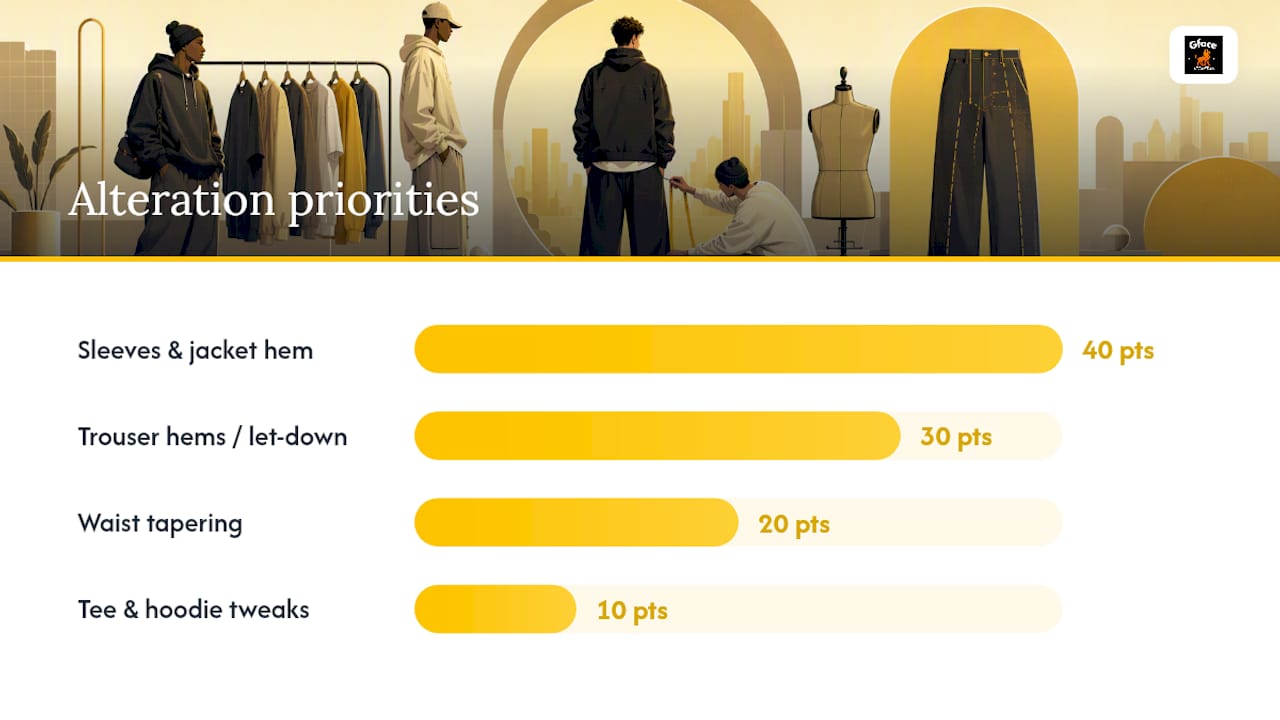
That order isn't arbitrary. Sleeves and hems are the fastest, cheapest fixes a tailor can make, and they're also the most visible sign that something doesn't fit. Tailoring sleeves and jacket length first is the highest-value move you can make, because a jacket that's an inch too short in the body reads as a mistake from across the room, while a slightly loose waist barely registers.
Here's where it gets specific:
- Jacket sleeve shortening or lengthening typically runs cheap and takes about a week at most tailors.
- Trouser hemming is fast, often same-day, but a let-down (adding length back) only works if the fabric was left inside the original hem — always check that before buying pants you'll need to lengthen.
- Waist tapering on jackets or trousers costs more and takes longer, since it involves reworking seams rather than just trimming fabric.
For blazers specifically, buy for shoulder fit first, since shoulders are the hardest and most expensive part of a jacket to alter. Sleeve and body length are comparatively cheap fixes.
Pro Tip: Save made-to-measure budgets for two or three pieces you'll actually be seen in often, like a blazer, a dress shirt, or tailored trousers. Everyday streetwear tees and hoodies are almost always cheaper to buy in a tall cut and tailor slightly than to have made from scratch.
Five Streetwear Outfit Formulas Built for Tall Frames
Proportion is the whole game once your pieces fit. These five formulas work because they either break up your height with texture and horizontal lines, or lean into the length on purpose.
- Longline tee, tapered jogger, clean low-top trainer. The tee's extra length balances a slim jogger leg, and a low-profile shoe keeps the whole look from feeling top-heavy.
- Hoodie, overshirt, straight-leg jeans. Layering a shorter overshirt over a longline hoodie creates a horizontal break at the hip, which does more for your silhouette than any single garment could alone.
- Oversized puffer, wide-leg trouser. Two loose pieces stacked together read as intentional volume instead of "clothes that don't fit," as long as the puffer's hem and the trouser's rise line up.
- Long double-breasted coat, slim knit, boots. The double-breasted front adds width across the chest, which balances a long vertical line the way structured tailoring and waist details are built to do.
- Longline jersey, shorts, high socks. This one leans all the way into height instead of hiding it, and it works specifically because the proportions are deliberate, not accidental.
Pockets, panel seams, and contrast stitching all create the same horizontal breaks a designer tailor charges for, and they're already built into most streetwear pieces. For warmer months, swap the puffer for a lighter shell and the joggers for shorts with the same tapered leg logic. For colder weather, add a base layer under the longline tee rather than sizing up, which keeps your proportions intact instead of adding bulk in the wrong places.
If you want more layering combinations built specifically around this kind of proportion play, the layering breakdown here walks through several more, and these outfit formulas are worth a look too.
Where Should Tall Guys Actually Shop?
Three channels exist for you, and each one solves a different problem.
Tall-specific ready-to-wear is the most convenient option, since dedicated tall retailers already build for extended inseams and longer torso cuts, meaning less guesswork on your end. Made-to-measure gives you the best possible fit but costs more and takes longer, which is why it makes sense for two or three pieces rather than your whole wardrobe. A local tailor is your cheapest, fastest option for fixing an otherwise-good piece that's just slightly off.
Before you buy anything online, run the product page through this checklist:
- Does it list an explicit sleeve length or inseam number, not just S/M/L/XL?
- Does the description mention a let-down allowance for future hemming?
- Is the return policy clear and generous enough to cover a sizing miss?
If a listing calls itself "tall" but only lists chest and waist measurements, be skeptical. That's often just a wider cut with no extra length, and it's the single most common trap tall shoppers fall into.
Why Trust This Guide on Tall Men's Streetwear?
This playbook comes from the same measurement-first, tailor-smart approach covered in Victor's streetwear guides, including breakdowns on layering for proportion and pants inseam measurement. Gfacegear builds its longline categories, from hoodies to jackets to jersey, with tall frames in mind, and its limited drops give tall buyers a reason to check back often instead of settling for whatever fit happens to be in stock.
Which Fabrics Work Best for Tall Streetwear Fits?
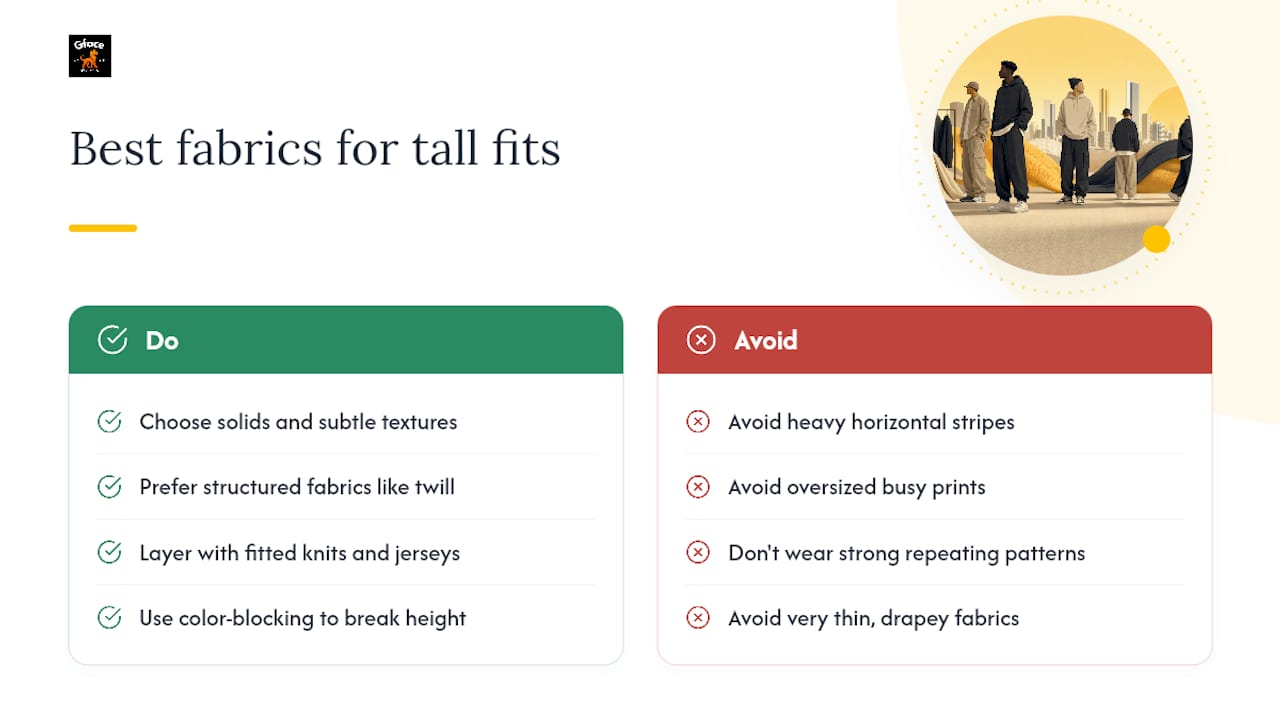
Fabric choice can make or break a tall silhouette before you even factor in cut. Heavy horizontal stripes, oversized busy prints, and anything with a strong repeating pattern tend to visually chop your body into segments, which draws attention to height in an unflattering way. Solid colors, subtle textures, and vertical or diagonal detailing generally read cleaner on a long frame.
Structured fabrics matter more for tall guys than for average heights, too. A stiff or heavier cotton twill holds its shape through a longer torso and sleeve without collapsing into extra fabric, while thin, drapey materials can look sloppy once you add the extra length a tall cut requires. That's part of why textured fabrics and structured tailoring help balance a long vertical line instead of exaggerating it.
Denim and heavyweight cotton hold their shape best through repeated wear and washing, which matters if you're already paying more for tall-specific inseams and don't want the fit to degrade after a few months. Knits and jerseys work well for layering pieces since they move with your body instead of fighting a longer frame, but they should still fit through the shoulder and chest rather than hanging loose.
Color blocking is another underused tool. Breaking an outfit into two or three distinct color zones, like a dark jacket over a lighter tee, creates a visual stopping point partway up your body instead of one uninterrupted column of color from collar to ankle. It's a small trick, but it's one of the easiest ways to make six-plus feet of height feel proportioned rather than towering.
Which Streetwear Brands Actually Cater to Tall Men?
Most streetwear brands treat "tall" as an afterthought, tacking a couple of extra inches onto their largest size rather than building a genuine tall line. The brands worth your attention are the ones that publish sleeve length and inseam numbers on every product page, not just chest and waist.
Gfacegear's longline approach fits directly into this gap. Its hoodie, shirt, and jersey categories are built around extended body and sleeve length rather than treating "tall" as a footnote on a standard cut, and its limited-edition drops, including pieces like the Boriqua swimwear release, are designed with that same longer-frame logic in mind. That matters if you've ever bought a "tall" hoodie that turned out to just be wider through the middle.
Beyond dedicated tall lines, some mainstream denim brands have started extending their inseam range. Levi's and a handful of mainstream brands now offer inseams up to 38 to 40 inches for specific styles, but availability varies by cut and season, so always verify the exact inseam and rise on the product page rather than assuming a "tall" label covers it.
The safest approach is treating any brand's tall claim as a hypothesis until the product page proves it with actual numbers.
How Do You Layer Streetwear Without Looking Boxy?
Layering is where a lot of tall guys either nail their look or accidentally add ten pounds and ten years. The difference usually comes down to length coordination between layers, not the layers themselves.
Every piece in a layered outfit needs a slightly different hem length, or the whole thing reads as one shapeless block. A longline hoodie under a cropped or waist-length overshirt creates a natural break at the hip. Stack two pieces of identical length and you lose that visual interest entirely, which is part of why horizontal details and layering breaks work better than trying to hide height altogether.
Volume needs the same coordination as length. If your outer layer is oversized, like a puffer or a boxy jacket, keep what's underneath slimmer to avoid doubling up on bulk. Two oversized pieces stacked together on a tall frame can tip from "intentional streetwear silhouette" into "wearing a sleeping bag," and the line between those two is thinner than you'd think.
Fabric weight matters just as much as fit. Pairing a heavier outer layer with a lighter base keeps the whole outfit from feeling stiff or overloaded, especially across the shoulders where extra bulk on a tall frame gets noticed fastest. For a deeper walkthrough of specific layering combinations built around these proportion rules, this layering guide covers several more setups worth trying.
What Accessories Actually Work for Tall Guys?
Accessories follow the same rule as clothing: scale matters. A tiny crossbody bag or a delicate chain can look almost comedic against a 6'4" frame, not because the item is wrong, but because the proportions clash.
Bags are the easiest place to get this right or wrong fast. A structured mid-size or larger bag balances a tall frame better than anything undersized, and a crossbody worn slightly lower sits more naturally on a longer torso than one worn high and tight.
Hats deserve more attention than most tall guys give them. A fitted cap or a structured bucket hat adds a horizontal anchor point at the top of your silhouette, which helps break up height the same way a hemline does at the bottom. Skip anything too small or floppy, since it gets visually lost against a taller frame.
Watches and jewelry should lean toward slightly bigger faces and slightly bolder chains, not because bigger is automatically better, but because delicate pieces tend to disappear on larger hands and wrists. The goal isn't flash, it's proportion.
Belts matter more than they get credit for, too. A visible belt at the natural waist gives a tall outfit a clear horizontal reference point, which helps anchor a long torso instead of letting it run uninterrupted from chest to hip.
The Real Problem With Tall Menswear Advice
Most tall-guy style advice treats height like a flaw to disguise. That's backwards, and it's the biggest thing wrong with how this topic usually gets covered. Streetwear especially rewards leaning into proportion rather than hiding it. A longline tee, a properly hemmed jacket, an intentional break at the ankle. None of that works if you're still buying standard sizes and hoping tailoring fixes what a bad cut never should've had in the first place.
The conventional wisdom oversells made-to-measure and undersells the basics. You don't need custom everything. You need two or three well-chosen tailored pieces, a tall-specific cut for your daily rotation, and five measurements written down somewhere you'll actually check. Skip the measuring step and every other decision downstream gets harder.
What tall guys should prioritize first isn't a brand or a price point. It's the sleeve length field on a product page. Check that before chest, before color, before anything else, and half the fit problems in your closet disappear before you even hit checkout.
— Victor
Gfacegear: Longline Streetwear Built for Tall Frames
Gfacegear is built around longline cuts and Brooklyn street energy, which means the categories that matter most to you aren't an afterthought here, they're the point. Every hoodie, shirt, and jersey in the lineup is designed with that extra length in mind, so you're not stuck guessing whether "tall" on the tag actually means anything.
Start with the basics: check the hoodies and shirts pages for body and sleeve length details before you buy, then look at jackets if you're ready to invest in a structured outer layer that actually clears your wrists. If you're building out a summer rotation, the limited-edition swimwear drops, including pieces like the Boriqua release, are cut with the same longer-frame logic as the rest of the lineup.
For $9.99 a month, the Pride Membership gets you sitewide discounts and early access to limited drops, which matters most when tall-friendly sizes tend to sell out first. Grab your measurements, then go check the shop while this season's drop is still live.
Sources
- Tall mens clothing tips
- Style tips for tall men: the dos and the don'ts
- Tall man fashion: The real style guide that actually fits
- Real Men Real Style - tall menswear guidance
FAQ
What Is the 3-3-3 Rule for Clothes?
The 3-3-3 rule isn't a standard menswear sizing framework, and definitions vary depending on where you encounter it. If you've seen it applied to capsule wardrobes or minimalist packing, it generally has nothing to do with tall-specific fit, so don't use it as a substitute for measuring your sleeve, inseam, and torso length directly.
What Brands Are Best for Tall Men?
The best brands for tall men are the ones that publish exact sleeve length and inseam numbers on every product page rather than just chest and waist. Gfacegear's longline hoodie, shirt, and jersey categories are built around that extra length, and some mainstream denim brands now offer inseams up to 38 to 40 inches for select styles, though availability varies.
What Clothes Look Good on Tall Guys?
Longer torso tees, tapered joggers, structured jackets with proper sleeve length, and layered pieces with staggered hems all work well on tall frames. The key is choosing "slim-tall" or "athletic-tall" cuts over generic wide sizing, and using horizontal details and textured fabrics to balance a long silhouette instead of hiding it.
Where Do Tall Guys Buy Clothes?
Tall guys generally shop three channels: tall-specific ready-to-wear brands for convenience, made-to-measure for two or three high-visibility pieces like a blazer or dress shirt, and a local tailor for quick fixes on otherwise-good garments. Gfacegear's shop offers longline categories built for this exact problem, from hoodies to jackets to limited-edition swimwear.
How Much Does Tailoring Cost for Tall Men?
Costs vary by tailor and region, but sleeve and hem adjustments are typically the cheapest and fastest fixes, while waist tapering and shoulder work cost more and take longer. Checking garment construction before buying helps you avoid paying for alterations that aren't even possible, like a let-down hem with no spare fabric inside.