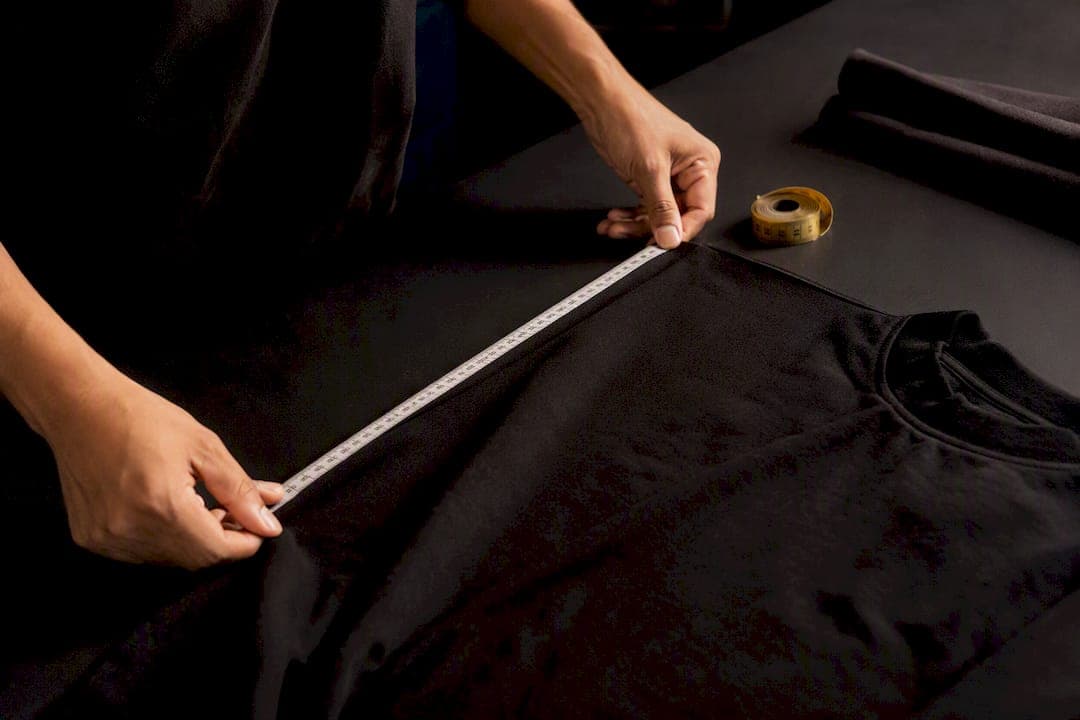
TTS stands for "True to Size." When you see it on a listing, it means the item fits the way its labeled size promises. That's it. No mystery, no hype. Order your normal size when the measurements, reviews, and photos back up the claim. But TTS is only ever true to that brand's chart, never a universal standard, so the checklist matters more than the letters.
TL;DR:
- Confirm actual measurements of garments you already own and compare them to the seller’s size chart before trusting a TTS claim.
- Read multiple recent reviews focusing on fit, fabric content, and model measurements to verify if the TTS claim matches real-world results.
- Be aware that TTS varies across brands and regions, so convert size labels to body measurements rather than relying solely on size names.
- For secondhand or international purchases, ask sellers for precise flat measurements in inches or centimeters and consider the fabric stretch and wear.
- Trust TTS as a starting point, always measure a known good fit first, and prioritize brands that publish transparent measurements and detailed on-model shots.
Table of Contents
- What Does TTS Mean in Clothing and Sneakers?
- Why Do Sellers and Reviewers Use the TTS Label?
- Why a "TTS" Claim Can Still Be Wrong for You
- How Do You Verify a TTS Claim Before You Buy?
- What Should You Actually Do on a Listing That Says "TTS"?
- How Does TTS Affect Returns and What Should You Do If It Doesn't Fit?
- Does TTS Mean the Same Thing in Every Country?
- Does TTS Fit the Same Way for Everyone?
- Which Brands Get TTS Right, and Which Don't?
- How Do You Handle TTS When Buying Secondhand or International?
- The Smart Way to Treat a TTS Label
- Shop the Brands That Back Up Their TTS Claims
- Sources
- FAQ
What Does TTS Mean in Clothing and Sneakers?
TTS on a garment or sneaker listing means the fit tracks with the labeled size instead of running big or small. It's the middle ground between two other common flags you'll see across product pages: true to size sits opposite "runs small" (buy up) and "runs large" (buy down).
The catch is that TTS behaves differently depending on what you're buying:
- Sneakers: TTS usually refers to length against your normal shoe size. Width is a separate conversation. A shoe can be TTS in length and still run narrow, which is why sneaker reviewers often tack on a note like "TTS but tight through the toe box," according to sneaker sizing glossaries.
- Apparel: TTS covers the whole garment, chest, length, sleeve, shoulder, so a tee or jersey can be TTS in the body and still feel off in the sleeve if the brand's fit model has long arms.
One more wrinkle: outside of shopping, TTS also means "text-to-speech," a totally unrelated tech term used for voice-reading software, per Cambridge Dictionary. If you land in that conversation while researching a size chart, you've wandered into the wrong thread. Context sorts it out fast: a shoe review says fit, a tech forum says software.
Why Do Sellers and Reviewers Use the TTS Label?
Sellers stamp TTS on a listing because it lowers uncertainty at the exact moment a shopper is deciding whether to click "add to cart" without ever touching the fabric. It's shorthand for "you already know how to buy this."
That shorthand shows up in three places most often:
- Product descriptions, where the brand itself claims the fit runs standard.
- Customer reviews, where buyers confirm or contradict the brand's own claim, which is usually more trustworthy than the seller's copy.
- Resale listings, on platforms like StockX or Grailed, where a reseller uses TTS to reassure a buyer who can't try the item on.
Brands lean on TTS because predictable fit reduces returns, and returns eat margin fast in print-on-demand and limited-run apparel.
Watch for modified TTS claims. "TTS but runs long" or "TTS in the body, tight in the shoulders" are more useful than a bare TTS tag, because they tell you exactly where the fit deviates. Treat those qualifiers as the real information and the bare label as the headline.
Why a "TTS" Claim Can Still Be Wrong for You
TTS is a promise, not a guarantee, and the biggest reason it breaks down is simple: there's no universal sizing standard across brands. A men's large at one label can measure like a medium at another. That's vanity sizing, and it's everywhere in streetwear and mainstream retail alike.
A few other ways a TTS label can mislead you:
- Fabric content and stretch. A 95% cotton, 5% spandex tee will feel different at "true to size" than a stiff 100% cotton blank in the same labeled size.
- Cut and style. A slim-cut hoodie and a relaxed-fit hoodie can share a size label and still fit two completely different ways on the same body.
- Vintage or reissued blanks. Older stock or reissued cuts sometimes predate a brand's current size chart, so "TTS" on an old-school jersey may not match what the brand ships today.
- Thin review sample sizes. One glowing "fits great!" comment tells you almost nothing. A dozen reviews saying the same thing is a real signal.
Pro Tip: Before trusting a TTS claim on anything with spandex, Lycra, or a "stretch" callout in the fabric description, size down half a step in your head, then check the flat measurements to confirm. Stretch fabric almost always reads smaller once it's on a body than its listed dimensions suggest.
How Do You Verify a TTS Claim Before You Buy?
Confirm it with your own numbers instead of trusting the label alone. Here's the order that works:
- Measure a garment you already own and trust. Lay it flat and record chest, body length, sleeve length, waist, and hip, whichever apply to the item type.
- Compare those numbers to the seller's published size chart, not just the size name. "Large" means nothing without a number attached.
- Apply a tolerance. For basic tees and blanks, expect roughly 0.25 to 0.5 inches of natural variance between what's charted and what arrives. Anything wider than that on a simple cotton tee is a red flag.
- Adjust that tolerance for fabric and cut. Stretch knits and relaxed cuts earn more slack than a rigid slim-fit weave.
- Study the on-model photos. Note the model's height and size if the brand lists it, since that tells you how the garment drapes on a body close to your own.
- Order one sample before committing to a bulk buy, especially on limited drops where a resize isn't an option once it sells out. Capra Sports' team uniform sizing guide walks through the same logic for group orders, and it holds just as true for a solo purchase.
A garment that falls within a small tolerance range of the size chart is doing exactly what its TTS label promised. One that doesn't means the chart, not you, is the problem.
What Should You Actually Do on a Listing That Says "TTS"?
Run this short sequence before you check out:
- Pull up the brand's actual size chart, not just the size name on the product photo, and compare it against a garment you own that fits well.
- Read at least five to ten recent reviews that specifically mention fit, and weigh the pattern over any single comment.
- Check the fabric content. Cotton/poly blends, French terry, and stretch cotton all wear differently even at identical labeled sizes.
- Look for on-model shots with stated model measurements. A 5'10", 170-pound model in a size medium tells you far more than a flat product photo ever could.
- Read the return and exchange policy before you buy, not after. Know the window and whether exchanges are free before you're stuck with something that doesn't fit.
Pro Tip: If a brand lists model height and weight next to the size worn in the photo, that's one of the strongest fit signals available on the internet. Screenshot it and compare your own proportions against it.
Our jersey size guide walks through exactly this kind of comparison for streetwear cuts, and the same logic carries over to hats, dresses, and swim pieces.
How Does TTS Affect Returns and What Should You Do If It Doesn't Fit?
Fit is one of the biggest single drivers of online apparel returns, and a mismatched TTS claim is often the root cause. Brands that publish clear measurements and on-model imagery see meaningfully fewer fit-based returns than brands that rely on the size name alone.
If a TTS item still doesn't fit despite your homework, a few steps keep the process painless:
- Screenshot the product page and size chart before you buy, so you have proof of what was promised if a dispute comes up later.
- Keep the original packaging and tags until you're certain the item works, and act inside the return window rather than waiting.
- Contact the seller with your own measurements if you're disputing a fit claim. "The chart said 22 inches across the chest, mine measured 20.5" is a lot stronger than "this runs small."
- Leave a specific review, not a vague one. "TTS in length, runs an inch narrow through the shoulders" helps the next shopper more than "didn't fit."
Does TTS Mean the Same Thing in Every Country?
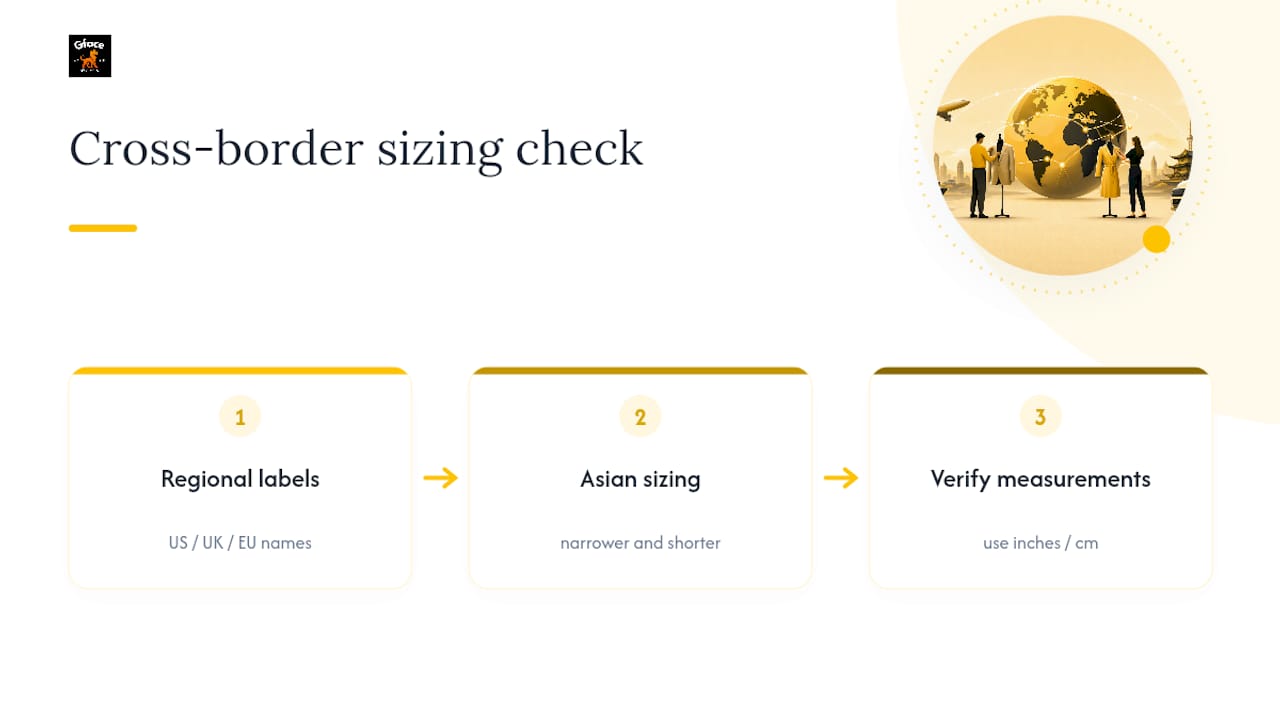
Not exactly. A US medium, a UK 12, and an EU 40 or 42 don't line up on a single chart, so a listing that's "TTS" for a US shopper can run noticeably different for a buyer in the UK or across the EU. Asian sizing, particularly from Japanese and Korean brands, tends to run narrower and shorter across the board compared to US streetwear cuts, which means a self-reported "TTS" from a size chart built for one region can mislead a shopper measuring against another region's norms entirely.
Resale and cross-border marketplaces make this worse because sellers often copy the manufacturer's own TTS claim without adjusting it for the buyer's regional expectations. A UK reseller listing a US-made hoodie as "TTS" is really only vouching for how it fit against the US chart, not confirming anything about UK conversions.
The safest habit: always convert to actual body measurements (inches or centimeters) instead of trusting a size label name across borders. A chest measurement in inches means the same thing everywhere. "Medium" does not. When a listing gives you both a size name and a flat measurement chart, lean entirely on the numbers and treat the size name as a footnote.
Does TTS Fit the Same Way for Everyone?
TTS relevance shifts with who's wearing the garment, and that's rarely spelled out on a product page. Men's and women's cuts from the same brand frequently use different fit blocks entirely, so a "TTS" claim on a men's tee tells you nothing reliable about how a women's cut from that same label will fit, even at a size that shares a number.
Body shape matters just as much. A brand's fit model represents one body type, and TTS is calibrated to that model. Someone with broader shoulders relative to their waist, or a longer torso than the fit model, can find a "TTS" garment fits perfectly in one dimension and off in another, even when the brand's own claim is accurate for its intended average.
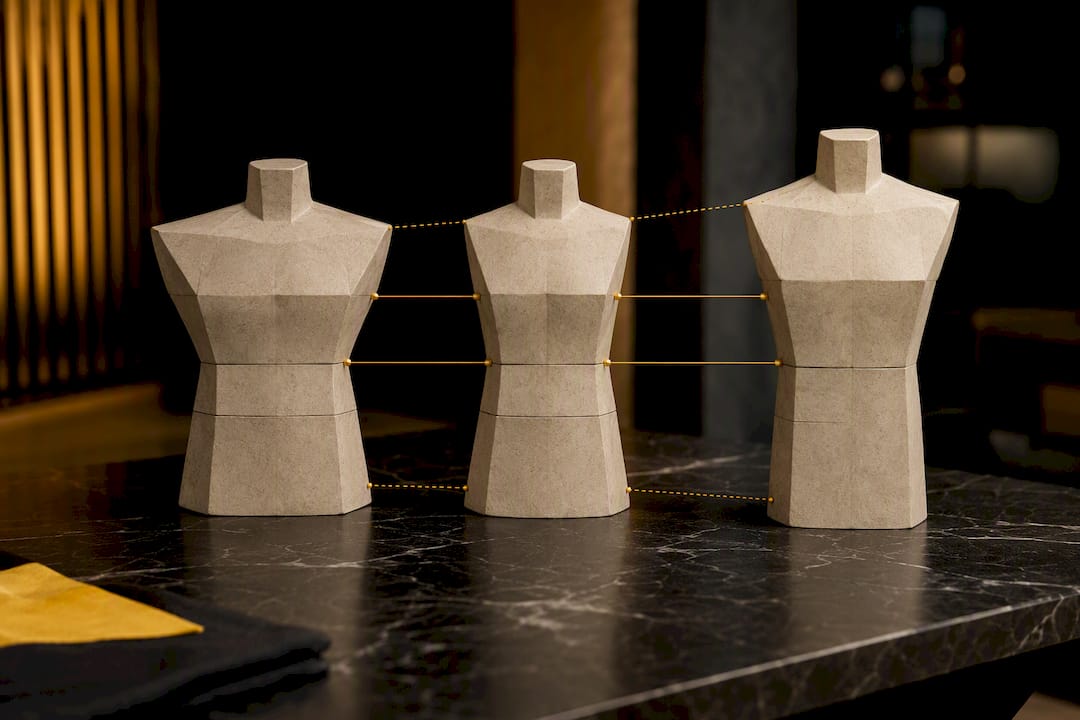
Age and body composition changes over time shift this too. A size that fit TTS five years ago on the same person may fit differently today, not because the brand changed anything, but because bodies do. None of this means TTS claims are unreliable. It means TTS is a statement about the brand's average customer, and you are checking whether you happen to match that average closely enough for the claim to hold.
Which Brands Get TTS Right, and Which Don't?
Consistency varies enormously across the streetwear and mainstream retail space, and it's rarely about brand size. Some large retailers have a well-earned reputation for consistent, predictable sizing year over year because they rarely change their fit blocks. Others, often fast-fashion labels chasing trend cycles, adjust cuts seasonally, which means a "TTS" claim that held true on last year's drop can quietly shift on this year's version of the same product name.
Print-on-demand and limited-drop brands face a specific version of this challenge: because different blanks or manufacturing partners can be used across drops, a size that was TTS on one release isn't automatically TTS on the next unless the brand is deliberate about keeping its measurements consistent. That's exactly why published flat measurements per drop matter more for limited releases than for a mass retailer restocking the identical SKU for a decade.
The practical rule holds regardless of brand size: check the current listing's own measurements rather than assuming last season's fit still applies, and weight recent reviews over older ones whenever a brand has a history of shifting its cuts.
How Do You Handle TTS When Buying Secondhand or International?
Secondhand and cross-border shopping strip away most of the safety net a first-party TTS claim gives you, because you're often trusting a reseller's judgment rather than the brand's own chart.
For secondhand buys on platforms like Grailed, Depop, or Poshmark, ask the seller for actual flat measurements rather than relying on their TTS note, especially on older or discontinued items where the brand's chart may have changed since that piece was made. Fabric also degrades and stretches with wear and washing, so a garment that was TTS when new can run slightly larger after a few years of use.
For international purchases, always request measurements in inches or centimeters rather than trusting the local size label, and factor in a few extra days of buffer if a return means shipping the item back overseas. Many international sellers don't offer free return shipping, which raises the stakes on getting the measurement check right before you buy rather than after.
When in doubt on either front, message the seller directly and ask for exact measurements against the specific piece in front of them, not the brand's general chart. A five-minute message can save a costly overseas return.
The Smart Way to Treat a TTS Label
Trust TTS as a starting point, never as the final word. The habit that saves the most returns is boring but effective: measure one garment you already love, keep those numbers saved on your phone, and hold every future "TTS" claim up against them before you check out.
Brands that publish real flat measurements and honest model stats are doing the work for you. Brands that just slap "TTS" on a product photo with no numbers behind it are asking you to take their word for it. Use the jersey size guide checklist, read the reviews that mention specific measurements, and reward the sellers who show their work with your business.
— Victor
Shop the Brands That Back Up Their TTS Claims
Gfacegear publishes flat garment measurements and on-model shots with every drop, from the ROAR jerseys and long tshirt dresses to the Limited Boriqua Swimwear runs, so you're never guessing what "TTS" actually means on a piece before it ships.
Every product page lists the model's height and the size they're wearing, alongside chest, length, and sleeve measurements for tees, hoodies, and jackets. Check the jersey size guide before ordering, and for limited swimwear and fitness-set drops where fit risk runs higher, consider ordering a single sample piece first and comparing it against a garment you already own. Lion sneakers, hats, and the print-on-demand lineup all follow the same published-measurement approach, since a brand that hides its numbers is asking for your trust without earning it. Ready to gear up with sizing you can actually verify? Head to the Gfacegear storefront and shop the current drop.
Sources
- TTS — Streetwear Directory glossary
- What Does 'TTS' Mean, and How Do You Use It? — HowToGeek
- What Does 'True to Size' Actually Mean? | YourSizer
FAQ
What Does TTS Mean in Clothing Sizing?
TTS means "True to Size," indicating an item fits according to its labeled size rather than running larger or smaller than expected.
What Does TTS Mean in Slang or Casual Use?
Outside of shopping, TTS commonly means "text-to-speech," a technology term for voice-reading software, so the meaning depends entirely on context.
What Does TTS Mean in Retail Listings?
In retail, TTS is a fit cue sellers add to product pages, reviews, and resale listings to tell shoppers the garment or shoe matches its standard size chart.
Is TTS the Same Across All Brands?
No. TTS is relative to each brand's own size chart, so a TTS large at one label can measure differently than a TTS large at another.
Does Gfacegear Run True to Size?
Gfacegear publishes flat garment measurements and on-model photos with stated model sizes for every drop, giving shoppers real numbers to check against instead of relying on the size label alone.