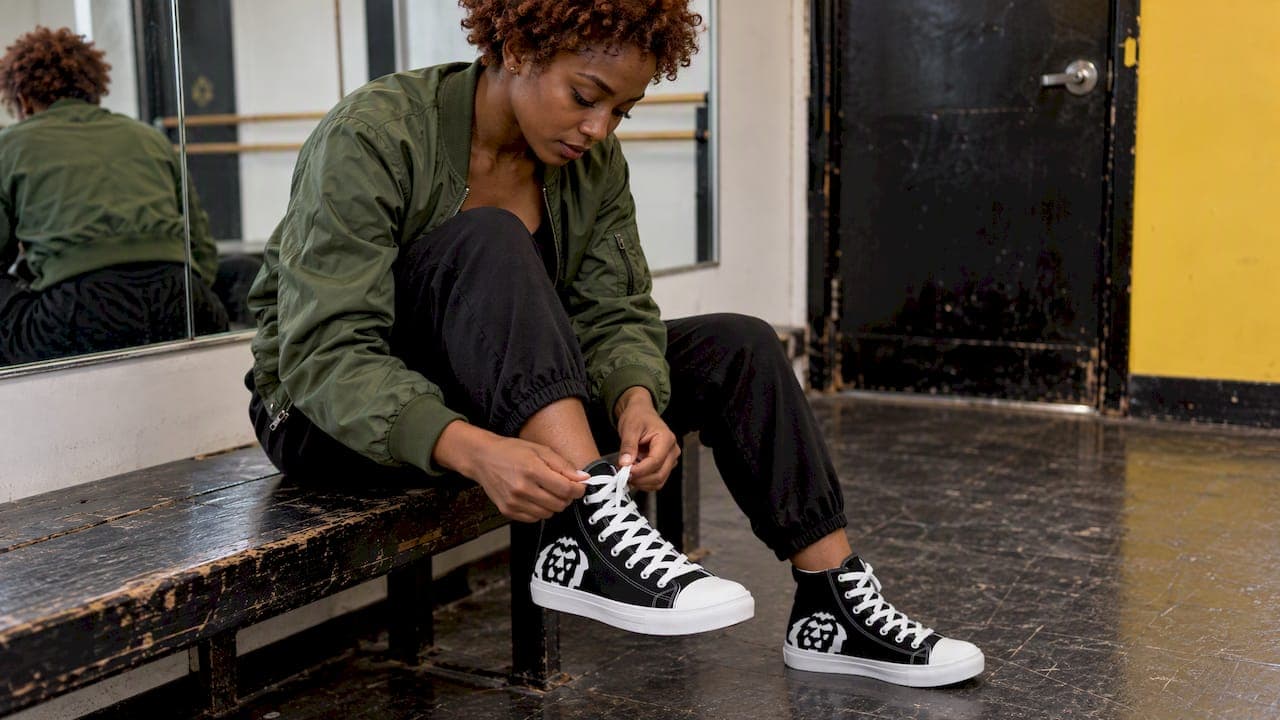
You lace sneakers by threading the lace straight across the bottom eyelets, crossing the ends up through each pair, and tying off at the top. That is the standard criss-cross. Everything else, bar lacing, loose lacing, no-tie setups, high top tricks, is a variation on that one path. Learn the base, then bend it to fit your foot and your fit.
Your laces are the cheapest customization on any pair. Same shoe, new lace path, totally different statement. Here is how to do each style, when to use it, and how to fix the problems that make a good pair feel wrong.
TL;DR
- Standard criss-cross is the default: even tension, fast on and off, works on any sneaker.
- Bar (straight) lacing gives a flat, clean look, but needs an even number of eyelets.
- For a loose, street look, lace with the shoe on your foot, then leave the ends loose, tuck them, or knot the tips.
- High tops add eyelets, so lace in zones: snug at the ankle, easier over the forefoot.
- Heel slip, tight toes and pressure on top of the foot each have a lacing fix. You don't need new shoes.
Table of Contents
- Before you lace: set up the pair
- The standard criss-cross: step by step
- How to lace high tops
- Bar lacing: the clean, flat look
- Loose lacing: the street look
- How to lace sneakers without tying them
- Creative sneaker lacing styles
- Fix fit problems with lacing
- Our take: your laces are part of the fit
- Shop the pairs that make lacing worth it
- FAQ
- Sources
Before you lace: set up the pair
A few seconds of prep changes the result more than any fancy pattern.
Lace with your foot in the shoe. Highsnobiety's lacing guide recommends lacing while the sneaker is on your foot so you can judge tightness as you go, pulling the sides apart while you work. If you lace off your foot, you are guessing.
Start with even ends. Pull the lace through so both ends are the same length before you begin. If one side runs long, you will be fighting it all the way to the top and end up with lopsided bows.
Keep laces flat. Straighten the lace as you pull it through each eyelet. A twisted lace sits lumpy, wears faster and ruins a clean look. Flat laces are what make a pair look fresh out of the box.
Decide the goal first. Three questions:
- Do you want comfort, lockdown or looks?
- How many eyelets does the pair have, odd or even?
- Do you want a bow, or no bow at all?
The answers pick your style.
The standard criss-cross: step by step
This is the factory pattern on most sneakers. It spreads tension evenly and is the fastest to tighten and loosen, according to a lacing pattern reference. If you only ever learn one, learn this one.
- Open the shoe fully. Loosen everything and pull the tongue up and straight.
- Run the lace straight across the bottom pair. Thread it so both ends come out underneath, on the inside of the shoe, and even them out.
- Cross and go up. Take the left end over the right, and thread it up through the next eyelet on the opposite side.
- Repeat with the other end. Cross it over and thread it up through the next opposite eyelet.
- Keep alternating until you reach the top pair. Pull each crossing snug as you go, not all at the end.
- Tie off. Make your bow, or use one of the no-tie finishes below.
Small detail that matters: at the last eyelets, Highsnobiety notes you can feed the laces from inside to outside before tying. Try it. The top of the shoe sits cleaner.
Another detail sneakerheads argue about: whether the lace goes up through the eyelet from underneath or down from above. Pick one and stay consistent on every crossing. Consistency is what reads as clean from across the street.
How to lace high tops
High tops are a different animal. More eyelets, more ankle coverage, more ways to get it wrong. A canvas high top like our Gface men's high top canvas White Lion print has a tall collar that is built to be seen, so the lacing is part of the look.
The base is the same criss-cross, but think in three zones:
- Bottom zone (toes and forefoot): keep it comfortable. Over-tightening here is what makes your toes go numb by lunch.
- Middle zone (arch and instep): snug, even, flat.
- Top zone (ankle): this is where you lock in, so pull firmer so the collar hugs without cutting off circulation.
You can do this with the standard criss-cross by simply varying how hard you pull at each level. Pull as you lace, pair by pair, instead of tightening the whole shoe from the top.
Different looks for high tops
- Bar lacing: the flat horizontal bars look sharp on a tall upper, with a long clean stretch of lace. More on this below.
- Loose and open: leave the top two eyelets unlaced or very slack for a relaxed, slouchy vibe, and tuck the ends in.
- Wrap-around: this is a style where you loop the lace ends around the ankle just before the top eyelet, then through the top eyelet, wrap again and knot, as one lacing guide describes. It only works if your laces are long enough, so check length before you commit.
If your high tops feel loose at the ankle but tight over the toes, that is a tension problem, not a size problem. Re-lace, loosening the bottom pairs and firming the top ones. Our guide on high vs low sneaker alternatives helps if you are still deciding which silhouette suits you.
Bar lacing: the clean, flat look
Bar lacing (also called straight lacing) swaps the crossed X's for horizontal bars. No criss-cross visible on top. The result is a minimal, architectural look that photographs well on a plain tee-and-jersey fit.
A lacing pattern reference lays out the method: thread the lace down through the bottom eyelets so both ends run underneath, then take one end straight up the same side to the next eyelet and across to the opposite side. Alternate so each end skips a row until you reach the top.
Quick version:
- Start with the lace going down through the bottom pair, ends underneath.
- Take the left end up to the second eyelet on the same side, then across to the right side.
- Take the right end up the right side, skipping a row, then across to the left.
- Keep alternating until you are at the top. Tie off.
Two things to know. First, bar lacing needs an even number of eyelets to finish properly, per a footwear lacing guide. Count before you start. Second, bar lacing is less forgiving to adjust, so get your tension right as you build it.
Loose lacing: the street look
Loose lacing is how a lot of people actually wear sneakers on the block. Relaxed, easy, a little undone on purpose. Highsnobiety's approach is to lace with the shoe on, then leave the ends loose, tie a loose knot, or knot the tips so they do not loosen further.
How to do it right:
- Lace the standard criss-cross, but leave the pairs slightly open as you go. Pull the sides apart as you work to set the gap.
- Check that your foot is held. You should be able to walk without your heel lifting.
- Finish with one of the no-tie options below.
Loose does not mean sloppy. The difference is intent: even gaps, flat laces, a tidy finish. Clean white pairs show this off best, so keep them fresh with our guide to cleaning white sneakers.
How to lace sneakers without tying them
No bow, no problem. Three options, straight from the loose-lacing playbook:
- Let the ends hang from the top eyelets. Fastest, loosest, very casual.
- Tie them together loosely for a compact, tucked finish.
- Knot the tips of each lace so the ends hold in place without a bow.
One more that works on most sneakers: tie a normal bow, then tuck it under the tongue or slip the ends inside the shoe. You get the clean no-lace-showing look, and the tension stays put.
No-tie only works if the shoe stays on. If your heel lifts when you walk, tighten up or use a heel lock (below). Slip-offs on a subway staircase are not a look.
Creative sneaker lacing styles
When you want the laces to be the focal point, change the path and the color. Creative lacing styles work by manipulating how the lace travels across the tongue, and contrasting colors or thicker laces make that path pop, as one brand guide puts it. Here are the ones worth knowing.
| Style | Look | Best for | Difficulty |
|---|---|---|---|
| Criss-cross | Classic X pattern | Everyday, any shoe | Easy |
| Straight / bar | Flat horizontal bars | Clean, minimal fits | Medium |
| Loose | Relaxed, open | Casual street wear | Easy |
| Ladder | Rungs like a ladder | Statement pairs | Medium |
| Spider web | Intricate woven web | Showpiece sneakers | Hard |
| Two-tone | Two colors in the same eyelets | Color-matched outfits | Medium |
| Wrap-around | Laces circle the ankle | High tops | Medium |
Ladder lacing gives you rungs of lace across the tongue. It was originally created for military boots worn by ceremonial guards, according to the same creative lacing guide.
Spider web lacing weaves an elaborate web across the top of the shoe. It takes patience and a long lace, and it rewards you with a pair no one else is wearing.
Two-tone lacing threads two different colors into the same eyelets. Match one color to your hat or jersey and the whole outfit locks together. For help picking colors, run through our streetwear color matching formulas and color block outfit formulas.
Tip: lacing is personal expression, and it can move a pair from casual to sporty without changing the shoe, as a lacing guide notes. Thicker flat laces suit bar and ladder styles. Thin round laces suit spider web.
Fix fit problems with lacing
Lacing tension pulls the two sides of the upper together, so the same shoe can feel loose or locked in depending on how you lace it. Before you blame the size, try these. And if you are not sure about size at all, our sneaker size conversion guide will save you a return.
Heel slipping
Use a heel lock (also called a runner's loop). Verywell Fit says a heel-lock pattern can reduce forward foot movement, which may help prevent toe impact and friction blisters. The method: lace normally to the second eyelet from the top, run each end straight up through the top eyelet on the same side to form a loop, cross each end through the opposite loop, pull snug and tie as usual. This needs a shoe with an extra top eyelet, which many sneakers have.

Pressure on top of the foot
Use window (box) lacing. Unlace to just below the sore spot, go straight up to the next eyelet instead of crossing, then pick the crisscross back up. That leaves a small gap exactly where it hurts.
Wide feet
Skip a set of eyelets at the bottom of the shoe to open up midfoot room. Check it by standing and walking, not sitting.
Toes jamming forward
Loosen the bottom pairs and firm up the middle and top. Then walk around for a minute. Verywell Fit's practical advice is to judge lacing by how it feels after walking, then retighten or loosen, because one tension does not work for every foot.
If pain keeps coming back, or you have numbness, a podiatrist or your doctor is the person to see. Lacing tweaks fix fit, not foot conditions.
Our take: your laces are part of the fit
We are a Brooklyn-born brand, and we have watched this on the block our whole lives. Nobody walks out in a great outfit and ignores their feet. The pair is the punctuation at the end of the sentence.
Here is how we think about it:
- Lock in first, style second. If it does not feel right on your foot, it will not look right. Get the tension dialed, then play.
- Pick one statement. Wild laces on a loud pair is a lot. Let one thing talk: the print, the color or the lace path.
- Match the lace to the mood. Clean bar lacing for a sharp day. Loose and open when you want to move easy. Two-tone when the fit has a color story.
- Own it. Gameface means you walk out like you meant every detail. Because you did.
Start simple, then get bolder. Your destiny is not going to grab itself, and neither will the next pair.
— Victor
Shop the pairs that make lacing worth it
Good lacing needs a pair worth showing off. Our canvas high tops, like the Gface Patriot Kicks, give you the tall collar for wrap-around and bar looks. Prefer low profile? The GFACE Blue Camouflage AF1 Low-Top is a leather low-top that takes a clean two-tone lace. Browse the full range of sneakers, hats, dresses and more, and join The Pride Membership at $9.99 per month for sitewide discounts, early access to limited drops and VIP perks.
Finish the fit with tees from our shirts collection and, when a drop lands, our limited edition swimwear. Need outfit ideas to go with them? Check these sneaker outfit ideas.

FAQ
How should tennis shoes be laced?
Use the standard criss-cross with the shoe on your foot, keeping tension even and the laces flat. Walk around briefly, then loosen or tighten where needed. If your heel slips, add a heel lock. If the top of your foot hurts, use window lacing.
How do you lace sneakers without tying them?
You can leave the ends hanging from the top eyelets, tie them loosely together, or knot the tips so they stay put. Another option is to tie a bow and tuck it under the tongue. Make sure your heel stays in place when you walk.
Can you use bar lacing on any sneaker?
Only on shoes with an even number of eyelets, as straight bar lacing needs them to finish cleanly. Count the eyelets on one side first. If the number is odd, stick with criss-cross, or try another style such as ladder lacing.
What is the best way to lace high tops?
Start with the criss-cross and vary the tension by zone: easy over the toes, even across the middle, firmer at the ankle. For a different look, try bar lacing or wrap-around lacing. Check that your laces are long enough before you start.
How do I stop my laces from coming undone?
Lace with the shoe on and pull each crossing snug as you go. Then tie a secure bow, or knot the tips if you wear them loose. Tucking the bow under the tongue keeps the ends out of the way.
Sources
- How to Lace Your Shoes in 2024: A Step-By-Step Guide, Highsnobiety
- Sneaker and Everyday Lacing Patterns, 12 Methods
- How to Lace Your Shoes for the Right Fit, Verywell Fit
- A Guide on Lacing Sneakers, Vionic
- 6 Creative Ways To Lace Up Your Sneakers, adidas