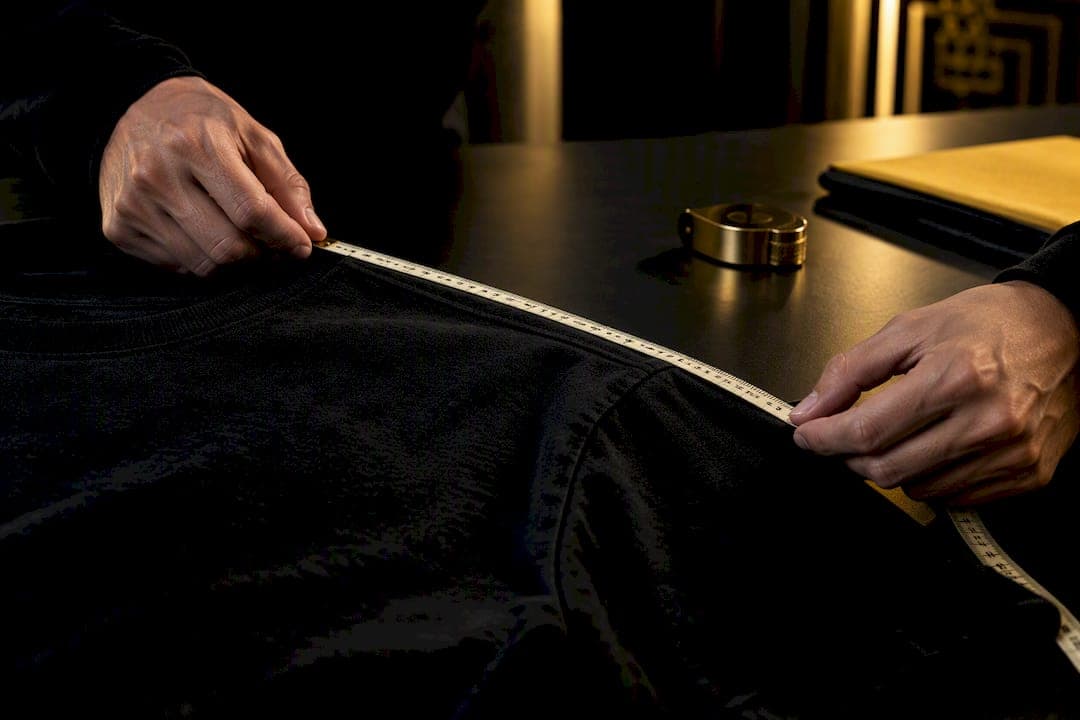
Relaxed fit means roomier than regular but still shaped to your body. Oversized means intentionally bigger, boxier, with longer sleeves and a longer hem that drops past where a normal tee would end. Pick relaxed when you want everyday comfort with a silhouette that still tracks your frame. Pick oversized when you want layered looks or a bold, exaggerated streetwear shape. Measure first, always, and you will never guess wrong again.
TL;DR:
- True relaxed fit is designed with moderate ease and a shaped silhouette, while oversized fits deliberately add excess fabric for a boxier look.
- Key indicators include shoulder seam placement, sleeve length, and hem length, which differ significantly between the two styles.
- Sizing should primarily be true to the garment's measurements to avoid disproportionately long shoulders and sleeves, especially when opting for oversized.
- Fabric type influences fit perception; stiff materials enhance boxiness, while soft knits tend to drape, altering the visual effect of the same ease.
- Checking measurements on seated as well as standing positions ensures comfort and proper fit, especially for online purchases.
Table of Contents
- Relaxed vs oversized: the visual and measurement differences
- How to choose between relaxed and oversized for your body and goals
- Build an ease map: the measurement checklist that settles it
- Outfit ideas that put each fit to work
- Where shoppers go wrong picking between the two
- Where relaxed and oversized came from
- How GfaceGear thinks about ease and silhouette
- Try both fits without the guesswork
- Sources
- FAQ
Relaxed vs oversized: the visual and measurement differences
Your eyes can catch the first clue, but your tape measure settles the argument. Start with the shoulder seam. On a relaxed piece, the seam sits close to your actual shoulder point, maybe a half inch off. On an oversized piece, the seam drops well past your shoulder, sometimes an inch or more down your arm, creating that slouched, drop-shoulder look streetwear built its whole identity around.
Sleeve length follows the same logic. Relaxed sleeves hit near the natural elbow bend or just above it. Oversized sleeves run longer, often covering more of the forearm, because the whole garment is built on a bigger frame than your body needs.
Hem length tells you the rest. A relaxed tee ends around the hip, same as a regular fit but with more circumference. An oversized tee keeps going, landing mid-thigh or lower, which is exactly why oversized tees pair so well with biker shorts or slim joggers underneath.
The overall silhouette is the summary of all three. Relaxed reads as a shaped rectangle: wider than regular but still following your torso's lines. Oversized reads as boxy: a near-uniform block from shoulder to hem with almost no taper at the waist.
Here's where the numbers matter more than the vibe check. According to ease guidance from TYPE MAGAZINE, a fitted woven bodice typically carries ease at the bust that is moderate but noticeably less than loose silhouettes. For shirts and jackets, chest ease is moderate to ample, with upper arm ease suitable for fitted sleeves. Relaxed streetwear tees usually have ease near the higher end of this scale. Oversized pieces have significantly more ease, intentionally exceeding typical ranges, which is exactly the point.
Fabric changes how that ease reads on your body. A stiff woven cotton with 10 centimeters of ease looks structured and boxy because the fabric holds its shape away from you. A soft, draping jersey knit with the same 10 centimeters of ease will hang closer and read as relaxed rather than oversized, because the fabric follows gravity instead of fighting it. This is why two garments with identical spec sheets can feel completely different once you put them on. Ease distribution matters as much as total ease: where the extra room sits on the body changes the read entirely, not just how much room there is.
Use this checklist when you are scanning a product page or standing in front of a rack:
- Shoulder seam placement: aligned with your shoulder point means relaxed; dropped past it means oversized.
- Sleeve length: hits near the elbow for relaxed; runs longer toward the forearm for oversized.
- Hem length: ends at hip for relaxed; extends to mid-thigh or lower for oversized.
- Fabric behavior: stiff wovens exaggerate boxiness; soft knits soften the same amount of ease.
- Model photos: garments that hang loosely off the model's frame, rather than skimming it, usually signal oversized rather than relaxed.
Check these five points before you check out, and you will stop guessing which fit you are actually buying.
How to choose between relaxed and oversized for your body and goals
The right call depends on what you are building the outfit for, not just what looks cool on a hanger. Ask yourself four questions before you add anything to your cart.
- What silhouette are you going for? A shaped, slightly roomy look calls for relaxed. A dramatic, boxy statement calls for oversized.
- Are you layering? Oversized pieces layer better under jackets or over hoodies because the extra volume absorbs bulk without looking stuffed. Relaxed pieces layer cleaner on their own.
- How much mobility do you need? Relaxed fit moves with you at the gym, on a bike, or through a packed subway car. Oversized fit can feel like extra fabric working against you during anything active.
- How tall is your torso? Taller frames often carry oversized proportions better because there's more length to fill. Shorter torsos can get swallowed by an oversized hem that hits below where it should, cutting the leg line and making you look shorter, not cooler.
On sizing, true-to-size is the safer default for relaxed fit because the brand already built the roominess into the pattern. Size up one size only when you specifically want more length and width for an oversized look, and even then check the garment measurements first. Sizing up blindly on a whim rarely works, because you inherit extra shoulder and sleeve length you did not plan for, and the drop-shoulder seam can end up somewhere between your elbow and your bicep instead of where you wanted it.
Before you buy, run this checklist:
- Pull the actual garment measurements, not just the size label.
- Check the model's height and the size they're wearing in the photo.
- Consider whether the fabric has stretch, since stretch knits forgive more than stiff wovens.
- Read the returns policy before you commit to an unfamiliar fit.
For proportion guidance on the bottom half, our pants inseam measuring guide breaks down how leg length affects the whole outfit balance.
Pro Tip: Try the garment on seated, not just standing. Hip and waist room can tighten up once you sit, and a tee that felt relaxed standing can suddenly pull across the chest and hips at a desk or on a train.

Build an ease map: the measurement checklist that settles it
Forget guessing. An ease map is a one-page comparison between your body measurements and the garment's finished measurements, and it tells you exactly which fit category you're looking at before you spend a dollar.
Start with four measurements on your own body: chest (around the fullest part, arms relaxed), shoulder width (seam to seam across the back), sleeve length (shoulder point to wrist), and torso length (top of shoulder to where you want the hem). The NMSU pattern-fitting checklist recommends taking both front and back measurements where possible, since a chest or hip measurement can differ between the two, and a single number can hide the asymmetry that makes a garment bind on one side.

Now compare those numbers to the garment's listed measurements. The gap between your body and the finished garment is your ease. Wearing ease is the small cushion every garment needs just so you can move, breathe, and raise your arms without ripping a seam. Design ease is everything beyond that, the extra room a brand adds on purpose to create a silhouette. A tee with 2 inches of ease at the chest is close to regular fit. Push that to 4 to 6 inches and you're in relaxed territory. Cross into 8 inches or more and you're solidly oversized.
Build your ease map like this:
- Chest: your measurement, garment measurement, and the gap between them.
- Shoulder: your seam-to-seam width against the garment's shoulder-to-shoulder span.
- Sleeve: your arm length against the garment's sleeve length, checking where it lands relative to your elbow.
- Length: your preferred hem point against the garment's total length from collar to hem.
Write these four rows down for any piece you're on the fence about, whether it's a tee, a hoodie, or a jersey. Our jersey size guide walks through how this applies specifically to jersey cuts, where chest ease and sleeve length swing further between relaxed and oversized versions than they do in a basic tee.
One last step the NMSU checklist flags and most shoppers skip: test the fit seated, not just standing. Hip and waist measurements can expand once you sit down, and a garment that read fine standing in front of a mirror can suddenly pull tight across the lap. If you're buying online and can't try before you buy, at least sit down in something similar you already own and note how it behaves.
Outfit ideas that put each fit to work
Relaxed and oversized aren't rules, they're tools, and the right outfit depends on which tool you grab.
- Relaxed tee with slim jeans. The roomier top balances a tapered leg, keeping the whole look shaped without feeling tight anywhere.
- Relaxed hoodie with joggers. Matched proportions on top and bottom read clean and intentional rather than sloppy.
- Relaxed jersey with tapered shorts. Warm-weather streetwear that keeps the athletic edge of a jersey without drowning your frame.
- Oversized tee with slim joggers. The classic proportion play: big on top, tight on bottom, so the silhouette stays sharp instead of shapeless.
- Long oversized tee with biker shorts. The extended hem covers more leg, which makes this pairing a staple for anyone chasing that dramatic streetwear drape.
- Layered oversized hoodie under a jacket. The bulk of an oversized hoodie fills out a jacket's shoulders and chest, giving the whole fit more presence without extra padding.
The proportion rule that ties all six together: balance volume. If your top is big, keep your bottom slim, and if your bottom is loose, keep your top closer to the body. Tucking a relaxed tee can restore shape at the waist when you want a cleaner line, while tucking an oversized tee usually fights the silhouette the piece was built for.
Height changes the math slightly. Taller readers can wear oversized hems that hit mid-thigh without looking swallowed, while shorter readers often do better keeping the oversized piece up top and skipping the longest hem lengths. Our guide for tall shoppers covers how to buy length first and skip unnecessary tailoring. For outfit inspiration built around graphic tees specifically, check our graphic tee outfit ideas, and for jersey-specific pairings, our baseball jersey outfit guide has Victor's own fit notes on that category.
Where shoppers go wrong picking between the two
The biggest misconception: relaxed fit is not just "a size bigger." Sizing up in a regular-fit pattern gives you more circumference everywhere at once, including the shoulders and sleeves, which throws off the whole proportion instead of just adding comfort at the chest. A true relaxed fit is cut differently from the start, with the extra ease placed intentionally rather than scaled up across the board.
Another mistake: assuming oversized always means shapeless. A well-built oversized tee still has a defined shoulder drop and a consistent silhouette. Sloppy oversized happens when the extra fabric has nowhere intentional to go, which is a design failure, not a feature of the category.
Shoppers also lean too hard on product photos alone. A model shot can flatter almost any cut depending on the model's own build and how the photo is styled. That's exactly why the NMSU measurement checklist exists: compare your own numbers to the garment's numbers, every time, rather than trusting a photo to tell you how something will sit on your frame.
Last mistake: ignoring fabric. The same design ease reads completely differently on stiff denim versus soft cotton jersey, so judging fit by the size label alone, without factoring in the fabric, sets you up for a surprise when the box arrives.
Where relaxed and oversized came from
Relaxed fit has roots in workwear and military surplus, garments cut with extra room so people could move through physical labor without restriction. That practical looseness got adopted into casual fashion decades later, kept as comfort clothing rather than a statement piece.
Oversized took a different path, growing out of hip-hop and skate culture in the 1980s and 1990s, where bigger silhouettes became a visual language of their own: borrowed sizes, dropped shoulders, and longer hems that signaled a specific identity rather than just comfort. That era set the template streetwear still runs on.
Both fits cycle in and out of mainstream fashion on a loop, but they never really disappear from streetwear, because the category was built on exaggerated proportions from the start. What's changed is precision. Brands now design relaxed and oversized fits with intentional ease budgets rather than just cutting things bigger, which is why a well-made oversized tee today holds its shape in a way an old borrowed hand-me-down never did. The silhouette got louder, but the construction got smarter.
How GfaceGear thinks about ease and silhouette
GfaceGear builds every tee, hoodie, and jersey around a target ease budget instead of just scaling a pattern up or down. That's the difference between a piece that reads relaxed on purpose and one that just feels like an oversized shirt that missed. Our lion and Greek Key medallion designs live on both silhouettes, because a bold graphic still needs a fit that actually works with the wearer's frame, not against it.
Print-on-demand production means each piece is made when you order it, which lets us hold to consistent ease specs across drops instead of the size drift that happens with mass-produced runs sitting in a warehouse for months. When we launch limited drops, including recent swimwear releases, fit consistency is part of what we're protecting.
— Victor
Try both fits without the guesswork
Once you know your ease map, shopping GfaceGear gets a lot faster. Our Shirts category carries relaxed tees built with a shaped ease budget, while our long tee and jersey pieces in Jersey lean oversized with that classic drop-shoulder length. If hoodies are your layering piece, our Hoodies collection runs both fits depending on the drop, so check the garment measurements against your ease map before you buy.
The Pride Membership offers early access to limited drops, including swimwear releases in small batches, plus sitewide discounts that make trying a new fit lower stakes if it doesn't land the way you expected.
- Shirts for relaxed tees built with shaped ease.
- Jersey for oversized, drop-shoulder length pieces.
- Hoodies for layering in either fit.
- Swimwear for our limited-edition drops.
- The Pride Membership for early access and discounts while you test what fits your frame.
Browse the full shop or check out our lookbook to see both fits styled before you commit.
Sources
Measurement guidance drew from the NMSU pattern-fitting checklist and TYPE MAGAZINE's ease breakdown.
- Ease allowance: the math of fit | TYPE MAGAZINE
- Check your pattern for proper fit | New Mexico State University
FAQ
Does relaxed fit mean big?
Not necessarily. Relaxed fit means roomier than regular with more wearing ease, but the garment is still shaped to follow your body rather than hanging in a boxy block the way oversized pieces do.
Should I size up or down for relaxed fit?
Buy relaxed fit true to size, since the extra room is already built into the pattern. Sizing up on top of that usually adds unwanted length in the shoulders and sleeves rather than the comfort you're after.
Which is better, loose fit or relaxed fit?
Neither is universally better since they describe overlapping ideas, but relaxed fit generally implies a shaped silhouette with moderate ease, while loose fit can mean anything from relaxed all the way to oversized depending on the brand's labeling.
What size should I get if I want it oversized?
Check the garment's finished measurements first, since a true oversized piece is already cut with significant design ease and sizing up further can push the shoulder seam and sleeve length past where you actually want them.