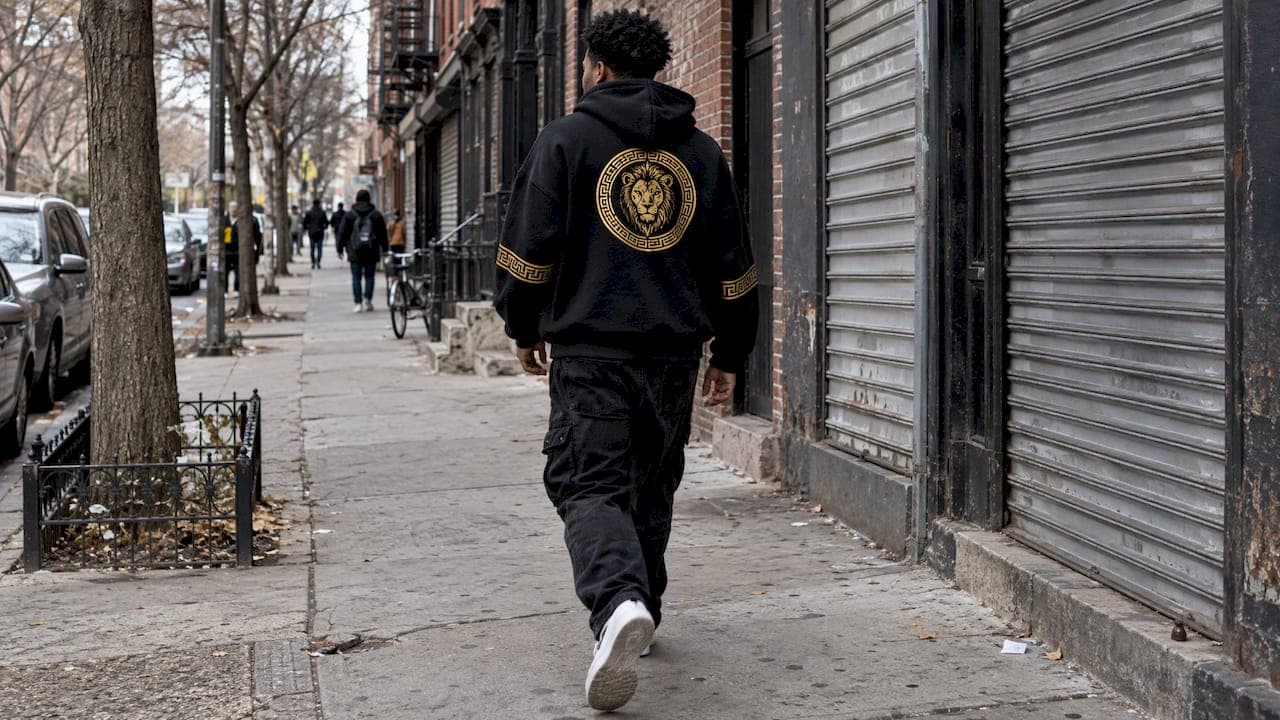
A drop shoulder is a construction where the shoulder seam sits below your natural shoulder edge, landing on the upper arm instead of right at the bone. That seam placement is what builds the relaxed, boxy look you see on streetwear tees, hoodies, and oversized dresses. Keep reading for the construction details, how to tell it apart from a raglan or a set in sleeve, and what to do if the fit feels off.
TL;DR:
- Drop shoulder seams sit on the upper arm, often two inches or more below the natural shoulder point, creating a relaxed, boxy silhouette.
- Garments with no shaping in body and sleeve panels, plus wider, deeper armholes, are typical of drop shoulder construction, especially in knitwear.
- Moving the shoulder seam affects perceived shoulder width, making shoulders look broader and sleeves shorter, with fit best checked in motion.
- Drop shoulders are distinct from raglan, set-in, and dolman sleeves, with the key difference being a horizontal seam on the upper arm instead of at the shoulder or neckline.
- Fixing fit issues generally involves sizing down or altering side seams unless the shoulder seam itself is misplaced, which requires reshaping both armhole and sleeve.
Table of Contents
- What drop shoulder means in construction and why designers use it
- What a drop shoulder does to your silhouette and proportion
- Drop shoulder vs. raglan, set in, and dolman: how to tell them apart
- Fixing the fit: sizing and tailoring a drop-shoulder piece
- Styling drop-shoulder pieces without looking sloppy
- How GfaceGear builds drop-shoulder fits that hold up
- Why drop shoulders keep coming back around
- Where to find drop-shoulder pieces built right
- FAQ
- Sources
What drop shoulder means in construction and why designers use it
Every garment has a shoulder point, the spot where your actual shoulder bone ends and your arm begins. On a set in sleeve, the seam sits right there. On a drop shoulder, the seam is moved down the arm by a measured amount, sometimes just half an inch, sometimes two inches or more depending on how oversized the design is meant to feel. Sewing and apparel guides describe this seam shift as the thing that creates a looser, boxier result because the armhole opens up and the sleeve reads shorter against the body, with the final look shaped by fabric weight, body width, sleeve width, and overall garment length according to sewing and pattern construction guidance.
That same shift explains why knitwear leans on drop shoulder construction so heavily. Patterns can skip shoulder shaping entirely: the body panel and the sleeve are both worked straight, then joined along a flat seam. Knitting pattern references note that this no-shaping approach is a favorite in beginner patterns and classic oversized sweaters, because there's no curved armhole to engineer and the fit stays forgiving across a range of body types.
A few things make the construction click:
- The shoulder seam drops onto the upper arm instead of sitting at the natural shoulder point.
- The body and sleeve panels are cut and sewn with little or no shaping, which simplifies assembly.
- The armhole sits deeper and wider, which is what gives the garment room to move.
Designers reach for this cut when they want consistency more than precision. A set in sleeve has to be graded carefully across every size to keep the shoulder sitting correctly. A drop shoulder has more built-in tolerance, which is part of why it shows up across tees, sweatshirts, hoodies, jackets, sweaters, and dresses as a go-to streetwear shape.
What a drop shoulder does to your silhouette and proportion
Moving the seam down the arm changes two things your eye reads instantly: shoulder width and sleeve length. Because the seam sits past your actual shoulder bone, the garment visually extends your shoulder line outward, which reads as broader on top. At the same time, the sleeve looks shorter relative to your arm, since part of what would normally be sleeve is now body fabric covering your upper arm.
That combination produces a handful of recognizable silhouettes. A boxy tee uses a shallow drop for a slightly relaxed shape without losing structure. An oversized hoodie pushes the drop further for maximum slouch. A long T-shirt dress keeps the same relaxed shoulder but extends the body length, so the proportion still reads intentional instead of like a tee that stretched out. In every version, the drop amount is doing the work: small changes in where that seam lands shift the whole garment's attitude, and even a short distance in seam placement changes perceived shoulder width and the outfit's balance according to fit and proportion guidance.

Checking fit on a drop shoulder means moving, not just looking in a mirror. Raise your arms, reach forward, turn to the side. A good drop shoulder seam should sit somewhere on the upper arm, not slide down toward your elbow, and the armhole shouldn't pull or gape when you move. Construction guidance points out that armhole depth and sleeve behavior only show up in motion, so a static try-on can miss a fit that's actually too loose or too tight once you're walking around in it.

Pro Tip: Check the fit with your arms raised and reaching forward, not just standing still. A drop shoulder that looks right at rest can pull or gape the moment you move.
Drop shoulder vs. raglan, set in, and dolman: how to tell them apart
Product photos and descriptions throw around sleeve terms like they're interchangeable, and they're not. Here's the quick read:
- Set in sleeve: the sleeve is cut separately and inserted into a curved, cup-shaped armhole right at your natural shoulder point, giving a tailored shape with full range of motion.
- Raglan sleeve: the seam runs diagonally from the underarm up to the neckline, so the sleeve and shoulder panel are one continuous piece. A quick comparison of raglan construction shows how that diagonal seam is the single giveaway, no horizontal shoulder line at all.
- Dolman sleeve: the sleeve is cut as one piece with the body, creating a wide, batwing-like shape that narrows toward the wrist.
- Drop shoulder: a horizontal seam sits on the upper arm instead of at the shoulder point, the detail that separates it from all three.
Technical patternmaking research treats these as genuinely different constructions, even though designers sometimes blend them, pairing a raglan seam with extra drop, for instance, to build pleats or drapery around the shoulder. The trade-offs matter too: set in sleeves give the most mobility and shape, raglan splits the difference, and dolman and drop shoulder sacrifice some structure for comfort and ease of movement.
Fixing the fit: sizing and tailoring a drop-shoulder piece
If a drop-shoulder garment feels wrong, the fix depends on what's actually off. Figure out which problem you have before you touch a seam.
- If the whole garment feels too wide, including the chest and body, size down rather than trying to alter the shoulder itself.
- If only the seam placement feels off, that's a shoulder and armhole problem, and it requires reshaping both the armhole and the sleeve together since they're connected pieces.
- If the body fits but the length feels off, take in the side seams or shorten the sleeve hem instead of touching the shoulder.
Reworking shoulder seam placement is a bigger job than it sounds, especially on knits. Dictionary and alteration guidance confirms that shifting where a shoulder seam sits means redoing the armhole and sleeve as a pair, not as separate fixes, and knit fabrics stretch and behave differently than wovens, which makes that reshaping trickier to get right. For a simple tee or hoodie that's just slightly too boxy, taking in the side seams at home with a sewing machine is manageable. For anything involving the actual shoulder line or armhole, that's a job for a tailor who can reshape both pieces together without throwing off the drape.
Styling drop-shoulder pieces without looking sloppy
The easiest rule: when your top has volume, keep your bottom slim. A boxy drop-shoulder tee or hoodie paired with joggers or slim jeans keeps the whole outfit from reading as oversized everywhere at once. The one exception is a long T-shirt dress, where the drop shoulder and the length work together as one relaxed silhouette, so you don't need a fitted counterpart underneath.
Layering is where drop shoulder pieces actually shine. A drop-shoulder hoodie fits cleanly under an oversized jacket without bunching at the arm, since the wider armhole and shorter apparent sleeve leave room to layer. Check our layering guide for how to stack pieces without adding bulk in the wrong places.
Three formulas worth copying:
- Hoodie formula: drop-shoulder hoodie, slim joggers, chunky sneakers.
- Oversized tee formula: drop-shoulder graphic tee tucked loosely into straight-leg denim, with graphic tee styling offering more combinations.
- Jacket formula: drop-shoulder jacket over a fitted base layer, paired with tapered pants, a combination covered in our jacket style guide.
For full head-to-toe inspiration, our summer outfit roundup and all-black formulas both lean heavily on drop-shoulder pieces as the anchor.
How GfaceGear builds drop-shoulder fits that hold up
We select fabric weight and reinforce the shoulder seam to ensure the drop looks intentional, not like the garment is worn out. On-demand production means grading has to stay consistent across every size, so the drop amount doesn't shrink or balloon from a small to an XL. We advise shoppers to check the actual shoulder seam measurement listed on the product page, as that number tells more about fit than size labels alone.
Why drop shoulders keep coming back around
Streetwear cycles back to the drop shoulder because comfort never really goes out of style, and the silhouette reads as effortless even when the construction behind it is deliberate. We build limited drops around that same idea: practical fit choices wrapped in bold design, not just volume for its own sake. If you're shopping one, let the seam placement and how it moves with you be the test, not just how it looks folded on a shelf.
— Victor
Where to find drop-shoulder pieces built right
When shopping here, fit is considered carefully. Hoodies, shirts, and jackets are designed to balance structure and roominess so the silhouette appears intentional rather than overly large.

- Browse Hoodies for the classic oversized drop-shoulder shape.
- Check Shirts for drop-shoulder tees built for layering or wearing solo.
- Look at Jackets for structured outerwear with that same relaxed shoulder line.
The Pride Membership offers early access to limited drops plus sitewide discounts; current prices and details are available on the product site. Every piece is made on demand, so check the fit guide on each product page before you buy, and when you're ready, put on your Gameface and grab the fit that lets you show up exactly how you want.
FAQ
How do I fix a dropped shoulder?
Start by figuring out whether the whole garment feels too big or just the shoulder seam sits wrong. If it's the overall fit, size down or take in the side seams; if the shoulder seam itself is the issue, that requires reshaping the armhole and sleeve together, which is a job best left to a tailor.
Does drop shoulder mean oversized?
Not exactly. Drop shoulder describes where the seam sits on the arm, and while it often produces a relaxed or boxy look, the degree of oversized feel depends on how far the seam drops, the fabric weight, and the garment's overall cut.
Who should wear a drop shoulder?
Anyone can wear one; it's more a question of proportion than body type. Pairing a drop-shoulder top with slimmer bottoms keeps the silhouette balanced, while long drop-shoulder dresses work as a complete relaxed look on their own.
What does a dropped shoulder indicate?
In garment terms, a dropped shoulder simply indicates the shoulder seam extends past your natural shoulder point onto the upper arm, a detail confirmed by Merriam-Webster's definition. It's a construction choice, not a quality issue, and it's intentional in most streetwear and knitwear pieces.
Sources
- Dictionary
- dropped shoulder — Merriam-Webster
- Understanding sleeve styles and fit — New Mexico State University sewing/pattern guide
- Knittingtips