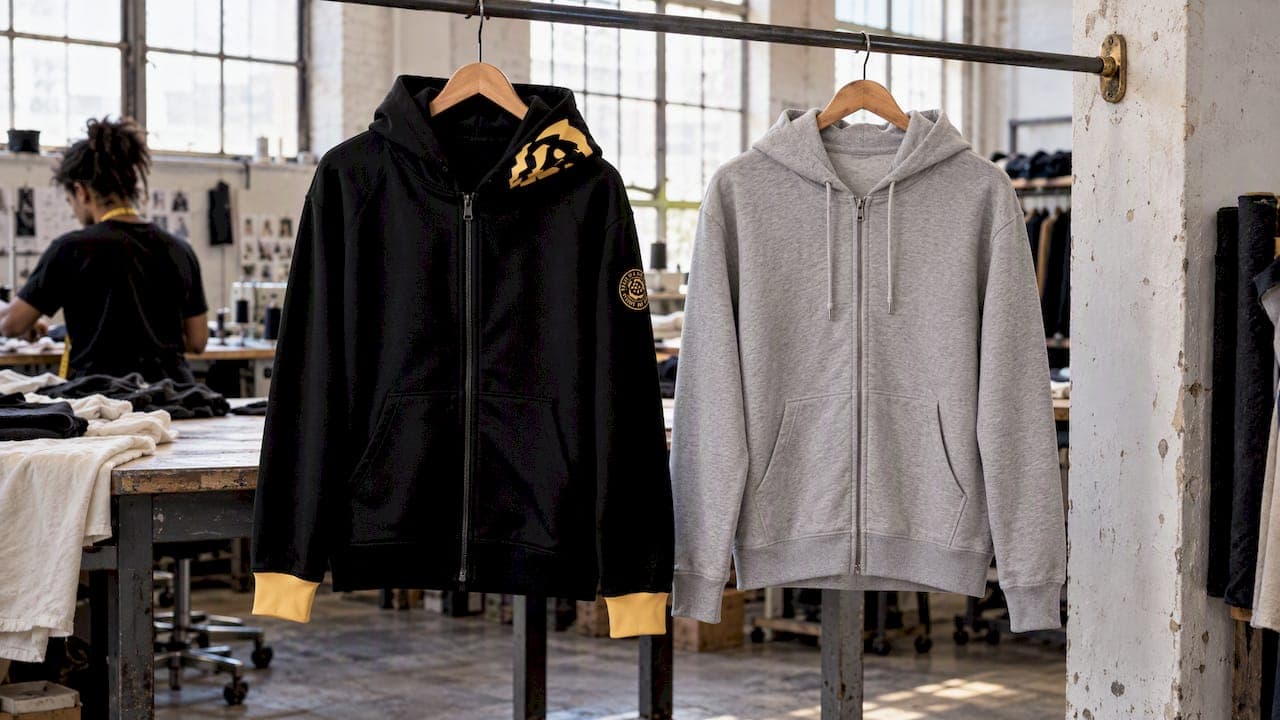
Cotton is the pick for softness, breathability and everyday wear. Polyester is the pick for sweat, light rain and fast drying. For warmth, it comes down to weight and fleece construction more than fiber name. At equal weight, polyester fleece usually traps more heat. Most people who want one hoodie for everything land on a cotton-rich blend.
That's the short version. Here's the full breakdown, so you can lock in the right fabric before you spend a dollar.
TL;DR
- Warmth: at equal weight, polyester fleece tends to feel warmer. Heavier fabric and brushed fleece matter as much as the fiber.
- Sweat and drying: polyester absorbs little moisture and dries fast. Cotton soaks up more and stays damp longer.
- Feel and odor: cotton feels softer on skin and releases odor more easily in the wash. Polyester holds its shape and color better.
- Best all-rounder: a cotton-polyester blend, with cotton-rich for daily wear and more polyester for workouts.
Table of Contents
- Which is warmer, cotton or polyester?
- How cotton and polyester handle sweat
- Softness and comfort: where cotton shines
- Durability, odor and care
- When to choose cotton, polyester or a blend
- Our take
- Shop the hoodie that fits your day
- A quick buying checklist
- FAQ
- Sources
Which is warmer, cotton or polyester?
This is the question most people really have. The honest answer: polyester fleece usually wins at the same weight, but weight changes everything.
One fleece-versus-cotton comparison explains that polyester fleece has a lofted surface that traps insulating air. It also cites textile measurements that put 100% polyester's thermal conductivity at roughly 0.04 W/m·K, against around 0.06 W/m·K for standard cotton. Lower conductivity means less heat leaves your body through the fabric.

But fiber is only half the story. Academic work on knit fabrics found that loop length and raw material both shape thermal comfort, and that brushing fleece makes it thicker, softer and warmer. Translation: a heavy, brushed cotton fleece can beat a thin polyester one every time.
Weight and construction matter more than the label
When you shop, look at three things:
- Fabric weight (GSM): grams per square meter. A lightweight hoodie sits in the low range and layers easily. A heavyweight one is built for cold streets. Our guide on choosing a hoodie by weight, fit and pockets walks through the ranges.
- Brushed interior: a fuzzy inside traps air. A smooth loopback inside breathes more.
- Knit type: fleece and French terry behave differently. We broke that down in fleece vs French terry for streetwear.
A simple rule: for winter in NYC or Philly, go heavy and brushed. Fiber is the tiebreaker, not the starting point.
How cotton and polyester handle sweat
Here the gap is clearest. A textile study on moisture and comfort found cotton fabrics show high moisture absorption but dry slowly. Polyester absorbs less, wicks better and dries faster.
What that feels like in real life:
- Cotton: you sweat, the hoodie drinks it in, and it clings and stays damp. Cool air later makes it feel clammy.
- Polyester: sweat moves across the surface and evaporates. You feel drier, sooner.
There's a catch. A news report on fabrics for extreme heat notes that cellulosic fibers like cotton tend to be more breathable and comfortable, while engineered polyester can move moisture but untreated polyester can feel uncomfortable as sweat builds up against skin. So "polyester wicks" is true of performance-treated fabric, not every poly hoodie on the rack.
If you run, train or ride in your hoodie, we cover that tradeoff in depth in moisture wicking vs cotton for runners.
Breathability is about construction too
Cotton has a natural edge for airflow, but a loose knit polyester can out-breathe a tight cotton one. Construction, yarn count and fabric weight drive how much air passes through. Don't judge a hoodie by fiber alone: hold it up to the light. If you see through it a bit, air moves.
Softness and comfort: where cotton shines
Put a 100% cotton hoodie on bare forearms and you know. It's soft, calm against the skin, and it doesn't have that slick, almost plasticky hand some polyester has.
There's some research behind that preference. A Cotton Incorporated technical bulletin on clothing comfort reports that in controlled studies under mild sweating, people widely preferred 100% cotton knit shirts over 100% polyester ones, and also preferred cotton-polyester blends over polyester. That's shirt testing by a cotton industry group, so treat it as a signal, not a law of nature for every hoodie.
Real-world wear tells a similar story. Outside's hoodie testing described an 80% cotton, 20% polyester hoodie as supple on the skin and softer after washing, with no pilling or shrinking after a year. That's one product, not a guarantee. But it shows what a cotton-rich blend can do when it's well made.
On the other side, exercise research is more mixed. A review of clothing and thermoregulation notes that synthetic fibers transport moisture efficiently, yet studies often find no significant difference in how comfortable wearers say different fibers feel during exercise. Your own skin is the final judge.

Durability, odor and care
Now the stuff that shows up after month three.
Odor
This one surprises people. A University of Alberta-led study had eight participants wear and wash exercise shirts across 20 cycles. Polyester carried significantly stronger odor than cotton, both before and after laundering, though washing cut odor and bacteria in both fabrics. Small study, but it matches what many gym-goers notice: a poly hoodie can hold a funk that a cotton one lets go.
Practical move: wash polyester sooner after hard sessions, turn it inside out, and don't let it sit in a gym bag.
Shape, shrinking and wear
Cotton is the one that shrinks, wrinkles and loses shape when wet. Polyester stays stable, dries quickly and holds color well. A comparison from a textile supplier lays out the same split: polyester is strong and fast-drying, cotton is soft but needs more care.
Care cheat sheet:
| Cotton | Polyester | |
|---|---|---|
| Softness | High | Varies, can feel slick |
| Sweat absorption | High, slow to dry | Low, dries fast |
| Odor after workouts | Washes out more easily | Can cling longer |
| Shrinking | More likely | Unlikely |
| Shape retention | Can stretch or tighten | Holds well |
| Best for | Daily wear, lounging | Workouts, damp weather |
Low heat in the dryer helps either one. And if you hate fuzz balls, read how to buy a hoodie that resists pilling, because blend and yarn quality matter there as much as fiber.
When to choose cotton, polyester or a blend
Stop asking which fabric is "better." Ask what you're doing in it.
- Everyday wear, campus, the train, coffee runs: cotton or a cotton-rich blend. Printful's hoodie material guide lines up with this: cotton or cotton-rich blends suit everyday wear, while polyester or performance blends suit workouts and activewear because they dry faster and manage moisture.
- Gym, runs, pickup games: polyester or a performance blend.
- Light rain and damp days: polyester. It doesn't hold water like cotton does, so it won't weigh on you.
- Lounging and sleeping in: cotton, no contest.
- Cold-weather layering: heavy brushed fleece, either fiber, with a wind layer on top. See windbreaker vs rain jacket for what to throw over it.
On mild days when you want something lighter than fleece, a classic French terry hoodie is the kind of piece that layers easily without the bulk.
What about blends?
Blends are the answer for most people because they split the difference: cotton's feel, polyester's staying power. Printful describes a 50/50 cotton-poly blend as balancing softness and durability, with a 65/35 cotton-leaning blend offering a softer balance. Cotton-rich mixes like these are the everyday sweet spot. Push the polyester share up and you gain drying speed and shape retention; push cotton up and you gain softness and breathability.
What to check on a tag:
- Fiber percentages. The label tells you the real split.
- Weight. Often listed in GSM or ounces on the product page.
- Knit and interior. Brushed fleece, loopback or French terry.
- Care instructions. Tells you what the maker expects it to handle.
Do most hoodies contain polyester? Plenty do, especially blended fleece, because it adds durability and helps the garment keep its shape. A fully cotton hoodie is easy to find, but check the label instead of assuming.
Our take
We built Gfacegear in Brooklyn around one idea: you should walk out the door fully yourself. A hoodie is part of that. It's the layer you wear on the 7 train, on a Philly walk-up, at a late drop pickup, at the park with your people.
So we think about fabric the way you live in it. Daily wear wants softness and comfort. Hard movement wants fast drying. Cold wants weight. No fiber wins all three, and anyone who tells you otherwise is selling you a slogan.
That's why we make our pieces on demand and in a range of styles, from pullovers to zip hoodies and graphic designs, so you can choose the cut and the print that match your day. Before you order, check each product page for fabric and fit details, and match them to how you'll wear it. Wear it loud. Wear it often. Let the lion do the talking.
Victor
Shop the hoodie that fits your day
Ready to put this into practice? Our hoodie collection has pullovers, zip-ups and graphic pieces carrying the lion and Greek Key medallion that make Gfacegear what it is. Browse the full hoodie lineup, then check each listing for its fabric and fit details.

Want to see a few first? Start with the Gface Roarwear unisex zip hoodie for easy layering, or the artful x-treme unisex hoodie if you want the print to lead. And if you buy often, The Pride Membership is $9.99 per month and brings sitewide discounts, early access to limited drops and VIP perks. Join the Pride.
Not sure about the cut? Our guide to the best graphic hoodies for streetwear fans and our breakdown of zip hoodie vs pullover will help you decide.
A quick buying checklist
Before you check out, run through this:
- Where will you wear it most? Mostly sitting, walking and commuting points to cotton-rich. Mostly moving and sweating points to polyester or a performance blend.
- How cold does it get? Pick weight and a brushed interior first, fiber second.
- How sensitive is your skin? If slick synthetics bug you, go cotton or a cotton-leaning blend.
- How do you wash? If you air-dry or use low heat, cotton's shrinking risk shrinks too. If you toss everything in a hot dryer, a blend is safer.
- How many hoodies do you own? One hoodie for everything: blend. Two or three: one cotton for downtime, one polyester-leaning for movement.
That last point is the real answer for many people. Two good hoodies beat one compromise.
FAQ
Are 100% cotton hoodies comfortable?
Yes, for most people. Cotton is soft against the skin and breathes well, which is why it's the default for everyday and lounge wear. The tradeoffs are that it absorbs sweat, dries slowly and can shrink if you wash it hot.
Which is warmer, cotton or polyester?
At the same weight, polyester fleece usually feels warmer because its fluffy surface traps more air. But a heavy, brushed cotton fleece can be warmer than a thin polyester one, so compare weight and interior, not only the fiber.
Do most hoodies have polyester?
A lot of them do, especially blended fleece, since polyester helps the hoodie keep its shape and wear longer. Always read the fiber percentages on the label or product page instead of guessing.
What is the best fabric blend for a hoodie?
For everyday wear, a cotton-leaning blend gives you softness plus durability. A 50/50 blend balances the two, and a 65/35 cotton-poly mix leans softer. If you train in it, shift toward more polyester.
Sources
- Fleece vs Cotton Hoodies: Which Actually Keeps You Warmer?
- Effect of Raw Materials and Loop Length on Thermal Comfort
- Moisture and Comfort Properties
- The best fabric for extreme heat? It's complicated (NBC 7)
- Cotton Incorporated technical bulletin on cotton comfort
- Our Favorite Do-It-All Hoodies (Outside)
- Influence of Clothing on Thermoregulation and Comfort
- Odor study on polyester and cotton exercise wear
- Cotton vs Polyester vs Blends: Choosing Fabric Composition
- Best fabric for hoodies: A complete guide
- Classic French terry hoodie