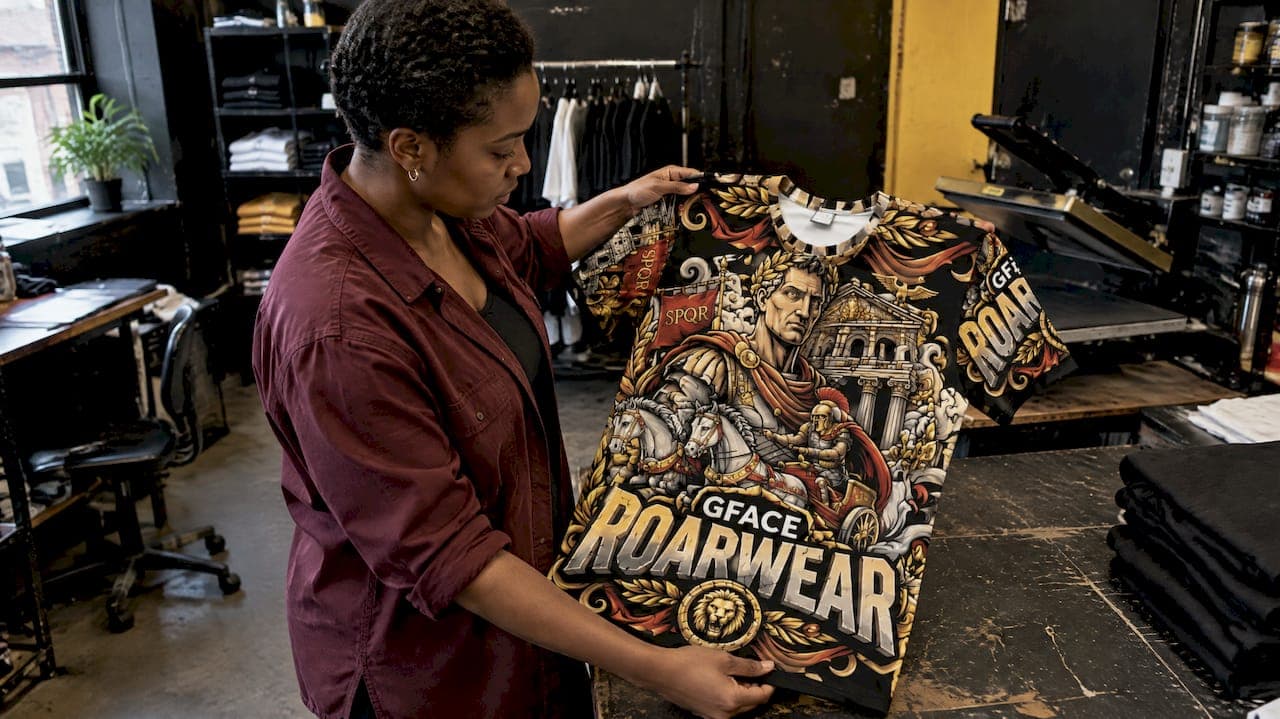
Made to order clothing is simple: nobody cuts, prints or sews your piece until you buy it. The brand takes your order first, then makes it. That flips the usual fashion cycle, and it changes what you should check before you pay: lead time, fit, returns and how honest the brand is about its claims. This guide walks you through all of it, with streetwear in mind, so you can lock in your next piece with your eyes open.
TL;DR
- Made to order (MTO) means a garment is produced only after you order it, not in bulk ahead of time.
- Ready-to-wear is faster and usually cheaper. Made to order trades speed for a more personal piece and less unsold stock.
- Print on demand is one way to run made to order: the design is printed on a blank once an order lands.
- Before you buy, check the production window, the size chart, the return policy and any sustainability claim.
- Limited drops pair well with made to order, because the run is shaped by real demand, not guesswork.
Table of Contents
- What made to order clothing actually means
- Made to order vs ready-to-wear
- Print on demand vs made to order: where they overlap
- The checklist: what to confirm before you order
- Why made to order and streetwear fit together
- What to look for in made to order streetwear brands
- Perspective
- Shop made to order streetwear that roars
- How to choose: a quick decision guide
- Common mistakes to avoid
- FAQ
- Sources
What made to order clothing actually means
Made to order is a business model. A brand waits for customer orders before it manufactures a product, instead of producing items in bulk ahead of time. You pick the piece, you pay, then production starts.
That is the whole idea. Everything else, the wait, the fit, the price, the lower waste, follows from it.
You will see the phrase used in a few different ways, so here is the plain breakdown:
- Made to order: a set design, produced after you buy. You usually choose size and sometimes color or fabric.
- Made to measure: a pattern adjusted to your numbers. More personal, usually slower.
- Bespoke or custom: built from scratch for you, often with a tailor, seamstress or patternmaker. In the United States, you can pay professionals to create clothing from scratch or customize existing garments. So yes, you can pay someone to make clothes for you. It is a different lane from buying a made to order streetwear drop.
Most made to order streetwear lives in the first lane. You are not getting a tailor's fitting. You are getting a piece that did not sit in a warehouse waiting for you.
Made to order vs ready-to-wear
Ready-to-wear is mass-produced in standard sizes and sold off the rack, ready to ship or grab right away. Made to order pieces are only produced on request.
Here is how the two stack up for a shopper:
| What you care about | Ready-to-wear | Made to order |
|---|---|---|
| Speed | Available right away | Wait while it is made |
| Price | Usually the lower-price path | Often a bit higher for the personal touch |
| Stock | Made in advance, some goes unsold | Made after the order |
| Personalization | Limited to what is on the rack | More room for choice and individual pieces |
| Returns | Higher return rates in mass-market fashion | Typically very low, since items are often built to your order |
The general pattern comes from industry sources: ready-to-wear prioritizes speed and volume, while made to order focuses on personalization and cutting overproduction, usually with longer lead times. One industry analysis notes that return rates for made to order clothing are typically near zero, because the pieces are often custom-made to specific requirements. Treat that as a trend across the category, not a promise from any one brand. Always read the brand's own return page.
When made to order wins
Pick made to order when you want something nobody else on your block is wearing, when a piece's story matters to you, or when you care about avoiding mass-produced overstock. Pick ready-to-wear when you need the fit tomorrow, or when the lowest price is the whole point. Both are fair. Know which one you are shopping for.

Print on demand vs made to order: where they overlap
This is where people get tangled. Print on demand (POD) is a type of made to order. Print-on-demand produces items only when an order is placed, so there is no inventory and no unsold stock.
The difference is in what gets made:
- Print on demand starts with a blank garment and applies a design after you order. The creative work is the artwork.
- Broader made to order can cover cutting and sewing the whole garment after the order, sometimes with fabric and fit choices.
So every POD piece is made to order, but not every made to order piece is POD. If a brand says "made to order" and you want to know which one you are getting, ask what exactly happens after you click buy. Our own explainers cover the basics in what print on demand is and the bigger picture in on-demand manufacturing for fashion.
Print method matters too. If you are curious how the design lands on the fabric, we break down screen printing versus DTG and the choice between embroidered and printed looks for small runs.
The checklist: what to confirm before you order
Made to order is not risky. It is just different. Run this list before you check out and you will rarely get surprised.
1. Production and shipping time
This is the big trade-off. Industry guides put made to order production at 4 to 12 weeks or more, against instant availability for ready-to-wear. That range is wide and covers all kinds of made to order, including slow, handcrafted work. On-demand apparel moves on a different clock, and we explain realistic windows in our guide to on-demand shipping times.
What to look for: a stated production window and a stated shipping window, shown separately. If you have an event, a birthday or a trip, count backward from that date and leave a cushion.
2. Fit and sizing
Most made to order streetwear is standard sizing, not tailored. So the size chart is your best friend.
- Measure a piece you already love and compare it to the chart, not to the size label.
- Check whether the cut is oversized, boxy or fitted. A long tee, a tee dress and a standard tee all wear differently.
- For jerseys, use a dedicated chart. We built a jersey size guide for streetwear and POD drops for this.
3. Total cost
Add it up: item, shipping, tax, and any membership discount. Made to order often costs a bit more than a mass-produced equivalent, and ready-to-wear is generally the better pick when the lowest price is the goal. Judge the piece by what it is: a design with a story, made when you asked for it.
4. Returns and exchanges
Because pieces are made for your order, many brands tighten return rules. Read the policy before you buy: who pays shipping, how long you have, and whether exchanges are allowed. Near-zero returns across the category is a trend, not a guarantee of how any one store handles you.
5. Honest sustainability claims
Made to order can cut overproduction, since you produce only the amount needed after orders are placed. That is a real advantage over "produce, then sell." But a brand saying "sustainable" is not proof. Here is how to check:
- Look for named certifications such as GOTS or OEKO-TEX Standard 100, plus supplier transparency.
- Be wary of vague words. A North Carolina Law Review article points out that the FTC's Green Guides do not currently define terms like "sustainable", which gives brands wide room, so the burden of digging falls on you.
- Ask where the piece is made. Production closer to the customer helps reduce shipping emissions.
We go deeper on this in our guide to spotting greenwashing when you buy made to order streetwear that cuts deadstock.
Why made to order and streetwear fit together
Streetwear runs on drops. A drop says: this is here, it is limited, and when it is gone, it is gone. Made to order lines up with that logic. Instead of guessing how many units will sell and sitting on the rest, a brand lets real demand decide the run.
For you, that means three things:
- Pieces with a point of view. Designs built around heritage, symbols and a story, not generic basics.
- Less of the same thing everywhere. You are not wearing what a thousand people picked off the same rack.
- Less waste behind the scenes. Fewer unsold units is better for everyone, the planet included.
Want the longer take? Read why buyers prefer made to order pieces for streetwear drops.
What to look for in made to order streetwear brands
You can shop by type without a brand list. Here is what separates a brand worth your money from a storefront with a slogan:
- Clear identity. Does the design have a meaning behind it? Symbols, culture, place. A real story shows in the details.
- Plain timelines. The product page tells you when it ships. No guessing.
- Real size info. A chart with measurements, not just S to XL.
- Quality proof. Close-up photos, fabric details, and honest talk about print methods. Our guide to print on demand quality shows what to look for.
- Straight policies. Returns, exchanges and support are easy to find and easy to read.
- No big green claims without receipts. See the checklist above.
Also compare by type of seller. Big marketplaces give you endless choice and little story. Slow, handcrafted made to order brands give you fit and craft at a longer wait and higher price. Brand-led streetwear on demand sits in the middle: strong identity, faster lead times, drop energy. If you are browsing big retailers and want options with more style and ethics, our roundup of alternatives to fast-fashion marketplaces is a good start.
Perspective
Here is where we stand. Made to order is not a trend we picked up. It is how a brand with something to say should work. When you build around a lion, a Greek Key medallion and Boricua heritage, you are not making clothes for everybody. You are making them for the person who wants to step out and be heard.
GfaceGear was born in Brooklyn. We run print-on-demand apparel and limited-edition drops, and we think that is the right match. A drop should feel like an event, not a clearance rack in waiting. Making pieces after you order means the run follows the people who want it.
Our focus is the pieces that carry the ROAR identity best: lion sneakers, hats, long tee dresses, men's tees, and especially our limited-edition swimwear. Each one is built to be worn loud. Put on your Gameface. Grab destiny with both hands. Let the world hear you.
Victor
Shop made to order streetwear that roars
Ready to put this into practice? GfaceGear sells print-on-demand streetwear for men and women, with limited-edition drops and designs built around lions, the Greek Key medallion and Boricua pride. Start where the energy is:

- Limited-edition swimwear: our drop pieces, made when you order.
- Shirts: men's tees with the ROAR look.
- Long tee dresses: try the ROARWEAR artful x-treme T-shirt dress.
- Sneakers, hats and more: finish the fit from head to toe.
Want first access and perks? The Pride Membership is $9.99 per month and brings sitewide discounts, early access and VIP perks. Join the Pride. Shop the drop.
How to choose: a quick decision guide
Still deciding between made to order and ready-to-wear? Use this.
- Do you need it by a hard date? If yes, check the shipping window first, or go ready-to-wear.
- Do you want a piece with a story? Go made to order or limited drop.
- Is fit your biggest worry? Measure a favorite piece and compare to the size chart. For jerseys, use the jersey guide.
- Is price the deciding factor? Ready-to-wear is generally the lower-price path. If a membership discount applies, factor it in.
- Do you care about waste? Made to order helps, but ask for proof beyond the buzzwords.
If you land on made to order for most answers, you are in the right place.
Common mistakes to avoid
- Ordering without reading the timeline. The wait is part of the deal. Know it.
- Guessing your size. Compare measurements, not labels.
- Assuming every made to order brand is eco-friendly. Look for named certifications and clear sourcing.
- Mixing up terms. Print on demand, made to order, made to measure and bespoke are not the same. Ask what happens after you pay.
- Skipping the return policy. Custom or on-demand pieces often have tighter rules. Read first.
FAQ
Can I pay someone to make clothes for me?
Yes. In the United States you can hire tailors, seamstresses or patternmakers to make clothing from scratch or alter existing pieces. That is bespoke work, and it costs more and takes longer than buying a made to order streetwear piece from a brand.
Is made to order the same as print on demand?
Not quite. Print on demand is one kind of made to order: the item is produced only after an order is placed, with the design applied to a blank. Made to order is the broader model and can include making the whole garment after you buy.
How long does made to order clothing take?
It depends on the brand and the method. Industry guides cite 4 to 12 weeks or more for made to order overall, while on-demand apparel is often faster. Check the product page for the stated production and shipping windows before you buy.
Is made to order clothing more sustainable?
It can be. Producing only what has been ordered cuts overproduction. Still, verify claims by looking for certifications like GOTS or OEKO-TEX and clear supplier information.
Can I return made to order clothing?
That is up to the brand. Return rates in the category are typically very low, partly because pieces are made for specific orders, but policies differ. Read the return and exchange page before you check out, and use the size chart to get it right the first time.
Sources
- Custom-made clothing: 10 tips for ordering it, Los Angeles Times
- 30 Fashion Terms to Know if You Want to Work in Fashion
- Made-to-Order Garments vs Ready-to-Wear Apparel Options
- Made-to-Order vs Ready-to-Wear: Which Model for Fashion
- The Ultimate 2026 Guide for Eco-Friendly Print on Demand
- Made-To-Order: The Solution To Fashion's Sustainability Problem, The Interline
- Eco-friendly print on demand suppliers: A 2026 creator's guide
- Goodbye to Greenwashing in the Fashion Industry, North Carolina Law Review